

Best Limited Ingredient Dog Food for Sensitive Stomachs


Did you know that "limited ingredient dog food" isn't actually a regulated term? Despite how often it appears on colorful packaging, there's no official government standard for what qualifies as a limited diet. This means the burden of label-reading falls squarely on you, the pet parent, while your dog continues to struggle with itchy hotspots and unpredictable stools. It's exhausting to watch your companion suffer from chronic gas or skin rashes while you feel lost in a sea of complex ingredients and marketing jargon.
We understand that you want to provide the best care possible, and we're here to help you find the clarity you need. This guide will show you how to identify high-quality proteins, evaluate bioavailability, and choose a diet that delivers firm stools and a radiant coat. We've analyzed the latest 2026 AAFCO label standards and premium formulations from trusted partners like FirstMate and Petcurean to help you cut through the noise. You'll learn to navigate the new Pet Nutrition Facts box and gain the confidence to transform your dog's digestive health and skin vitality through precise, holistic nutrition.
Key Takeaways
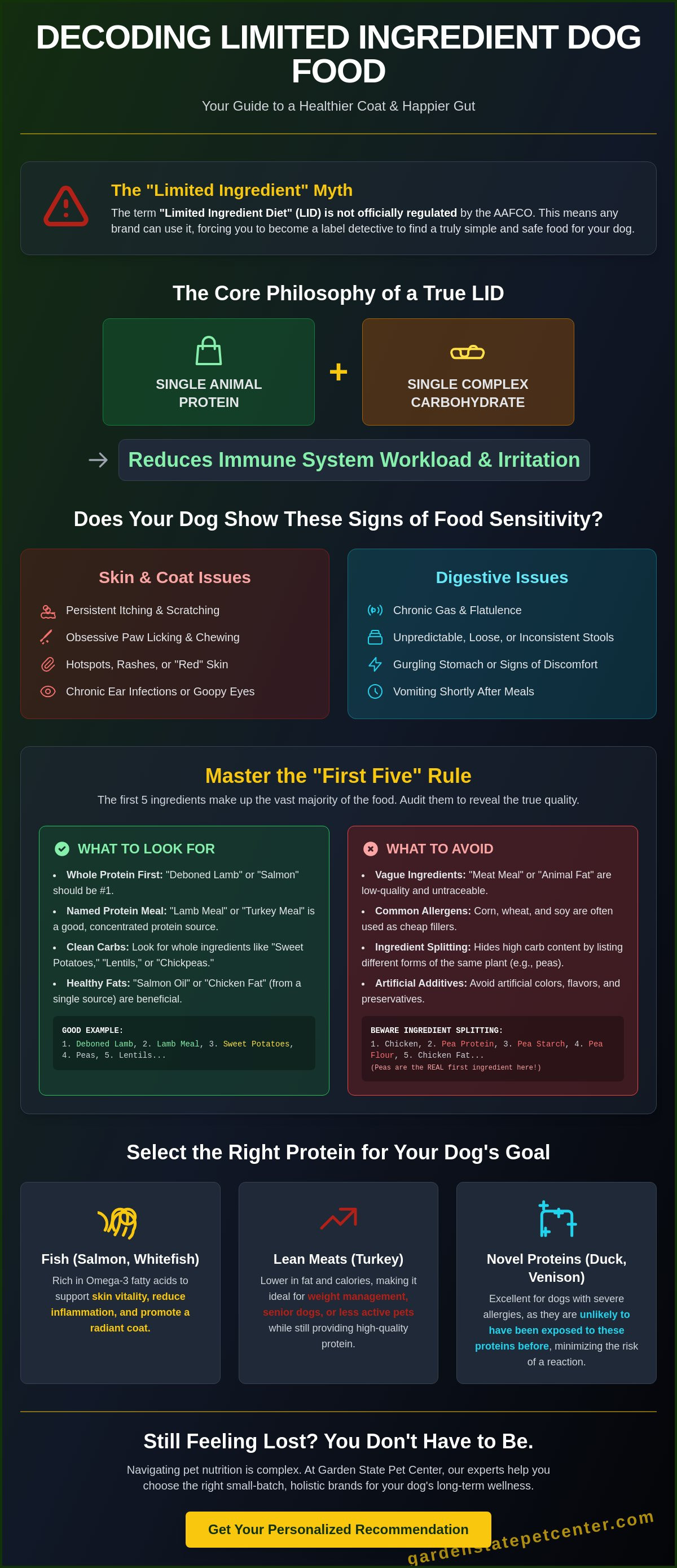
- Learn why a minimalist diet featuring a single protein and complex carbohydrate reduces the immune system's workload to stop chronic irritation.
- Recognize the subtle signs of food sensitivities, such as persistent paw licking and flatulence, that indicate it’s time to switch to a limited ingredient dog food.
- Master the "First Five" rule to audit ingredient lists and avoid common manufacturing tricks like "ingredient splitting" that hide the true carbohydrate content.
- Discover how to select the right protein source based on your dog's specific health goals, from Omega-3 rich fish for skin vitality to lean turkey for weight management.
- Understand the value of professional pet nutritional consultations to help you navigate small-batch, holistic brands for long-term wellness.
Table of Contents
-
What is Limited Ingredient Dog Food? Defining the Minimalist Diet
-
Is a Limited Ingredient Diet Right for Your Dog? Signs and Symptoms
-
How to Evaluate Limited Ingredient Labels: Beyond the Marketing
-
Selecting the Best Limited Ingredient Food for Specific Needs
-
Expert Curation: Why Garden State Pet Center is the Authority on LID
What is Limited Ingredient Dog Food? Defining the Minimalist Diet
Limited ingredient dog food isn't just a marketing buzzword; it's a deliberate nutritional strategy designed to simplify your dog's bowl. At its core, a minimalist diet typically features one animal protein source and one complex carbohydrate. This approach aims to reduce the "antigenic load" on your dog's immune system. By limiting the number of foreign proteins your dog's body encounters, you decrease the likelihood of a defensive immune response that manifests as itchy skin or digestive upset. For those seeking a comprehensive overview of dog food, it's clear that commercial diets have evolved from generic scraps to highly specialized formulas that target specific health needs.
Even with simplified recipes, these foods must meet AAFCO standards to ensure they provide a complete and balanced nutrient profile. It's vital to distinguish between these and prescription hypoallergenic diets. While hypoallergenic options often use hydrolyzed proteins, which are chemically broken down so the immune system doesn't recognize them, a limited ingredient diet uses whole, high-quality ingredients. This makes them a proactive choice for pet parents who want to avoid fillers without needing a veterinary prescription.
To better understand this concept, watch this helpful video:
The 'Single Protein' Standard
Using one animal source, such as lamb or turkey, is the cornerstone of any effective limited ingredient dog food. This clarity allows you to isolate exactly what your dog is eating. If they react poorly to one bag, you know exactly which protein to avoid next time. You must check labels carefully for hidden culprits like beef meal or chicken fat. These often sneak into standard recipes as cheap flavor enhancers but can trigger a sensitive system. Many pet owners find success with novel proteins like venison, duck, or salmon. These are proteins your dog likely hasn't encountered before, making them much less likely to cause an allergic flare-up.
The Role of Clean Carbohydrates
Clean carbohydrates provide the energy your dog needs without the inflammatory risks associated with corn, wheat, or soy. Modern limited ingredient formulations often swap these common allergens for nutrient-dense alternatives like chickpeas, lentils, or pumpkin. These ingredients usually have a lower glycemic index, which helps maintain steady blood sugar levels and prevents energy crashes. To support gut health, look for specific fiber sources like miscanthus grass or beet pulp. These fibers act as prebiotics, feeding the beneficial bacteria in your dog's microbiome and ensuring stools remain firm and consistent. At Garden State Pet Center, we prioritize holistic dry food options that utilize these superior carbohydrate sources to ensure long-term vitality.
Is a Limited Ingredient Diet Right for Your Dog? Signs and Symptoms
Identifying the need for a dietary change starts with observing your dog's daily habits. Persistent itching, obsessive licking, or "red" paws are the most frequent indicators of a problem. When your dog constantly chews their feet or rubs their face against the carpet, they aren't just grooming; they're likely reacting to a specific protein or filler in their bowl. High-quality limited ingredient dog food helps break this inflammatory cycle by removing the complex variables found in standard kibble. Beyond the skin, you should watch for gastrointestinal red flags. Chronic flatulence and inconsistent stool quality are clear signs that the digestive tract is struggling to process its current fuel.
These symptoms often point to "leaky gut" syndrome, where the intestinal barrier becomes compromised. When the gut lining is inflamed, undigested food particles can leak into the bloodstream, causing the immune system to overreact. A minimalist diet allows the intestinal wall to rest and repair itself. This simplified approach is also beneficial for dogs diagnosed with Inflammatory Bowel Disease (IBD), as it reduces the mechanical and chemical stress on the digestive system. By following FDA pet food regulations for safety and ingredient transparency, you can ensure the formula you choose is free from the hidden cross-contaminants that often plague lower-end brands.
Food Sensitivities vs. True Food Allergies
It's important to distinguish between a biological immune response and a digestive intolerance. A true food allergy involves the immune system and can cause immediate reactions like swelling or hives. Food sensitivities are more common and typically involve a gradual breakdown in digestion. While an allergy might trigger a sudden flare-up, sensitivities often manifest as dull coats, recurring ear infections, or chronic soft stools over several months. Using a limited ingredient dog food addresses both issues by simplifying the digestive process and removing the most common "antigenic" triggers that cause the body to attack itself.
The Elimination Diet Trial
The most reliable way to identify a trigger is through a 12-week elimination trial. During this period, you must feed your dog a single protein and carbohydrate source and nothing else. The "No Treats" rule is the most difficult part for owners, but it's vital for success. Even a small piece of cheese or a flavored heartworm pill can reset the clock on your progress. We recommend keeping a "poop and skin" journal to document daily changes in itching levels and stool consistency. If you're unsure where to start, our team can provide pet nutritional consultations to help you select the best novel protein for your dog's specific needs.
How to Evaluate Limited Ingredient Labels: Beyond the Marketing
Look past the glossy photos of fresh vegetables and prime cuts of meat on the packaging. To truly understand what you're feeding, apply the "First Five" rule. The first five ingredients listed on a bag of limited ingredient dog food typically represent the vast majority of the total formula. If the primary components aren't recognizable, high-quality proteins or complex carbohydrates, the food likely relies on fillers to meet nutritional requirements. High-quality fats are also essential markers of a premium diet. Look for named sources like salmon oil or sunflower oil rather than generic "animal fat." These specific oils provide the concentrated Omega-3 and Omega-6 fatty acids necessary to restore skin vitality and coat shine.
Be wary of the "ingredient split" trap. This common marketing tactic involves listing different forms of the same carbohydrate separately. By breaking "peas" into "pea protein," "pea fiber," and "pea flour," a manufacturer can move these components further down the list. This makes the meat source appear to be the most prominent ingredient when, in reality, the total carbohydrate volume might be much higher. While the ingredient list should be short, don't be alarmed by a long list of chemical-sounding names at the bottom. These are synthetic vitamins and minerals. Because these recipes use fewer whole-food sources, these additions are vital to ensure the meal remains "complete and balanced" according to AAFCO standards.
Identifying Quality Protein Sources
Understand the difference between whole meat and meat meal before you buy. Whole meat includes high water content, which can artificially inflate its position on the ingredient list. A named "meal," such as duck meal, is a concentrated protein source with the moisture already removed, often providing more actual protein per gram. Always prioritize named sources over generic terms like "poultry meal" or "meat by-products." You can consult an expert veterinary source on food allergies to learn why the bioavailability of these specific proteins is the deciding factor in how well your dog absorbs nutrients and avoids digestive flare-ups.
Grain-Free vs. Wholesome Grain LID
Choosing between grain-free and grain-inclusive options depends on your dog's specific sensitivities. Grain-free recipes often utilize legumes like chickpeas or lentils to provide energy. If your dog doesn't have a specific grain allergy, ancient grains like quinoa or steel-cut oats offer excellent fiber and steady energy levels. Many pet parents worry about heart health debates surrounding grain-free diets. To address these concerns, we carry premium dry dog food brands that balance their formulations with taurine and carnitine to support cardiac function while maintaining a minimalist ingredient profile.
Selecting the Best Limited Ingredient Food for Specific Needs
Choosing the right limited ingredient dog food requires looking beyond the "sensitive" label to match the formula with your dog's specific biological needs. If your primary goal is restoring a dull coat or soothing flaky skin, prioritize recipes rich in Omega-3 fatty acids. Cold-water fish like salmon or whitefish provide the essential EPA and DHA levels that plant-based oils often lack. For dogs needing weight management, look for lean, high-protein options like turkey. These formulas help maintain muscle mass while keeping fat content low, ensuring your dog stays fit without triggering a digestive flare-up.
Puppies have even more precise requirements. You must ensure the calcium and phosphorus ratios are specifically balanced for growth, as a standard adult minimalist diet might lack the mineral density needed for developing bones. If you're dealing with a picky eater, consider brands that use freeze-dried raw coatings. This adds intense natural flavor and aroma without introducing a long list of synthetic flavorings. For a deeper look at how these specialized diets fit into a total wellness plan, read our Premium Pet Food in Audubon, NJ: The Complete Guide.
Novel Proteins: The Secret to Stopping the Itch
Novel proteins are animal sources your dog has never eaten before. Duck, venison, and kangaroo are the safest bets for dogs who have already developed sensitivities to common proteins like chicken or beef. Be mindful of cross-reactivity; for instance, a dog allergic to beef might also react to bison because the protein structures are similar. We recommend rotating your novel protein sources every few months. This prevents the immune system from becoming overexposed to a single ingredient, which reduces the chance of new sensitivities developing over time.
Wet vs. Dry vs. Freeze-Dried LID
The format of the food also impacts health outcomes. Limited ingredient wet food is an excellent choice for older dogs or those with kidney concerns because the high moisture content supports hydration. If you want the highest nutrient density, freeze-dried raw options provide the benefits of raw nutrition with the safety and convenience of a shelf-stable product. These minimally processed diets preserve natural enzymes and amino acids that are often lost in high-heat kibble production. Visit us for pet nutritional consultations to find the perfect format for your dog's unique lifestyle.
Expert Curation: Why Garden State Pet Center is the Authority on LID
Your dog's health is too important to leave to chance. At Garden State Pet Center, our on-site certified pet nutritionist personally evaluates every brand to ensure it meets our rigorous standards for purity and performance. We deliberately choose small-batch and holistic manufacturers over large conglomerates. These smaller partners share our commitment to sourcing high-quality, traceable ingredients that actually make a difference in your dog's daily life. When you choose a limited ingredient dog food from our shelves, you're benefiting from a vetting process that prioritizes biological value over corporate profit margins.
Our 30-year history in the pet industry has taught us that reliability is everything. We prioritize family-owned brands because they often maintain higher standards for raw material sourcing than publicly traded companies. This focus on specialized care extends beyond dogs. If you share your home with other unique companions, our Bearded Dragon Food Guide demonstrates how we apply the same high-end nutritional standards to every animal group we serve. We aren't just a vendor; we're your partner in long-term pet welfare.
Our Curated LID Brands
If you're looking for a proven track record, FirstMate stands out as a pioneer. They've perfected the art of the simple, high-quality LID formulation, focusing on single-protein sources that are easy on the gut and highly bioavailable. For more specific health challenges, Petcurean Go! Solutions provides targeted recipes designed to alleviate unique sensitivities like itchy skin or chronic gas. You can browse these expert-vetted options and more in our online Dog Food Collection, which features only the most trusted names in pet nutrition.
The Garden State Pet Center Difference
Don't guess which limited ingredient dog food is right for your pet. We invite you to book one of our professional pet nutritional consultations to receive a personalized plan tailored to your dog's specific health profile. Whether you need local delivery to your front door or fast nationwide shipping, we make it easy to access the premium diets your dog deserves. We take pride in being a service-oriented resource that cares about the long-term well-being of the local community and their pets. Visit us today to see how specialized care and professional standards can transform your dog's digestive health and skin vitality.
Empower Your Dog with Specialized Nutrition
Transitioning your companion to a limited ingredient dog food is a proactive step toward ending the cycle of digestive discomfort and skin irritation. You've learned how to audit labels for hidden fillers and why novel proteins like duck or salmon are vital for restoring vitality. By focusing on high bioavailability and minimalist recipes, you provide your dog with the clean fuel they need to thrive. These deliberate choices lead to the clear skin, shiny coats, and firm stools that every pet parent wants to see.
At Garden State Pet Center, we've specialized in holistic and small-batch diets since 1990. Our on-site Certified Pet Nutritionist carefully vets every formula we carry to ensure it meets the highest professional standards for specialized care. We offer free local delivery and nationwide shipping to make accessing premium nutrition as easy as possible for your family. Take the first step today and consult with a knowledgeable partner who truly cares about your pet's long-term well-being and health.
Shop Our Expert-Curated Limited Ingredient Dog Foods Today
Your dog's journey to better health starts with a single, high-quality bowl. We're here to help you make it happen.
Frequently Asked Questions
How long does it take to see results on a limited ingredient dog food?
You should expect to see digestive improvements within one to two weeks, but skin and coat changes typically take eight to twelve weeks. This longer window allows the body to complete a full skin cell turnover cycle and clear out old inflammatory triggers. Consistency is the most important factor during this time. If you don't see progress after three months, the chosen limited ingredient dog food might still contain a trigger your dog is sensitive to.
Can I feed my puppy a limited ingredient diet?
You can feed your puppy a minimalist diet as long as the formula is specifically labeled for growth or all life stages. Puppies have higher requirements for protein, calcium, and phosphorus to support their developing bones and muscles. Many limited ingredient dog food options are designed for adult maintenance only, so always verify the AAFCO statement on the bag. Our nutritional consultations can help you select a growth-appropriate formula from trusted brands like FirstMate.
Is grain-free limited ingredient food safe for my dog's heart?
Grain-free diets are safe when they are professionally formulated with a focus on amino acid balance. The heart health debate often centers on taurine levels and specific legume concentrations. We prioritize brands that include supplemental taurine and carnitine to support cardiac function. If your dog doesn't have a grain sensitivity, you might prefer a limited diet that uses ancient grains like oats or quinoa to provide steady energy and fiber.
What is the difference between limited ingredient and hypoallergenic dog food?
The primary difference is how the protein is processed. Limited ingredient diets use whole, recognizable protein sources like duck or lamb. Hypoallergenic foods are typically prescription diets that use hydrolyzed proteins, which are broken down into tiny pieces so the immune system doesn't recognize them as threats. LID is an excellent proactive choice for managing sensitivities, while hydrolyzed diets are usually reserved for the most severe clinical allergy cases.
My dog is still itching on LID; what should I do next?
Persistent itching often suggests that your dog is reacting to an environmental trigger or a hidden ingredient in their current bowl. Environmental factors like pollen or dust mites can mimic food sensitivities. If the itching continues, try switching to a novel protein your dog has never eaten before, such as kangaroo or venison. You should also audit any vitamins or supplements you're giving to ensure they don't contain soy, corn, or generic animal fats.
Can I give my dog treats while they are on a limited ingredient diet?
You can give treats, but they must strictly follow the same ingredient profile as your dog's primary meal. If you're feeding a salmon-based diet, only offer single-ingredient salmon treats or compatible fruits like blueberries. Giving a beef treat to a dog on a turkey-based diet will ruin an elimination trial. We carry a wide variety of single-protein freeze-dried treats that are perfect for maintaining dietary consistency while you monitor your dog's progress.
How do I transition my dog to a new limited ingredient food safely?
Transition your dog slowly over a period of seven to ten days to prevent digestive upset. Start by mixing 25% of the new food with 75% of the old diet for two days. Gradually increase the ratio to 50/50, then 75/25, until the transition is complete. This slow progression allows the beneficial bacteria in your dog's gut to adapt to the new protein and carbohydrate sources without causing gas or loose stools.

Article by
Victor Santucci
Victor Santucci is the owner of Garden State Pet Center in Audubon, NJ, where he specializes in premium pet nutrition, exotic animals, and expert-level care. With years of hands-on experience and a passion for helping pets thrive, Victor is dedicated to educating pet owners on proper nutrition, enrichment, and species-specific care. His mission is simple: provide every pet with the highest quality products and every customer with honest, knowledgeable guidance.
Share this post
- 0 comment
- Tags: dog food allergies, dog health, dog nutrition, itchy skin, limited ingredient dog food, reading dog food labels, sensitive stomach, single protein diet