

Reptile habitat setup: Everything You Need to Know


Did you know that millennials and Gen Z now represent over 60% of all reptile owners? While the hobby is growing rapidly, a successful reptile habitat setup requires more than just a glass tank and a heat lamp. It's about creating a functional, scientifically backed ecosystem that mirrors the wild with clinical precision.
We understand the anxiety that comes with conflicting lighting advice or the fear of Metabolic Bone Disease caused by a poor environment. It's difficult to maintain perfect temperature gradients when you're getting mixed signals from different sources. You want a visually stunning enclosure that promotes natural behaviors, but you need the confidence that your technical settings are correct.
This guide provides the professional expertise you need to master your enclosure's environmental controls. You'll learn how to balance humidity, lighting, and heat to ensure long term health and vitality for your pet. We'll explore everything from the latest bioactive trends to the essential equipment required for a professional grade habitat that lasts for years.
Key Takeaways
- Select the ideal enclosure material, such as glass or PVC, based on your species' specific humidity and ventilation requirements.
- Master the science of thermal gradients by creating distinct hot and cool zones that allow your pet to self-regulate its body temperature naturally.
- Configure a professional reptile habitat setup using high-output T5 or T8 UVB lighting to ensure proper Vitamin D3 synthesis and bone health.
- Evaluate the benefits of sterile quarantine environments versus advanced bioactive ecosystems that utilize live plants and natural drainage layers.
- Maintain long-term vitality by following structured hygiene checklists and utilizing professional disease screening to prevent enclosure contamination.
Essential Components of a Professional Reptile Habitat Setup
A successful reptile habitat setup begins with the physical foundation. You aren't just buying a container; you're selecting a specialized piece of equipment that dictates how well you can control heat and moisture. Choosing the right material isn't merely about aesthetics. It's about thermodynamics and maintaining the delicate biological balance your pet needs to thrive.
Choosing Enclosure Materials
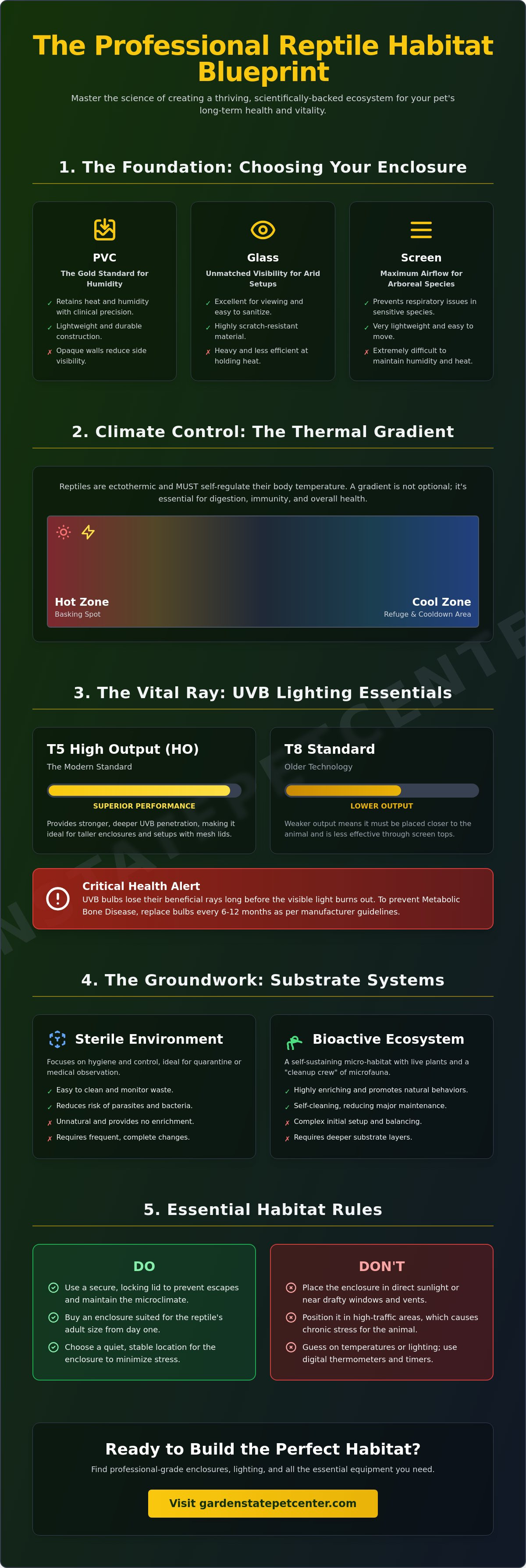
PVC enclosures are the gold standard for high-humidity species. These solid walls retain heat with clinical precision; they make it easier to maintain a steady ambient temperature without your equipment working overtime. Glass terrariums offer unmatched visibility and work beautifully for arid species that benefit from higher ventilation. While glass is heavier, it's highly scratch-resistant and easy to sanitize. For arboreal species that require constant airflow, a screen enclosure is the most reliable choice to prevent respiratory distress.
To better understand how these components come together in a functional ecosystem, watch this helpful video:
Configuring a professional reptile habitat setup requires a balance between safety and environmental control. A secure, locking lid is a non-negotiable safety feature. It prevents escapes and helps maintain the internal microclimate by controlling how much air and moisture exit the top. Many reptiles will attempt to push against the top of their home; a locking mechanism prevents injuries caused by persistent escaping attempts. When placing your enclosure, avoid drafty hallways or areas with direct sunlight. Drafts cause rapid cooling, making it nearly impossible to keep your heat lamps consistent. Windows cause dangerous temperature spikes that even the best thermostats can't always counteract. High-traffic areas also cause chronic stress for more sensitive animals. Choose a quiet, stable corner where your pet feels secure.
Determining Optimal Enclosure Size
Many keepers start with small tanks, but we recommend purchasing an enclosure that your pet can grow into from day one. This provides immediate space for natural enrichment and saves you from the logistical stress of multiple upgrades. Think about the natural behavior of your reptile. A turtle or a skink needs a wide horizontal footprint to explore. In contrast, a Crested Gecko requires vertical height for climbing and leaping. If you're planning a Bioactive terrarium, ensure the enclosure has a deep enough base to accommodate drainage layers and living substrate. To find the perfect foundation for your pet, Explore our professional reptile enclosures and select a model that meets these high standards.
Understanding the Science of Light, Heat, and UV Gradients
Reptiles are ectothermic, meaning they rely entirely on their environment to regulate their internal body temperature. A professional reptile habitat setup isn't complete without a clearly defined thermal gradient. This involves placing your heating and UV equipment on one specific side of the enclosure. By doing this, you create a warm basking end and a cooler refuge end. This allows your pet to move back and forth to digest food, boost their immune system, or simply cool down. According to clinical standards for Reptile Management and Husbandry, failing to provide this range can lead to chronic stress and metabolic shutdown.
The Role of UVB in Reptile Health
UVB lighting is a biological necessity, not an optional accessory. Most keepers now use Ferguson Zones to match UV intensity to their specific species. For example, a sun-loving bearded dragon requires a much higher index than a forest-dwelling skink. When choosing bulbs, T5 High Output (HO) lamps are generally superior to the older T8 style because they provide better penetration through mesh lids. Don't forget that UVB bulbs burn out biologically; they stop producing beneficial rays long before the visible light actually fails. Most experts recommend replacing these every six to twelve months to maintain a healthy environment.
Thermoregulation and Basking Zones
Your basking zone should include a piece of natural slate or stone. These materials act as a thermal battery, soaking up heat and releasing it slowly to provide belly heat for digestion. To manage this safely, always use a dimming thermostat. These devices don't just turn the light on and off; they gently adjust the power to maintain a precise temperature. This prevents the dangerous spikes that lead to burns or fire risks. For more help selecting these technical components, consider choosing the right reptile store for expert lighting advice.
Nighttime heating requires a different approach. Since most reptiles need a period of darkness to sleep, you shouldn't use colored night bulbs. Instead, use a ceramic heat emitter or a deep heat projector. These provide warmth without disrupting the circadian rhythm. Finally, don't guess the temperature. Digital thermometers and infrared temp guns are non-negotiable tools for any serious reptile habitat setup. They allow you to check surface temperatures instantly, ensuring your setup remains within safe parameters. If you need help finding high-quality monitoring tools, explore our specialized reptile supplies for reliable options.
Substrate Selection: Sterile vs. Bioactive Ecosystems
Choosing the right floor for your reptile is a balance of hygiene and biology. While a complex bioactive setup is visually stunning, a sterile environment is often the best choice for new arrivals. Use paper towels or slate during the initial quarantine period; this allows you to monitor waste easily and ensure your pet is healthy before moving to a permanent home. Many keepers refer to these Reptile Housing Guidelines to understand why simplicity is often safer during the first few weeks of ownership.
Building a Bioactive Foundation
Bioactive enclosures are self-sustaining micro-ecosystems that reduce maintenance by breaking down organic waste naturally. To build one, you'll need a three-layer system:
- Drainage Layer: Clay balls or gravel that prevent water from pooling at the bottom.
- Substrate Barrier: A fine mesh that keeps your soil from falling into the drainage layer.
- Bioactive Soil: A nutrient-rich mix designed to support live plants and beneficial microbes.
Introduce a 'Clean-up Crew' (CUC) of isopods and springtails. These tiny organisms act as your habitat's janitors, consuming waste and preventing mold growth before it starts.
Safety and Impaction Risks
The science of impaction is often misunderstood. It isn't just about the substrate; it's about the relationship between heat and digestion. If your reptile habitat setup doesn't have a high enough basking temperature, the animal cannot move particles through its digestive tract effectively. This leads to ingestion issues. Avoid dangerous options like calcium sand or cedar shavings. Calcium sand is particularly lethal because it encourages reptiles to lick the substrate, which leads to internal blockages. Wood shavings like cedar or pine contain volatile oils that can irritate sensitive respiratory systems.
For arid species like Leopard Geckos, use safe alternatives like ceramic tile, excavator clay, or specialized desert mixes that don't clump. These provide a naturalistic look without the risk. If you're managing humidity, choose your material based on your pet's native climate. Sphagnum moss is excellent for localized humid hides, while cypress mulch holds moisture across the entire enclosure without molding quickly. To find the right foundation for your pet's home, Shop substrates and reptile accessories from our curated collection of professional-grade supplies.
Species-Specific Setup Frameworks for Common Reptiles
A successful reptile habitat setup requires moving beyond generalities to meet the precise biological demands of your chosen species. While the core principles of heat and light remain constant, the execution varies wildly between a desert dweller and a tropical climber. Providing an environment that mimics their native range isn't just about survival; it's about encouraging the active, natural behaviors that define a healthy pet.
The Bearded Dragon Oasis
Modern standards for an adult Bearded Dragon have shifted toward larger spaces. A 120-gallon (4x2x2 feet) enclosure is now the baseline for providing adequate room for exercise and a proper thermal gradient. These reptiles require intense UVB and low humidity levels, usually between 30% and 40%. Beyond the physical structure, focus on enrichment by adding sturdy climbing branches and varied textures like rough slate or cork bark. These elements help keep their claws filed and provide mental stimulation. To complement a high-quality environment, read our complete buying guide for bearded dragon nutrition to ensure their diet matches their habitat's excellence.
In contrast, the Leopard Gecko setup prioritizes different environmental cues. These crepuscular lizards benefit from belly heat provided by heat mats or deep heat projectors regulated by a thermostat. Because they originate from arid grasslands and rocky areas, they require at least three hides: one warm, one cool, and one humid hide filled with damp moss to assist with shedding. For keepers of Ball Pythons, the challenge lies in humidity retention and security. These snakes are notorious escape artists and require heavy, locking lids and enclosures that hold 60% to 80% humidity without becoming stagnant.
Tropical vs. Arid Enclosure Logic
Managing the moisture cycle is the most critical task for tropical species like Crested Geckos. You can choose between manual spraying twice daily or installing automated fogging systems that provide a consistent mist. Always use digital hygrometers to monitor these levels; consistently wet conditions without a dry-out period can lead to serious respiratory infections. Tropical setups require non-porous decor to prevent mold and bacterial colonies from forming in the damp air. Crested Geckos specifically need vertical space and dense foliage to feel secure while sleeping during the day. If you are ready to build a custom home for your pet, browse our premium reptile terrariums to find the perfect species-specific foundation.
Long-Term Habitat Maintenance and Health Monitoring
Establishing a professional reptile habitat setup is only the first step in a lifelong journey of care. Maintaining that environment with clinical precision ensures your pet remains active and healthy for years to come. Consistency is the foundation of success; a clean enclosure prevents the buildup of harmful bacteria and parasites that can compromise your reptile's immune system. By following a structured maintenance schedule, you can catch potential issues before they become serious health concerns.
Execute daily spot cleans to remove waste and uneaten food immediately. Refresh water bowls every morning to prevent stagnation and bacterial growth. On a weekly basis, sanitize feeding equipment and wipe down enclosure walls to maintain visibility and hygiene. Every month, plan for a deeper evaluation of the environment. If you aren't using a bioactive system, this is the time to replace substrate and thoroughly scrub all decor. As your animal matures, evaluate their physical growth and add more enrichment, such as larger climbing branches or new hiding spots, to keep them mentally stimulated.
Hygiene and Sanitization Protocols
Always use specialized reptile-safe disinfectants like F10 rather than household cleaners. Standard bleach or ammonia can leave behind toxic fumes that irritate sensitive respiratory systems. To minimize stress during deep cleaning, move your reptile to a secure, temporary holding bin with a heat source. This allows you to work efficiently without causing unnecessary anxiety for your pet. For aquatic and semi-aquatic species, monitor water quality with regular testing kits. High-performance filtration is essential, but it doesn't replace the need for scheduled water changes to manage nitrate levels and organic debris.
Integrated Health Screening
Disease screening is a vital component of a responsible reptile habitat setup, especially when introducing a new animal to a home with existing pets. Hidden pathogens can spread quickly through shared tools or proximity, leading to enclosure contamination. Utilizing professional services for disease screening provides peace of mind and protects the long-term well-being of your entire collection. Additionally, avian and reptile DNA testing offers accurate insights into the sex of your animal, which is crucial for managing hormonal behaviors and specific nutritional requirements.
Partnering with experts for pet nutritional consultations helps you adjust diets as your reptile transitions from a rapid growth phase to adulthood. These sessions provide a baseline for health and ensure your animal receives the correct balance of vitamins and supplements. If you're ready to ensure your pet has the best start possible, Schedule a professional health screening or DNA test today to verify their health status and sex with expert precision.
Mastering Your Reptile's Microclimate
Creating a thriving environment requires moving beyond generic kits to embrace clinical precision. You've learned how to balance thermal gradients, select the right substrate for your species, and maintain rigorous hygiene protocols. These elements don't just keep your pet alive; they allow them to flourish and display their natural brilliance. Providing a stable ecosystem is the ultimate gift for your cold-blooded companion.
Since 1990, we've specialized in exotic animal welfare and understand that every detail matters. We offer support that goes far beyond a simple transaction. From an on-site certified pet nutritionist to professional DNA and disease screening, our team provides the specialized care your pet deserves. We're proud to be your knowledgeable local resource for everything from technical lighting advice to long-term health monitoring.
Ready to elevate your pet's quality of life? Build your perfect habitat with expert-curated reptile supplies and gain the confidence that comes with professional-grade equipment. Your journey toward a scientifically-backed reptile habitat setup starts with the right foundation and a partner who cares about long-term success. We can't wait to help your pet thrive in their new home.
Frequently Asked Questions
What is the best size tank for a beginner reptile?
The ideal tank size depends entirely on the species you choose, but we recommend starting with at least a 40-gallon enclosure for most juveniles. For popular beginner pets like bearded dragons, a 120-gallon (4x2x2) tank is now the industry standard for adults. Providing more space from the beginning allows for better enrichment and a more stable thermal environment for your pet to thrive.
How do I maintain the correct humidity in my reptile habitat?
Maintain humidity by using digital hygrometers to monitor levels in real time. You can increase moisture through daily manual misting, installing automated foggers, or choosing moisture-retentive substrates like cypress mulch. Ensure your enclosure has the correct balance of ventilation; too much airflow can dry out a tropical habitat, while too little can lead to stagnant, unhealthy air that causes respiratory issues.
Do all reptiles need UVB lighting to survive?
While some nocturnal species can survive without intense UV, almost all reptiles benefit from UVB lighting to support their natural biological cycles. It is essential for Vitamin D3 synthesis and calcium absorption, which prevents Metabolic Bone Disease. Even for species that don't strictly require it for survival, providing low-level UV exposure often results in better appetite, activity, and overall vitality.
Can I use sand in my reptile enclosure?
Avoid using loose play sand or calcium sand, especially for juvenile reptiles, as it poses a significant risk of intestinal impaction. If you prefer a naturalistic look for arid species, use specialized desert mixes or excavator clay that doesn't clump easily. For a safer, low-maintenance reptile habitat setup, many keepers prefer ceramic tile or slate, which are easy to sanitize and hold heat effectively.
What is a bioactive reptile setup and is it hard to maintain?
A bioactive setup is a self-sustaining ecosystem that uses live plants and a "clean-up crew" of isopods and springtails to break down waste. While the initial configuration requires more planning and technical knowledge, the long-term maintenance is often easier than traditional setups. These environments create a more natural home for your pet and significantly reduce the need for frequent, labor-intensive substrate changes.
How often should I clean my reptile's habitat?
Perform spot cleaning daily by removing waste and uneaten food to keep the environment hygienic. You should sanitize water bowls and wipe down surfaces once a week using a specialized, reptile-safe disinfectant. For non-bioactive enclosures, plan a deep clean every month where you replace the substrate and scrub all decor to prevent the buildup of harmful bacteria and parasites.
What are the most common mistakes in reptile habitat setup?
The most frequent errors include using inaccurate analog thermometers, failing to use a thermostat, and providing inadequate UVB lighting. Many new keepers also struggle with a reptile habitat setup that is too small or has poor ventilation, which makes it impossible to maintain a proper temperature gradient. Investing in digital monitoring tools from the start helps you avoid these common pitfalls and ensures your pet's safety.
How do I know if my reptile's temperature gradient is correct?
Use an infrared temperature gun to measure the surface temperatures at both the basking end and the cool end of the enclosure. Your digital thermometers should show a clear difference between these two zones, allowing your pet to move back and forth to regulate their body heat. If the entire tank feels like the same temperature, you must adjust your heating elements to create a more distinct gradient.

Article by
Victor Santucci
Victor Santucci is the owner of Garden State Pet Center in Audubon, NJ, where he specializes in premium pet nutrition, exotic animals, and expert-level care. With years of hands-on experience and a passion for helping pets thrive, Victor is dedicated to educating pet owners on proper nutrition, enrichment, and species-specific care. His mission is simple: provide every pet with the highest quality products and every customer with honest, knowledgeable guidance.
Share this post
- 0 comment
- Tags: Bioactive Setup, Herpetology, Reptile Care, Reptile Enclosures, reptile habitat setup, Reptile Husbandry, Terrarium Design, Thermal Gradient, UVB Lighting