

Best Beginner Reptiles: 5 Perfect Species for New Owners in 2026


Choosing your first pet lizard or snake based solely on what is "hardest to kill" is a common mistake that often leads to a mismatched lifestyle. You want a companion that fits your daily routine without the anxiety of a complex laboratory-grade setup or the stress of difficult feeding requirements. It's natural to feel a bit of hesitation when looking for the best beginner reptiles, especially as these unique animals now account for nearly 28% of the exotic pet market in 2026.
We understand that you're looking for a healthy, long-lived pet that doesn't require a degree in biology to maintain. This guide simplifies your search by identifying five species known for their hardiness and gentle temperaments. You'll discover exactly which reptiles are easiest to handle and how to build a simple, effective care routine that actually works. We will preview the essential setup needs and professional nutritional insights that ensure your new exotic partner thrives for years to come.
Key Takeaways
- Understand the specific traits like hardiness and docile temperament that ensure a successful experience for first-time keepers.
- Explore why species like Leopard Geckos and Bearded Dragons are widely considered the best beginner reptiles for those seeking a handleable pet.
- Discover how Corn Snakes and Ball Pythons provide a rewarding, low-maintenance alternative for owners who prefer a slower pace.
- Learn to create a professional-grade habitat by mastering heat gradients and specialized nutrition for long-term health.
- Use a proven success checklist to stabilize your terrarium's environment 48 hours before bringing your new companion home.
What Makes a Reptile "Beginner-Friendly"? Evaluating Your First Pet
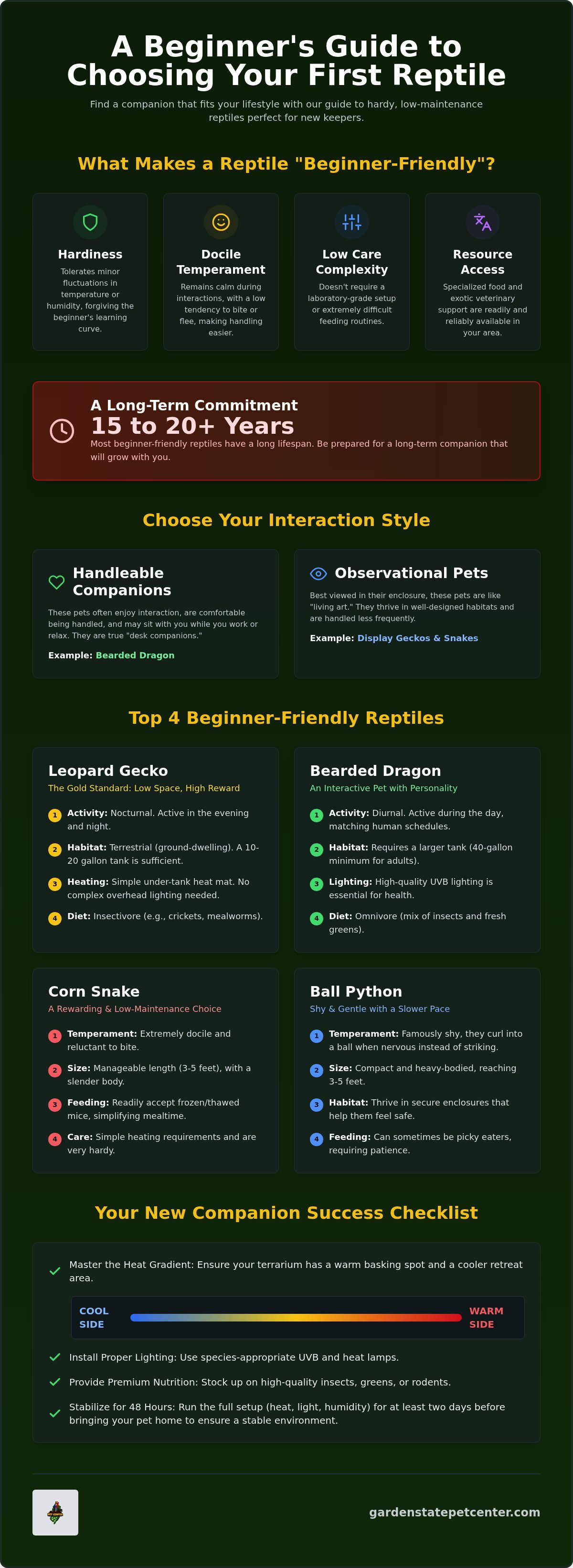
Entering the world of Herpetoculture is an exciting journey, but success depends on choosing an animal that matches your lifestyle. Identifying the best beginner reptiles isn't just about finding species that are "easy." We look for animals that forgive the occasional learning curve. A truly beginner-friendly pet is defined by its hardiness. This is the ability to tolerate small fluctuations in temperature or humidity while you master your reptile terrariums and lighting equipment.
Temperament and care complexity are equally vital. You want a pet that remains calm during interactions rather than one prone to biting or high-speed escapes. Finding the best beginner reptiles also involves checking the availability of local resources. Reliable access to specialized food and exotic veterinary support is non-negotiable for a healthy pet. Beyond the basics, consider your own daily rhythm. A nocturnal gecko might be active while you're unwinding at night, whereas a diurnal bearded dragon will be your daytime shadow. Matching your pet's active hours to your own schedule prevents the feeling of owning an "empty" tank.
To better understand how different species might fit your home, watch this helpful video:
The Longevity Factor: A 20-Year Commitment
Reptiles aren't short-term hobbies. Most species recommended for newcomers live between 15 and 20 years with proper care. This means a pet bought for a middle-schooler will likely still be around when that child finishes college. Plan for the long haul. If your lifestyle involves frequent travel, Garden State Pet Center provides professional pet boarding services. We ensure your companion receives expert care in a specialized environment while you are away, giving you peace of mind during vacations.
Handleability vs. Observational Pets
Ask yourself if you want a "desk companion" or a "living art piece." Bearded dragons are the gold standard for interaction; they often enjoy sitting on a shoulder while you work or watch television. Conversely, some species are better as observational pets. While they can be handled occasionally, they are more delicate and often thrive best inside their lushly planted enclosures. These display animals offer a stunning glimpse into a miniature ecosystem without requiring constant physical engagement. Deciding on your desired level of contact before you buy will prevent disappointment and ensure your pet's lifestyle matches your expectations.
Top Beginner Lizards: From Handleable Giants to Low-Maintenance Geckos
Choosing the right lizard involves balancing your available space with your desire for daily interaction. Many hobbyists consider these specific species the best beginner reptiles because they offer a gentle entry into exotic pet ownership. Before making a final decision, consult expert veterinary guidance to ensure your home environment is properly prepared for a new resident.
The Leopard Gecko: Low Space, High Reward
Leopard geckos are the gold standard for first-time keepers, with 1.8 million of these lizards sold annually in the U.S. alone. They are terrestrial, meaning they spend their time on the ground rather than climbing glass walls. This makes them much easier to handle and manage. These lizards are famous for their "smiling" faces and calm demeanor. They don't require complex overhead lighting; a simple under-tank heat mat often provides the necessary warmth. Their diet consists of insects, which is perfect for owners who are comfortable with live feeding. Explore our reptile collection to find the right starter habitat for these docile companions.
The Bearded Dragon: Personality in a Spiky Package
If you want a pet that truly interacts with you, the bearded dragon is a top choice. They are diurnal, meaning they are active during the day just like you. This lifestyle fit makes them excellent companions for those who want to see their pet active while they work or relax. While they are incredibly hardy, they do require a more robust setup, including a 40-gallon minimum tank as they grow. This setup must include high-quality UVB lighting to prevent health issues. Nutrition is also key to their longevity. They eat a mix of insects and fresh greens. Read our bearded dragon food guide to master their nutritional needs from day one.
For those who prefer a different pace, Crested Geckos are a fantastic choice. They thrive at room temperature and eat a powdered fruit diet. This often eliminates the need for live bugs or specialized heat lamps. If you have more space and want an intelligent, sturdy lizard, consider the Blue Tongue Skink. These lizards are known for their distinct blue tongues and curious nature. They are exceptionally hardy and can live for decades with proper care. If you need help choosing, our team at Garden State Pet Center is ready to provide a professional recommendation tailored to your home.
Best Beginner Snakes: Understanding the Low-Maintenance Choice
Corn Snakes: The Ultimate Entry-Level Serpent
Corn snakes remain the most popular choice for first-time snake owners. They are remarkably hardy and come in a stunning array of "morphs," ranging from vibrant oranges to deep reds and snow whites. Unlike some more sedentary species, corn snakes are curious and active. They enjoy exploring their environment, which makes them fascinating to observe. However, their active nature means they are talented escape artists. You must house them in a secure reptile tank with a locking lid to prevent any unplanned adventures. Their care routine is refreshingly simple; an adult corn snake typically only needs to be fed once every 7 to 10 days.
Ball Pythons: The Gentle Giants
If you prefer a snake that is happy to simply sit on your lap while you watch a movie, the ball python is an ideal partner. These snakes are famous for their "balling" defense mechanism. Instead of striking when they feel nervous, they curl into a tight ball with their head tucked safely inside. This gentle nature makes them a favorite for families. To keep a ball python healthy, you must focus on their humidity levels. Maintaining a range of 60% to 80% is vital for ensuring they have clean, healthy sheds. While they are slower-moving than corn snakes, they provide a sense of sturdy, calm companionship that is hard to beat.
For owners with limited space, Rosy Boas offer a fantastic alternative. These snakes rarely exceed three feet in length and thrive in simple desert-style setups. They are exceptionally slow-moving and docile, making them perfect for children or nervous beginners. Regardless of which species you choose, remember that the "aggressive snake" myth is largely a thing of the past. Modern herpetoculture focuses on breeding for temperament. By sourcing your pet from a specialized pet center like Garden State Pet Center, you're ensuring that your new companion is healthy, well-fed, and ready for a long life in your home.
Essential Foundations: Terrariums, Lighting, and Premium Nutrition
Building a proper habitat is the most critical step in ensuring your new companion thrives. Many people assume a small plastic container is sufficient, but a 20-gallon tank is the industry-standard minimum for most of the best beginner reptiles during their juvenile stages. This space isn't just about comfort; it's about providing enough room for a proper heat gradient. Since reptiles are ectothermic, they cannot produce their own body heat. By placing your heat source at one end of the terrarium, you allow your pet to move between warm and cool zones to regulate its internal temperature naturally.
Lighting is another non-negotiable pillar of reptile health. Think of UVB lighting as sunlight in a bulb. Without these specific rays, many species cannot synthesize Vitamin D3, which is required to absorb calcium. A lack of proper UVB often leads to Metabolic Bone Disease, a painful and preventable condition. At Garden State Pet Center, we've specialized in exotic animals since 1990. We prioritize professional-grade equipment that mimics the natural environment with clinical precision. Relying on generic store-brand pellets is a common pitfall for new keepers. These often lack the complex vitamins found in high-quality, holistic diets that promote long-term longevity and vibrant colors.
Creating a Bioactive or Naturalistic Habitat
For arboreal species like the Crested Gecko, a bioactive setup using live plants and specialized soil can create a self-sustaining ecosystem. These naturalistic habitats help maintain humidity levels and provide enrichment through climbing opportunities. If you're unsure which supplies fit your specific animal, consult our reptile store guide to learn how to identify high-quality materials. A well-designed enclosure reduces stress for the animal and creates a beautiful display piece for your home.
Supplementation: Calcium and Multivitamins
Even with the best lighting, most indoor reptiles require dietary supplements. Maximize the nutritional value of feeder insects through a process called gut-loading. This involves feeding the insects high-quality food for 24 hours before they are offered to your pet. Dusting these insects with calcium and Vitamin D3 powder ensures your reptile receives the minerals it would naturally find in the wild. Our on-site certified pet nutritionist can help you develop a customized feeding schedule that supports your pet's specific growth stage. Order your professional-grade reptile terrariums and supplies today to build a reliable foundation for your new pet's health.
Bringing Your Reptile Home: A Success Checklist for New Keepers
Prepare for your new arrival by finalizing the habitat 48 hours in advance. This window allows you to monitor and stabilize the heat and humidity levels within your enclosure. It's far safer to adjust your equipment in an empty tank than to troubleshoot while your new pet is inside. When you are ready to buy, source your animal from a reputable breeder or a specialized pet center. These professionals provide vital data on the animal's lineage and health history, which generalist vendors often lack. Choosing from the best beginner reptiles is only the first step; starting with a healthy individual is what ensures long-term success.
- Stabilize the environment two days before arrival to ensure temperature gradients are correct.
- Establish a baseline weight to monitor growth and detect early signs of health changes.
- Identify an exotic animal veterinarian for an initial wellness check shortly after bringing them home.
- Find a knowledgeable partner for ongoing support and professional guidance.
Establish a baseline weight for your pet during their first week. Tracking weight is one of the most reliable ways to monitor a reptile's health, as they are masters at hiding illness. These small steps build the foundation for a healthy, long-lived companion that fits perfectly into your home. These experts understand the specific needs of the best beginner reptiles and can guide you through every stage of development.
The First 48 Hours: Stress Management
Resist the urge to handle your new pet immediately. The transition from a transport container to a new environment is a significant event. Give them at least 48 hours to explore their surroundings and find the hiding spots you've provided. Watch for signs of a healthy transition, such as active exploration at night or basking during the day. Conversely, prolonged hiding, refusal to eat after the first week, or heavy breathing may indicate excessive stress. A calm, hands-off approach during these first few days builds the trust necessary for future handling. Patience now pays off in a more confident and handleable pet later.
Ongoing Care and Maintenance
Develop a consistent cleaning schedule to prevent bacteria buildup. Spot-clean waste daily and perform a deep scrub of the entire enclosure once a month. This routine keeps the environment sanitary and allows you to inspect the equipment for any wear or tear. If your lifestyle includes travel, utilize professional exotic pet services for your peace of mind. Specialized boarding ensures your pet maintains its strict light and heat cycles while you are away. Our team provides the specialized care these sensitive animals require, rooting your pet's well-being in a community of local experts who care about their long-term health.
Start Your Reptile Journey with Confidence
Choosing from the best beginner reptiles is the first step toward a rewarding lifelong bond. Success isn't just about the species you pick; it's about the reliable foundation you build through proper thermoregulation and specialized nutrition. You've learned that whether you prefer the interactive personality of a bearded dragon or the low-maintenance charm of a corn snake, your pet's health depends on a stable environment and high-quality care. At Garden State Pet Center, we've provided specialized exotic pet care since 1990. Our on-site pet nutritionist is available to create custom diet plans that ensure your new companion thrives from day one.
Ready to set up your dream habitat? Browse our curated collection of premium reptile supplies and habitats and enjoy nationwide shipping on all premium food and accessories. We are here to serve as your knowledgeable partner throughout every stage of your pet's life. Welcome to the vibrant world of herpetoculture; your new exotic adventure is just beginning.
Frequently Asked Questions
Which reptile is the easiest for a child to handle?
Bearded dragons are widely considered the best choice for children due to their docile nature and larger, sturdier bodies. Unlike smaller geckos that might be flighty or fragile, a bearded dragon is less likely to be injured during gentle handling. They are active during the day, which aligns perfectly with a child's schedule. Always supervise interactions to ensure the safety of both the pet and the child.
Do all pet reptiles need to eat live insects or mice?
No, not every reptile requires live insects or rodents to remain healthy. Crested geckos are a popular alternative because they thrive on a commercially prepared powdered fruit diet. While many of the best beginner reptiles like leopard geckos do eat insects, you can choose species that simplify the feeding process if you are uncomfortable with live prey. This flexibility makes them accessible to more households.
How much does it cost to set up a beginner reptile habitat?
A general beginner reptile setup typically requires an initial investment between $300 and $600 for the enclosure and necessary equipment. This estimate includes the terrarium, heating elements, UVB lighting, and substrate. While the animal's purchase price varies by species and morph, establishing a high-quality habitat is a one-time cost that ensures your pet's long-term health. Always prioritize reliable equipment to avoid frequent replacements.
What is the smallest reptile that is still easy to care for?
Leopard geckos are among the smallest reptiles that remain easy for beginners to maintain and handle. They typically reach about eight to ten inches in length and require only a 20-gallon enclosure. Their small size makes them manageable for those with limited space, yet they are hardy enough to handle the occasional beginner mistake. Crested geckos are another compact option that thrives in vertical, space-saving terrariums.
Can I keep two reptiles in the same tank?
Keeping two reptiles in the same tank is generally discouraged because most species are solitary and highly territorial. Forcing them to share space often leads to chronic stress, competition for food, or physical injury. Even if they don't fight openly, the dominant animal may prevent the other from basking or eating properly. It is always safer and more ethical to provide each pet with its own dedicated habitat.
How long can I leave my reptile alone if I go on vacation?
Do beginner reptiles require a lot of electricity for their heat lamps?
Reptile setups don't typically cause a significant increase in your monthly electricity bill. Most heat lamps and UVB bulbs use between 50 and 150 watts, which is comparable to a few standard household light bulbs. Using a thermostat to regulate heat sources can further improve efficiency and safety. These small energy requirements are a minor trade-off for maintaining the specific climate your pet needs to thrive.
What are the signs that a reptile is sick or stressed?
Common signs of illness or stress include lethargy, a sudden loss of appetite, or hiding for unusually long periods. You might also notice abnormal shedding, weight loss, or changes in their droppings. Because many best beginner reptiles are masters at hiding discomfort, it's important to establish a baseline behavior for your pet. If you notice any persistent changes, consult an exotic animal veterinarian immediately to address potential health concerns.

Article by
Victor Santucci
Victor Santucci is the owner of Garden State Pet Center in Audubon, NJ, where he specializes in premium pet nutrition, exotic animals, and expert-level care. With years of hands-on experience and a passion for helping pets thrive, Victor is dedicated to educating pet owners on proper nutrition, enrichment, and species-specific care. His mission is simple: provide every pet with the highest quality products and every customer with honest, knowledgeable guidance.
Share this post
- 0 comment
- Tags: ball python, bearded dragon, beginner reptiles, best beginner reptiles, corn snake, exotic pets, leopard gecko, pet reptiles, reptile care, reptile setup