

Fish antibiotics Best Practices and Expert Advice


You approach your aquarium for the morning feeding, only to find your favorite fish hovering in the corner with frayed, bloody fins or a ragged ulcer. It's a heart-sinking moment that every dedicated hobbyist eventually faces. You know you need to act fast, yet the fear of choosing the wrong fish antibiotics or accidentally destroying your tank's delicate nitrogen cycle often leads to frustrating hesitation.
We understand that your aquarium is more than just a hobby. It is a living ecosystem that requires specialized care and professional precision. Watching your aquatic companions suffer is stressful, especially when dosing instructions feel vague or contradictory. You deserve a reliable partner that simplifies the recovery process while prioritizing the long-term welfare of your entire aquatic community.
Learn how to distinguish between bacterial and fungal issues with total confidence while navigating the latest 2026 regulatory updates. This guide provides expert advice on selecting the right treatments, such as Amoxicillin or Ciprofloxacin, and offers clear, step-by-step dosing instructions. We will show you how to eliminate pathogens while keeping your beneficial bacteria safe, ensuring your fish return to their active, vibrant selves in a stable environment.
Key Takeaways
- Identify the specific nature of your fish's ailment by distinguishing between bacterial, fungal, and parasitic infections to ensure you apply the correct remedy.
- Discover how pharmaceutical-grade fish antibiotics like Amoxicillin and Ciprofloxacin work and which delivery method, such as capsules or medicated flakes, offers the best absorption for your species.
- Master the use of a dedicated hospital tank to provide targeted treatment without risking the health of your main display’s delicate inhabitants.
- Safeguard your aquarium's biological foundation by learning how to protect essential Nitrosomonas and Nitrobacter bacteria during the medication process.
- Prioritize quality and freshness by sourcing health supplies from specialized experts who understand the unique welfare needs of exotic aquatic life.
What Are Fish Antibiotics and When Does Your Tank Need Them?
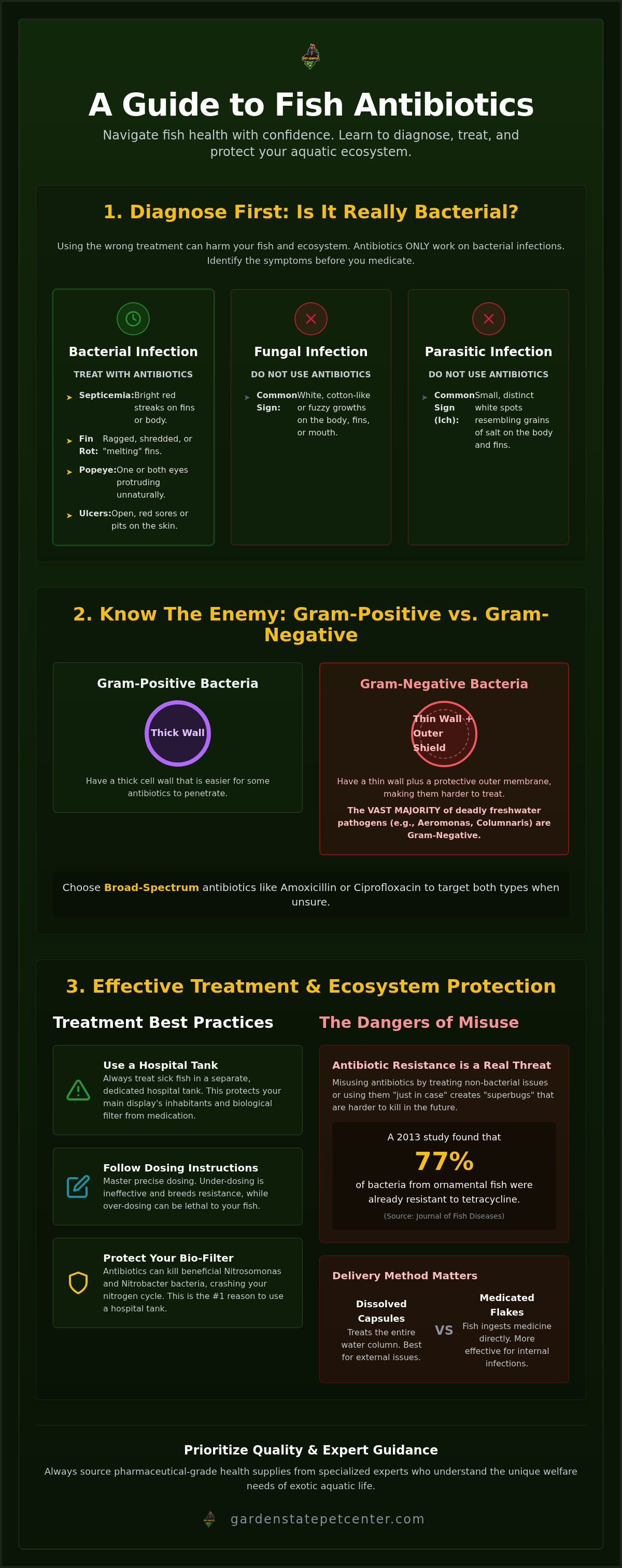
Fish antibiotics are specialized medications designed to inhibit or kill pathogenic bacteria in ornamental fish. These treatments target the cellular processes of harmful microbes without harming the fish themselves when used correctly. Fish antibiotics serve as essential broad-spectrum tools for maintaining aquarium health when bacterial outbreaks threaten your aquatic community. However, successful recovery depends entirely on an accurate diagnosis. Many hobbyists mistakenly reach for these powerful drugs to treat white spots or fuzzy growths, but those are typically caused by parasites or fungi. Antibiotics possess no curative power against non-bacterial invaders.
Consult with a knowledgeable partner before starting any regimen. Using these medications as a preventative measure or "just in case" is a dangerous practice that contributes to global antibiotic resistance. A 2013 study in the Journal of Fish Diseases found that 77% of bacteria tested from ornamental fish were already resistant to tetracycline. Misuse doesn't just fail to help your fish; it actively creates "superbugs" that are harder to kill later. The use of Antimicrobials in aquaculture should be reserved for confirmed bacterial infections where clinical symptoms are present.
Common Symptoms of Bacterial Infections
Recognizing the early warning signs of a bacterial surge allows you to intervene before the damage becomes irreversible. Look for these specific indicators:
- Septicemia: Bright red streaks appearing on the fins or along the body, indicating a systemic internal infection.
- Advanced Fin Rot: Fins that look ragged, shredded, or appear to be "melting" away at the edges.
- Exophthalmia (Popeye): One or both eyes protruding unnaturally from the socket, often accompanied by cloudiness.
- Ulcers: Open, red sores or pits on the skin that don't resolve with standard water changes.
Gram-Positive vs. Gram-Negative Bacteria
Bacteria are classified into two main groups based on their cell wall structure. Gram-positive bacteria have thick walls, while Gram-negative bacteria have thinner walls protected by an outer membrane. This distinction is vital because many medications only penetrate one type of wall. In freshwater aquariums, the vast majority of deadly pathogens, such as Aeromonas and Columnaris, are Gram-negative.
Choose your treatment based on this biological reality. If you are unsure of the specific pathogen, broad-spectrum options like Amoxicillin or Ciprofloxacin bridge the gap for beginners by targeting a wide range of both Gram-positive and Gram-negative threats. This professional approach ensures you aren't wasting precious time with an ineffective drug while your fish's health declines. Always prioritize specialized care by matching the pharmaceutical properties of the medication to the specific threat in your water.
Types of Fish Antibiotics: Amoxicillin, Ciprofloxacin, and More
Choosing the right pharmaceutical-grade ingredients is the most critical decision in your fish's recovery journey. High-purity medications ensure that your aquatic companions receive the exact dosage needed without harmful fillers or contaminants. You should always consult the FDA guidance on fish antibiotics to understand the safety precautions for these powerful drugs. Delivery methods also play a significant role in absorption. While capsules dissolved in water treat the environment, medicated flakes are often more effective for internal issues because the fish ingests the medicine directly. Sourcing from a reliable expert is vital, especially as regulatory scrutiny on unapproved animal drugs increased in early 2026.
Fish Amoxicillin and Penicillins
Amoxicillin is a staple in the aquarium hobby due to its ability to inhibit bacterial cell wall synthesis. This action effectively stops the growth of pathogenic microbes, allowing the fish's immune system to regain control. Fish Amoxicillin is primarily used for systemic infections that have spread through the bloodstream. It is an excellent choice for treating infected wounds, deep skin ulcers, and certain types of gill disease. For owners of ornamental goldfish and koi, penicillins provide a reliable first line of defense against common pond-side bacterial threats. These medications work best in a controlled hospital tank where the concentration remains stable and the water quality is monitored closely.
Ciprofloxacin and Cephalexin for Fish
When standard treatments fail, more specialized options like Ciprofloxacin and Cephalexin become necessary. Ciprofloxacin is a potent fluoroquinolone that acts as a powerful tool for stubborn Gram-negative infections that have developed resistance to milder drugs. It targets the bacterial DNA itself, making it highly effective for severe internal distress. Cephalexin, a first-generation cephalosporin, excels at targeting skin issues and fin rot effectively. You should choose these over standard penicillins when symptoms are advanced or when treating species known to carry resistant bacterial strains. Using the right fish antibiotics requires a balance of clinical precision and empathetic care for your pets' welfare.
If you're feeling overwhelmed by the technical details of aquarium health, don't hesitate to reach out. You can find high-quality supplies and professional advice at Garden State Pet Center to ensure your pets receive the best possible care. Our team is dedicated to supporting your hobby with reliable resources and specialized knowledge.
Selecting the Right Treatment: A Dosing Framework
Administering medication requires more than just dropping a pill into the water. You must follow a disciplined protocol to ensure the treatment is effective while protecting the rest of your aquatic community. Successful intervention starts with preparation. By creating a controlled environment, you maximize the impact of the medicine and minimize stress for the patient. Specialized care means treating the individual, not just the environment.
Follow these four essential steps for every treatment cycle:
- Isolate the sick fish: Move the patient to a dedicated hospital tank immediately. This prevents the spread of pathogens and allows you to treat a smaller volume of water, which is more cost-effective.
- Calculate the exact water volume: Subtract the space occupied by substrate and decor. A standard 20-gallon tank often holds only 16 to 17 gallons of actual water. Dosing based on the tank's exterior dimensions leads to dangerous over-medication.
- Remove chemical filtration: Take out any activated carbon or ion-exchange resins. These materials are designed to strip impurities from the water and will neutralize your medication before it can work.
- Boost oxygen levels: Many medications reduce dissolved oxygen levels or cause a slight bacterial bloom that consumes O2. Add an extra air stone or increase surface agitation to keep your fish breathing easily.
The 'Not for Human Use' Requirement
Legitimate aquarium medications are strictly labeled for ornamental use only. These products aren't manufactured under the same sterile conditions as human pharmaceuticals and may contain different binders or concentrations. There are significant risks of misusing fish antibiotics, including the acceleration of antimicrobial resistance in human pathogens. Always look for tamper-evident seals and clear expiration dates to ensure you're providing high-quality, professional-grade supplies for your pets.
Calculating the Correct Dosage
Precision is your best tool against infection. Most fish antibiotics require a specific mg-per-gallon ratio, such as 250mg per 10 gallons of water. Never guess the amount. Under-dosing is a primary cause of treatment failure and leads to the development of "superbugs" that won't respond to future therapies. Most cycles last 5 to 7 days. If you miss a dose, don't double up the next day. Simply resume the regular schedule and extend the treatment by one day to complete the full course. Consistency ensures the bacteria are fully eradicated rather than just suppressed.
Protecting the Ecosystem: Bio-Filters and Water Quality
Antibiotics are powerful tools, but they don't distinguish between the pathogens causing fin rot and the beneficial bacteria living in your filter media. When you introduce medication into an aquarium, you risk wiping out the essential Nitrosomonas and Nitrobacter colonies that drive the nitrogen cycle. This biological collapse can lead to a rapid accumulation of toxic ammonia and nitrite. Using a hospital tank, as discussed in our dosing framework, is the only reliable way to keep your main display's biological balance intact while treating a sick individual. If you must treat the entire tank, be prepared for a "mini-cycle" and the extra maintenance required to keep your pets safe.
Monitor your water parameters with clinical precision during any medication course. Test for ammonia and nitrite daily. Even a slight rise in these levels can stress a fish that's already fighting an infection. If you detect a spike, utilize a high-quality bacterial starter to "re-seed" the tank. These products provide a concentrated dose of nitrifying bacteria that helps stabilize the environment while the medicine does its work. Professional standards require a proactive approach to water chemistry to ensure the cure doesn't become more dangerous than the disease.
Managing Ammonia Spikes During Treatment
If ammonia levels become dangerous, perform a 25% water change immediately. To avoid diluting the fish antibiotics, calculate the amount of medication needed for the new water only and add it back into the tank right away. Watch your fish closely for signs of respiratory distress. Gasping at the surface or rapid, heavy gill movements often indicate a drop in water quality rather than the infection itself. In the event of a total filter crash, use an ammonia-neutralizing conditioner as an emergency measure to protect your fish until the medication cycle is complete.
Post-Treatment Recovery and Water Clearing
Once the 5 to 7 day course of medicine ends, your focus shifts to clearing the water and rebuilding health. Re-introduce activated carbon to your filter to strip any residual medication from the system. Nutrition is the foundation of a strong recovery. Providing Premium Pet Food helps rebuild the fish's immune system and provides the energy needed for tissue repair. Observe your fish for at least 48 hours in the isolation tank before moving them back to the main display. This final step ensures they are fully recovered and won't introduce lingering pathogens back into the community.
Find the specialized supplies and professional-grade medications you need for a healthy aquarium at Garden State Pet Center. Our team is ready to help you maintain a thriving aquatic environment with expert advice and reliable products.
Finding Reliable Supplies and Expert Guidance
Sourcing your health supplies from a specialized pet center is the only way to guarantee pharmaceutical purity and potency. The effectiveness of fish antibiotics relies heavily on proper storage and fresh inventory. Generalist retailers often overlook the climate-controlled environments required to maintain these sensitive medications. When you consult with experts who understand exotic animal welfare, you gain access to a wealth of specialized knowledge that transcends simple retail transactions. These partners help you interpret subtle behavioral changes and ensure your diagnostic approach is sound before you ever open a bottle. Reliability is the foundation of every successful recovery.
Prepare for the unexpected by assembling an Aquarium First Aid Kit today. You shouldn't be searching for a remedy while your fish is in respiratory distress. A professional-grade kit includes broad-spectrum treatments, a reliable thermometer, and a master water testing kit. This proactive step allows you to begin the isolation and dosing process within minutes of spotting a symptom. Know when to pivot. If your fish shows no progress after a full treatment cycle, or if you notice secondary infections appearing, it is time to seek professional guidance. Specialized care means knowing the limits of home treatment and prioritizing the animal's survival above all else.
Quality Standards for Aquarium Health
Always inspect packaging for tamper-evident seals and clear expiration dates. Reliable supplies are the backbone of aquatic health. Garden State Pet Center prioritizes specialized care, ensuring that every product meets rigorous professional standards before it reaches your door. This commitment to excellence extends beyond the aquarium to all your exotic companions. Explore our Specialized Small Animal Supplies for professional-grade care across all your sensitive pets.
Next Steps for a Healthy Aquarium
Maintain your tank's vitality with the right tools. Browse our curated selection of Reptile and Aquatic Supplies to find high-end maintenance solutions for your unique ecosystem. Sign up for our newsletter to receive recurring updates on pet health and welfare directly from our knowledgeable team. This keeps you informed on the latest best practices and specialized care techniques. Shop our specialized pet health collections today to give your aquatic community the professional care they deserve.
Restoring Your Aquarium’s Vitality and Balance
Success in the aquatic hobby depends on acting with both speed and precision. You now have the tools to distinguish between bacterial threats and other pathogens, ensuring you only use fish antibiotics when they are truly necessary. By following a disciplined dosing framework and utilizing a dedicated hospital tank, you protect the delicate biological foundation of your main display. This proactive approach doesn't just save a single fish; it preserves the stability of your entire underwater ecosystem.
Trust in reliability when your pets' welfare is on the line. Our team of certified pet enthusiasts has provided specialized care for exotic species since 1990, ensuring every health solution meets the highest professional standards. We offer nationwide shipping on all essential health supplies so you can respond to emergencies without delay. Secure your aquarium's health with professional-grade supplies from Garden State Pet Center. With the right knowledge and high-quality resources, you can enjoy a thriving, active aquarium for years to come.
Frequently Asked Questions
Can I use human antibiotics for my fish?
You should never use human antibiotics for your fish because they aren't formulated for aquatic absorption. Human medications often contain binders or fillers that can be toxic to delicate gill tissues or disrupt water chemistry. These products lack the specific concentrations required for ornamental species. Using human-grade drugs also increases the risk of creating resistant bacterial strains that threaten public health. Always choose specialized aquarium treatments to ensure the safety and welfare of your pets.
Will fish antibiotics kill my snails or shrimp?
Most pure antibiotics like Amoxicillin or Ciprofloxacin won't directly harm snails or shrimp when used at the correct dosage. However, these medications can indirectly kill invertebrates by destroying the beneficial bacteria in your bio-filter. The resulting ammonia spike is often fatal to sensitive shrimp and snails. We recommend treating sick fish in a separate hospital tank to protect your invertebrates and maintain the biological balance of your main display.
How long does it take for fish antibiotics to start working?
You will typically see a visible improvement in your fish's behavior and appearance within 24 to 72 hours of the first dose. While redness may fade or activity levels might increase quickly, you must complete the full five to seven day treatment cycle. Stopping early allows the strongest bacteria to survive and multiply. This creates "superbugs" that are much harder to treat in the future. Consistency is the key to a full recovery.
Do I need a prescription for fish antibiotics in the US?
You don't currently need a prescription for most over-the-counter fish antibiotics in the United States, although regulatory scrutiny has increased significantly as of early 2026. The FDA has issued warnings to several distributors regarding the sale of unapproved animal drugs. While these products remain available online, we recommend consulting with an expert to ensure you're using legal, high-quality supplies. Always prioritize medications that feature clear labels, expiration dates, and tamper-evident seals for professional-grade safety.
What happens if I overdose my fish tank with antibiotics?
Overdosing your tank can lead to acute organ failure in your fish and a total collapse of your nitrogen cycle. High concentrations of medication often deplete dissolved oxygen levels, causing your fish to gasp at the surface. If you accidentally add too much, perform a 50% water change immediately and add an extra air stone to boost oxygenation. Monitor ammonia levels closely for several days, as a crashed filter will lead to toxic spikes.
Should I remove the carbon filter when using fish medication?
Yes, you must remove activated carbon and other chemical filtration media before starting any treatment. Carbon is designed to strip impurities and organic compounds from the water, which includes the active ingredients in your medications. If left in the filter, the carbon will neutralize the fish antibiotics before they can effectively treat the infection. Keep your mechanical and biological media in place to maintain as much of the nitrogen cycle as possible during the process.
Can I mix two different types of fish antibiotics?
You should avoid mixing different types of antibiotics unless you are following a specific, expert-recommended protocol. Combining medications can lead to dangerous chemical reactions or neutralize the effectiveness of both drugs. Some combinations are common in the hobby, but beginners should stick to one broad-spectrum treatment at a time. Mixing drugs also places immense stress on the fish's liver and kidneys, which are already struggling during an active infection.
Why is my fish still sick after a full course of antibiotics?
If your fish remains symptomatic after a full course, you likely have a misdiagnosis or are dealing with antibiotic-resistant bacteria. Many hobbyists mistake fungal infections or parasites like Ich for bacterial issues, which antibiotics cannot cure. It is also possible that poor water quality is preventing the fish's immune system from recovering. Test your parameters immediately. If ammonia and nitrites are zero but symptoms persist, consult with a specialized professional to identify the specific pathogen.

Article by
Victor Santucci
Victor Santucci is the owner of Garden State Pet Center in Audubon, NJ, where he specializes in premium pet nutrition, exotic animals, and expert-level care. With years of hands-on experience and a passion for helping pets thrive, Victor is dedicated to educating pet owners on proper nutrition, enrichment, and species-specific care. His mission is simple: provide every pet with the highest quality products and every customer with honest, knowledgeable guidance.
Share this post
- 0 comment
- Tags: amoxicillin, aquarium care, aquarium treatment, ciprofloxacin, fish antibiotics, fish health, fishkeeping, hospital tank, sick fish