


High Fiber Guinea Pig Treats: How to Choose Safe Snacks


The best high fiber guinea pig treats are hay-based options and fiber-rich leaves, such as dandelion leaves. Keep treats modest: they should complement, not replace, a diet built around grass hay and appropriate pellets. Save fruit for occasional treats because it is high in sugar.
Choosing a snack can feel tricky when your guinea pig wants a tasty reward but its everyday diet needs to come first. This guide explains how fiber supports digestion, which fresh and packaged treats may fit, how to manage portions and frequency, and what to avoid. You’ll also learn to read treat labels and keep snack time enjoyable without letting extras crowd out the foods your guinea pig relies on.
Key Takeaways
- Choose simple treats and avoid ingredients that can be harmful, including chocolate and dairy.
- Keep treats small and occasional so they complement, rather than crowd out, your guinea pig’s regular diet.
- Read packaged-treat labels and favor options without added sugar or preservatives.
- Use fiber-rich choices to support digestion and encourage healthy chewing, while varying treat frequency by food type.
1. What Are the Best Kinds of Treats for Rabbits, Guinea Pigs, And Other Small Pets?
Choose simple, fiber-rich treats suited to your pet’s species. For guinea pigs, dandelion leaves make a leafy treat, while compressed-hay treats offer extra chewing. Keep fruit occasional because most fruits contain considerable sugar. A healthy treat adds variety without displacing the hay that anchors a guinea pig’s diet.
For an affordable option in the United States, compare the cost per serving of plain, high-fiber guinea pig pellets. Oxbow recommends pellets fortified with vitamin C and free of seeds or colorful bits. A low price alone doesn’t make a treat a good fit.
Dried herbs and leafy greens can be suitable high-fiber guinea pig treats when offered in moderation. Dandelion leaves and raspberry leaf are examples. Introduce new foods gradually and watch for changes in appetite or droppings. If your guinea pig has known allergies or sensitivities, avoid the trigger food and keep its usual diet consistent.
To make a simple homemade treat, start with fresh, guinea-pig-safe leafy greens or a small amount of a suitable herb. Rinse the produce, remove damaged pieces, and serve it plain, without sugar, seasoning, or dairy. You can also offer a small piece of hay to chew. Introduce one new ingredient at a time so you can notice whether it suits your pet.
Some foods and ingredients should stay out of a guinea pig’s treat bowl:
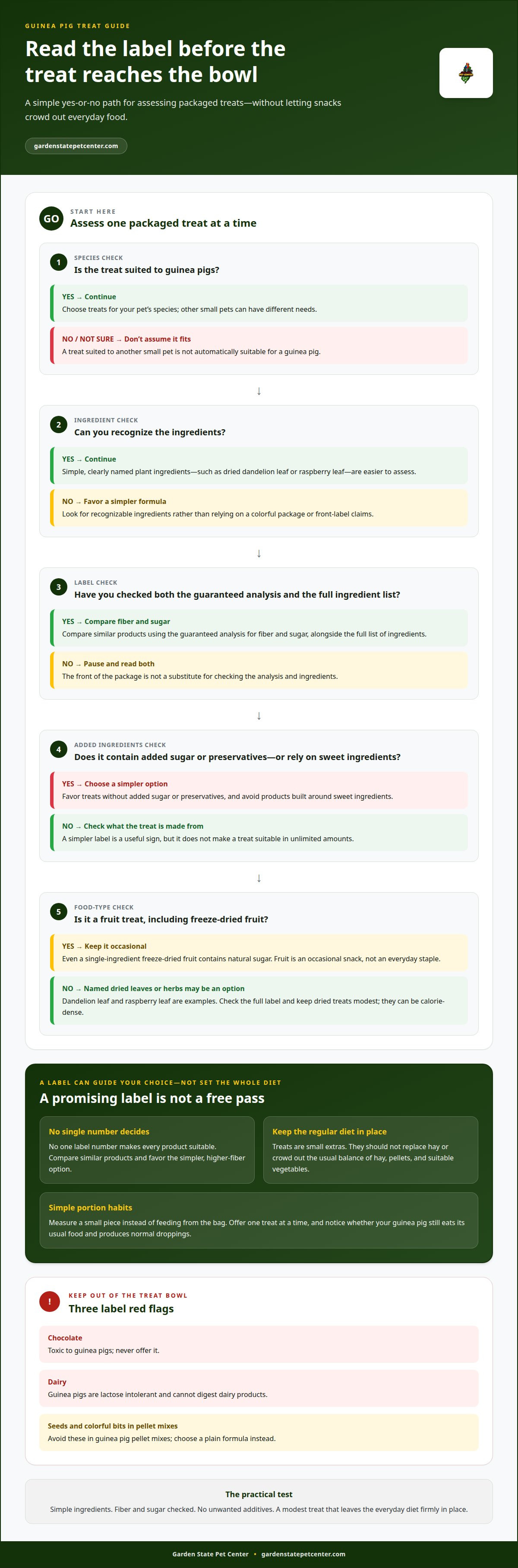
- Chocolate: It’s toxic to guinea pigs and should never be offered.
- Dairy: Guinea pigs are lactose intolerant and can’t digest dairy products.
- Seeds and colorful bits: Avoid these in guinea pig pellet mixes; choose a plain formula instead.
- Sweet foods: Keep fruit occasional, and offer only small pieces. Remove seeds and cut fruit into bite-sized pieces to reduce choking risk.
Take care with familiar produce, too. Carrots contain sugar, so offer them sparingly. Parsley is high in calcium, and mint should also be limited. These foods don’t replace everyday hay or leafy greens. Offer small portions and provide variety across suitable options.
Other small pets have different needs, so don’t assume a treat suited to rabbits also suits guinea pigs. For rabbits, a small piece of seedless watermelon is an occasional treat, not a staple. For guinea pigs, compressed hay can encourage chewing that supports dental wear. Choose treats by species, keep ingredients simple, and introduce each new food carefully.
2. Treat moderation and serving sizes
Use treats as small extras, not as a second meal. One recommendation limits treats to no more than 2% of a small pet’s daily diet. Another gives a guideline of 1–2 treats per day, depending on the animal’s size and species. These are broad guides, not permission to serve several rich snacks together. Keep high fiber guinea pig treats small enough to complement the usual feeding routine.
For guinea pigs, one recommendation says treats should make up 5% of the diet. Since guidance can use different proportions, focus on the practical rule: keep treats modest and preserve the regular balance of hay, pellets, and suitable vegetables. A treat should not replace a meal or reduce your guinea pig’s interest in its usual food. Choose high fiber guinea pig treats as occasional extras, not as a substitute for forage.
Portion size depends on the food. A tiny slice of banana is enough for a taste because bananas are high in sugar. Offer carrots sparingly for the same reason. Dried foods can also be calorie-dense, so a small piece may be more appropriate than a handful. Keep a simple record of treat type and amount if portions tend to creep upward.
Pea flakes have a specific suggested limit: up to 2 or 3 flakes per day. That doesn’t mean every guinea pig needs them daily. If you offer pea flakes, count them as that day’s treat rather than adding them on top of fruit or another snack. Smaller animals may need less, and the purpose is a brief reward, not a filling serving.
Keep fruits and veggies distinct in your routine. Fruit is suggested 1–2 times a week in small, thumb-sized portions. Oxbow suggests serving vegetables a few times per week, at about one tablespoon per 2 pounds of body weight. Choose leafy greens and vitamin C-rich foods for variety, and remove uneaten vegetables from the cage after a few hours.
- Measure first: Use a small piece or a counted portion, rather than feeding from the bag.
- Choose one treat: Avoid combining several calorie-dense snacks in one sitting.
- Watch the pattern: Note whether your guinea pig still eats its usual food and produces normal droppings.
Remember that flavor isn’t a reason to increase the serving. If a guinea pig turns away from a new treat, don’t coax it with a larger portion. Keep the usual diet steady and offer a different suitable choice another time. For a measured selection, browse small animal treats and keep portions consistent with your pet’s routine.
3. Choosing and limiting packaged treats
A colorful package can make a snack tempting, but the ingredient list matters more than the front label. Compare fiber, sugar, and ingredients before choosing. Prefer a simple formula with recognizable plant ingredients, such as dried leaves, rather than a sweetened mix.
To compare commercial guinea pig treats, read the guaranteed analysis for fiber and sugar, then scan the full ingredient list. Favor options without added sugar or preservatives, and avoid treats built around sweet ingredients. No single label number makes every product suitable. Compare similar products and choose the simpler, higher-fiber option.
Freeze-dried treats can be made from fresh fruits and vegetables with nothing added. Check that the package lists the fruit or vegetable itself, such as apple, rather than added sweeteners. Even a single-ingredient fruit treat is still fruit, so its natural sugar makes it an occasional snack, not an everyday staple.
Dried herbs and leaves offer another packaged choice. Look for clearly named ingredients, such as dandelion leaf or raspberry leaf, and avoid blends with added sugar or preservatives. Dried foods can be calorie-dense, so a small-looking piece may still provide more energy than fresh leaves. Keep the serving modest.
- Fiber: Compare the listed fiber content across similar products.
- Sugar: Favor treats without added sugar; keep naturally sweet fruit occasional.
- Ingredients: Choose recognizable plants and avoid unnecessary additions.
- Serving guidance: Follow the package directions as a ceiling, not a reason to offer extra.
Check the package condition and use-by information before serving. Close resealable packaging after each use and keep treats dry so leaves don’t become damp or stale. If the smell, color, or texture changes, discard the treat instead of mixing it into fresh food.
Frequency depends on the treat’s ingredients and energy density. High-energy or sweet treats are best limited to 2–3 times per week. Don’t give a fruit-based snack on top of another sweet treat that day; choose one small reward and return to the usual feeding routine.
Use packaged treats for occasional variety, not to replace nutrients from the regular diet. A plain dried-leaf treat can offer a different texture, while an apple treat adds sweetness. Track what you offer, especially when introducing a new product, and watch your guinea pig’s appetite and droppings for changes.
4. Fiber’s role in guinea pig digestion
Fiber supports normal gut function and keeps a guinea pig’s digestion moving. Grass hay provides the foundation, while leafy treats add variety without replacing that staple. Timothy hay is a high-fiber choice for adult guinea pigs, and its coarse strands encourage sustained chewing. Fiber-rich treats work best as small additions alongside everyday hay.
Unlimited fresh hay, such as timothy or meadow hay, should make up 80% of a guinea pig’s diet. That gives the digestive system a steady source of forage throughout the day. Meadow hay also has a texture that supports dental health. Keep hay available rather than relying on a small treat portion to provide the day’s fiber.
Hay types offer different textures. First-cut Timothy hay is coarser and higher in fiber, while second-cut Timothy is softer and leafier. Orchard grass is another high-fiber option, with less protein than alfalfa. These differences can add variety, especially for a guinea pig that turns away from one texture.
Consistent access to grass hay, not treats alone, supports a healthy daily fiber intake. Keep hay available and use high-fiber guinea pig treats as occasional extras. Treats can’t replace the role of forage in the overall diet.
- Timothy hay: Its fiber supports digestion, and chewing helps maintain dental wear.
- Meadow hay: Its texture offers another forage choice with fiber and chewing benefits.
- Orchard grass: Its high fiber and lower protein than alfalfa provide a different hay option.
- Raspberry leaf: Its fiber supports a guinea pig’s natural metabolism as an occasional treat.
Fiber also makes treat texture worth considering. A small hay-based chew takes longer to eat than a soft morsel and encourages natural chewing behavior. Dandelion leaves and raspberry leaf offer leafy alternatives, while hay treats add interest without making sweet fruit the main reward.
Offer a treat during gentle bonding or a calm handling routine, then return to the regular feeding pattern. Freeze-dried treats can serve as training or bonding rewards, but keep portions modest. If your guinea pig’s usual appetite or droppings change after a new food, pause that item and return to familiar forage.
Build variety around forage rather than adding more and more snacks. Keep timothy or meadow hay available, introduce one new leaf at a time, and note which textures your guinea pig eats comfortably. This steady routine lets fiber-rich choices support digestion while hay remains the dependable foundation.
5. Recommended treat frequency
Set a simple rhythm based on the treat, not just your guinea pig’s enthusiasm. One general recommendation limits small-pet treats to 1–2 per day, depending on species and size. For an adult guinea pig, specific herb suggestions vary, so count each serving as part of the day’s extras.
Hay-based treats can be offered as rewards, provided they stay modest and don’t replace regular hay. Use the general limit of 1–2 treats per day as a practical guide, and consider the treat’s size and ingredients. A compressed-hay chew can add chewing time, while loose hay remains part of everyday feeding.
Herb portions have their own suggested schedules. An adult guinea pig may have up to 1 tablespoon of chamomile per day. Dandelion leaf and raspberry leaf are each suggested at 1 tablespoon up to 3 times per week. Marigold and rose hips are each suggested at 1 tablespoon up to 2 times per week.
- Chamomile: Up to 1 tablespoon per day for an adult guinea pig.
- Dandelion leaf: 1 tablespoon up to 3 times per week.
- Raspberry leaf: 1 tablespoon up to 3 times per week.
- Marigold: 1 tablespoon up to 2 times per week.
- Rose hips: 1 tablespoon up to 2 times per week.
These serving suggestions aren’t a menu to combine in full. Pick one suitable treat for a feeding occasion, then leave room for the regular diet. For example, offer dandelion leaf on its scheduled day instead of pairing it with rose hips and a sweet snack. This keeps treat choices varied without stacking extras.
Pay attention to nutrients as well as frequency. Guinea pigs need daily vitamin C because they can’t produce it themselves, so treats shouldn’t displace vitamin C-rich foods. Parsley is high in calcium, another reason to keep its portion moderate. A varied mix of leafy greens adds interest without making one ingredient the daily default.
Keep a short feeding note with the treat name, serving, and day offered. This makes it easier to space herbs across the week and avoid accidental double portions. Include packaged treats in the same record. Dried foods can be calorie-dense even when a piece looks small.
Choose a suitable small animal treat and use its ingredients to plan a modest serving. A steady rotation of hay-based and leafy options can make rewards predictable while keeping daily meals central.
Garden State Pet Center
Garden State Pet Center helps small-animal owners find food and treat options for thoughtful daily care. If you’re weighing ingredients, fiber, or snack frequency, explore its premium pet food and small animal treats. Keep your guinea pig’s usual hay-based diet central, and use treat labels and serving guidance to decide what fits the routine. Pet toys and accessories can also add enrichment beyond food rewards. The store’s focus on small animals makes it a helpful resource for considering your pet’s needs.
For a closer look at suitable options, explore the small animal selection. Contact Garden State Pet Center to discuss your guinea pig’s treat and feeding needs.
Make Treat Time a Thoughtful Routine
Let your guinea pig’s preferences guide your next small step. Choose one suitable snack, offer it calmly, and notice which textures your pet approaches willingly. A quiet, consistent routine can make rewards easier to manage and help build positive moments together. Explore high fiber guinea pig treats with your pet’s usual diet in mind, and treat each new choice as a chance to learn what your companion enjoys.
If you’re still deciding how to choose snacks or want help finding an appropriate option, Garden State Pet Center can be a helpful next stop. Share what you’re considering and what your guinea pig already eats, then take the next step with guidance suited to your question. Contact Garden State Pet Center for help and make your next treat choice with confidence.
Frequently Asked Questions
Guinea Pig Awareness Week: What treats can a guinea pig have?
Guinea pigs can have small portions of suitable leafy greens, herbs, and hay-based treats. For example, offer a little dandelion leaf or a plain hay chew to vary the routine. Introduce one new food at a time instead of combining several unfamiliar ingredients. That makes it easier to notice which foods your guinea pig eats comfortably and which it leaves behind.
How Often Should You Give Treats?
Keep treats occasional and account for them in the day’s feeding routine. A practical approach is to choose one modest snack rather than offering several extras together. Frequency depends on the treat: a leafy herb and a sweet fruit snack don’t have the same nutritional profile. Rotate suitable options across days, and keep your guinea pig’s regular food available as usual.
What Are the Best Kinds of Treats for Rabbits, Guinea Pigs, And Other Small Pets?
The best choice depends on the animal’s species and the treat’s ingredients. Guinea pigs do well with grass-hay-based options and suitable leaves, while rabbits may have a small piece of seedless watermelon occasionally. Don’t transfer a treat from one species’ routine to another without checking its ingredients. For small pets, choose simple options that complement their usual food rather than replace it.
Which high-fiber treats are safe for guinea pigs?
Suitable options include timothy-hay chews, dandelion leaves, and raspberry leaves, served in modest portions. A hay-based chew gives your guinea pig a fibrous texture to work through, while leaves offer a different taste and feel. Introduce a new option on its own, not alongside several new foods. That makes it easier to identify which treat your pet accepts.
Which treats should guinea pigs avoid, such as seeds, nuts, and sugary fruit?
Avoid chocolate, which is toxic to guinea pigs, and dairy, which they can’t digest. Choose guinea pig pellets without seeds or colorful bits, and don’t use seed mixes as treats. Keep fruit occasional because most fruits are high in sugar. Nuts aren’t a good default treat for guinea pigs; choose simple, herbivore-appropriate foods instead of rich or mixed snacks.
How much treat can a guinea pig have per day?
Keep the portion small: general guidance limits small-pet treats to 1–2 per day, depending on species and size. The treat’s type matters too, since a small dried snack can be calorie-dense. Treat recommendations also differ by food and serving method, so don’t combine every suggested portion in one day. Offer a single modest reward and leave the regular diet unchanged.
Can high-fiber treats help with guinea pig digestion or dental health, and what are the risks?
Fiber supports a healthy digestive system, and chewing hay-based treats can help wear down guinea pigs’ teeth. Treats don’t replace the hay that forms the dietary foundation. Too many extras can crowd out regular foods, while sweet or dried snacks can add unnecessary calories. Keep portions modest, and pay attention if a new food changes your guinea pig’s appetite or droppings.
What are affordable high-fiber guinea pig treat brands available in the United States?
Oxbow recommends plain, high-fiber guinea pig pellets fortified with vitamin C and without seeds or colorful bits. To find an affordable option in the United States, compare the cost per serving.

Article by
Victor Santucci
Victor Santucci Jr. is the owner of Garden State Pet Center and a Certified Clinical Pet Nutritionist specializing in premium pet nutrition, raw and fresh feeding, holistic pet wellness, birds and exotic animals. Through years of hands-on retail and animal-care experience, Victor helps pet parents make informed decisions about nutrition, enrichment and species-appropriate care.
Share this post
- 0 comment
- Tags: grass hay, guinea pig care, guinea pig treats, high fiber guinea pig treats, high-fiber foods, pet health, safe snacks, small pet nutrition