

Dog Joint Health: 2026 Guide to Canine Mobility


You notice it first on a quiet morning when your once-energetic companion hesitates at the foot of the stairs or takes a few extra seconds to rise from their favorite bed. It's a difficult sight that often leads to a frantic search for dog supplements for joint health, leaving you stuck between confusing labels and the fear of choosing an ineffective product. We understand that you want more than just a quick fix; you want your best friend to regain their zest for life without the guesswork. It's common to feel overwhelmed by the technical jargon and filler ingredients found on many retail shelves.
This 2026 guide provides a clear, professional roadmap to canine mobility. You'll gain a solid understanding of how ingredients like Glucosamine and Chondroitin actually work together and why clinical favorites like Green Lipped Mussel are essential for recovery. We'll also explore how to integrate premium, whole-food nutrition with targeted supplements to create a holistic plan. Discover the exact strategies needed to keep your dog active, comfortable, and ready for every adventure at any life stage.
Key Takeaways
- Identify the "Big Three" ingredients, Glucosamine, Chondroitin, and MSM, that serve as the primary building blocks for cartilage repair.
- Learn to evaluate dog supplements for joint health by looking for the NASC seal of quality and choosing the most bioavailable delivery methods.
- Discover why a holistic diet based on premium, whole-food ingredients provides a more reliable foundation than standard processed kibble.
- Master a long-term mobility strategy that prioritizes precise weight management and low-impact exercise to minimize joint inflammation.
- Understand the value of consulting with a pet nutritionist to create a customized wellness plan that avoids expensive, ineffective filler ingredients.
Understanding Canine Joint Health and Mobility Issues
Think of your dog's joints as precision-engineered shock absorbers designed for a lifetime of movement. A healthy joint relies on a smooth layer of cartilage to cushion bone-on-bone contact, while synovial fluid acts as a vital lubricant to ensure frictionless gliding. Connective tissues, including ligaments and tendons, provide the structural integrity needed for every leap and sprint. When these components function perfectly, your dog moves with a fluid grace that defines their vitality. However, joint health is a delicate balance that can be disrupted by aging, genetic predispositions, and the cumulative effects of daily activity.
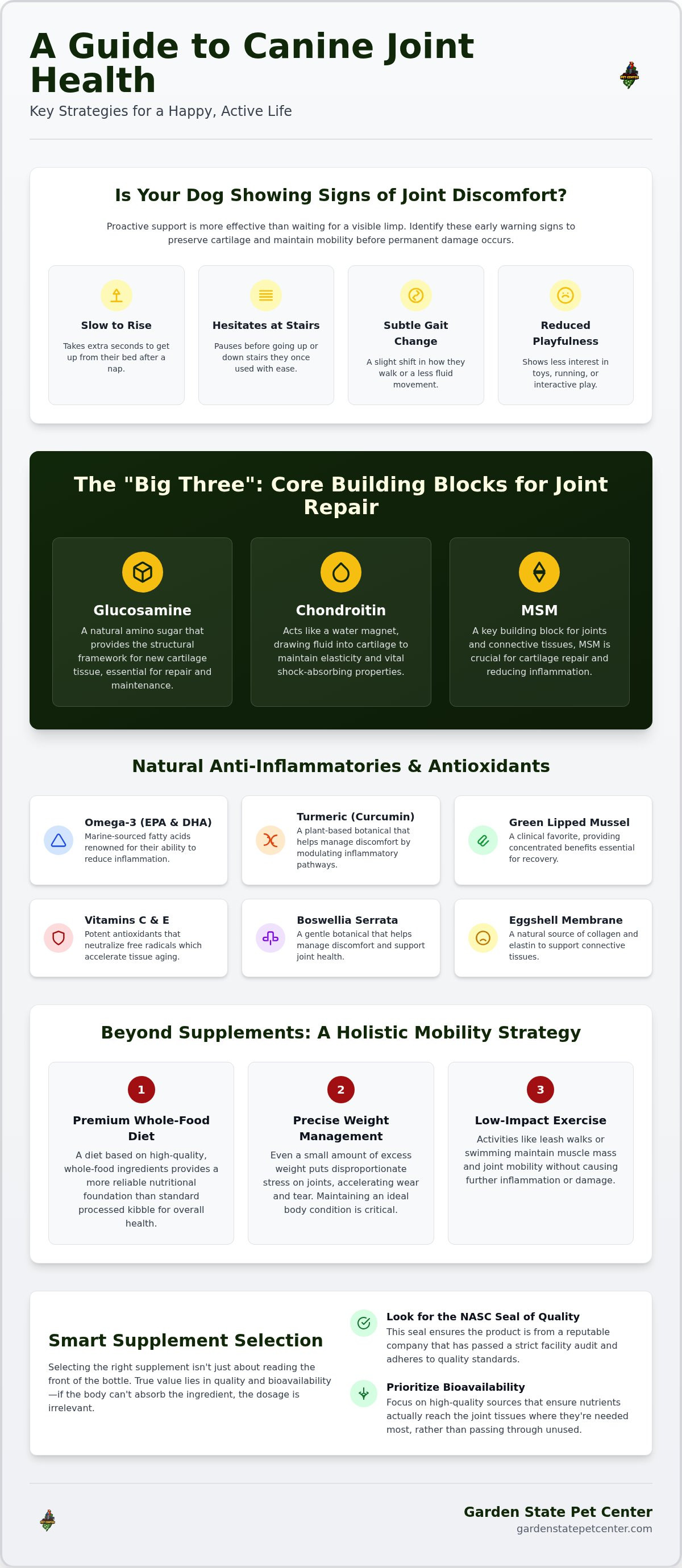
Identifying the early warning signs of joint decline is the first step in effective care. You might notice your dog rising slowly after a nap, hesitating at the bottom of the stairs, or showing a subtle shift in their gait during daily walks. Some dogs even experience behavioral changes, becoming more irritable or less interested in interactive play. Choosing high-quality dog supplements for joint health during these early stages is far more effective than waiting for a visible limp. Proactive support aims to preserve the integrity of the cartilage and maintain fluid quality before permanent damage occurs.
The Role of Inflammation in Joint Pain
Chronic inflammation is the primary driver of joint degradation in aging pets. While acute inflammation helps the body heal from a minor strain, persistent inflammation triggers the release of enzymes that actively break down cartilage tissue. This cycle often leads to Degenerative Joint Disease (DJD), where the joint loses its ability to absorb impact effectively. Synovitis refers to the painful inflammation of the synovial membrane that lines the joint capsule, causing fluid buildup and significant discomfort during movement. Managing this inflammatory response is a cornerstone of any effective mobility plan.
Breed-Specific Risks and Timing
Large breeds like Labradors, Golden Retrievers, and German Shepherds face unique mechanical stresses due to their size and bone structure. For these dogs, we suggest a "pre-habituation" phase to stay ahead of potential issues. This means introducing dog supplements for joint health before clinical signs of stiffness appear, providing the body with the building blocks it needs to repair daily micro-trauma. Weight management also plays a critical role in this equation. Even a small amount of excess weight puts disproportionate stress on the joints, accelerating wear and tear. You can explore our curated selection of premium dog supplies to find the right tools for maintaining an ideal body condition and supporting long-term mobility.
Key Ingredients in Dog Supplements for Joint Health
Selecting the right dog supplements for joint health isn't just about reading the front of the bottle. It's about understanding how specific molecules interact with your dog's unique biology. Many owners focus on high dosages, but the true value lies in bio-availability. If the body can't absorb the ingredient, the dosage is irrelevant. High-quality sourcing ensures these nutrients actually reach the joint tissues where they're needed most, rather than passing through the system unused.
Glucosamine and Chondroitin: The Building Blocks
Glucosamine is a natural amino sugar that helps the body produce glycosaminoglycans, which are essential for cartilage repair and maintenance. Chondroitin sulfate acts like a magnet for water, helping cartilage maintain its elasticity and vital shock-absorbing properties. While most supplements use shellfish-derived sources, vegetarian options are available for dogs with specific protein sensitivities. Glucosamine provides the structural framework for new tissue while Chondroitin inhibits the enzymes that destroy it, creating a powerful synergistic effect that preserves joint integrity over time.
Natural Anti-Inflammatories and Antioxidants
Protecting the joint from oxidative stress is just as vital as rebuilding it. Vitamins C and E serve as potent antioxidants, neutralizing free radicals that accelerate tissue aging. For a more holistic approach, many owners are turning to plant-based options like Turmeric (Curcumin) and Boswellia Serrata. These botanicals help manage discomfort by modulating inflammatory pathways, often serving as gentle, natural alternatives to traditional medications. Eggshell membrane is another emerging favorite, providing a natural source of collagen and elastin to support connective tissue health without heavy processing.
Marine-sourced ingredients offer some of the most concentrated benefits for canine mobility. Omega-3 fatty acids, specifically EPA and DHA, are renowned for their ability to reduce systemic inflammation. Green Lipped Mussel has gained significant traction in 2026 clinical reviews for its unique blend of fatty acids and minerals that often outperform standard fish oils. These marine compounds don't just mask symptoms; they actively improve the environment within the joint capsule to support fluid movement.
Consulting with a specialist can help you cut through the noise of complex labels and "filler" ingredients. If you're looking for curated, professional-grade options, you can explore our full range of dog vitamins and supplements to find a formula tailored to your pet's specific life stage and activity level.
The Synergy of Diet and Supplementation
A high-quality supplement can only do so much if your dog's daily meals are working against their mobility. We often see pet owners treat nutrition and supplementation as two separate categories, but they are deeply interconnected. Your dog's primary food serves as the biological foundation for their joint health. When that foundation is built on pro-inflammatory ingredients or heavily processed fillers, even the most expensive dog supplements for joint health will struggle to provide lasting relief. True mobility support requires a "nutritional ecosystem" where every calorie contributes to tissue repair and inflammation control.
Many standard kibble brands feature "joint support" claims on their packaging; however, these are often limited by the manufacturing process. The high-heat extrusion used to create traditional dry food can degrade delicate compounds like collagen and certain omega fatty acids. While these diets may contain trace amounts of glucosamine, the concentrations are rarely high enough to provide therapeutic benefits for an aging or active dog. This is why we view targeted supplements as essential tools to fill the nutritional gaps left by processed diets.
Holistic Nutrition as a Preventative Tool
Managing inflammation starts with the ingredient list. High-glycemic fillers like corn, wheat, and soy can trigger systemic inflammatory responses that exacerbate joint discomfort. By choosing premium pet food rich in high-quality animal proteins, you provide the amino acids necessary to maintain lean muscle mass. This muscle is vital because it acts as a secondary support system, taking the physical load off the joints themselves. Incorporating fresh additions like bone broth or gently cooked proteins provides a natural source of collagen that helps maintain the "cushion" within the joint capsule.
Raw and Freeze-Dried Benefits
Raw and freeze-dried diets offer a distinct advantage for canine mobility. Raw bones and cartilage are naturally packed with bioavailable glucosamine and chondroitin in their most ancestral form. Unlike heat-processed options, freeze-dried foods preserve vital enzyme activity and delicate nutrients that support the synovial fluid's viscosity. For owners who prefer the convenience of a traditional bowl, our dry dog food collections feature curated, high-integrity brands that prioritize whole-food ingredients over cheap fillers. Combining these high-standard base diets with specific dog supplements for joint health ensures your pet receives a comprehensive spectrum of nutrients designed for long-term agility.
How to Choose and Administer Joint Supplements
Finding the right dog supplements for joint health requires a discerning eye for quality and a focus on transparency. Your first step should always be to look for the National Animal Supplement Council (NASC) seal on the packaging. This yellow seal indicates that the manufacturer has passed a comprehensive facility audit and maintains rigorous quality control standards. Without this verification, you have no guarantee that the ingredients listed on the label actually match what is inside the bottle.
Evaluate the delivery format based on your dog's specific needs and lifestyle. Soft chews are highly popular for their convenience, but they often contain more "inactive" ingredients like binders, starches, and artificial flavorings to maintain their texture. Powders generally offer a cleaner ingredient profile and are easy to mix into a meal. For senior dogs or those with sensitive digestive systems, liquid supplements often provide the best absorption rates because they bypass some of the heavy breakdown required by solid tablets or chews.
Reading the Supplement Label Like a Pro
Don't be misled by "label dressing," which is the practice of listing high-end ingredients in trace amounts that offer no therapeutic benefit. Check the "Active Ingredients" section to ensure the milligrams provided meet the needs of your dog's weight class. Avoid products that rely heavily on fillers like soy, corn, or wheat, as these can trigger the very inflammation you're trying to resolve. To determine the true value of a product, divide the total price by the number of daily servings to find the cost-per-day rather than focusing on the initial cost-per-bottle.
Administration Tips for Picky Eaters
If your dog is hesitant about a new supplement, try mixing powders or liquids with a high-value topper like raw goat milk or a gently cooked wet food. Liquid formulas are particularly effective for senior dogs because they can be drizzled directly over their favorite meal, ensuring every drop is consumed. Regarding timing, we generally suggest giving joint supplements with a meal to prevent potential stomach upset and to improve the absorption of fat-soluble nutrients like Vitamin E.
Every dog is an individual with unique metabolic requirements. Consulting with a professional can help you navigate these choices with confidence. You can shop our curated selection of dog vitamins and supplements and connect with our team to find the perfect formula for your pet's mobility journey.
A Holistic Approach to Long-Term Mobility
Achieving long-term mobility for your dog requires looking beyond the supplement bottle. While dog supplements for joint health provide the necessary chemical building blocks for repair, they work best within a lifestyle designed for wellness. We believe in a comprehensive approach that addresses the physical, environmental, and nutritional needs of your pet. This "Garden State" philosophy centers on the idea that every small adjustment contributes to a life free from discomfort. It's about being a proactive partner in your dog's aging process rather than waiting for a crisis to occur.
Weight Control as Joint Medicine
Maintaining an ideal body weight is the single most important action you can take for your dog's joint longevity. Research indicates that even a 5% increase in body weight can significantly accelerate joint wear and exacerbate existing inflammation. Think of weight management as a form of daily medicine. Switch to low-calorie, high-nutrient treats for training sessions to keep their interest high without adding unnecessary bulk. If you need a reliable partner to maintain these healthy habits during travel, our Expert Pet Boarding services ensure your pet receives specialized care and attentive monitoring while you're away.
Physical and Mental Wellness
Exercise should focus on building muscle without stressing the skeletal structure. Low-impact activities like "sniffing walks" provide excellent mental stimulation while keeping the joints moving at a gentle pace. For dogs already showing signs of stiffness, hydrotherapy or cold-laser treatments can act as powerful complementary therapies alongside your chosen dog supplements for joint health. These professional interventions help maintain range of motion and reduce localized pain by stimulating blood flow to damaged tissues.
Don't overlook the impact of your dog's daily environment. Simple changes like adding non-slip rugs to hardwood floors or providing a high-quality orthopedic bed can prevent micro-injuries caused by slipping or poor sleeping posture. Using ramps for vehicle access or high furniture also preserves the integrity of the shoulders and hips. Our team is ready to help you navigate these choices and build a specialized care routine. Reach out to our experts to develop a custom nutrition and supplement plan that ensures your companion stays active and happy for years to come.
Empower Your Dog's Future Mobility
Securing your dog's agility for the years ahead starts with the decisions you make today. You've learned that true mobility isn't found in a single pill but in a balanced ecosystem of high-quality nutrition and targeted support. By prioritizing bioavailable ingredients and maintaining a lean body weight, you're giving your companion the best chance at a pain-free life. It's vital to look for the NASC seal and consult experts who understand the nuances of canine physiology.
At Garden State Pet Center, we've been family owned and operated since 1990. Our on-site certified pet nutritionist is ready to help you navigate the complex world of dog supplements for joint health to find a plan tailored to your pet's needs. We offer nationwide shipping on all supplements, ensuring you have access to professional-grade care no matter where you are. Your dog's comfort is our passion, and we're here to support every step of their journey.
Shop Our Expert-Curated Dog Supplement Collection and start building a foundation for lifelong vitality today.
Frequently Asked Questions
When should I start giving my dog joint supplements?
Early intervention is the most effective strategy for long-term mobility. For large breeds or highly active working dogs, we suggest starting as early as 12 to 18 months of age. You don't need to wait for a visible limp or stiffness to appear. Introducing these nutrients during the growth or prime years helps maintain the integrity of the cartilage before significant wear and tear begins.
Can joint supplements reverse existing arthritis in dogs?
No supplement can reverse permanent structural changes like bone spurs or the complete loss of cartilage tissue. These products are designed to manage inflammation and slow down the progression of joint decay. By improving the quality of the synovial fluid and supporting the remaining tissue, they help your dog move more comfortably. Think of them as a vital maintenance tool for managing chronic discomfort.
Is there a difference between human glucosamine and dog glucosamine?
Yes, there are critical differences in both formulation and safety. Human products often contain sweeteners like xylitol, which is highly toxic to canines. Additionally, canine-specific dog supplements for joint health are balanced with specific minerals like manganese to improve absorption within a dog's unique digestive system. Always choose products designed for animal physiology to ensure the ingredients are both safe and metabolically effective for your pet.
How long does it take to see results from a joint supplement?
Most pet owners notice a visible improvement in their dog's movement within four to six weeks of consistent daily use. These nutrients work cumulatively, meaning they need time to build up in the system and affect the joint environment. We often recommend a higher "loading dose" for the first few weeks to saturate the tissues. If you don't see changes after two months, consult a nutritionist.
Are there any side effects to joint supplements for dogs?
Side effects are rare but can include mild digestive upset such as gas or soft stools during the first few days. These issues usually occur if a supplement is introduced too quickly or given on an empty stomach. Dogs with specific shellfish allergies might also react to certain glucosamine sources. Starting with a half-dose and gradually increasing to the full amount helps your dog's body adjust without discomfort.
Can I give my dog joint supplements if they are on other medications?
Most joint supports are safe to use alongside standard medications, but you should always consult your veterinarian first. Certain ingredients, such as high-dose Omega-3s, can have a mild blood-thinning effect that might interact with specific anti-inflammatories or pre-surgery protocols. Our on-site certified pet nutritionist can help you review ingredient lists to ensure there are no contraindications with your dog's current wellness plan or prescribed medical treatments.
What is the most important ingredient to look for in a joint supplement?
While there isn't a single "magic" ingredient, Green Lipped Mussel is widely considered a powerhouse for 2026. It provides a unique combination of Omega-3 fatty acids, amino acids, and minerals that traditional fish oils simply lack. When combined with high-quality dog supplements for joint health, it targets the source of inflammation directly. Look for formulas that pair this marine superfood with structural building blocks like Glucosamine and Chondroitin.
Can a raw diet replace the need for joint supplements?
A raw diet provides an excellent nutritional foundation but may not always provide therapeutic levels for dogs with advanced needs. Raw bones and cartilage contain natural glucosamine, yet a senior dog often requires more concentrated doses to manage chronic inflammation effectively. We view raw feeding as the "base layer" of joint health. Supplements then act as targeted boosters to address specific mobility challenges or genetic predispositions in larger breeds.

Article by
Victor Santucci
Victor Santucci is the owner of Garden State Pet Center in Audubon, NJ, where he specializes in premium pet nutrition, exotic animals, and expert-level care. With years of hands-on experience and a passion for helping pets thrive, Victor is dedicated to educating pet owners on proper nutrition, enrichment, and species-specific care. His mission is simple: provide every pet with the highest quality products and every customer with honest, knowledgeable guidance.
Share this post
- 0 comment
- Tags: canine mobility, dog arthritis, dog health, dog supplements for joint health, glucosamine, joint supplements, pet nutrition, senior dog care