

Natural calming supplements for dogs and their needs


Up to 70% of behavioral disorders in dogs can be attributed to some form of anxiety. Natural calming supplements for dogs may support relaxation, but they aren’t a substitute for diagnosing or treating an anxiety disorder. For a small dog, choosing a calming chew or supplement means considering more than size alone.
It’s understandable to want a gentle way to help when your dog seems unsettled. Choosing natural calming supplements for dogs starts with noticing what your dog is experiencing and considering possible triggers, emotional wellbeing, age, weight, and health needs.
This guide covers common signs and triggers of anxiety, what to compare in calming ingredients and formulas, and how your small dog’s size can inform your choice. You’ll also learn when supplements may fit into a broader plan and when persistent or severe behavior changes call for professional guidance.
Key Takeaways
- Notice when anxious behaviors occur and what changes may be triggering them to better understand your dog’s needs.
- For small dogs, consider the chew’s serving directions and your dog’s weight rather than guessing a portion.
- Compare ingredients and intended uses, and factor in your dog’s age, health, medications, and other supplements.
- Calming products can support a broader care plan, but persistent or severe behavior changes need professional attention.
- Learn how to make pet-food and everyday care choices that support your dog’s overall well-being.
Common anxiety triggers and signs in pets
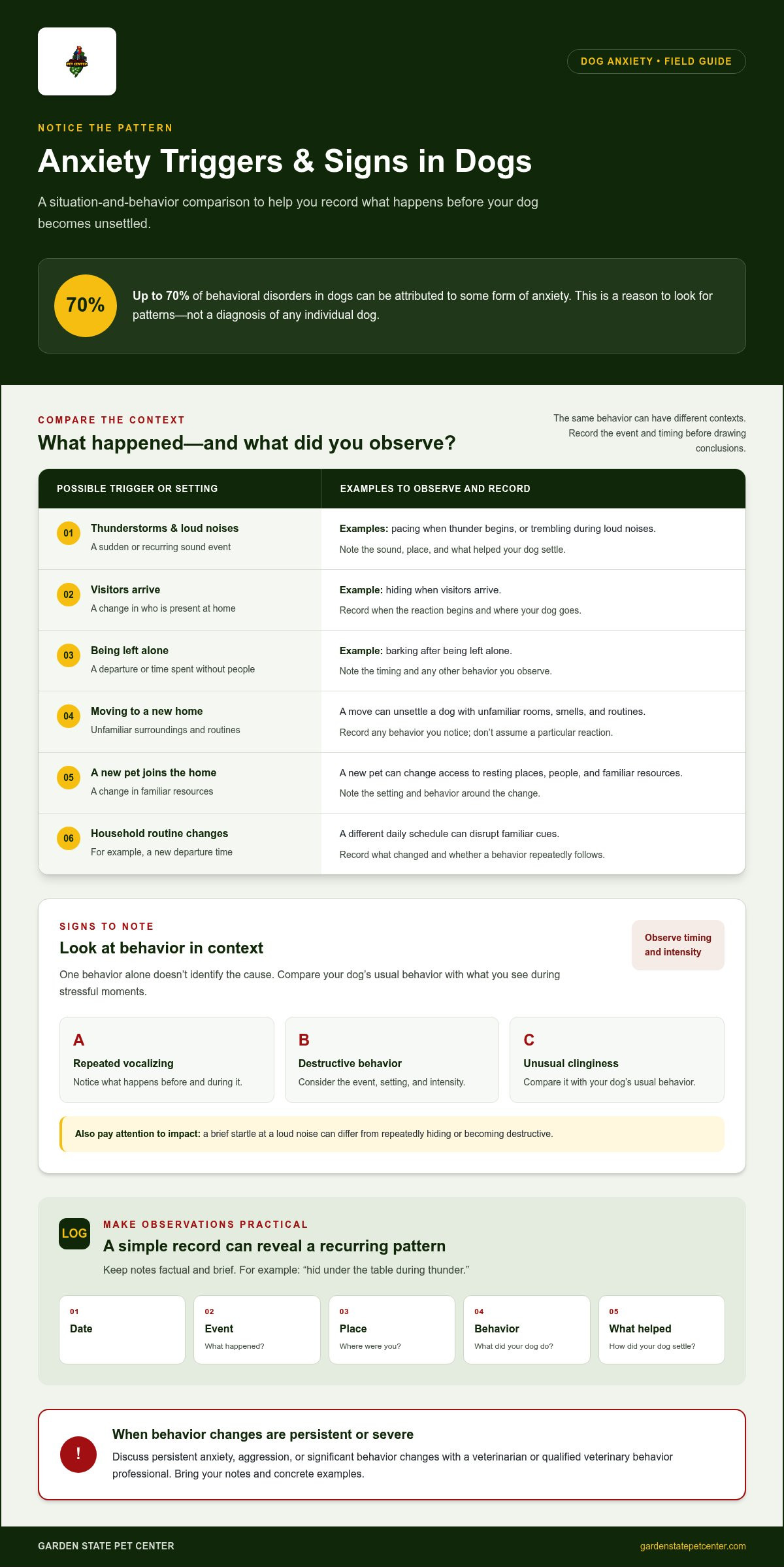
Up to 70% of behavioral disorders in dogs can be attributed to some form of anxiety. Spotting what happens before a behavior helps you recognize patterns and choose a useful next step.
Common anxiety triggers
A move to a new home can unsettle a dog with unfamiliar rooms, smells, and routines. Thunderstorms and other loud noises may also trigger anxious reactions, especially if your dog has no quiet place to settle. A new pet can change access to resting places, people, and familiar resources.
Changes to the household routine matter, too. A different departure time or daily schedule can disrupt familiar cues. Note the trigger, setting, and behavior. For example, record whether pacing starts during a thunderstorm or after a new pet arrives. This context can help distinguish a recurring pattern from an isolated reaction.
Signs of anxiety in pets
Look for behavior linked to a particular event. Your dog may pace when thunder begins, tremble during loud noises, hide when visitors arrive, or bark after being left alone. Destructive behavior, repeated vocalizing, and unusual clinginess can also signal distress. One behavior alone doesn’t identify the cause, so consider the situation and timing.
Compare your dog’s usual behavior with what you observe during stressful moments. Note whether your dog eats normally, settles comfortably, and responds to familiar cues before a household change. Keep observations factual: “hid under the table during thunder” is more useful than “acted badly.” A brief record can reveal which situations consistently precede a reaction.
Make your observations practical with a simple log. Record the date, event, place, behavior, and what helped your dog settle. Include a move, a new pet’s arrival, or a change in household routine. Over time, the notes can show whether the same trigger repeatedly precedes anxious behavior.
Pay attention to intensity and impact, not just the behavior’s name. A dog that briefly startles at a loud noise may respond differently from one that repeatedly hides or becomes destructive. Discuss persistent anxiety, aggression, or significant behavior changes with a veterinarian or qualified veterinary behavior professional. Bring your notes to share concrete examples.
These examples show how changes in a pet’s surroundings or routine may trigger anxiety. Possible triggers include moving to a new home, thunderstorms and loud noises, introducing a new pet, and changes in household routine. When reviewing a reaction, consider these possibilities alongside the event and setting you recorded.
Calming chews for small dogs
A chew is one convenient format, but size alone doesn’t determine the right serving. Follow the product’s directions and consider your dog’s weight, age, and health needs. Don’t divide a chew or change its serving based on appearance. A small dog and a larger dog may have different directions, even if both take a chew.
Side effects and safety risks depend on the ingredients, formulation, and individual dog. A “natural” label doesn’t mean a formula suits every dog. Watch for changes after introducing a supplement, and discuss concerns with a veterinarian.
Which calming supplements can interact with prescription medications or health conditions? A dog’s medications and medical conditions can affect whether an ingredient is appropriate. Before starting a supplement, discuss its label with a veterinarian if your dog has a health condition or takes medication.
Compare active ingredients and intended use rather than choosing by chew shape or flavor alone. Common calming ingredients include melatonin, hemp, passionflower, ashwagandha, and L-theanine. A product containing one of these ingredients isn’t automatically the right match. Read the ingredient list and serving directions, then consider whether the product’s stated purpose fits your dog’s situation.
Timing varies, too. How quickly a chew works depends on its ingredients, formulation, and the individual dog. Follow the label for when and how often to give it. Don’t give extra servings because you haven’t noticed an immediate change. Record the serving time and your dog’s behavior, such as whether they settled during a familiar stressful event.
Make the first trial easy to observe. Choose an ordinary, calm day rather than introducing a new chew during a move, storm, or other major disruption. Keep your dog’s routine steady and note any changes in behavior or appetite. This gives you clearer information to share with your veterinarian than trying several new products at once.
For small dogs, the practical choice is the chew whose label directions suit their weight and whose ingredients fit their health picture. Browse dog vitamins and supplements as you compare supplement categories, and use the product label and veterinary guidance to assess a specific calming formula.
Choosing a supplement for a dog's needs
Choose a formula for your dog’s needs, not just its format or label. Compare the ingredients, intended use, serving directions, and health considerations.
Safety and quality criteria
In the United States, start with the full product label. Read the active ingredients, intended use, and serving directions, then compare those details across formulas. A “natural” description alone doesn’t show whether an ingredient suits your dog. Consider your dog’s age, weight, medical conditions, medications, and other supplements, as these can affect whether a calming ingredient is appropriate.
Choose a formula with clear directions that cover your dog’s weight, and follow them as written. Don’t assume products with similar ingredients have identical directions or purposes. Compare each formula’s ingredient list rather than treating every product containing melatonin or hemp as interchangeable.
Supplement forms and product choices
Chews, powders, and capsules differ mainly in how they can be given. Consider which format fits your dog’s routine and the product’s directions. A chew may suit a dog that accepts treats, while a powder may fit a meal-based routine. Capsules are another option, but no format is automatically best for every dog.
Pheromone products are a separate option, not edible supplements. Adaptil is a pheromone product brand for dogs; Feliway is for cats. Both are available as collars, diffusers, and sprays. Pheromone products may be useful for travel anxiety, noise phobias, and multi-pet households.
Dosage by dog weight
There is no single dosage for every calming product or dog. The appropriate serving depends on the formula and its directions. Check the label for weight-based instructions instead of estimating from your dog’s size or using another dog’s serving.
Along with weight, consider age, medical conditions, medications, and other supplements. If the directions don’t clearly cover your dog’s situation, don’t adjust the serving yourself. A veterinarian can assess these factors and help determine whether the ingredient and product fit your dog.
When to consult a veterinarian
Ask a veterinarian before starting a calming supplement if your dog has a medical condition or takes medication. Share the product label and a list of other supplements so ingredient and interaction considerations can be reviewed together. Age and weight are also relevant when assessing whether an ingredient is appropriate.
Bring specific observations, such as when the anxiety occurs and how your dog behaves. Persistent or severe anxiety, destructive behavior, aggression, or significant behavior changes call for discussion with a veterinarian or qualified veterinary behavior professional. Supplements don’t replace diagnosing or treating an anxiety disorder.
Use a practical comparison before choosing: identify the intended use, review the active ingredients, match the label directions to your dog, and consider their health history. If your dog takes medication, has a medical condition, or shows ongoing serious behavior changes, make veterinary guidance part of that decision. For product comparisons, review dog supplement options alongside the specific label details.
Emotional health
Supplements address only one part of a dog’s emotional wellbeing. Training, thoughtful environmental changes, and professional guidance can also contribute to a support plan. For mild anxiety, trainers can help with basic obedience, management, positive reinforcement, and behavior modification.
Try a practical approach: identify one situation and build a calmer routine around it. For example, reward your dog for settling on a bed while ordinary household activity continues. Keep rewards predictable and sessions manageable. This teaches a useful alternative behavior instead of relying on a supplement alone.
Environmental support can make daily life easier to manage. Create a quiet resting spot where your dog can withdraw undisturbed. Keep familiar routines steady where practical, and introduce changes gradually. If your dog struggles in a particular setting, use your notes to plan small, consistent adjustments.
Ingredients vary, so consider what a formula contains and its intended role. Common ingredients in natural calming supplements for dogs include melatonin, hemp, passionflower, ashwagandha, and L-theanine. The ingredient list can guide a conversation about fit, but a supplement doesn’t diagnose or treat an anxiety disorder.
Gut health is another area researchers discuss. Purina Institute Research reports that dogs and cats with anxiety often have an imbalance in their gut microbiome. That finding doesn’t establish which supplement is right for an individual dog. Consider it one aspect of wellbeing alongside behavior, routine, and health history.
Zylkene contains casein, a milk protein, and is described as suitable for long-term use. Knowing the ingredient can help you understand what the product contains. Your dog’s age, health conditions, medication, and other supplements still matter when assessing whether an ingredient is appropriate.
Take persistent changes seriously. Discuss ongoing or severe anxiety, destructive behavior, aggression, or significant behavior changes with a veterinarian or qualified veterinary behavior professional. Share specific examples, such as a repeated response to a daily situation, instead of relying on a general description.
If anxiety continues despite natural options, discuss prescription medication with your veterinarian. A supplement doesn’t replace diagnosing or treating anxiety, and combining supplements with medication requires careful consideration. Bring the product label and a clear list of anything your dog already takes.
Pair any supplement discussion with a behavior plan. For example, a trainer may help reinforce calm settling while you adjust the environment, and resources like tiptoptraining.us can provide structured guidance to support positive behavior changes. If you’re considering a new product, review its ingredients and directions with your veterinarian, especially if your dog has ongoing symptoms or existing health needs.
Bring the product label and note that Adaptil is a pheromone product brand for dogs, while Feliway is for cats. Both are available as collars, diffusers, and sprays.
What are typical dosages of natural calming supplements for dogs by weight?
There isn’t one dosage for every dog or calming supplement. The serving depends on the specific product, its ingredients, and your dog’s weight. Follow the product’s directions for amount and timing. Don’t estimate a serving from another brand’s label or another dog’s routine.
Weight matters, but it isn’t the only factor. One formula may give directions by weight range, while another may use different serving instructions. If your dog is near a listed weight-range boundary, follow the label rather than rounding the serving up or down yourself.
Ingredients and formulation also affect how a product is used. A chew, powder, or capsule may have its own serving directions, even when formulas share an ingredient such as melatonin or L-theanine. Read the specific package, not a general dosing chart for another product.
- Weigh your dog: Use a current weight when comparing it with the product’s stated directions.
- Read the full label: Note the serving amount, timing, frequency, and intended use.
- Use that product’s directions: Don’t transfer instructions between formulas or formats.
- Record each serving: Note when it was given and what you observe afterward.
Keep the record simple. If you give a chew before a familiar stressful event, note the time and your dog’s response. This helps you follow the label consistently and gives you concrete information to discuss with a veterinarian. How quickly a supplement works depends on its ingredients, formulation, and the individual dog, so don’t add servings just because you haven’t noticed an immediate change.
Your dog’s age, medical conditions, medications, and other supplements can affect whether an ingredient is appropriate. Weight-based directions don’t account for every health consideration. If your dog takes medication or has a medical condition, discuss the product with a veterinarian before starting it. Share the label and your serving record for a clearer review.
For a small dog, use the dog’s actual weight and the selected product’s exact directions. If the label doesn’t make the serving clear for your dog’s weight, don’t create a custom amount. Ask a veterinarian to consider your dog’s weight, age, health, and other products.
Compare dog vitamins and supplements while reviewing labels, then follow the specific calming product’s directions for serving and timing. Consistent use of the stated instructions is more reliable than guessing from weight alone.
Garden State Pet Center: Premium Pet Food
Garden State Pet Center offers premium pet food for owners considering their dog’s broader nutrition as part of an anxiety-support plan. Food choices don’t replace diagnosing or treating anxiety, and a calming supplement should still be assessed by its ingredients, directions, and your dog’s health needs.
Turn to Garden State Pet Center when reviewing everyday food options or looking for pet toys and accessories to support your dog’s routine. Familiar activities and enrichment can complement a thoughtful care plan, while persistent or severe anxiety calls for veterinary guidance.
Explore Garden State Pet Center’s premium pet food selection, or contact the store with questions about its offerings. Visit gardenstatepetcenter.com to learn more.
Make your dog’s next step practical
Choose one realistic goal for your dog’s daily comfort, such as settling more easily during a familiar part of the day. Share that goal with the people involved in your dog’s care so routines and expectations stay consistent. If you’re considering natural calming supplements for dogs, make them part of a thoughtful approach to your dog’s wellbeing, not the only focus.
Garden State Pet Center offers premium pet food, pet toys, and accessories for everyday care, alongside its focus on exotic birds. Explore its offerings as you consider your household’s broader needs and your pet’s routine.
Contact Garden State Pet Center to continue exploring practical pet-care options. A steady, informed next step can help you keep your dog’s wellbeing at the center of the plan.
Frequently Asked Questions
Can calming supplements help dogs with anxiety?
Calming supplements may support relaxation for some dogs, but they don’t replace diagnosing or treating an anxiety disorder. A dog’s response depends on the supplement’s ingredients, formulation, and the individual animal. A product that suits one dog may not fit another’s health needs. Consider behavior and daily routines alongside any supplement, and involve a veterinarian when anxiety persists or becomes severe.
What ingredients should I look for in a dog calming supplement?
Common ingredients include melatonin, hemp, passionflower, ashwagandha, and L-theanine. Compare the full ingredient list and intended use rather than choosing by a familiar name alone. Note whether a formula combines several ingredients or features one primary ingredient. Your dog’s age, weight, health conditions, medications, and other supplements all matter when assessing whether a formula is appropriate.
Which natural calming supplements are commonly used for dogs, and how do they work?
Formulas commonly contain melatonin, hemp, passionflower, ashwagandha, or L-theanine, but their effects depend on the ingredient, formulation, and individual dog. The product label shows which ingredients it contains and how it should be used. Don’t assume that two products with a shared ingredient work identically. Follow the specific label directions and consider your dog’s overall health when comparing options.
What evidence supports calming supplements for dogs, including melatonin, L-theanine, and valerian?
Assess evidence for the specific ingredient, product, and outcome rather than inferring effectiveness from an ingredient’s popularity. Seeing melatonin or L-theanine on a label doesn’t establish that the complete formula will ease a particular dog’s anxiety. The same distinction applies to valerian. Ask a veterinarian to help evaluate a product’s ingredients and suitability, especially if your dog has health conditions or takes medication.
Which calming supplements can interact with prescription medications or health conditions?
Your dog’s medications and medical conditions can affect whether ingredients such as melatonin, hemp, passionflower, ashwagandha, or L-theanine are appropriate. Discuss the product label with a veterinarian before starting a supplement if your dog takes medication or has a health condition.

Article by
Victor Santucci
Victor Santucci Jr. is the owner of Garden State Pet Center and a Certified Clinical Pet Nutritionist specializing in premium pet nutrition, raw and fresh feeding, holistic pet wellness, birds and exotic animals. Through years of hands-on retail and animal-care experience, Victor helps pet parents make informed decisions about nutrition, enrichment and species-appropriate care.
Share this post
- 0 comment
- Tags: calming chews, calming supplements, dog anxiety, dog behavior, natural calming supplements for dogs, natural dog care, pet wellness, small dogs