

Macaw Diet: How Much Pellet, Produce, Seed, and Nuts to Feed


Pellets should form the foundation of a macaw’s diet, making a specialized pellet diet for macaws a practical starting point for balanced feeding. Aim for pelleted food to make up about 75%-80% of the diet; the remaining 20% can include vegetables, nuts, and a small amount of fruit. Keep seeds and treats limited, and transition gradually if your bird is used to a different menu.
Choosing food for a macaw can feel complicated when pellets, produce, seeds, and nuts all have a place in the bowl. The key is knowing how each fits, rather than letting favorite treats crowd out a complete food. This guide explains how to offer fresh foods, make a gradual diet change, and monitor what your bird eats. Age, activity, health, and dietary history also matter when shaping a feeding routine that supports your bird’s wellbeing.
Key Takeaways
- Offer fresh produce daily, and remove leftovers before they spoil, especially in warm conditions.
- Keep seeds, nuts, and treats as measured extras; sunflower seeds are best reserved for occasional treats because they’re high in fat.
- Make diet changes gradually. A transition may take days, weeks, or months, and an avian veterinarian can guide the process.
- Choose a complete, balanced pellet and tailor the feeding routine to your macaw’s age, activity, health, and dietary history.
- Track what your bird actually eats during a transition so you can spot changes in acceptance and keep meals consistent.
Fresh fruit and vegetables alongside pellets
Yes. Macaws can eat fruit, vegetables, nuts, and seeds alongside pellets. Offer fresh produce daily and keep calorie-dense extras measured. Pellets should remain the foundation of a macaw’s specialized pellet diet, while produce adds variety and different textures to explore. Serve washed, fresh pieces in a separate dish so you can see what your macaw actually eats.
Keep the proportions in perspective. A commonly cited target for vegetables and fruit is about 15%-20% of a pet macaw’s diet. Broader recommendations allow fruits, vegetables, and greens to make up no more than 20%-40%, so the amount depends on the feeding plan. Treat the upper range as a ceiling, not a reason to let produce displace pellets. Nuts, seeds, and treats also count toward the non-pellet portion.
Build variety around vegetables and greens, with smaller amounts of fruit. Options include leafy greens, carrots, bell peppers, broccoli, apples, and berries. Cut firm vegetables such as carrots into manageable pieces, and serve leafy greens washed and drained. Rotate choices instead of relying on one favorite. If your macaw selects only apple or banana, it may leave less-sweet vegetables, so offer a balanced selection and observe what it eats.
Serve fresh produce each day, starting with an amount your bird can sample without leaving the dish full of leftovers. A handful of wholesome people food is sometimes compared with a dinner-plate-size serving for a person, but that is not a precise macaw portion. Watch what your bird actually eats, adjust the amount, and remove uneaten food promptly. Keep pellets available as the main food.
Fruit adds variety, but sweetness matters. Offer banana in moderation because it can be high in sugar. Pair a small piece with vegetables such as peppers or greens rather than making sweet fruit the most tempting choice. Nuts and seeds can also be offered, but keep them separate from fresh produce and treat them as measured extras. Sunflower seeds are high in fat, so reserve them for occasional rewards.
Remove fresh fruit and vegetables before they spoil. Don’t leave them in the cage for more than a couple of hours, especially in warm conditions. Check the dish and nearby cage area for dropped or tucked-away pieces. Wash food dishes after feeding, and discard produce that has become soft, dirty, or uneaten. These habits help keep fresh servings safe and make it easier to monitor your macaw’s specialized pellet diet.
Recommended proportions of pellets, produce, seeds, and nuts
Use pellets as the dietary base, and measure produce and richer extras so they don’t dominate. A useful starting point is to distinguish the main food from treats, then account for what your macaw actually eats.
Moving from Seeds to Pellets
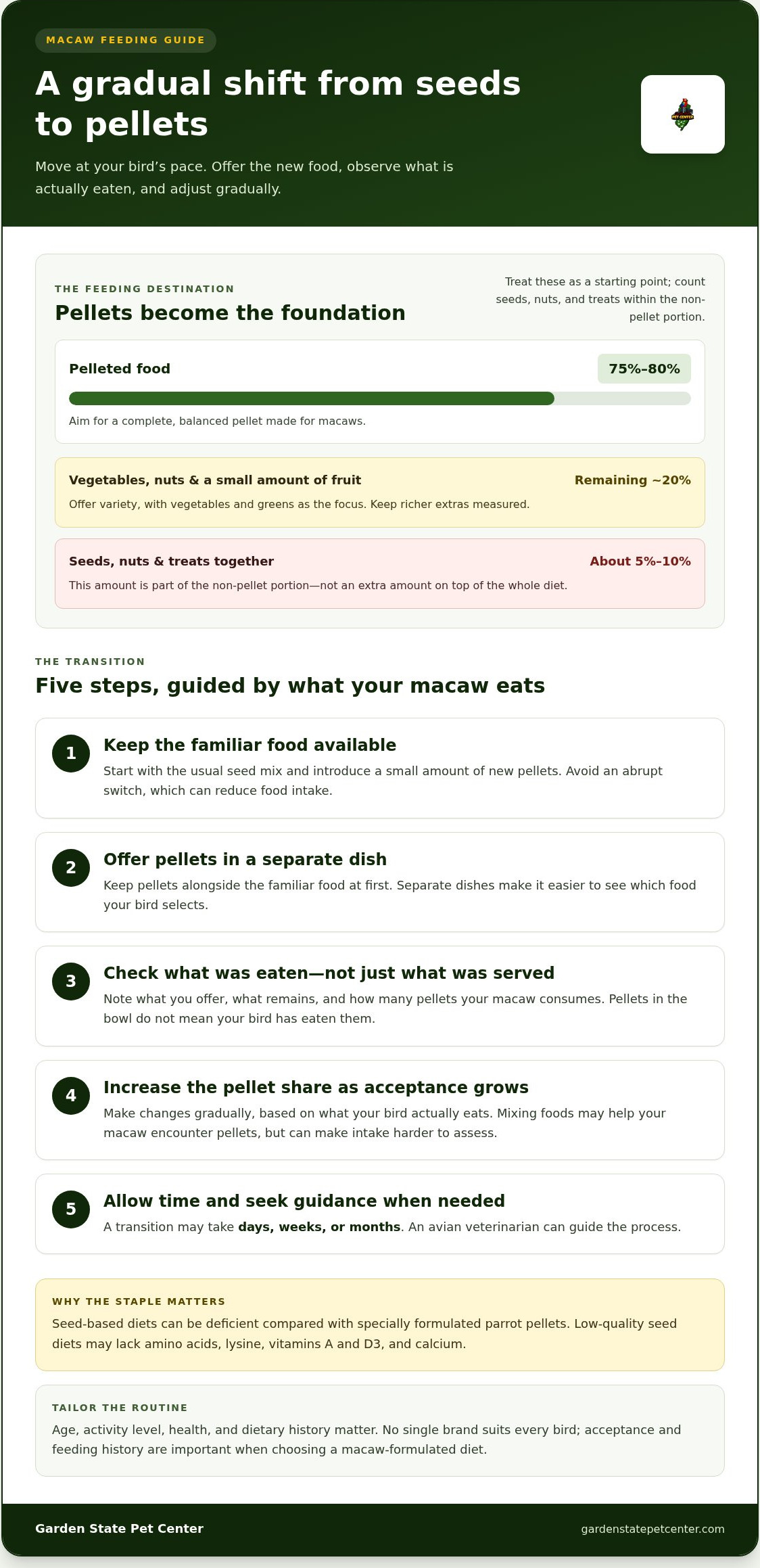
When transitioning from seeds to pellets, introduce the new food gradually while keeping familiar food available. A macaw may reject unfamiliar pellets, and an abrupt change can reduce its food intake.
Pellets should make up approximately 75%-80% of the diet. Vegetables, nuts, and a small amount of fruit can make up the remaining 20%; seeds, nuts, and treats together should stay around 5%-10%. These figures describe different parts of the menu, so count nuts and seeds among extras rather than adding them on top of the whole diet.
Offer pellets alongside the usual seed mix at first, and watch what your bird eats. Gradually increase the pellet share as acceptance grows. Don’t assume your bird has eaten pellets just because they’re in the bowl. The transition may take days, weeks, or months, and an avian veterinarian can guide the process. Mixing foods may help your macaw encounter pellets, but it can make intake harder to assess.
Seed-based diets can be deficient in key nutrients compared with specially formulated parrot pellets. Low-quality seed diets may lack amino acids, lysine, vitamins A and D3, and calcium, so seeds shouldn’t replace a balanced staple.
Choosing Specialized Macaw Pellets
Specialized macaw pellets are formulated as a staple for parrots, while seed mixes and treats have different roles. Choose a complete, balanced pellet made for macaws, then consider its form and whether your bird accepts it. No single brand suits every bird, since acceptance and dietary history matter.
In the United States, pellet cost depends on package size and the food selected; compare the amount of food in each package rather than judging by the package alone. Avoid relying on a seed-based mix as the main diet, since low-quality seed diets can lack amino acids, lysine, vitamins A and D3, and calcium. Choose a balanced pellet instead of trying to correct gaps with scattered treats.
Improper feeding can leave a macaw short of nutrients, including amino acids, vitamins A and D3, and calcium. Age, activity level, health, and dietary history all help determine the appropriate food; select a macaw-formulated diet rather than assuming every parrot has identical needs.
Keep extras modest: seeds, nuts, and treats should total about 5%-10% of the diet. Sunflower seeds are best offered occasionally because they’re high in fat, while bananas can be served in moderation because they can be high in sugar. For help weighing food choices and feeding history, a pet nutritional consultation can support a more considered feeding plan.
Gradually transitioning to a healthier diet
Change your macaw’s food gradually, offering pellets alongside its familiar diet. The transition may take days, weeks, or months, so base each adjustment on what your bird actually eats.
Start by offering a small amount of new pellets beside the usual seed mix. Keep them in separate dishes at first so you can see which food your macaw selects. A bird that ignores pellets hasn’t started eating them just because they’re available. Note what you offer, what remains, and how many pellets your bird consumes.
Use these steps to make the transition observable and steady:
- Serve familiar food and pellets together, without abruptly removing the familiar option.
- Watch whether your macaw picks up and eats pellets, rather than only moving them around.
- Once pellet eating is established, increase their share gradually and reduce the seed portion.
- Keep a simple daily record of food offered and leftovers to spot changes in acceptance.
Some keepers have reported offering a bird’s previous seed diet during two 15-minute periods a day while transitioning. That is an individual forum member’s approach, not a universal schedule. Your macaw’s existing routine and actual intake matter more than copying a fixed timetable. If your bird eats only seeds during a feeding period, continue tracking its choices instead of assuming the transition is complete.
Mixing pellets directly into seeds can introduce their taste and texture, but it can also make intake harder to judge. Your macaw may sort through the mixture and leave the pellets behind. Separate dishes make this easier to spot. If you mix the foods, inspect what remains and distinguish eaten pellets from pieces scattered or discarded around the cage.
Reward curiosity with calm, positive reinforcement. When your macaw investigates or samples a pellet, offer gentle praise or a preferred interaction. Avoid using extra high-fat treats, such as sunflower seeds, to persuade your bird, since treats can make pellet intake harder to measure. Keep the routine consistent, including the dishes and feeding location, so you can compare your bird’s choices from day to day.
Make the change with guidance from an avian veterinarian, especially if your macaw has a health concern or a long history of eating seeds. Share your bird’s current foods and your intake notes so the veterinarian can consider its dietary history. Since the transition may span days, weeks, or months, adjust gradually rather than forcing a rapid switch. Continued seed selection shows that the new food has not yet become a reliable part of the diet.
Pelleted food as the recommended macaw diet
Use a complete, balanced pellet as the main food, with fresh produce alongside it. This makes the daily diet less dependent on your macaw selecting individual ingredients from a mixed bowl.
Pellets as a Dietary Foundation
A pellet foundation means pelleted food supplies most of the bird’s daily nutrition, while produce and treats remain supporting foods. Pellets should make up approximately 75%-80% of a macaw’s diet. This proportion matters because a bird eating mostly seed or treats may not receive the balanced nutrition intended from a formulated staple.
Pellets can also make daily feeding easier to assess. With a seed mix, your macaw may pick out preferred pieces and leave others, so the bowl’s appearance may not show what it ate. A uniform pellet diet reduces selective feeding. Still, check the dish and surrounding area: food scattered from the bowl is not necessarily food consumed.
Pair the staple with fresh produce and keep the routine consistent. Offering pellets, leafy greens, and a small amount of fruit gives your macaw different textures without relying on treats as its nutritional base. Record which foods your bird accepts and what remains. This simple observation helps distinguish actual pellet intake from a full-looking bowl.
Nutritional Contents of Specialized Pellets
A specialized macaw pellet should provide a complete and balanced mix of nutrients, including protein, fat, vitamins, and minerals. These nutrients support the diet’s overall nutritional role; choosing a pellet as the staple matters more than adding isolated treats to compensate for an unbalanced menu.
Macaws eating species-appropriate, complete and balanced pellets with fresh produce typically don’t need vitamin or mineral supplements unless a veterinarian directs supplementation. A bird eating approximately 75%-80% pelleted food generally doesn’t need supplements. Extra vitamins aren’t automatically beneficial, so don’t add them simply because the bird enjoys a particular food or has changed its menu.
Read the packaging to confirm which birds the product is intended for and review its feeding directions. Then consider how it fits your macaw’s age, activity level, health, and dietary history. A macaw with a different feeding background may need a slower transition than one already eating pellets. If a veterinarian recommends supplements, follow that individual guidance rather than applying a general rule to every bird.
Keep a practical record of the pellets offered, produce served, and leftovers observed each day. For example, if your macaw eats greens but leaves most pellets, the bowl’s overall appearance can conceal an imbalance. Aim for a reliable pellet staple supported by fresh foods, not a menu where fruit, seeds, or supplements crowd out the formulated diet.
What should a specialized pellet diet for macaws contain?
A macaw’s specialized pellet diet should provide protein, fat, vitamins, and minerals in a complete, balanced food. Check that the product is formulated for parrots or macaws, then consider its stated nutrition alongside your bird’s other foods.
Protein and fat are essential parts of the nutritional profile, but neither should be judged on its own. A pellet’s role is to provide a balanced combination, not simply one standout nutrient. Vitamins and minerals are also part of the overall formulation. The ingredient list shows what goes into the food, while the nutritional information helps you assess it as a whole.
Some pellet products highlight additional nutrients. For example, Tropican High Performance Sticks are described as rich in protein, vitamins, and omega fatty acids. That description can clarify the product’s emphasis, but it doesn’t make every pellet or feeding plan interchangeable. Compare the intended bird and feeding directions with your macaw’s age, activity level, health, and dietary history.
- Protein and fat: Look for both as part of a balanced formulation, not as isolated selling points.
- Vitamins and minerals: These should be supplied as part of the complete food’s nutritional profile.
- Species suitability: Choose a pellet intended for parrots or macaws, rather than relying on a seed mix.
- Feeding directions: Use the package guidance to understand how the pellet fits with other foods.
Color, shape, or a familiar ingredient does not prove that a pellet is nutritionally complete. Likewise, adding a vitamin or mineral supplement won’t necessarily improve an already balanced menu. Macaws eating species-appropriate, complete and balanced pellets with fresh produce typically don’t need supplements unless a veterinarian directs supplementation. The whole diet, not one ingredient, determines how foods work together.
Review the pellet’s stated purpose as your bird’s needs change. Age, activity, health, and previous diet can affect which food suits your macaw’s routine. Breeding, recovery, or other health circumstances may call for a different feeding plan. Parental nutrition, including fat, protein, and minerals, must support a complete clutch. In these situations, individualized guidance is more useful than choosing by appearance alone.
Keep the pellet as the nutritional anchor and use produce to complement it. For help comparing bird-food choices with your macaw’s feeding history, explore bird food options.
Garden State Pet Center: Premium Pet Food
Garden State Pet Center offers premium pet food to help bird owners explore feeding options for their macaws. When comparing pellets or looking for a suitable staple, focus on products formulated for parrots and observe how your bird responds during a gradual transition. The store’s Certified Pet Nutritionist can help you consider food options for your pet.
Pair food choices with careful observation: note which pellets your macaw eats and how they fit alongside fresh produce. Garden State Pet Center also carries exotic birds, pet toys, and accessories to support birds’ everyday needs. If your macaw refuses a new pellet or has a health-related dietary concern, seek guidance suited to its individual situation from an avian veterinarian.
Explore premium pet food and bird-care options at gardenstatepetcenter.com.
Build a Feeding Routine That Grows With Your Macaw
Your macaw’s food routine can evolve as its preferences, activity, and health change. Keep a simple record of accepted foods and feeding patterns, then use it to guide thoughtful adjustments instead of changing several things at once. That record also gives you a clearer starting point when discussing a macaw’s specialized pellet diet with a knowledgeable pet nutrition resource.
Garden State Pet Center offers premium pet food, exotic birds, and pet toys and accessories for bird owners. Explore food options with your macaw’s needs in mind, and choose toys that add variety to its daily environment. For help considering the next step in your bird’s feeding routine, contact Garden State Pet Center.
Small, attentive choices can make feeding more deliberate. Keep observing your bird, respond to its needs, and build a routine that supports its wellbeing over time.
Frequently Asked Questions
What should I feed my macaw?
Feed a complete, balanced pellet as the staple, alongside suitable fresh produce and measured extras. Pellets generally account for about 75%-80% of the diet, while fruit, vegetables, nuts, seeds, and treats make up smaller portions. Keep pellets and produce in separate dishes so you can see what your bird chooses. A brief daily note about leftovers can reveal whether your macaw is eating the intended foods.
Should I be concerned about what my macaw eats?
Yes, pay attention to your macaw’s food choices and changes in appetite. A bird that picks through a seed mix may leave nutrient-rich pieces uneaten, while a bird that stops eating familiar food during a diet change needs close attention. Track the foods offered and leftovers, and share notable changes with an avian veterinarian. This record can help distinguish food preference from a broader change in eating habits.
Do macaws need vitamin supplements?
Macaws eating species-appropriate, complete and balanced pellets with fresh produce typically don’t need vitamin or mineral supplements unless a veterinarian directs supplementation. Don’t add a supplement simply because your bird prefers one food or is learning to eat pellets. The full diet matters: record the pellets, produce, and treats your macaw consumes, then discuss the routine with an avian veterinarian before adding concentrated nutrients.
Does my bird need extra vitamins, minerals or amino acids?
Extra nutrients depend on the bird’s complete diet and health, not on one ingredient or treat. Low-quality seed-based diets can be deficient in amino acids, lysine, vitamins A and D3, and calcium, but that doesn’t mean every macaw needs a separate supplement. Note the current food and any recent diet changes, then have an avian veterinarian assess whether supplementation is appropriate.
How do I convert my bird to a pelleted diet?
Introduce pellets gradually while keeping your macaw’s familiar food available, and base changes on observed intake. The transition may take days, weeks, or months. Offer foods in separate dishes when possible, since your bird may sort through a mixture and leave pellets behind. Keep a daily record of what’s eaten, and make the change with guidance from an avian veterinarian.
Is it safe to mix pellets with seeds?
Pellets and seeds can be offered together during a gradual transition, but mixing them can make it harder to tell what your macaw eats. Some birds select preferred seeds and leave pellets in the bowl. Separate dishes make those choices easier to observe. If you combine foods, inspect the leftovers rather than assuming the pellets were eaten because they were offered.
What percentage of a macaw's diet should be pellets?
Pellets should make up approximately 75%-80% of a macaw’s diet. The remaining portion includes vegetables, nuts, and a small amount of fruit; seeds and treats should stay limited. Think of the percentages as a guide to the whole menu, not as separate allowances to add together. Count seeds, nuts, and treats within the non-pellet portion so extras don’t displace the staple.
How many pellets should a macaw eat per day by species or weight?
The amount of pellets to offer each day depends on the food’s energy density, your macaw’s size and species, activity, health, and other foods in its diet. Use the product’s feeding directions as a starting point, then observe what your bird consumes rather than measuring only what goes into the bowl. Record leftovers and discuss the routine with an avian veterinarian, especially if your bird’s needs or diet change.

Article by
Victor Santucci
Victor Santucci Jr. is the owner of Garden State Pet Center and a Certified Clinical Pet Nutritionist specializing in premium pet nutrition, raw and fresh feeding, holistic pet wellness, birds and exotic animals. Through years of hands-on retail and animal-care experience, Victor helps pet parents make informed decisions about nutrition, enrichment and species-appropriate care.
Share this post
- 0 comment
- Tags: bird nutrition, fresh produce, macaw diet, macaw feeding, macaws specialized pellet diet, parrot care, parrot pellets, seeds and nuts