

Holistic Flea and Tick Prevention for Dogs and Cats


A holistic flea and tick prevention plan for dogs isn’t built around a single spray or powder. Combine regular coat checks and flea combing with consistent home cleaning and sensible outdoor care, then discuss your dog’s risk with a veterinarian. Diatomaceous earth requires care: keep it away from your pet’s eyes, mouth, and nose, avoid creating dust they could inhale, and supervise them to prevent licking or swallowing it.
It’s understandable to prefer gentler options, but “natural” doesn’t automatically mean harmless or effective for every pet. This guide covers practical holistic flea and tick prevention for dogs and cats, how to clean your home during prevention or an infestation, and what to consider before using diatomaceous earth or essential-oil sprays. You’ll also learn when veterinary advice matters, so you can create a routine that accounts for your pet’s health, your home, and your yard.
Key Takeaways
- Use a flea comb and regular coat checks as practical parts of prevention, and seek veterinary advice to tailor protection to your pet.
- Handle diatomaceous earth carefully: avoid airborne dust and keep it away from your pet’s eyes, nose, and mouth.
- During an active flea infestation, clean carpets, furniture, and pet bedding daily to target pests and life stages in the home.
- Essential oils and other “natural” products can still irritate pets; learn which ingredients call for extra caution before applying a spray.
- Compare prevention options with a veterinarian, weighing your pet’s health and exposure risks rather than choosing by label alone.
1. Diatomaceous earth safety
Are diatomaceous earth, garlic, or herbal supplements safe for flea prevention in dogs? There’s no blanket safety answer. Diatomaceous earth can irritate or dry the eyes and airways if inhaled or if it contacts the eyes. Garlic and herbal supplements aren’t automatically safe because they’re natural. Discuss specific ingredients and use with your veterinarian before giving them to your dog.
Keep diatomaceous earth dust away from your dog’s face. Product directions say not to spray it near a dog’s eyes, mouth, or nose. Follow directions carefully and prevent powder or spray from drifting into your pet’s breathing space. Avoid creating airborne dust, and keep your dog away while you apply the product.
Supervise your dog after application. Product notes advise preventing licking and ingestion, so keep your pet away from treated areas until you can prevent contact with the product. Take extra care with curious puppies and dogs that lick floors, carpets, or their paws. If the product gets into your dog’s eyes or is inhaled, irritation and dryness are possible. Stop exposure and seek veterinary advice about symptoms or next steps.
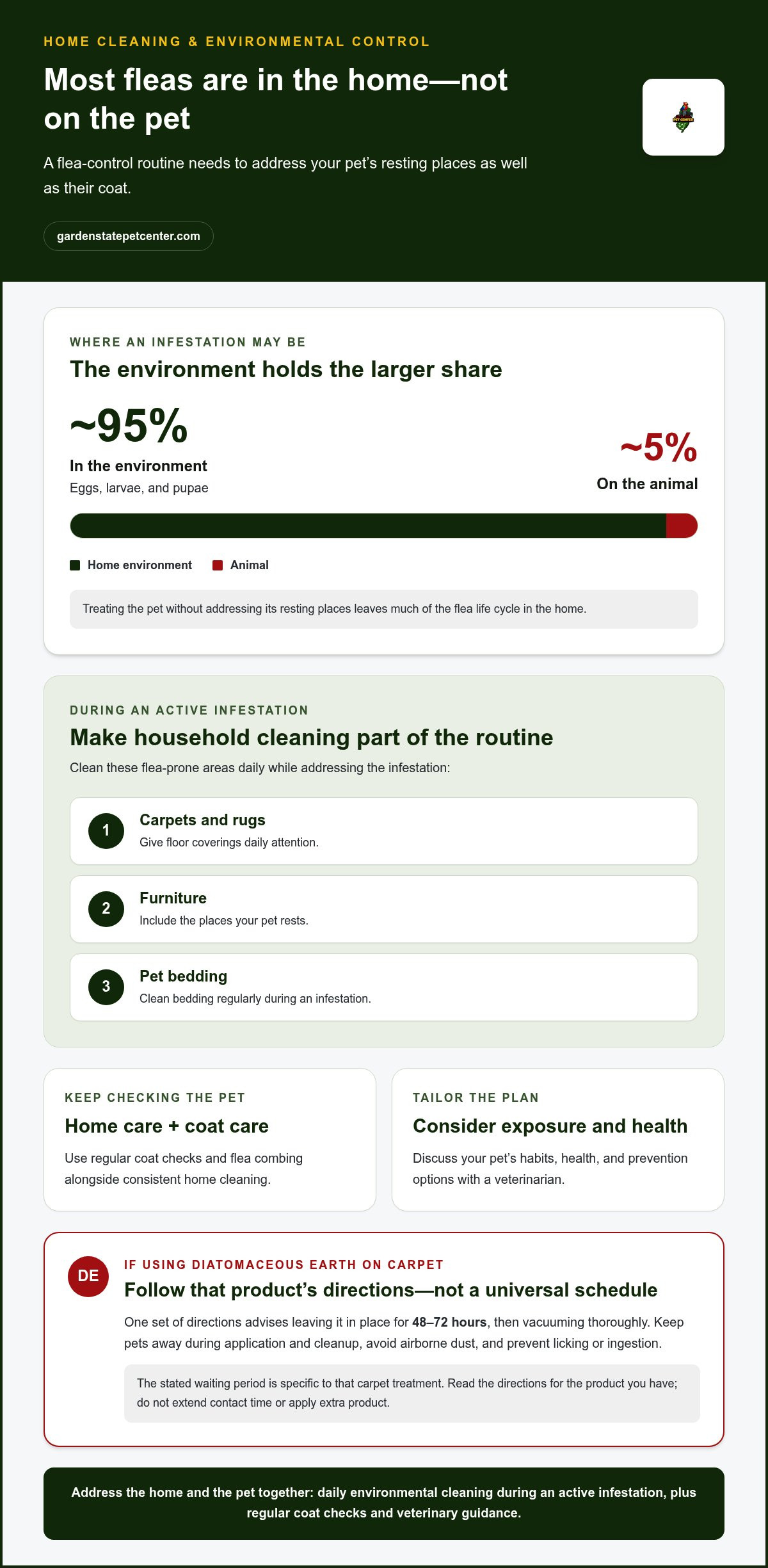
For carpet use, one set of product directions advises leaving diatomaceous earth in place for 48-72 hours, then vacuuming thoroughly. Treat this as a specific product-use instruction, not a universal schedule for every powder or surface. Before application, read the directions for the product you have and make sure the room can be kept clear of pets. After the waiting period, vacuum carefully and keep your dog away while dust is being stirred up.
Think through the whole process before opening the container: where the product will go, how your dog will be kept away, and how residue will be removed. For example, if your dog sleeps on a treated rug, move the bed and block access during application and cleanup. Use the vacuum only after the stated 48-72-hour interval for that carpet treatment. Don’t apply extra product or extend contact time beyond its directions.
For holistic flea and tick prevention for dogs, treat diatomaceous earth as a limited household measure, not a substitute for a complete prevention plan. It doesn’t replace checking your dog’s coat or discussing flea-control choices. Don’t experiment casually with garlic or herbal supplements: ingredients, dose, and your dog’s health matter. A veterinarian can assess these details and whether a proposed supplement is suitable for your dog.
2. What's the Best Natural Flea and Tick Prevention for Dogs and Cats?
How much do holistic and conventional flea and tick preventives for dogs cost? The total depends on the product, application schedule, and duration of use. Compare the full routine, including repeat applications and household measures, rather than judging by one dose or container. A veterinarian can help weigh product type and your pet’s needs, with price as one consideration rather than the only factor.
Do holistic flea and tick remedies work, and what does the evidence say? Results vary by method, and no single natural remedy should be treated as a complete prevention plan. Flea combing, coat checks, and environmental cleaning are useful nonchemical measures. Try these strategies before considering safer synthetic chemicals for flea control, while discussing any product or supplement with your veterinarian.
Do flea and tick risks and recommended prevention vary by U.S. region or season? Yes. Local climate, seasonal conditions, and your pet’s outdoor routine affect exposure, so discuss your dog or cat’s habits with a veterinarian. A pet that regularly visits brush or tall grass has different exposure patterns from one that stays indoors. Revisit the plan when routines or local conditions change.
Essential oils require careful product selection. One topical recipe uses two drops of neem and lavender oil per one ounce of water, plus a drop or two of dish soap per bottle. Another uses ten drops of cedarwood oil per one ounce of water. A cedarwood solution has also been recommended for pets and the environment, applied once to twice daily. These are distinct recipes, not interchangeable directions.
Test any spray on a small patch before broader use to help minimize potential allergic reactions. Citrus oils, d-limonene, eucalyptus, and citronella in minimum-risk pesticides have been linked to allergies in pets and people. Stop using a product if irritation appears. Ask your veterinarian about ingredients before applying a spray to a pet with sensitive skin or existing health concerns.
Choose preventives by species and route. Don’t use a dog product on a cat unless its label specifically permits that use. Skin-applied pet products are regulated by the EPA, while orally administered products, such as pills, must be approved by the U.S. Food & Drug Administration. Follow each product’s label, and don’t combine treatments without veterinary guidance.
Start with regular coat checks and flea combing, then discuss additional options with your veterinarian. Food supports nutrition, but it isn’t flea or tick prevention. Keep dietary choices separate from parasite control, and tailor the routine to your pet’s species, health, and exposure.
The cost of either approach varies with the product, how often it is applied, and how long it is used. Include repeat treatments and household measures when comparing the overall expense.
3. Home cleaning and environmental control
Cleaning the home matters because fleas don’t stay only on the pet. About 95% of an infestation may be in the environment as eggs, larvae, and pupae, while about 5% live on the animal. That means treating your dog or cat without addressing its resting places leaves much of the flea life cycle untouched. Focus on carpets, rugs, furniture, and bedding, especially where your pet sleeps or spends time.
During an active infestation, vacuum carpets, rugs, furniture, and pet bedding daily. Regular vacuuming removes flea debris and can disturb pests hiding in fabric and floor edges. Vacuuming alone can kill up to 96% of adult fleas, but it doesn’t remove every life stage. Flea pupae can remain dormant for up to 6 months before hatching, so keep cleaning after adult fleas become less visible.
For prevention, vacuum those same household areas weekly. Pay attention to rug edges, areas beneath furniture, and favorite resting spots, where loose debris and flea stages can collect. If your pet uses several rooms, include each area in the routine rather than cleaning only its bed. During an infestation, return to daily vacuuming; once the immediate problem has eased, weekly cleaning supports ongoing environmental control.
Wash pet bedding, blankets, and soft toys weekly. The recommended wash temperature is 140°F/60°C or higher, followed by drying on high heat. Hot, soapy water also helps clean bedding, and common soap and water kill adult fleas. Check care labels before washing a soft toy or blanket, and choose washable items for your pet’s regular sleeping area where possible. A consistent laundry day makes this task easier to maintain.
Keep cleaning practical. Gather bedding, blankets, and soft toys, then wash and dry them while vacuuming nearby floors and furniture. For example, if a dog sleeps on a living-room rug, clean the rug and nearby upholstery as well as the dog’s blanket. Fleas can develop in the environment, so cleaning only the item your pet lies on may leave nearby areas untreated.
Consistency is the key step. Continue the weekly prevention routine even when you no longer spot adult fleas, since pupae may remain dormant for up to 6 months. If fleas are active, vacuum daily and wash bedding weekly while following the stated hot-water and high-heat guidance. Pair these home measures with an appropriate plan for your pet, so environmental cleaning supports rather than replaces animal-focused prevention.
4. Risks and environmental effects of conventional treatments
How do natural flea and tick products compare with FDA- or EPA-registered preventives? They differ in ingredients, route of use, and application directions. Skin-applied products are regulated by the EPA, while oral products such as pills must be approved by the U.S. Food & Drug Administration.
Conventional treatments can cause reactions, so consider the product and the animal using it. Small dogs weighing 10 to 20 pounds are identified as most likely to react to topical flea treatments. Follow the product label, use only the stated amount, and watch for unusual signs after application. Don’t add another flea product unless a veterinarian advises how to use both safely.
Flea collars deserve the same careful review as spot-on treatments. A collar keeps its active ingredients close to the animal’s skin and coat, so check the label for the intended species, fit, directions, and warnings. Keep children from handling a treated collar, and prevent pets from chewing it. If a dog or cat develops irritation where the collar rests, remove it and seek veterinary advice.
Route matters when comparing options. Oral flea-prevention ingredients identified as potential alternatives to treatments that leave residue on fur include lufenuron, nitenpyram, and spinosad. Topical spot treatments containing selamectin are described as a second-best option after oral treatments. These names aren’t interchangeable instructions: the right choice depends on the animal, product label, and veterinary guidance.
Environmental concerns include the chemicals used in pet products and how they are applied or discarded. According to the Natural Resources Defense Council (NRDC), it petitioned the EPA to phase out harmful pesticides from pet products. NRDC successfully petitioned the EPA to phase out propoxur pet products in 2014 and TCVP pet products in 2022. These dates illustrate why active ingredients deserve attention, not just product format.
When synthetic chemicals are needed for flea or tick control, s-methoprene and pyriproxyfen are identified as less toxic ingredient options. That description doesn’t make label directions optional. Apply products only as directed, keep them away from areas pets lick, and dispose of containers according to their instructions. For a collar, don’t cut, reuse, or combine it with another treatment unless its label permits that action.
Start with nonchemical measures, including coat checks and household cleaning, before deciding whether a pesticide is needed. If treatment is necessary, compare the active ingredient and route, then review the choice with your veterinarian. A natural label alone doesn’t establish safety, and a conventional product’s risks depend on its ingredients and use. Make the decision around your pet’s species, size, health, and exposure.
5. Tick prevention and veterinary advice
Check your dog’s coat after walks in brush, tall grass, or wooded areas. Use your fingers and a bright light to inspect the head, ears, neck, legs, and between the toes. Part thick fur in small sections so you can see the skin. Make this part of your return-home routine, especially after outdoor activity in areas where ticks may be present.
How can you check dogs for ticks and remove them safely? Examine the whole coat, including hidden areas, and use a tick-removal tool according to its instructions if you find an attached tick. If you can’t remove it or aren’t sure how, contact your veterinarian for help.
Tick exposure depends on local conditions and your dog’s activities. Note where your pet spends time, such as brush, tall grass, or wooded paths, and share those details during a veterinary visit. This gives the veterinarian useful context when discussing prevention, without assuming one routine fits every dog.
Ask your veterinarian to weigh your pet’s health, lifestyle, and likely exposure before choosing a preventive. Bring the product label or ingredient list, and mention any flea or tick products already in use. Skin-applied products are regulated by the EPA, while orally administered products such as pills must be approved by the U.S. Food & Drug Administration. These categories differ, so use each product only as directed.
Discuss essential oils and supplements before applying or giving them. One topical spray recipe uses two drops of neem and lavender oil per one ounce of water. A cedarwood oil solution uses ten drops per one ounce of water. These recipes don’t establish that either mixture suits every dog, and essential-oil products can cause allergic reactions. A veterinarian can consider your dog’s health and other treatments.
One veterinarian recommends liver-protective herbs and supplements for seven days before and after applying chemical flea medication. Don’t treat that recommendation as a universal instruction or add supplements without reviewing them with your veterinarian. Share the medication’s name, ingredients, and application date so the professional can assess the proposed combination and timing.
If pesticide exposure causes a health concern, the National Pesticide Information Center lists 800-858-7378 for reporting pesticide-related health issues. Keep the product packaging available so its name and ingredients can be identified. Pair routine coat inspections with a veterinarian-guided plan based on your dog’s exposure and health needs.
Garden State Pet Center: Premium Pet Food
Garden State Pet Center offers Premium Pet Food for pet owners reviewing everyday feeding choices as part of a broader care routine. Food isn’t flea or tick prevention, so keep coat checks, home cleaning, and veterinarian-guided protection central to parasite control. Choose food based on your pet’s nutritional needs, and keep prevention decisions separate from diet decisions.
Turn to Garden State Pet Center when exploring premium food options as part of your pet’s regular care. A thoughtful feeding routine can support daily wellbeing, while tick checks and appropriate prevention address parasite exposure. For questions about flea or tick products, rely on your veterinarian’s guidance.
Contact Garden State Pet Center or visit gardenstatepetcenter.com to explore Premium Pet Food.
Build a Routine That Fits Your Pet
Make your next step a prevention routine you can maintain. Keep a simple record of coat checks, cleaning days, products used, and any skin changes. Bring those notes to your veterinarian when discussing your dog’s or cat’s prevention plan. A clear record can help you explain what’s working and what may need adjusting, especially when your pet’s habits or outdoor exposure change.
A holistic flea and tick prevention plan for dogs works best when it fits the individual animal, not just a product label. Keep veterinary guidance central, and treat food and other everyday supplies as separate from parasite control. That distinction helps you make thoughtful choices without expecting one part of pet care to do every job.
For everyday pet-care needs alongside your prevention routine, connect with Garden State Pet Center. Contact Garden State Pet Center to take your next step with confidence.
Frequently Asked Questions
What's the Best Natural Flea and Tick Prevention for Dogs and Cats?
There isn’t one natural method that suits every pet and household. A practical plan combines suitable coat checks, environmental management, and veterinary input about your animal’s exposure and health. Keep dogs and cats on species-appropriate products; don’t transfer a dog product or dose to a cat. For holistic flea and tick prevention for dogs, treat natural methods as part of an individualized routine, not an automatic replacement for veterinary care.
What natural flea and tick prevention methods are safe and effective for dogs?
Use nonchemical steps, such as combing and checking your dog’s coat, alongside regular home care. These measures can help you find fleas early and address places where pests may develop, but they don’t establish that every infestation is controlled. Before applying a botanical product or giving a supplement, review its ingredients and intended use with your veterinarian. Your dog’s health, other treatments, and exposure all inform the choice.
Which essential oils are toxic to dogs or cats, and which should be avoided?
Citrus oils, d-limonene, eucalyptus, and citronella in minimum-risk pesticides have been linked to allergies in pets and people. Neem, lavender, and cedarwood also shouldn’t be assumed safe simply because they’re botanical ingredients. Sensitivity can differ between animals, and a recipe intended for one pet may not suit another. Avoid applying essential-oil mixtures without veterinary guidance, especially if your pet has shown skin irritation or other reactions.
What are the best year-round flea and tick prevention steps for dogs?
Make prevention a repeatable routine, not a task reserved for when pests are visible. Set a recurring reminder for coat checks, household cleaning, and reviewing preventive products. After a change in your dog’s routine, such as spending more time outdoors or visiting a new environment, reassess likely exposure with your veterinarian. Keep product labels and application dates together so you can share an accurate history when discussing changes.
What home and yard treatments help prevent fleas and ticks without harming pets?
Start with environmental steps that limit flea development, and choose yard measures with your pet’s access in mind. Beneficial nematodes can be added to soil where pets are likely to play; these worms eat flea larvae. Cedarwood mulch is another landscaping deterrent described for fleas and ticks. Keep pets away during any product application and follow its directions, since natural or outdoor use doesn’t mean risk-free.
When should a dog see a veterinarian for fleas, ticks, or a reaction to a treatment?
Contact your veterinarian if you find an attached tick you can’t remove, see continuing flea activity, or notice a reaction after treatment. Share the product packaging, ingredient list, and application date. If your dog may have licked, swallowed, or inhaled a product, explain that exposure promptly. A clear timeline helps the veterinary team assess the situation and advise on next steps.

Article by
Victor Santucci
Victor Santucci Jr. is the owner of Garden State Pet Center and a Certified Clinical Pet Nutritionist specializing in premium pet nutrition, raw and fresh feeding, holistic pet wellness, birds and exotic animals. Through years of hands-on retail and animal-care experience, Victor helps pet parents make informed decisions about nutrition, enrichment and species-appropriate care.
Share this post
- 0 comment
- Tags: cats, diatomaceous earth, dogs, flea cleaning, flea prevention, holistic flea and tick prevention for dogs, holistic pet care, pet safety, tick prevention