

Raw Meaty Bones for Dogs: Safe Feeding & Selection Guide


What if the secret to your dog’s sparkling teeth and calm demeanor isn't found in a plastic toothbrush, but in a carefully selected raw bone? You likely feel a bit of anxiety at the thought of splinters or the mess of bacterial contamination in your home. It’s completely natural to feel hesitant when you hear conflicting advice about which bones are safe and which ones lead to an emergency vet visit. We know your pet's safety is your top priority, and you want to provide the best holistic care possible without the stress of guesswork.
This guide helps you move past that uncertainty by mastering the science of structural matching. You'll learn how to safely select and feed raw meaty bones for dogs that align perfectly with your pet's specific size and unique chewing style. We'll show you how to distinguish between recreational and edible bones while maintaining a clean, safe environment for your family. By the end of this article, you’ll have the confidence to improve your dog's dental health and mental stimulation under the guidance of professional nutritional expertise. Let's explore how to transform mealtime into a safe, health-boosting experience for your companion.
Key Takeaways
- Understand how the mechanical action of raw bones acts as "dental gold" to naturally remove plaque and tartar.
- Apply the "Golden Rule" of selection to ensure every bone is appropriately sized for your dog's mouth and safety.
- Identify your pet's specific "chewsonality" to choose the best raw meaty bones for dogs for gulpers and nibblers alike.
- Follow professional preparation and environment protocols to maintain a hygienic home while your dog enjoys their meal.
- Learn why sourcing from expert-led brands like OC Raw or Tucker’s prevents the common risks associated with hard grocery store bones.
What Are Raw Meaty Bones (RMBs) and Why Do They Matter?
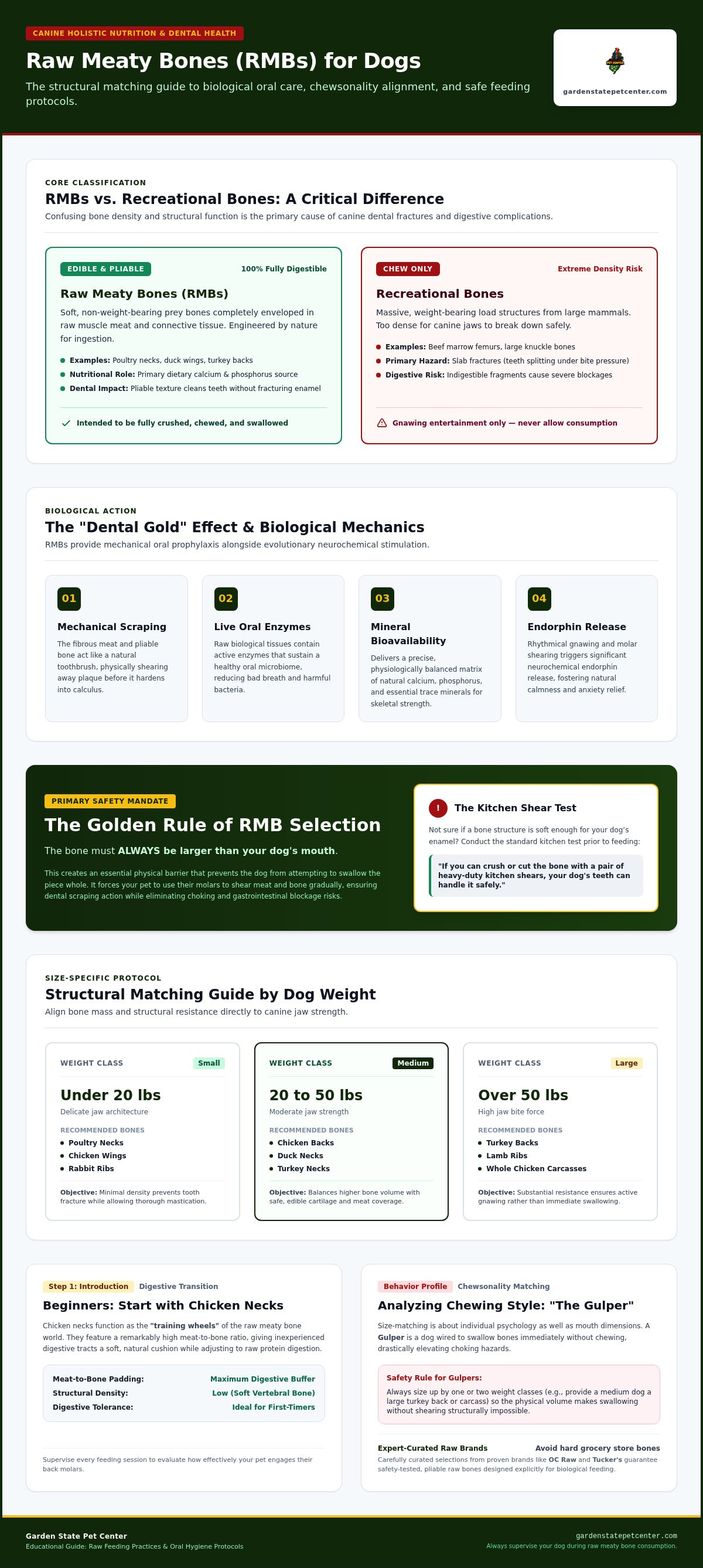
Raw meaty bones for dogs are often misunderstood as mere treats, but they serve as a cornerstone of canine wellness. Unlike the bare, bleached bones you might see on a shelf, a true RMB is a soft, edible bone entirely covered in muscle meat and connective tissue. Think of chicken necks, duck wings, or turkey backs. These aren't just snacks; they're complex biological packages that provide a precise balance of calcium, phosphorus, and essential trace minerals. Because they're fully digestible, they integrate seamlessly into your pet's digestive process.
We often refer to the mechanical action of chewing these bones as the "Dental Gold" effect. As your dog gnaws through the meat and bone, the abrasive texture acts like a natural toothbrush. It physically scrapes away plaque and prevents the buildup of tartar before it can harden into calculus. This proactive approach to oral hygiene often results in fresher breath and healthier gums without the need for stressful brushing sessions.
The Biological Necessity of Raw Chewing
Dogs are biologically designed to process raw materials. Looking back at raw feeding practices for dogs, we see that wild canines rely on smaller prey bones to meet their mineral requirements. Beyond the nutrients, raw meat contains live enzymes that help maintain a healthy oral microbiome. The act of gnawing also triggers a significant release of endorphins. This mental stimulation provides a natural sense of calm for your pet, making it an excellent tool for anxiety management and cognitive health.
RMBs vs. Recreational Bones: A Critical Difference
It's vital to distinguish between edible raw meaty bones for dogs and recreational bones. Recreational bones, such as large beef marrow femurs or knuckle bones, are weight-bearing structures. These are incredibly dense and are meant for gnawing rather than consumption. If a dog tries to chew these too aggressively, they risk slab fractures, where the tooth literally splits under the pressure. These hard bones are often the culprit behind the dental injuries that worry many pet parents.
In contrast, RMBs are pliable enough for the dog to crush and swallow completely. They provide the bulk of the calcium in a balanced raw diet, whereas recreational bones are mostly for entertainment. When you browse our premium dog food collections, you'll find that we prioritize these softer, safer options to protect your dog’s dental integrity while maximizing their nutritional intake. Choosing the right density is the first step toward a safer, healthier feeding routine.
Selecting the Right Raw Meaty Bones for Your Dog's Size
Selecting the perfect bone requires a strategic approach to structural matching. The Golden Rule is simple: the bone must always be larger than your dog's mouth. This physical barrier prevents them from attempting to swallow the item whole, which is the primary cause of choking or blockages. By forcing your pet to use their molars to shear through the meat and bone, you ensure they receive the full dental benefits of the chewing process. Choosing raw meaty bones for dogs involves assessing both the bone's density and the dog's jaw strength to find a safe, productive match.
Use these size-appropriate categories to guide your selection process:
- Small Dogs (under 20 lbs): Focus on delicate structures like poultry necks, chicken wings, and rabbit ribs. These are soft enough for smaller mouths to manage without risking tooth damage.
- Medium Dogs (20-50 lbs): Opt for slightly more substantial options such as chicken backs, duck necks, and turkey necks.
- Large Dogs (over 50 lbs): Choose turkey backs, lamb ribs, or whole chicken carcasses. These provide enough resistance to keep a large dog engaged.
Best Starter Bones for Beginners
Begin your journey with chicken necks. They act as the "training wheels" of the raw world because they have a high meat-to-bone ratio. This extra padding makes them easier to digest for a system that's still adjusting to raw proteins. You can easily identify safe, soft bones by testing them with hand shears. If you can crush the bone with a pair of heavy-duty kitchen shears, your dog’s teeth can handle it safely. If you're feeling unsure about where to start, exploring our curated dog food options can help you find pre-selected items that meet these high safety standards.
Bones to Avoid Based on Size
Size matching is about more than just jaw strength; it's about individual behavior. A "Gulper" is a dog that tries to inhale food without chewing. For these dogs, giving a small chicken wing is dangerous because they might try to swallow it in one piece. Review the AVMA position on raw pet food and bones to better understand the professional consensus on handling and hygiene. Never feed cooked bones of any size. Cooking changes the bone's molecular structure, making it brittle and prone to splintering into sharp shards. Stick to raw, non-weight-bearing raw meaty bones for dogs to ensure a safe and nutritious experience.
Analyzing 'Chewsonality': Matching Bones to Chewing Styles
Every dog approaches a bone with a unique set of instincts. Understanding this "chewsonality" is the final piece of the safety puzzle. While size guides offer a baseline for selection, your pet’s individual behavior dictates the actual risk level during a meal. It's not just about what they're eating; it's about how they're eating it. Identifying these traits allows you to customize your selection of raw meaty bones for dogs to prevent accidents before they happen.
Most dogs fall into one of three behavioral categories:
- The Gulper: These dogs view mealtime as a race. They often try to swallow items with minimal chewing, which creates a significant choking hazard.
- The Nibbler: Meticulous and patient, these dogs take their time. They carefully scrape every bit of meat and connective tissue from the bone before even attempting to crunch it.
- The Power Chewer: These dogs possess immense jaw pressure. They don't just chew; they attempt to pulverize anything in their mouth, often ignoring the "Dental Gold" scraping benefit in favor of total destruction.
Managing the 'Gulper' Profile
If your dog is a gulper, you must take active steps to slow them down. One of the most effective techniques is "hand-feeding" by holding one end of the bone while your dog chews the other. This physical control forces them to use their side teeth to shear through the material. You can also offer bones in a frozen state. This significantly increases the time spent gnawing and prevents them from quickly breaking off large pieces. Always select "awkwardly shaped" bones, such as chicken backs or turkey frames. These structures are difficult to position for a single gulp, forcing the dog to reposition and chew more thoroughly.
Safe Strategies for Power Chewers
Power chewers often fall into the "tooth cracker" trap. Because they have such high jaw pressure, they can accidentally damage their own teeth if the bone is too dense. For these dogs, transition away from smaller, crunchable bones toward larger, meatier cuts that require more shredding than crushing. Think of a whole duck or a lamb breast. These provide the resistance they crave through muscle meat and connective tissue without the density of a weight-bearing bone. Monitor for jaw fatigue. If a dog becomes over-excited, they may lose focus and bite down with dangerous force. If you're unsure which texture fits your dog’s strength, exploring our premium raw options can help you find a match that balances durability with safety.
How to Feed Raw Meaty Bones Safely: A Step-by-Step Guide
Feeding raw meaty bones for dogs is a rewarding experience that requires a disciplined approach to hygiene and safety. It isn't as simple as tossing a bone on the carpet. You must follow a structured protocol to protect your pet and your home environment. By establishing a routine, you turn the act of feeding raw meaty bones for dogs into a seamless part of your pet's holistic care.
Follow these four essential steps for every feeding session:
- Step 1: Prepare the bone. Move the bone from the freezer to the refrigerator 24 hours before use. Never use a microwave to thaw it. Even minimal heat can change the bone's molecular structure and make it dangerous.
- Step 2: Designate a feeding zone. Use a crate with a plastic tray, a tiled floor, or an outdoor space. Avoid porous surfaces like rugs or hardwood that can trap bacteria.
- Step 3: Implement active supervision. Stay within arm's reach throughout the entire session. Your presence is the most effective safety tool you have.
- Step 4: Execute post-feeding hygiene. Clean the feeding area with a pet-safe disinfectant. Wipe your dog’s face and paws to ensure no raw residue remains on their fur.
The Thawing and Handling Protocol
Safe handling starts with timing. Raw poultry bones should generally be used within two days of thawing in the refrigerator. If you're raising a teething puppy, you might find that feeding a partially frozen bone provides much-needed relief for sore gums. The cold temperature numbs the area while the texture encourages safe gnawing. Always treat the bone like raw meat for your own table. Wash your hands thoroughly before and after handling; use dedicated stainless steel or ceramic bowls that can be sanitized at high temperatures.
Supervision and Intervention
You need to learn the sounds of a safe chew session. A rhythmic "crunch-crunch" is the sound of your dog’s molars doing their job. In contrast, a sudden silence followed by gagging or frantic pawing at the mouth requires immediate attention. If a bone becomes small enough to fit entirely inside your dog's mouth, it’s time to take it away. Use the "trade" method by offering a high-value treat in exchange for the bone fragment. This prevents resource guarding and ensures you can safely remove leftovers without stress. For more guidance on specialized care, consult with our experts and explore our raw dog food offerings to find the safest options for your pet's needs.
Sourcing Quality: Why Expert Curation Matters
Avoid the temptation to grab a package of "soup bones" from your local grocer. These items are typically dense marrow bones from the legs of large cattle; they're far too hard for safe consumption and are often stripped of the muscle meat that makes a bone "meaty." For the safest experience, select raw meaty bones for dogs from professional raw brands like OC Raw and Tucker's. These companies specialize in providing "edible" bones that are appropriately soft and covered in high-quality protein. We offer nationwide shipping for these premium components, ensuring you have access to expert-vetted nutrition regardless of your location. Utilizing these curated sources eliminates the risk of accidental tooth damage while providing a consistent mineral profile for every meal.
Integrating Bones into a Balanced Raw Diet
A balanced raw diet usually follows the 80-10-10 ratio. This formula consists of 80% muscle meat, 10% bone, and 10% organ meat. Raw meaty bones are your primary tool for hitting that 10% bone target. Monitor your dog's stool daily to judge if you've found the right balance for their specific metabolism. If the stool is white and crumbly, your dog is likely consuming too much bone; this can lead to constipation if not corrected. If the stool remains loose, they might need a bit more calcium from bone sources. Consulting with a certified pet nutritionist allows you to fine-tune these variables. This professional guidance ensures you avoid nutritional deficiencies that can occur with unguided raw feeding.
The Garden State Pet Center Advantage
Since 2018, we've focused on specialized pet welfare and high-end service. We only source human-grade, hormone-free raw components to ensure your pet receives clinical-grade nutrition. Our on-site certified pet nutritionist is available to help you build a personalized feeding plan that accounts for your dog's age, weight, and unique chewing style. We believe in providing a service-oriented resource that cares about long-term well-being rather than just acting as a vendor. This holistic approach ensures that your dog enjoys the dental benefits of chewing without compromising their internal health. Explore our curated Dog Food collection to find the high-quality raw meaty bones for dogs your pet deserves.
Transform Your Dog’s Health with Confident Raw Feeding
You now possess the knowledge to improve your dog's oral hygiene and mental well-being through the science of structural matching. By selecting raw meaty bones for dogs that align with their specific size and behavioral "chewsonality", you remove the guesswork and anxiety from the process. Success lies in the details: choosing soft, edible bones over hard recreational ones, maintaining active supervision, and following a disciplined hygiene routine. These simple steps ensure your dog enjoys the "Dental Gold" effect while staying perfectly safe.
Garden State Pet Center supports your commitment to excellence with over 30 years of specialized pet care experience. Our on-site certified pet nutritionist is ready to provide personalized guidance for your dog's unique requirements. We offer nationwide shipping on premium raw brands, making it simple to access the high-quality components your pet needs to thrive. Shop our Premium Raw Dog Food and Meaty Bones to start your dog on a path toward fresher breath and better nutrition. We are excited to partner with you in your pet's holistic wellness journey.
Frequently Asked Questions
Can I feed my dog cooked bones if they are soft?
You should never feed cooked bones to your dog, even if they seem soft or pliable. Cooking dehydrates the bone and alters its molecular structure, causing it to become brittle and prone to splintering into sharp shards. These splinters can cause internal punctures or blockages. Always stick to raw bones, as their natural moisture and flexibility allow them to be safely crushed and digested by your pet's highly acidic digestive system.
How often should I give my dog a raw meaty bone?
Frequency depends on your dog's overall diet and caloric needs. For most dogs, offering a raw bone one to three times per week is sufficient to provide significant dental benefits and mental stimulation. If you're following a DIY raw diet, these bones should account for approximately 10% of the total intake. Our on-site certified pet nutritionist can help you determine the exact frequency based on your dog’s specific metabolic requirements.
What should I do if my dog swallows a large piece of bone?
If your dog swallows a large piece, stay calm and monitor them closely for signs of distress, such as gagging, excessive drooling, or unproductive vomiting. While many dogs have highly acidic stomach environments that can break down raw bone, a very large piece can pose a blockage risk. If you notice lethargy or a refusal to eat in the following 24 hours, consult a medical professional immediately to rule out an obstruction.
Are raw bones safe for puppies and senior dogs?
Raw bones are generally safe and highly beneficial for both life stages when matched correctly to their jaw strength. For puppies, soft bones like chicken necks provide excellent relief for teething pain and encourage healthy jaw development. Senior dogs benefit from the mechanical scraping effect that manages plaque. However, always check for existing dental disease or missing teeth in seniors before introducing harder textures to prevent accidental fractures or pain.
Will raw bones make my dog aggressive or 'bloodthirsty'?
There is no scientific evidence suggesting that raw feeding makes dogs aggressive or "bloodthirsty." This is an outdated myth. In reality, the act of gnawing on raw meaty bones for dogs triggers the release of endorphins in the brain. This biological response actually promotes a sense of calm and satisfaction. Any resource guarding behavior is typically a training issue rather than a result of the specific food being consumed.
How do I know if a bone is too hard for my dog's teeth?
A reliable rule of thumb is the "knee test": if you wouldn't want to be hit in the knee with the bone, it’s probably too hard for your dog’s teeth. Avoid weight-bearing bones from large animals, such as beef femurs, which are designed to support thousands of pounds. These are much denser than canine tooth enamel and can cause painful slab fractures. Stick to non-weight-bearing poultry or rabbit bones instead.
Can raw bones cause constipation in dogs?
Yes, excessive bone intake can lead to constipation. You can identify this by observing your dog’s stool; if it appears white, chalky, or crumbly, it’s a clear indicator that the bone-to-meat ratio is too high. This "white stool" suggests you need to reduce the frequency of bone feeding or increase the amount of muscle meat. Balancing these components is vital for maintaining smooth digestion and long-term gastrointestinal health.
What are the best raw meaty bones for small breeds like Chihuahuas?
For small breeds like Chihuahuas, the best options are delicate, easily crushable structures that match their jaw size. Chicken necks, duck wings, and rabbit ribs are ideal because they are soft enough for small mouths to manage safely. These smaller raw meaty bones for dogs provide the same nutritional and dental benefits as larger bones without posing a choking risk. Always supervise small dogs to ensure they chew thoroughly before swallowing.

Article by
Victor Santucci
Victor Santucci is the owner of Garden State Pet Center in Audubon, NJ, where he specializes in premium pet nutrition, exotic animals, and expert-level care. With years of hands-on experience and a passion for helping pets thrive, Victor is dedicated to educating pet owners on proper nutrition, enrichment, and species-specific care. His mission is simple: provide every pet with the highest quality products and every customer with honest, knowledgeable guidance.
Share this post
- 0 comment
- Tags: canine dental health, dog chew guide, dog nutrition, holistic pet care, pet safety, raw feeding, raw meaty bones, raw meaty bones for dogs