

4 foods and feeding tips for backyard chickens


A complete feed matched to a chicken’s age and laying stage should make up most of its diet; treats and extras should stay at or below 10%. For laying hens, layer feed supplies added calcium, and crushed oyster shell can offer extra calcium when needed. The best food for backyard chickens starts with the right main feed, not a pile of treats.
It’s tempting to share kitchen scraps or add supplements, but extra food is not automatically better. Choose feed for the birds’ stage: chicks need starter feed, growing birds need grower feed, and laying hens need layer feed. Keep treats limited, avoid unsafe foods, and offer extra calcium appropriately to laying hens. These steps help build a balanced feeding routine.
Key Takeaways
- Match feed to each chicken’s life stage: use starter for chicks, grower for young birds that aren’t laying, and layer feed for hens producing eggs.
- Keep balanced feed at the center of the diet, and offer treats and table scraps sparingly.
- Remove moldy food and avoid harmful items such as uncooked beans, chocolate, and avocado pits and skins.
- Learn when crushed oyster shell can provide laying hens with extra calcium, and why chickens also need grit to digest food.
1. What Can I Feed My Chickens?
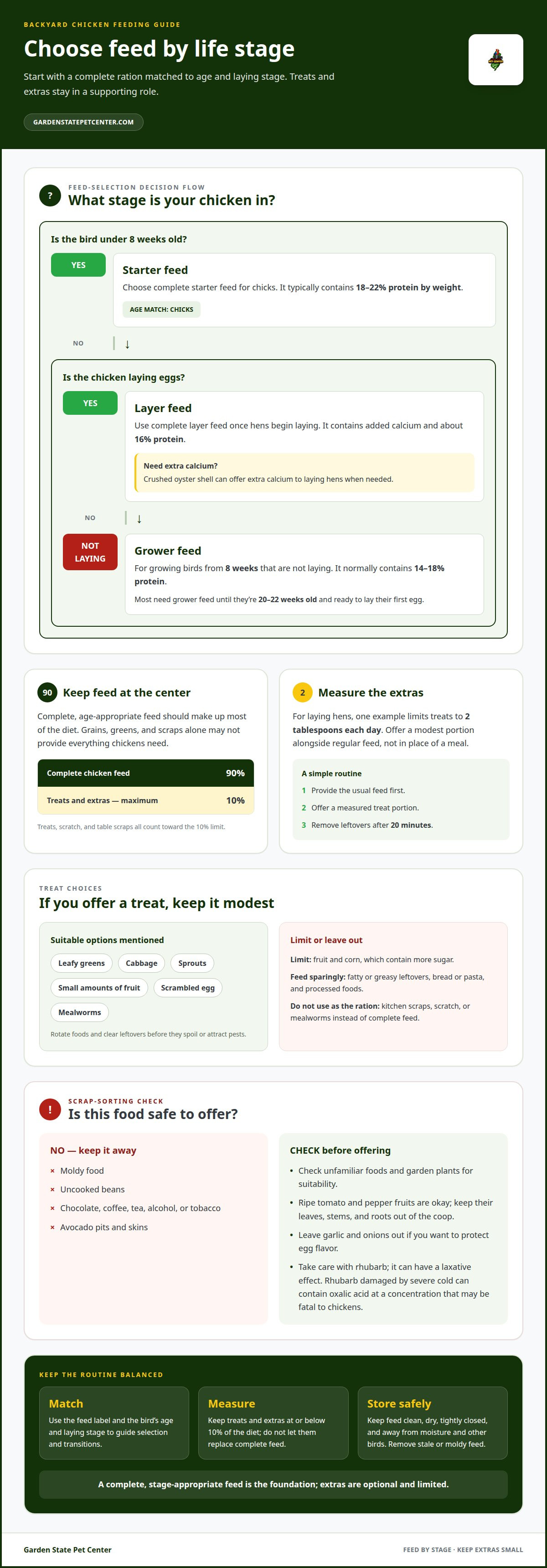
Build each ration around a complete chicken feed made for the bird’s age and laying stage. Chicks under eight weeks need starter feed, which typically contains 18-22% protein by weight. From eight weeks, chickens that aren’t laying need grower feed, normally containing 14-18% protein. Most need grower feed until they’re 20-22 weeks old and ready to lay their first egg.
Use the feed label to guide transitions, since products may have different age directions. A complete starter-grower feed is another option, with formulations designed for chicks from day one through week 18. Once hens begin laying, choose layer feed: it contains added calcium and about 16% protein. Match the feed to the flock, rather than relying on grains or greens to supply the full ration.
Some keepers raise chickens without commercial feed, relying on homemade mixes or foraged foods. The challenge is balancing nutrients consistently: grains, greens, and scraps alone may not provide everything chickens need. If you offer extras, keep a complete, age-appropriate feed as the nutritional foundation. Wheatgrass fodder or barley can be part of a flock’s diet, but neither automatically replaces a balanced ration.
High-protein feed suits particular life stages, not every bird. Starter feed’s 18-22% protein supports young chicks, while grower feed’s 14-18% suits growing birds that aren’t laying. Don’t choose a higher-protein ration simply because it sounds more nourishing; use the age and purpose on the label to guide selection.
There is no single best-rated chicken feed brand for every flock in the United States. Compare labels for complete feeds formulated for the birds’ age and laying stage, rather than choosing by brand recognition alone.
Organic, non-GMO, or soy-free feed may fit your ingredient preferences, but those labels do not confirm nutritional completeness. First check that the feed is formulated for the birds’ life stage and provides a complete ration.
Feed prices per bag depend on the bag and product selected, so compare the amount of feed supplied with your flock’s needs. A laying hen eats about 100-120 grams of feed per day on average; multiply daily use by the number of hens to estimate consumption.
Store chicken feed in a clean, dry, tightly closed container that other birds can’t access. Keep it away from moisture, remove old, stale, or moldy feed, and avoid leaving food exposed in the coop. For other household pets, dry dog food is a separate food category and shouldn’t be used as chicken feed.
2. Keeping treats and extras to a small share of a chicken's diet
Keep complete chicken feed as the daily foundation, and limit treats, scratch, and table scraps to no more than 10% of a chicken’s diet. This 90/10 balance leaves most of the ration for feed formulated to provide needed nutrients. It matters for young birds, too: chicks eating starter or growing birds eating grower feed still need their age-appropriate ration, not a dish of extras.
Wait until a hen lays her first egg before introducing treats. After that, offer a modest portion alongside the regular feed rather than replacing a meal. For laying hens, one feeding example limits treats to 2 tablespoons each day. Use that as a practical reminder to measure extras instead of letting a generous handful become a routine.
Offer fresh produce such as leafy greens, cabbage, or sprouts as a simple treat. Small amounts of fruit are also an option, but keep fruit and corn limited because they contain more sugar. Scrambled egg and mealworms can provide additional treat options. Rotate foods, and remove leftovers before they spoil or attract pests.
Kitchen scraps aren’t a balanced ration on their own. Separate suitable vegetable scraps from fatty or greasy leftovers, bread or pasta, and processed foods, which should be fed sparingly. Offer only what the flock will eat in 20 minutes, then clear the rest. That step keeps scraps from sitting in the coop and helps you see whether treats are crowding out the regular feed.
Foraging can add variety as chickens scratch for insects and greens outdoors. Mealworms can serve as a small treat when birds don’t find enough forage, but they shouldn’t replace complete feed. Keep scratch grain within the same 10% limit for the flock’s diet; scatter a measured amount to encourage pecking rather than filling feeders with it.
Local rules may govern whether backyard chickens are permitted and can address feeding practices. Requirements depend on the rules where you live, so do not assume an approach allowed in one town applies in another.
Build a repeatable routine: provide the usual feed first, offer a measured treat portion, and remove leftovers after 20 minutes. If several people feed the flock, set aside the day’s treat allowance in one container. That makes it easier to keep favorite scraps, produce, and mealworms within the limit, even when different family members share chicken care.
3. Foods to avoid feeding chickens
Sort scraps before feeding them or letting chickens forage in the garden. Do not offer moldy food, which can be toxic. Avoid chocolate, coffee, tea, alcohol, and tobacco, and keep uncooked beans away from the flock. These foods are not suitable treats, even in small portions.
Check garden plants before chickens can reach them. Some garden plants may be unsafe for chickens, so check them before letting the flock forage. Ripe tomato and pepper fruits are okay, but keep their leaves, stems, and roots out of the coop. Check whether unfamiliar foods are suitable for chickens before offering them.
Take care with rhubarb. It can have a laxative effect, and rhubarb damaged by severe cold can contain oxalic acid at a concentration that may be fatal to chickens. Garlic and onions can affect egg flavor, so leave them out of scraps if you want to protect the taste of your flock’s eggs.
The 90/10 rule also helps prevent risky feeding habits. Keep treats and other extras to no more than 10% of a chicken’s diet, leaving most of its food as balanced feed. Scratch and table scraps each count toward that limit. A measured portion is easier to manage than letting chickens eat unlimited leftovers.
Free-range birds may find greens and insects while foraging, but outdoor access does not make every garden plant safe. Check the area for toxic plants, and remove old, moldy, or stale food from the coop. Leftovers can attract rats and mice. In winter, check stored feed and coop scraps for dampness or spoilage.
Worms and fly larvae should be considered extras, not a replacement for balanced feed. Mealworms are a protein-rich treat, but they still count toward the 10% allowance. Avoid gathering insects from areas where you can’t identify what they’ve contacted. Offer treats separately from the main ration, and watch whether they’re reducing interest in regular feed.
Before each feeding, inspect leftovers, scraps, and produce collected from the garden. Remove food that is moldy, stale, or spoiled instead of mixing it into fresh feed. Keep chickens away from toxic plants, including fallen leaves and stems, and make sure everyone who feeds the flock knows which foods are off-limits.
4. Calcium and nutritional supplements
Calcium matters most in the ration of hens that are laying. Their dietary calcium need is typically 2.5-3.5%, while layer feed contains added calcium for egg-laying birds. Start by matching the feed to the flock’s stage, then use its label to understand what nutrients the complete ration provides. A supplement should add to that plan, not replace a balanced feed.
Crushed oyster shell can provide laying hens with extra calcium for their bones and eggs. Offer it as a separate calcium source rather than mixing an unmeasured amount into every bird’s feed. This lets hens access it as needed, while chicks on starter feed and non-laying birds continue receiving food suited to their life stage.
Eggshells can also contribute calcium. If you serve scrambled eggs as a protein-rich treat, the shells can add calcium too. Crush them into small pieces before offering, and treat them as an extra, not the flock’s main calcium plan. The same supplement routine may not suit chicks, growing birds, and laying hens.
Too much scratch, grain, or table scraps can dilute the nutrients supplied by complete feed. Keep these extras limited, and do not use them to deliver calcium. A practical routine is to provide the appropriate complete feed first, offer a suitable calcium source to laying hens, and keep treats separate from the main ration.
Review the flock’s feeding plan as its needs change. A pullet approaching laying needs a different plan from a chick on starter feed. Once a hen begins laying, layer feed supplies added calcium, and crushed oyster shell can provide extra. Check the feed label during the transition, and avoid combining supplements without a clear nutritional reason.
More supplements do not automatically improve nutrition. Start with a balanced feed suited to the birds’ stage, since it supplies a combination of nutrients, not calcium alone. If eggshells seem thin or a hen’s condition changes, note which birds are affected, what feed they receive, and whether they are laying. These details can help identify whether feed choice, access, or an extra calcium source needs attention.
Keep calcium sources clean and dry, and remove damp or spoiled material during routine coop checks. Store oyster shell separately from scratch and treats so it remains easy to identify. If chicks and laying hens share a flock, maintain distinct age-appropriate feeds and make the hens’ calcium source accessible without substituting it for starter feed.
5. What should backyard chickens eat as their main feed?
Make complete commercial chicken feed the foundation of the flock’s diet. For laying hens, good-quality layer-hen pellets provide a practical main feed, with fresh foods in limited amounts. Complete feed supplies nutrients that kitchen scraps alone may not provide. The best food for backyard chickens is a complete ration matched to the birds eating it, not a bowl of leftovers.
Match feed to each bird’s stage: chicks need starter feed, growing birds that are not laying need grower feed, and hens producing eggs need layer feed. In a mixed-age flock, separate feeding areas can help each group reach its appropriate ration. Follow package directions when changing feed, and avoid letting one age group rely on another group’s formula.
Build a consistent daily routine. Put feed in a container that visiting birds cannot access, and provide clean, fresh water in an easy-to-use drinker kept out of direct sun. These steps help protect chicken feed from wild birds and keep water available while the flock eats.
For chickens without free-range access, pair balanced commercial feed with fresh vegetables, limited fruit, calcium, and grit. Leafy greens add variety, while fruit should remain a smaller extra. Chickens need small stones or gravel as grit to help grind food in their gizzards. Provide places to scratch and peck for enrichment instead of relying on treats alone.
Keep fibre in view when selecting or combining foods. Chicken diets should contain no more than 10% fibre, so high-fibre additions shouldn’t crowd out complete feed. Large portions of greens or scratch can change the ration’s balance, even when each seems suitable alone. Offer extras alongside the main feed, not as a substitute.
Use a feeder routine that makes intake easier to monitor. Refill with fresh feed, remove old or moldy food, and notice whether chickens leave ingredients behind. If birds pick out grains and ignore other parts of a mix, complete feed can help keep the ration consistent. Protect the feeder from wild birds.
Fodder, garden greens, and insects can complement a complete ration, but they do not replace it. Keep extras modest and maintain access to grit, water, and suitable feed. Whether a flock ranges outdoors or stays in a run, the best food for backyard chickens remains a consistent, balanced main ration.
Garden State Pet Center: Premium Pet Food
Garden State Pet Center offers premium pet food for households caring for animals alongside backyard chickens. If you also need supplies for small animals or exotic birds, its selection of pet food, toys, and accessories can help meet those needs. Keep every animal’s diet specific to its species and life stage rather than sharing chicken feed across pets. Turn to Garden State Pet Center when comparing premium pet food or choosing everyday essentials for other animals at home. Visit gardenstatepetcenter.com to explore the selection.
Make your feeding routine work for your flock
Turn your feeding plan into a routine you can adjust thoughtfully. Keep a simple record of the feed offered, treats given, and changes you notice in the flock. This can help you spot patterns and make measured adjustments instead of switching foods without a clear reason. The best food for backyard chickens fits their life stage and remains the dependable foundation of daily care.
Garden State Pet Center can help you explore chicken-feeding options alongside its Premium Pet Food, Pet Toys and Accessories, and Exotic Birds offerings. If you’re considering a change or have questions about feed choices, contact Garden State Pet Center about chicken-feeding help. Take the next step with a practical plan, and keep building a healthy routine for your flock.
Frequently Asked Questions
What Can I Feed My Chickens?
Feed chickens a complete ration suited to their age and laying stage, then offer small portions of fresh foods for variety. For example, serve leafy greens separately instead of mixing a large amount of produce into the feeder. This makes it easier to see whether birds are eating their regular ration. Keep water accessible, and provide grit to help chickens grind food in their gizzards.
How much protein do chickens need?
Protein needs vary with age and role. Starter feed typically contains 18-22% protein by weight, grower feed normally contains 14-18%, and layer feed contains about 16%. Protein needs vary by age and role, so choose feed suited to the bird. Read the label for the intended bird group, especially if different ages share a coop, and avoid choosing a feed by protein percentage alone.
What are the dietary needs of chickens?
Chickens need a balanced feed, fresh water, and grit; laying hens also need calcium. To identify the best food for backyard chickens, match the ration to age and laying status before adding extras. A laying hen eats about 100-120 grams of feed per day on average. For free-ranging birds, remember that outdoor forage adds variety but doesn’t replace the nutrition supplied by their main feed.
What is the best diet for chickens of different ages?
Choose starter feed for chicks under eight weeks, grower feed for older birds that aren’t laying, and layer feed for hens producing eggs. Most chickens need grower feed until they are 20-22 weeks old and ready to lay. If a flock includes several life stages, separate feeding spots help reduce the chance that younger birds rely on feed intended for laying hens.
What is the best feed for laying hens?
Choose a complete layer ration formulated for hens that are producing eggs. Layer feed contains added calcium and about 16% protein, while laying hens typically need 2.5-3.5% calcium in their diet. The best food for backyard chickens changes with life stage, so layer feed isn’t the right default for chicks or birds that haven’t started laying. Crushed oyster shell can provide extra calcium.
What type of scraps are best for chickens?
Offer clean vegetable scraps such as leafy greens, sprouts, or cabbage, and keep portions modest. Remove leftovers instead of letting them sit in the coop. Do not offer moldy food, uncooked beans, or tomato leaves, stems, and roots. Ripe tomato fruit is okay, but avocado pits and skins are toxic. Sorting scraps before feeding makes it easier to remove unsuitable pieces.
What are the best treats for chickens?
Mealworms, leafy greens, sprouts, and scrambled egg can make suitable treats. Wait until a hen lays her first egg before introducing treats, and keep all extras within 10% of the diet. Scatter a measured portion to encourage natural scratching and pecking. If treats are left uneaten, remove them rather than adding more, and keep the regular ration available.
What protein percentage do laying hens need in feed?
Layer feed contains about 16% protein. Check the label for a complete ration intended for laying hens, since protein is only one part of nutritional balance. Laying birds also need dietary calcium, and their feed should match their current stage. If a hen is molting and has paused laying, grower or starter feed may be used until she resumes laying.

Article by
Victor Santucci
Victor Santucci Jr. is the owner of Garden State Pet Center and a Certified Clinical Pet Nutritionist specializing in premium pet nutrition, raw and fresh feeding, holistic pet wellness, birds and exotic animals. Through years of hands-on retail and animal-care experience, Victor helps pet parents make informed decisions about nutrition, enrichment and species-appropriate care.
Share this post
- 0 comment
- Tags: backyard chickens, best food for backyard chickens, chicken feed, chicken feeding, chicken grit, chicken treats, laying hens, oyster shell, poultry care