

Freeze Dried Chicken Hearts for Dogs: Nutrition and Use


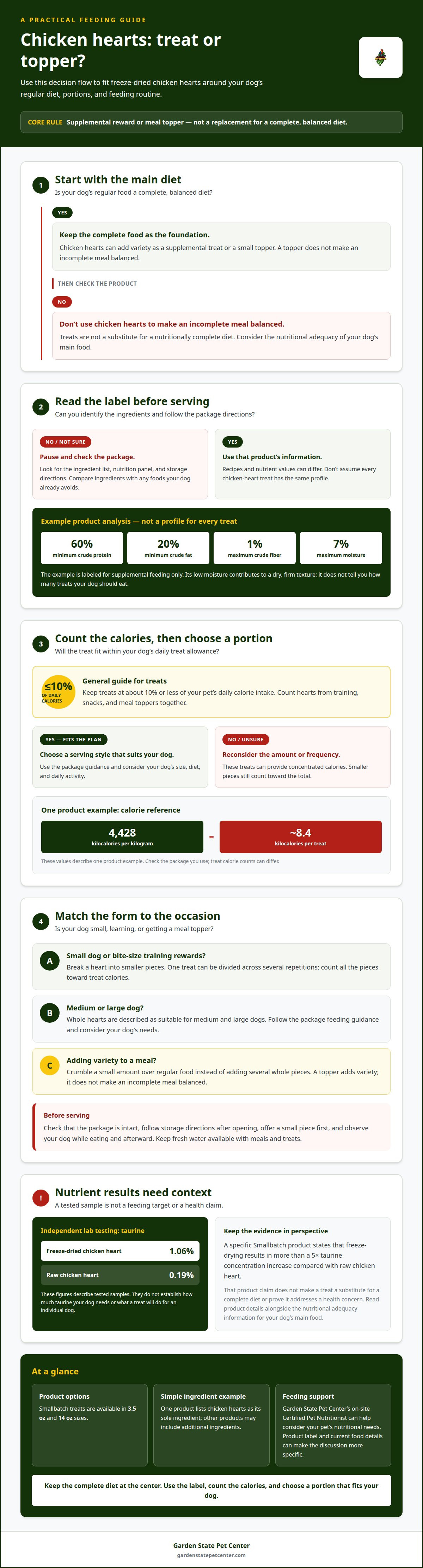
Freeze dried chicken hearts for dogs are best treated as a supplemental reward or meal topper, not a complete diet. One product example lists a minimum of 60% crude protein and is labeled for supplemental feeding only. That makes portion size and the rest of your dog’s diet important parts of deciding how to use them.
It’s easy to see the appeal of a simple, meat-based treat when you want to add variety or make a meal more enticing. But concentrated treats can contribute meaningful calories, so consider how often you offer them and whether you serve whole pieces or smaller bits.
This guide explains what chicken hearts can contribute, how to use them as treats or toppers, and what to consider when choosing portions. You’ll also learn how freeze-dried treats fit alongside a complete, balanced diet, helping you make a thoughtful choice for your dog.
Key Takeaways
- Use freeze-dried chicken hearts as a supplemental treat or topper, not as a replacement for a complete diet.
- Consider their concentrated nutrition and calories when deciding how much to offer.
- Break larger pieces into smaller bites for smaller dogs or training rewards.
- Keep treats to about 10% or less of your dog’s daily calories.
- Garden State Pet Center offers premium pet food to help you explore feeding options for your pet.
Freeze dried chicken hearts for dogs
Freeze-drying removes moisture from chicken hearts, leaving a lightweight, shelf-stable treat when stored as directed on its packaging. The process uses freezing and drying rather than cooking the hearts in the usual way. Check the ingredient list first: a simple recipe may list chicken hearts as its sole ingredient, while other products can contain additional ingredients. A product example has a maximum moisture content of 7%. That low moisture level helps explain the treat’s dry, firm texture, but it doesn’t tell you how many treats your dog should eat. Use the package directions and your dog’s size, diet, and daily activity to guide portions.
A nutrition label can help you understand what a specific product contributes. One freeze-dried chicken-heart treat example lists a minimum crude fat content of 20%, maximum crude fiber of 1%, and maximum moisture of 7%. These figures describe that product’s guaranteed analysis, not every chicken-heart treat. Fat contributes to its energy density, while fiber and moisture appear in smaller amounts in this example. Read the label on the package you use, since recipe and nutrient values can differ. Compare the ingredient list and analysis together, rather than assuming that every treat made from chicken hearts has the same profile.
Taurine is another nutrient associated with chicken hearts. Independent lab testing found 1.06% taurine in freeze-dried chicken heart and 0.19% in raw chicken heart. Those figures describe the tested samples; they don’t establish how much taurine your dog needs or what a treat will do for an individual dog. Treats are not a substitute for a nutritionally complete diet. If taurine content matters to your feeding plan, read the product details alongside the nutritional adequacy information for your dog’s main food. Avoid treating a single nutrient result as proof that a product can address a health concern.
Portions matter because these treats can provide concentrated calories. One product example provides 4,428 kilocalories per kilogram and approximately 8.4 kilocalories per treat. Treat calorie counts can help you account for extras alongside meals, training rewards, and other snacks. A general feeding guide recommends keeping treats at about 10% or less of a pet’s daily calorie intake. For example, count each heart offered during a training session, not just the pieces served in a bowl. If you break a heart into smaller rewards, the pieces still contribute calories; smaller pieces don’t make the total disappear.
Choose a serving method that suits your dog. Whole hearts are described as suitable for medium and large dogs, while smaller dogs can have broken pieces. Breaking a heart also creates bite-size training rewards, so one treat can be divided across several repetitions—ideal for rewarding cooperative behavior during bath time with an oodle dog shampoo. For a meal topper, crumble a small amount over your dog’s regular food instead of adding several whole pieces. Keep the treat’s role clear: a topper adds variety, but it doesn’t make an incomplete meal balanced. Follow the package’s feeding guidance and keep fresh water available with meals and treats.
Before serving, inspect the treat and its packaging. A clear ingredient list helps you identify chicken as the protein source and spot any ingredients your dog already avoids. Check that the package is intact, and follow the storage directions after opening. Offer a small piece first, then observe your dog while they eat and afterward. For example, a dog new to crunchy treats may do better with a broken piece than a whole heart. If your dog has a dietary restriction, compare the label with that restriction before adding the treat to their routine.
- Use the product’s ingredient list and nutrition panel, not assumptions about all chicken-heart treats.
- Count treat calories across training, snacks, and meal toppers.
- Break larger hearts into smaller pieces for small dogs or bite-size rewards.
Smallbatch Freeze-Dried Chicken Heart Treats contain 100% humanely raised chicken hearts and contain no fillers, grains, preservatives, or synthetic additives. For this product, freeze-drying results in more than a 5x taurine concentration increase compared with raw chicken heart. The treats are available in a 3.5 oz size and a 14 oz size, giving shoppers two package options to consider when choosing how much to keep on hand.
Garden State Pet Center: Premium Pet Food
Garden State Pet Center offers premium pet food for people considering treats alongside their dog’s regular meals. If you’re comparing feeding options or want to understand how supplemental treats fit into a broader diet, the store’s on-site Certified Pet Nutritionist can help you consider your pet’s nutritional needs. Bring the product label and details about your dog’s current food to make the conversation more specific.
A treat is just one part of a feeding routine. Consider the main diet, ingredient information, and how you use rewards to make a more informed choice. Garden State Pet Center also carries products for exotic birds and small animals.
Contact Garden State Pet Center to discuss premium pet food and your feeding questions.
Make Your Next Feeding Choice With Care
Build a routine around your dog’s needs rather than adding treats by habit. Consider how a new reward fits with everyday meals, and keep the ingredient label handy when comparing options. This simple practice can help you decide whether freeze dried chicken hearts for dogs suit your feeding approach. For pet owners who extend this focus on simple, quality ingredients beyond nutrition, Essencera offers clean and organic grooming products to complement your dog's wellness routine.
For help exploring premium pet food, Garden State Pet Center offers a welcoming place to discuss your options. The store also carries pet toys and accessories, along with products for exotic birds and small animals.
Take the next step at your own pace. Contact Garden State Pet Center to continue the conversation, and feel confident making a thoughtful choice for your dog.

Article by
Victor Santucci
Victor Santucci Jr. is the owner of Garden State Pet Center and a Certified Clinical Pet Nutritionist specializing in premium pet nutrition, raw and fresh feeding, holistic pet wellness, birds and exotic animals. Through years of hands-on retail and animal-care experience, Victor helps pet parents make informed decisions about nutrition, enrichment and species-appropriate care.
Share this post
- 0 comment
- Tags: chicken hearts, dog feeding tips, dog nutrition, dog treats, freeze dried chicken hearts for dogs, freeze-dried treats, meal toppers, supplemental feeding