

Suet Cakes for Wild Birds: Ingredients and Safe Feeding


The best suet cake depends on which birds you hope to attract and the weather where you feed them. Suet cakes for wild birds provide high-energy food, especially in cold weather. Ingredients such as nuts, seeds, fruit, and dried insects may attract woodpeckers, chickadees, nuthatches, wrens, and other visitors.
It’s natural to want a simple, nourishing option for the birds in your yard, but choosing a cake involves more than picking one off the shelf. Ingredients affect what’s on offer, and warmer temperatures can change which formulas are suitable.
Learn what suet provides, which birds different cakes may attract, and how to choose ingredients with care. We’ll also explain seasonal feeding, including when to use a warmer-weather formula and how to keep suet fresh for visiting birds.
Key Takeaways
- Choose cakes with nutritious fats and ingredients suited to the birds you want to attract; avoid sugary additions with little nutritional value.
- Woodpeckers, chickadees, nuthatches, wrens, and other backyard birds may visit suet feeders, with different blends appealing to different species.
- Match the formula to the weather: raw suet is best reserved for winter, while rendered or warmer-weather formulas can be more suitable as temperatures rise.
- Watch for softening or stale suet, and remove old food before cleaning the feeder and adding a fresh cake.
- Learn how suet supplies energy and how to select ingredients and feeding practices for your backyard visitors.
Suet cake ingredients and bacterial growth
Ingredients shape both a suet cake’s nutritional value and the birds it may attract. Suet binds ingredients such as nuts, seeds, oats, corn, wheat, and peppers into a firm cake. Some recipes also include fruit or dried insects. Look for a quality fat ingredient, such as peanut butter or another nut butter, and avoid sugary additions with little nutritional value.
What ingredients are safe or harmful in bird suet cakes? Choose a cake made with quality fat and recognizable ingredients, such as seeds, nuts, oats, or dried insects. Avoid sugary ingredients with little nutritional value. Keep in mind that corn and peanuts can provide a growth medium for dangerous bacteria.
Freshness and handling matter, too. Cakes containing corn, cornmeal, or peanuts may be refrigerated until use. Inspect the cake before putting it in the feeder. Discard old suet, clean the feeder, and add fresh food. An appealing flavor or appearance doesn’t establish freshness, so pay attention if a cake has softened or sat out for a long time, especially in warm weather.
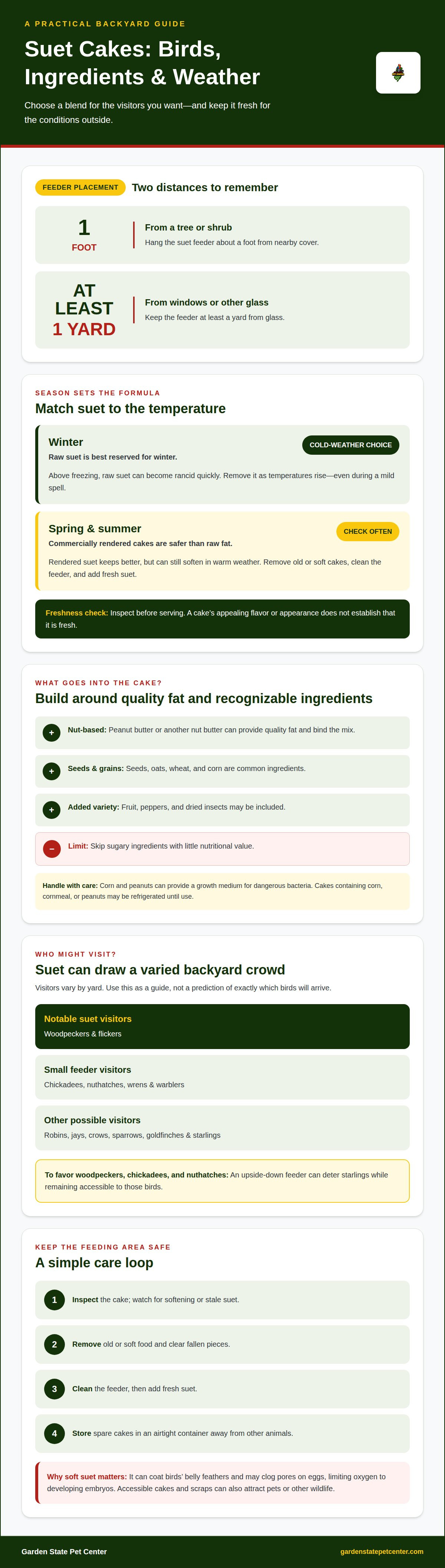
- Nut-based: Peanut butter or another nut butter can provide quality fat and bind a mix.
- Seed and grain: Seeds, oats, wheat, and corn are common recipe ingredients.
- Additional variety: Fruit, peppers, and dried insects can be included in suet blends.
- Limit: Skip sugary ingredients that add little nutritional value.
How to hang and use a suet feeder safely? Choose a metal feeder sized for the cake, then hang it about a foot from a tree or shrub and at least a yard from windows or other glass. Keep the feeder clean, remove old suet, and store spare cakes in an airtight container away from other animals.
What are the risks of suet cakes for birds, pets, and other wildlife? Soft suet can coat birds’ belly feathers, and it may clog pores on eggs, limiting oxygen to developing embryos. Accessible cakes and scraps can also attract pets or other wildlife, so secure stored suet and clear fallen pieces.
For a more selective setup, use a feeder that requires birds to hang upside down. This design can deter starlings while remaining accessible to woodpeckers, chickadees, and nuthatches. Match the cake to the feeder, and replace it promptly when it’s old or soft. These steps help keep the feeding area cleaner and make the cake’s condition easier to monitor.
Bird species attracted to suet
A suet feeder can attract more than woodpeckers. Chickadees, flickers, nuthatches, and wrens may visit, along with robins, jays, sparrows, warblers, and starlings. Woodpeckers are particularly attracted to suet, making it a useful option if you hope to see them up close.
There’s no single list of birds for every yard. Local visitors depend on which species live nearby and discover the feeder. Suet may attract:
- Woodpeckers and flickers: Especially notable visitors to suet feeders.
- Chickadees and nuthatches: Small birds that may share the feeder.
- Wrens and warblers: Additional visitors drawn to suet.
- Robins, jays, and crows: Larger species that may also eat it.
- Sparrows, goldfinches, and starlings: Other birds known to enjoy suet cakes.
Use the visitor list to set expectations, not to predict exactly which birds will arrive. A woodpecker may be your hoped-for visitor, but chickadees or nuthatches could find the food first. Observe which birds use the feeder before choosing a blend based on one expected species.
Visibility can help birds discover a new food source. Most birds rely on sight rather than smell to locate food, so place the feeder where passing birds can see it. Give visits time to develop and note which species appear. A simple yard log can track the bird, the blend offered, and whether it returns. These observations can help you adjust the setup to the visitors you actually see.
Do bird-feeding rules or local ordinances restrict suet feeders? Restrictions depend on the rules that apply to your location and property, so there isn’t one answer for every yard. Keep the feeding area tidy and follow applicable local and property requirements.
Competition can affect which birds you see. Starlings may visit suet, while an upside-down feeder can deter them and remain accessible to woodpeckers, chickadees, and nuthatches. This offers a practical way to favor those visitors without assuming other species won’t appear. After changing feeder styles, observe the visitors and compare them with your earlier notes.
To build a clearer picture of your yard’s birdlife, observe over time rather than judging from one visit. Record whether woodpeckers, wrens, or robins arrive and note which feeder they use. This approach helps you decide whether to favor a particular species or welcome a broader mix.
Seasonal use and warmer-weather formula
Suet can be offered year-round, though fall and winter are especially suited to energy-rich cakes. Choose a formula according to the temperature and whether the cake stays firm outdoors.
Raw Suet and Warm-Weather Spoilage
Reserve raw suet for winter. Above freezing, it can become rancid quickly, so a mild spell changes the feeding decision even if the calendar still says winter. Remove raw fat as temperatures rise instead of leaving it in the feeder.
For spring and summer, commercially rendered suet cakes are safer to use than raw fat, according to the U.S. Fish & Wildlife Service. Rendered suet keeps better, but it can still soften in warm weather. Check the cake regularly; if it becomes old or soft, remove it, clean the feeder, and add fresh suet. This routine matters when warmer days follow cooler nights.
No-Melt Suet Formulas
No-melt cakes are designed for year-round use, making them a practical option as outdoor temperatures climb. Lower- and mid-quality cakes may melt in warm weather, while a no-melt formula is intended to stay usable through changing seasons. Read the product description for its intended conditions, then observe how the cake holds up in your yard.
Rendered does not automatically mean melt-resistant. Rendered suet can still become soft, so consider both the formula and the feeder’s location. For example, a cake in direct sun may soften sooner than one kept in shade. Nuthatches and other visitors can still use a shaded feeder, while the cake remains less exposed to heat.
Offering Suet in Hot Weather
Temperatures over 90 degrees can cause suet to melt. During a hot spell, place the feeder in shade and inspect the cake for softening. A shaded position helps limit direct heat, but it doesn’t make a melting formula suitable for every temperature. Remove old suet, clean the feeder, and replace it with fresh food when needed.
Adapt feeding to the actual weather, not just the season. A cool spring stretch may allow a rendered cake to remain firm, while a hot day calls for closer attention. If a cake softens, switch to a no-melt formula or pause feeding until conditions suit the food. Keep the feeding area clean as the weather changes, and offer fresh suet only when it is in sound condition.
For a product-specific option, Wild Birds Unlimited recommends offering Woodpecker Suet Cake in cooler weather or in the shade. This makes the surrounding conditions part of the choice: a cooler period or a shaded feeder is the setting to consider when deciding whether to offer it.
When weather turns warm, shade remains relevant, while checking the cake helps you judge whether it is still in suitable condition. Match the offering to the conditions at the feeder, and remove it if it softens. This keeps the choice consistent with the seasonal approach without treating every suet cake as equally suited to heat.
What suet is and how birds use it for energy
Suet offers wild birds a concentrated source of energy, especially in cold weather. Its animal-fat base helps explain why birds return to the feeder for small amounts.
What Suet Is
Traditional suet is hard, white fat found near the kidneys of cattle and, to some degree, sheep. Its firm texture makes it suitable for shaping into cakes that birds can feed from. Unlike loose seed, it forms a rich, compact food that fits in a feeder.
The fat also binds other ingredients into a cake. A recipe may combine suet with seeds, nuts, oats, corn, wheat, peppers, fruit, or dried insects. These additions affect the cake’s texture and variety. For example, a cake with seeds offers a different blend from one with dried insects.
The word “suet” describes the fat ingredient, not every ingredient in a finished cake. Check the ingredient list to learn what a particular cake contains. A cake with nuts and oats, for instance, is a blend rather than plain animal fat.
Suet as an Energy Source
Many birds digest and metabolize animal fat easily, making suet a high-energy food. That energy can support immediate needs, and some can be stored for future use. This concentrated source is especially valuable in cold weather, when birds benefit from energy-rich food.
Feeding patterns offer another clue to how birds use suet. Birds typically eat small amounts frequently and may return to the feeder for more. A chickadee’s brief visit followed by another is normal feeding behavior, not evidence that one bird eats a whole cake at once.
Suet can also be valuable in spring, when birds are building nests, as well as in winter. These seasonal demands help explain why suet is more than a cold-weather treat. Its energy may serve immediate or future needs, while birds continue to feed in small amounts.
Think of a suet cake as a high-energy food option, not a complete description of every bird’s diet. The fat provides energy, while ingredients such as seeds, oats, or dried insects add variety. Birds can take small portions as they visit rather than eating the cake in one sitting.
Consider the season and the food offered when interpreting a bird’s visits. A woodpecker or chickadee may return for more, while a bird building a nest in spring has different demands from one coping with winter cold. Suet’s value comes from its concentrated energy and how birds use it over repeated visits.
Choosing suet for different bird species
Choose a suet setup based on the birds you hope to see, then observe who actually visits. Woodpeckers, chickadees, nuthatches, wrens, and other species eat suet, but feeder design can also shape the mix.
Start with a clear goal. A yard set up for woodpeckers may call for a different feeder than one intended to welcome a broad range of visitors. Check ingredient lists for nuts, seeds, oats, corn, fruit, or dried insects. Use these ingredients to compare cakes, not to predict which species will choose a particular blend.
- To welcome woodpeckers: Choose a feeder that lets them cling and feed comfortably.
- To include chickadees and nuthatches: Consider a standard suet feeder they can access.
- To discourage starlings: Try a design that requires birds to feed upside down; it can deter starlings while remaining accessible to woodpeckers, chickadees, and nuthatches.
- To encourage variety: If space allows, put out two or three feeders.
You can pair a suet feeder with other bird food, but keep the approach practical: identify visitors, then adjust the setup. For example, record whether flickers, wrens, or robins visit before changing the feeder’s placement or design. Most birds use vision rather than smell to spot new food, so make the feeder visible to passing birds.
Compare visitors over time. One visit from a jay or sparrow doesn’t show which setup works best for your yard; repeated appearances give a clearer pattern. Note the cake ingredients and feeder style alongside each species. If woodpeckers visit but starlings dominate, an upside-down feeder may shift access without changing the cake.
If you hope to attract a wider range of species, use more than one feeder when space allows, and observe which birds use each. Two or three feeders can attract a greater variety. Keep them visible and change one thing at a time, so you can connect a change in visitor patterns to the adjustment.
Use your observations to choose a suitable bird food selection alongside the suet setup. A simple record of bird species, ingredients, and feeder design turns guesswork into a practical plan, whether you’re hoping to see a woodpecker or welcome chickadees, nuthatches, and wrens.
Suet cakes can attract a wider range of birds than you might expect. Chickadees, crows, goldfinches, jays, nuthatches, robins, sparrows, starlings, warblers, and wrens are among the other species that enjoy suet cakes. Watch the feeder rather than assuming its visitors based on the ingredients or intended design.
Use the same simple approach for any of these birds: note which species appear, whether visits recur, and which feeder they use if you have more than one. If a hoped-for species doesn’t appear, keep observing and make a measured adjustment rather than deciding from one quiet period that the cake is unsuitable. Comparing visitors across suet options can help you choose an arrangement for the mix in your yard.
Garden State Pet Center: Premium Pet Food
Garden State Pet Center offers premium pet food for people making thoughtful nutrition choices for the animals in their care. After planning a wild-bird feeding setup, explore food and accessories for companion animals, including small animals and exotic birds. Keep their needs distinct: wild-bird suet guidance doesn’t determine the right diet for a pet.
Garden State Pet Center offers premium pet food and practical supplies for small animals and exotic birds. Its selection also includes pet toys and accessories to support enrichment alongside everyday care. Choose products for the animal they’re intended for, rather than treating one food as suitable for every species.
Contact Garden State Pet Center to discuss your pet-food or accessory needs.
Make Your Next Feeding Choice With Confidence
Let your next step come from what you’ve observed in your own yard. Keeping a simple record of visiting species and changing conditions can help you choose suet cakes for wild birds more thoughtfully and adapt your feeding routine to the birds that actually arrive.
For guidance and supplies beyond backyard feeding, Garden State Pet Center offers Premium Pet Food, Pet Toys and Accessories, and Exotic Birds. Explore these options as part of thoughtful care for the animals in your home, keeping each animal’s needs in mind when choosing food or enrichment.
Contact Garden State Pet Center to take the next step with your pet-care questions. A little attention to your birds and animals can make everyday care more rewarding.
Frequently Asked Questions
What are suet cakes for wild birds made of?
Suet cakes use animal fat, often combined with ingredients such as seeds, nuts, oats, corn, fruit, or dried insects. Check the ingredient label to see what the blend contains, and avoid sugary additions with little nutritional value. Cakes containing corn, cornmeal, or peanuts may be refrigerated until use because these ingredients can support the growth of dangerous bacteria.
Which wild birds eat suet cakes in the United States?
Woodpeckers, chickadees, flickers, nuthatches, and wrens are among the birds that eat suet. Robins, jays, crows, sparrows, goldfinches, starlings, and warblers may also visit. Note each visitor and the feeder design to learn which species use yours. An upside-down feeder can deter starlings while remaining accessible to woodpeckers, chickadees, and nuthatches.
How to choose the best suet cake for different birds and seasons?
Start with your target birds, then choose a feeder they can access and a cake whose ingredients suit your feeding plan. For seasonal use, raw suet is best reserved for winter; no-melt cakes can be used year-round. Suet is especially useful in fall and winter, and temperatures over 90 degrees can cause it to melt. Remove old food and clean the feeder before adding fresh suet.
How to make homemade suet cakes for wild birds?
Combine suet or a quality fat, such as peanut butter, with ingredients like seeds, nuts, or oats. Avoid sugary additions with little nutritional value.

Article by
Victor Santucci
Victor Santucci Jr. is the owner of Garden State Pet Center and a Certified Clinical Pet Nutritionist specializing in premium pet nutrition, raw and fresh feeding, holistic pet wellness, birds and exotic animals. Through years of hands-on retail and animal-care experience, Victor helps pet parents make informed decisions about nutrition, enrichment and species-appropriate care.
Share this post
- 0 comment
- Tags: backyard birds, bird feeding, bird food, suet cakes, suet cakes for wild birds, suet feeder care, wild birds, winter bird feeding