

Avian DNA Testing: The Essential Guide to Bird Sexing and Health Screening


What if the lifelong bond you're building with your feathered companion is based on a total mystery? For owners of monomorphic species, the inability to distinguish between a male and female bird by sight creates a cloud of uncertainty. You've likely considered avian DNA testing to solve this puzzle, but perhaps you've felt anxious about the sample collection process or feared hidden infectious diseases like PBFD. It's natural to want a clean bill of health and a definitive answer without causing your bird any unnecessary stress.
This guide reveals how modern screening provides the answers you need for gender identification and vital health insights. We believe that professional care should be accessible and proactive, turning guesswork into a foundation for long-term welfare. You'll learn about the latest PCR technology, discover how safe sample collection works through professional grooming, and see how these tools ensure your exotic bird thrives. Let's move past the uncertainty and establish a clear path for your bird's future.
Key Takeaways
- Learn why visual identification is impossible for many exotic species and how molecular science provides definitive answers for gender and health.
- Understand the precision of PCR technology used in avian DNA testing, which offers a safer and more accurate alternative to risky surgical methods.
- Discover how to achieve over 99% accuracy in your screenings to protect your flock from hidden infectious diseases like PBFD.
- Master the best practices for collecting sterile feather or blood samples to ensure your laboratory results are reliable and contamination-free.
- See how professional grooming support can transform the sampling process into a stress-free experience for you and your bird.
The Critical Role of Avian DNA Testing in Modern Bird Care
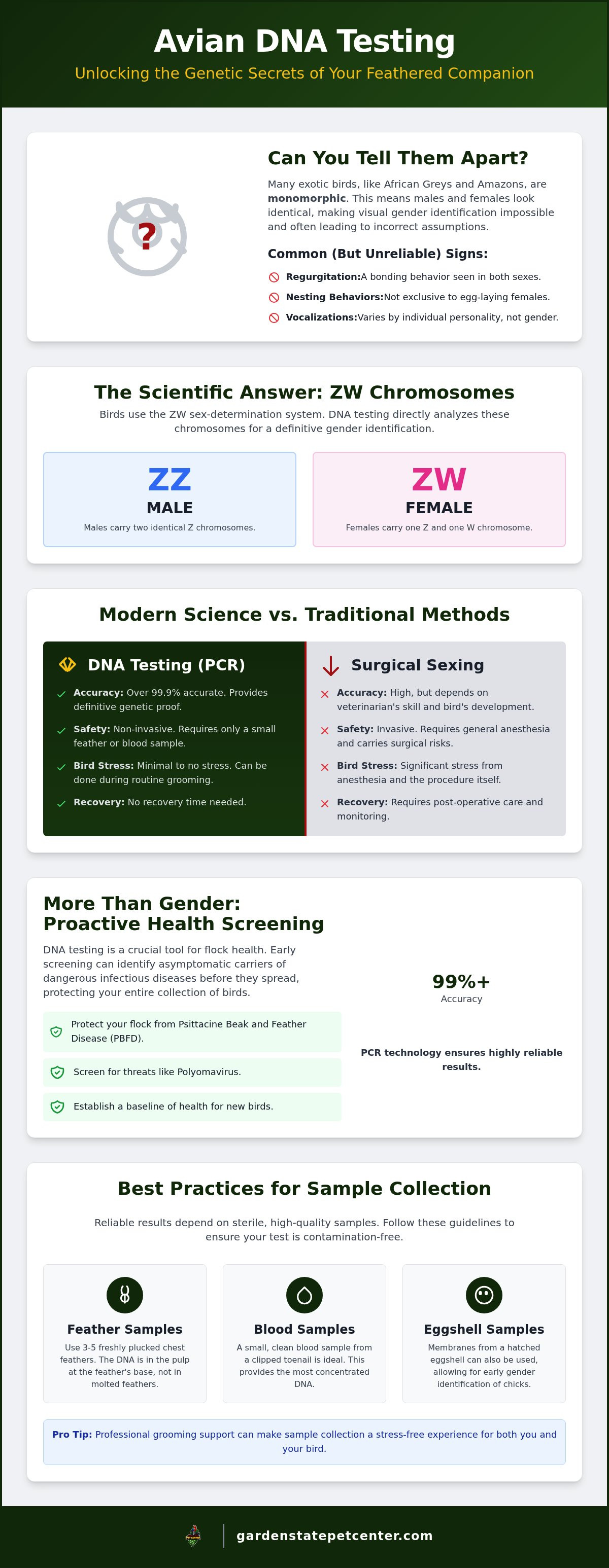
Avian DNA testing is a sophisticated tool that uses molecular biology to identify a bird's gender and detect specific pathogens. Unlike humans, birds operate on the ZW sex-determination system, where females carry the Z and W chromosomes and males carry two Z chromosomes. This genetic reality means that for many species, there's no visible way to tell them apart. By analyzing a small sample, experts can look directly at these chromosomes to provide a definitive answer that visual inspection simply cannot offer.
To better understand how simple the collection process can be, watch this helpful video:
Monomorphism and the Gender Guessing Game
Many popular companions, including African Greys and Amazons, are monomorphic. This means their physical appearance doesn't change based on sex. Relying on behavioral cues often leads to expensive or emotional mistakes. Common misleading signs include:
- Regurgitation: Often seen in both sexes during bonding or courtship.
- Nesting behaviors: Shredding paper or seeking dark corners isn't exclusive to females.
- Vocalizations: While some believe males are more vocal, this varies wildly by individual personality.
A bird assumed to be male might suddenly surprise you by laying an egg years later. These incorrect assumptions cause significant stress in multi-bird households, especially when you're trying to manage territorial behaviors or social dynamics. Knowing the truth from the start allows you to create a stable environment tailored to your bird's actual needs.
Proactive Health: Beyond Simple Sexing
Using avian DNA testing is about more than just knowing if your bird is a boy or a girl. It's a vital part of establishing a clean bill of health for any new bird entering your home. Early screening identifies asymptomatic carriers of infectious diseases like PBFD (Psittacine Beak and Feather Disease) or Polyomavirus. This prevents the accidental contamination of your existing flock and ensures you aren't bringing home a hidden crisis.
Knowing your bird's gender also transforms how you manage their daily life. It allows for precision in nutritional planning and proactive hormone management. For example, female birds have unique calcium requirements to prevent egg-binding, a life-threatening condition. By establishing a DNA-verified baseline, you create a more accurate long-term medical record that supports both responsible breeding and better daily care.
Understanding the Process: DNA Sexing and Disease Screening Explained
Modern avian DNA testing relies on the science of Polymerase Chain Reaction (PCR). This method acts like a high-tech photocopier for genetic material, allowing laboratories to amplify tiny fragments of DNA until they're large enough to analyze with absolute precision. PCR (Polymerase Chain Reaction) is the gold standard for avian genetic clarity. It's a significant advancement over surgical laparoscopy, which was once the primary way to sex birds. Surgery requires general anesthesia and carries the risk of internal injury, whereas DNA screening only needs a few drops of blood or a few feathers. It's safer, faster, and eliminates the recovery time associated with traditional veterinary surgery.
The Mechanics of Molecular Sexing
During the testing process, specialized labs isolate the Z and W chromosomes from the provided sample. Because DNA is most concentrated and stable in blood spots or the pulp at the base of a freshly plucked feather, these are the preferred materials for testing. Labs utilize advanced molecular sexing techniques to identify the presence of the W chromosome, which is unique to females. This level of microscopic detail ensures that the results you receive are backed by rigorous scientific evidence rather than subjective observation.
Essential Disease Screening for Exotic Birds
While sexing is a popular request, disease screening is a critical step for any responsible bird owner. Many avian threats are silent killers that show no symptoms until the bird is severely ill. Early detection is your best defense against a household outbreak.
- Psittacine Beak and Feather Disease (PBFD): This viral infection attacks the immune system. Early detection through DNA helps you manage the bird's environment before permanent feather loss begins.
- Avian Polyomavirus (APV): This virus is especially dangerous for juvenile birds. It can cause sudden death in chicks, making it a priority for anyone with a growing flock.
- Chlamydophila psittaci: Also known as Parrot Fever, this pathogen poses a zoonotic risk. It can spread from birds to humans; testing protects your entire family.
Once the lab receives your sample, processing usually takes between 1 to 5 business days depending on the specific tests requested. You'll receive an official certificate of results, which is a valuable document for your bird's permanent health record. If you're looking to expand your flock safely, browsing our healthy exotic birds is a great place to start, knowing that we prioritize these high standards of care.
Accuracy and Safety: Why DNA Testing Surpasses Traditional Methods
The numbers speak clearly. Accredited avian laboratories routinely report accuracy rates exceeding 99% for molecular sexing, a benchmark that no visual assessment or physical examination method can realistically match. But accuracy is only half the story. The way a test is performed matters just as much as the result it produces, and this is where avian DNA testing separates itself from older approaches entirely.
DNA vs. Surgical Sexing
For decades, surgical laparoscopy was the only reliable way to confirm a bird's sex. A veterinarian would place the bird under general anesthesia, make a small incision, and visually inspect the reproductive organs. The risks were real: anesthetic sensitivity varies significantly across avian species, and even a routine procedure carried the possibility of post-operative infection, prolonged stress, and a difficult recovery period. Smaller birds faced the highest danger, since their bodies tolerate anesthesia with far less margin for error than larger animals.
DNA testing eliminates every one of those risks. A few drops of blood or a freshly plucked feather with an intact follicle is all a certified lab needs. There's no anesthesia, no incision, and no recovery time. For a bird that may live 40 to 80 years depending on the species, avoiding even one unnecessary surgical procedure is a meaningful long-term welfare decision. Think of it as a one-time investment that protects your companion from preventable risk while delivering a result that's more precise than surgery ever was.
An official DNA certificate also carries practical value beyond the health record. Many reputable breeders, avian societies, and international travel authorities require certified documentation of a bird's sex and health status. That single document can support resale value, facilitate legal transport across state lines, and serve as a verified foundation for any future veterinary care.
Debunking Visual Sexing Myths
Common myths persist in the bird-keeping community, and they cause real harm. Eye color is frequently cited as a gender indicator in African Greys, but iris color changes with age in both sexes and cannot reliably distinguish between them. Wingspan, head size, and beak prominence are equally unreliable across most parrot species. Even experienced keepers who've worked with a species for years can be confidently wrong.
The danger isn't just an incorrect label on a cage card. A female bird misidentified as male won't receive the nutritional support she needs during egg production, raising her risk of life-threatening egg-binding. Pair dynamics in a multi-bird home can be mismanaged for years based on a single flawed assumption. Regardless of your bird's sex, providing the right specialized bird supplies from the start supports healthy development and reduces the risks associated with these common misidentifications.
Certainty isn't a luxury. It's the baseline every bird deserves.
Sample Collection Best Practices: Feathers, Blood, and Eggshells
Success in avian DNA testing begins long before the lab receives your package. It starts with the integrity of the sample you collect. While many owners choose DIY home kits for convenience, the risk of cross-contamination is high if you're managing multiple birds in the same household. Always wash your hands thoroughly between handling different individuals. Use a clean, dedicated workspace and fresh paper envelopes for each bird. If even a tiny amount of DNA from one bird transfers to another's sample, your results will be compromised. Maintaining a sterile environment is the only way to guarantee the precision of your results.
Step-by-Step Feather Collection
To get a viable result, you must use freshly plucked feathers. Naturally dropped or molted feathers usually fail because they lack the "pulp" or living tissue found in the follicle. This pulp contains the concentrated DNA required for analysis. Follow these steps for a successful collection:
- Select the area: Choose five to seven medium-sized feathers from the bird's chest or back where they are easiest to access.
- Pluck correctly: Grasp the feather firmly near the base and pull in a single, quick motion to ensure the follicle remains attached.
- Inspect the tip: Look for the small, clear bulb at the end of the quill. This is the pulp you need.
- Store properly: Place the feathers immediately into a breathable paper envelope labeled with the bird's name.
Never use plastic bags for storage. Plastic traps moisture, which leads to mold growth that can degrade the DNA before it reaches the laboratory.
Blood Spot and Eggshell Techniques
Blood collection is often considered the most reliable method for laboratory accuracy. The safest way for an owner to perform this is via a minor toenail clip. Clean the nail with an alcohol wipe first to remove any debris. Use sterilized clippers to trim just enough of the "quick" to produce two or three drops of blood. Blot the blood directly onto a specialized collection card or a clean piece of paper. Always have styptic powder ready to stop the bleeding immediately after the sample is taken to ensure your bird's safety and comfort.
For breeders, eggshell membrane collection offers a non-invasive way to sex neonates without disturbing the chick. After the bird hatches, collect the internal membrane from the shell. Ensure the membrane is completely dry before mailing it to prevent bacterial growth during transit. If the thought of plucking feathers or clipping a nail makes you anxious, don't risk your bird's safety or your bond. You can schedule professional grooming and sample collection with us to ensure the process is handled with expert care and clinical precision.
Choosing Expert Laboratory Testing for Your Exotic Birds
Choosing a partner for your bird's genetic health is a significant decision that impacts their long-term welfare. At Garden State Pet Center, we've spent decades building a reputation as a knowledgeable resource for exotic bird owners across the country. We don't just facilitate a test; we offer a comprehensive approach to care that starts with reliable data. By choosing professional avian DNA testing through our accredited partner laboratories, you ensure that every step of the process meets the highest clinical standards for accuracy and safety.
The Advantage of Professional Collection
Many owners feel a sense of anxiety about collecting their own samples at home. It's a valid concern because improper handling can lead to contaminated results or a stressed bird. Our trained handlers specialize in sensitive care, ensuring that bird grooming sessions are the perfect time for sample collection. We combine routine maintenance with genetic screening to minimize the number of times your bird needs to be handled. This integrated approach reduces bird anxiety and guarantees that the samples sent to the lab are of the highest quality. Once the process is complete, you'll receive a definitive certificate that serves as a cornerstone of your bird's medical history.
Integrating Results into Long-Term Care
The real value of avian DNA testing lies in what you do with the results once they arrive. Once you have a definitive answer regarding your bird's sex and health status, we help you translate that data into a better life for your pet. For instance, a confirmed female requires a specific premium nutrition plan to prevent the calcium depletion common in egg-laying species. Knowing the gender also allows you to implement smarter social management strategies, particularly in multi-bird households where hormonal behaviors can lead to territorial aggression.
Don't leave your bird's future to guesswork. Whether you've just brought home a new companion or want to provide better care for a long-time friend, we're here to serve as your expert partner. We provide transparent, flat-rate laboratory testing fees so you can plan your bird's wellness with confidence. Contact Garden State Pet Center for professional avian testing services today and take the first step toward a healthier, more predictable life for your exotic bird.
Elevate Your Bird's Care with Scientific Certainty
Investing in avian DNA testing is a proactive step that transforms how you care for your companion. By replacing guesswork with molecular precision, you gain the clarity needed to manage gender-specific nutritional needs and prevent the spread of asymptomatic diseases. Certainty leads to better health. Whether you're welcoming a new addition or refining the care of a long-time friend, these insights ensure your flock remains healthy and vibrant. Since 1990, our team of specialized avian enthusiasts has provided expert handling to make this process safe and stress-free for every bird.
We combine accurate results from accredited laboratories with our comprehensive grooming and nutritional consulting services. This holistic approach ensures you aren't just getting data; you're getting a partner in your bird's long-term welfare. Take the next step in your journey as a responsible bird owner today. Secure Your Bird’s Health with Professional DNA Testing and enjoy the peace of mind that comes with definitive answers. Your feathered friend deserves a future built on wellness and specialized expertise.
Frequently Asked Questions
Is avian DNA testing painful for the bird?
Avian DNA testing is a non-invasive process that causes minimal discomfort, comparable to a quick pinch. Unlike surgical methods that require general anesthesia, collecting a few feathers or a small blood spot is safe and fast. Professional handlers use specialized techniques to keep your bird calm throughout the collection. This proactive approach ensures you get the answers you need without compromising your bird's physical or emotional well-being.
How long does it take to get avian DNA sexing results?
You can typically expect official results within one to five business days after the laboratory receives your sample. While shipping times vary, modern PCR technology allows for rapid processing of genetic material. Once the analysis is complete, you'll receive a definitive certificate confirming your bird's gender or health status. This quick turnaround helps you make immediate decisions regarding your bird's long-term nutritional planning or social management.
Can I use feathers that have fallen off my bird for a DNA test?
You can't use naturally molted or dropped feathers for accurate testing because they lack the necessary living tissue. Successful analysis requires the "pulp" found at the base of a freshly plucked feather follicle. If you submit old feathers found at the bottom of a cage, the lab will likely report an insufficient DNA sample. Always ensure you or a professional handler plucks the feathers directly to guarantee a viable source of genetic material.
What is the most accurate method for bird sexing?
Molecular analysis using PCR technology is the most accurate method available, boasting a success rate exceeding 99%. This science-based approach is far superior to visual "expert" guesses or physical exams, which are notoriously unreliable for monomorphic species. By choosing avian DNA testing, you eliminate the guesswork and receive a laboratory-verified result that remains a permanent part of your bird's medical history and long-term care plan.
Which diseases should I screen my bird for using DNA testing?
It's vital to screen for silent infectious threats such as Psittacine Beak and Feather Disease (PBFD), Avian Polyomavirus (APV), and Chlamydophila psittaci. These pathogens often hide in asymptomatic carriers, meaning your bird could appear healthy while being contagious. Early detection through genetic screening protects your entire flock from contamination and allows for proactive intervention. Screening for these specific diseases is a foundational part of responsible exotic bird ownership.
At what age can a bird be DNA tested?
Birds can be tested at any age, including as neonates through eggshell membrane analysis immediately after hatching. There's no need to wait for a bird to reach maturity or show behavioral cues to determine its sex or health status. Early testing is actually preferred, as it allows you to establish a proper nutrition plan and social environment from the beginning. This ensures your bird thrives during its most critical developmental stages.
What happens if the DNA sample is contaminated?
If a DNA sample is contaminated by human touch or genetic material from another bird, the results may be inconclusive or incorrect. Contamination often happens when owners handle multiple birds without washing their hands or use non-sterile storage containers. If a sample is compromised, the laboratory will typically request a new collection to ensure accuracy. This is why many owners prefer professional collection services to guarantee a clean, reliable sample every time.
Is a DNA certificate required for traveling with my bird?
While not always a legal requirement for every local trip, an official DNA certificate is often essential for international travel and crossing certain state lines. Many airlines and border authorities require proof of health and species identification to prevent the spread of disease. Having these documents ready ensures a smoother transit process and provides verified evidence of your bird's status. It's a valuable asset for any owner who plans to travel.

Article by
Victor Santucci
Victor Santucci is the owner of Garden State Pet Center in Audubon, NJ, where he specializes in premium pet nutrition, exotic animals, and expert-level care. With years of hands-on experience and a passion for helping pets thrive, Victor is dedicated to educating pet owners on proper nutrition, enrichment, and species-specific care. His mission is simple: provide every pet with the highest quality products and every customer with honest, knowledgeable guidance.
Share this post
- 0 comment
- Tags: avian DNA testing, bird health, bird sexing, exotic birds, parrot care, PBFD, PCR technology, pet care