

The Ultimate Guide to Small Animal Habitat Setup: Creating a Thriving Home


What if the key to your pet's longevity and daily joy isn't just what they eat, but the exact way their environment is structured? It's common to feel frustrated by the conflicting advice found online regarding a proper small animal habitat setup and bedding safety. You want the best for your companion, yet the fear of using an unsafe material or failing to provide enough enrichment is a constant worry for many dedicated owners.
We're here to help you move past the confusion and provide the specialized care your pet deserves. This guide teaches you how to master a professional habitat that transforms a simple cage into a thriving, odor-controlled ecosystem. You'll learn how to encourage natural behaviors that lead to a more energetic and contented animal. We've compiled an expert-approved equipment list and layout strategies to ensure your setup supports long-term wellness and vitality from day one. By focusing on behavioral zoning and high-quality materials, you'll create a home where your pet doesn't just live, but truly flourishes.
Key Takeaways
- Master the difference between a standard cage and a functional habitat by prioritizing solid-bottom flooring for your pet's safety.
- Avoid respiratory distress by learning which common bedding materials are toxic and which safe substrates support a healthy environment.
- Optimize your small animal habitat setup by designing specific zones for "kitchen," "bedroom," and "playroom" activities.
- Establish a professional maintenance schedule to eliminate odors and protect your companion from common skin and respiratory infections.
- Understand the value of consulting with specialized experts to find premium supplies that support your pet's unique behavioral needs.
Selecting the Ideal Enclosure: The Foundation of Pet Health
Start your journey by selecting a home that prioritizes your pet's biological needs. While many use the terms interchangeably, a "habitat" differs significantly from a "cage." A cage is often a restricted space; a habitat is a functional ecosystem designed for natural movement and behavioral health. When planning your small animal habitat setup, research various types of animal enclosures to find the best fit for your specific species. Focus on maximizing horizontal space rather than just buying the most convenient box.
To better understand this concept, watch this helpful video:
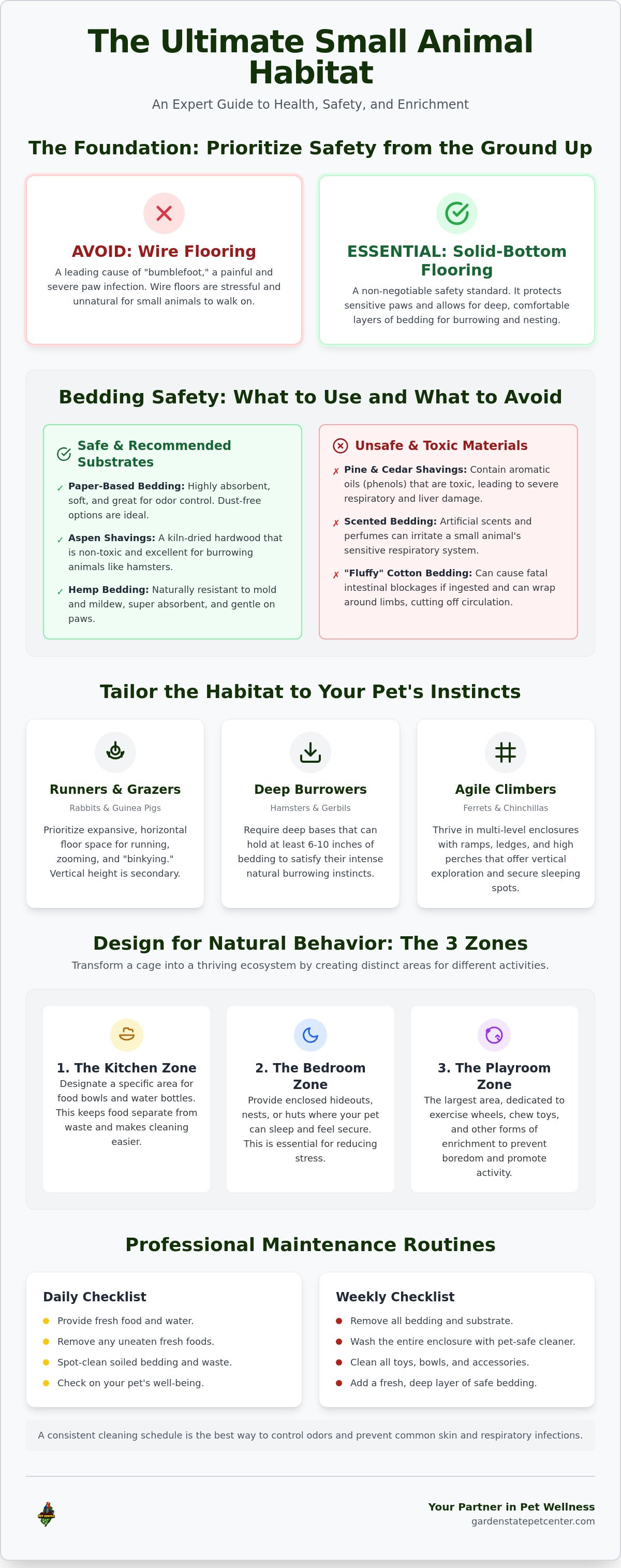
A proper small animal habitat setup requires more than just four walls; it needs a safe foundation. Solid-bottom flooring is a non-negotiable safety standard for any small mammal home. Wire floors are a leading cause of bumblefoot, a painful inflammatory condition that can lead to severe infections. A solid surface protects sensitive paw pads and allows for a deep layer of substrate. Ventilation is equally critical. Wire-topped enclosures provide superior air circulation compared to glass tanks. Ammonia from urine can build up quickly in enclosed spaces; this leads to chronic respiratory distress. Position the habitat in a quiet area away from direct sunlight, drafty windows, or high-traffic noise zones like television rooms to maintain a stable environment.
Size Guidelines for Common Small Animals
Rabbits and guinea pigs require expansive floor space to zoom and binky; vertical height is secondary to their need for running room. Hamsters and gerbils need deep bases that accommodate at least six inches of bedding for their intense burrowing instincts. Conversely, ferrets and chinchillas are agile climbers. They thrive in multi-level enclosures that offer vertical exploration and high-perched sleeping spots.
Materials and Safety Standards
Invest in high-quality materials like powder-coated metal and heavy-duty plastic. These are chew-proof and easy to sanitize. Pay close attention to bar spacing to prevent escapes or dangerous accidents. For smaller species like mice or young rats, spacing should be half an inch or less. While modular plastic tube systems look fun, they often lack the ventilation and space required for long-term health. Stick to open, accessible layouts that allow you to interact with your pet easily while providing them with the security they need.
Environmental Essentials: Bedding, Lighting, and Air Quality
Substrate is more than just a floor covering. It acts as a primary tool for waste management, insulation, and behavioral expression within your small animal habitat setup. Choosing the right material is vital because small mammals spend nearly every second in direct contact with it. We recommend paper-based, aspen, or hemp bedding for most species. These options are highly absorbent and gentle on sensitive paws. Avoid cedar and pine shavings at all costs. These woods contain aromatic oils called phenols that are toxic to small animal respiratory systems and can lead to chronic liver issues. By selecting safe materials, you ensure your home care aligns with the standards for the humane treatment of animals established by federal authorities.
Managing odors doesn't require chemical sprays or heavy perfumes. Artificial scents often irritate a pet's respiratory tract. Instead, rely on absorbent bedding and consistent spot cleaning to keep the air fresh. Proper air quality prevents the buildup of ammonia, which is a leading cause of pneumonia in rats and guinea pigs. Lighting also plays a silent but critical role in wellness. Most small mammals are crepuscular, meaning they're most active at dawn and dusk. Ensure the habitat receives natural, indirect light during the day. This helps maintain their internal circadian rhythms and supports a healthy sleep cycle. If you're looking for safe, dust-free bedding, explore our curated high-quality substrate options to find the perfect match for your pet.
Substrate Depth and Texture
Different species have unique depth requirements to feel secure. Hamsters and gerbils need at least 6 inches of compressed bedding to satisfy their natural burrowing instincts. For nesting, provide safe hay or soft paper strips. Never use "fluff" or cotton fibers; these can entangle limbs or cause fatal intestinal blockages if swallowed. Always prioritize dust-free substrates, especially for chinchillas and rats, as their lungs are exceptionally sensitive to airborne particles.
Temperature and Humidity Control
Maintain a stable environment between 65 and 75 degrees Fahrenheit. Small mammals cannot sweat and are highly susceptible to temperature swings. Rabbits and chinchillas are particularly prone to heatstroke; watch for red ears, panting, or lethargy if the room warms up. Humidity levels also matter. Excessively damp air can lead to fungal skin infections, while air that's too dry may cause respiratory irritation or brittle coats.
Behavioral Zoning: Designing for Natural Instincts
Security is the most vital component of any layout. Because most small mammals are prey species, they require multiple hideouts to feel confident. Provide at least two "escape" spots at opposite ends of the habitat. This ensures that if they feel startled, a safe retreat is always within a few steps. You can also turn mealtime into a mental workout by integrating foraging opportunities. Instead of placing all their food in one spot, hide treats inside cardboard rolls or under hay piles to stimulate their problem-solving skills and keep them physically active.
The bathroom zone is another essential area for hygiene and odor control. Rabbits and ferrets are remarkably clean animals and can often be litter trained with a little patience. Place a litter box in the specific corner your pet already prefers to use. Fill it with a safe, paper-based substrate to distinguish it from the rest of the bedding. This targeted waste management keeps the rest of the habitat sterile and makes your weekly cleaning routine much faster.
The Nutritional Kitchen Zone
Design a dedicated space for feeding that stays clean and dry. Use heavy ceramic bowls for pellets and fresh greens; these are difficult to tip over and prevent messy spills. When choosing a water source, consider your pet's specific needs. Gravity-fed bottles stay cleaner, but open bowls are often more natural for species like rabbits. For constant grazers, install a hay rack at eye level to keep their forage off the floor. We invite you to browse our selection of premium small animal food to stock your kitchen zone with high-quality, holistic nutrition.
Enrichment and Mental Stimulation
Mental health is just as critical as physical health. Implement environmental enrichment by rotating toys every week to prevent boredom. Provide safe wood types like apple, willow, or pear wood to encourage healthy dental wear. Tunnels and bridges are also excellent additions; they offer both a place to hide and a way to explore. These simple tools build a prey animal's confidence, helping them feel secure enough to play and interact with you daily.
Maintenance and Professional Wellness Routines
Establish a rigorous cleaning schedule to ensure your small animal habitat setup remains a safe, sterile environment. Consistency saves lives. A neglected habitat leads to a buildup of ammonia, which is the primary cause of chronic respiratory distress in sensitive species like rats. Damp, soiled bedding also creates a breeding ground for bacteria that cause skin infections and painful pododermatitis. Follow a structured approach to hygiene to protect your pet's health. Perform daily spot cleanings by removing soiled substrate and uneaten fresh food. Every week, scrub the entire enclosure with hot, soapy water and replace all bedding. Once a month, perform a deep disinfection of all toys, hideouts, and structural components to eliminate deep-seated pathogens.
Monitor your pet's health by observing their interactions with the environment. Your habitat is a diagnostic tool. Pay close attention to daily water intake and the consistency of droppings; sudden changes often signal digestive upset or dehydration. Track activity levels during their peak hours. If a normally energetic chinchilla stops using their wheel or a social guinea pig remains tucked away in a hideout, it's time to consult an expert. These subtle behavioral shifts are often the first indicators of illness before physical symptoms appear.
Professional Grooming and Maintenance
Professional intervention is a vital part of a holistic care routine. Nail trimming is a delicate task that is often safer when handled by an experienced professional to avoid cutting the quick. Long-haired breeds, such as Angora rabbits or Silkie guinea pigs, require specialized coat maintenance to prevent painful matting and skin irritation. Scent gland cleaning is another essential service for species like ferrets and rabbits to prevent blockages and manage odors. If you are planning a trip, read our guide on Professional Pet Boarding for when you can't be there to maintain the routine yourself.
Health Screening and Bio-Security
Protect your established colony by practicing strict bio-security. Always quarantine new arrivals in a separate room for at least 30 days before introducing them to your primary small animal habitat setup. This prevents the spread of undiagnosed parasites or respiratory infections. Watch for "red flag" behaviors like labored breathing, discharge from the eyes, or unusual lethargy. For multi-pet households, consider professional laboratory testing and disease screening to ensure the long-term safety of all your companions. Early detection through expert consultation is the most effective way to manage health risks in exotic and niche species.
Maintain your pet's peak condition by booking a professional small animal grooming appointment with our specialized team today.
Sourcing Premium Supplies for Your Small Animal Habitat
Select your supplies with the same precision you used for the initial layout. A successful small animal habitat setup relies on the quality of every component, from the structural integrity of the enclosure to the biological appropriateness of the diet. Specialized pet centers provide a level of quality control that big-box retailers often lack. While generalist stores frequently stock mass-market products that prioritize shelf-life over safety, a specialized resource carefully vets every item. This ensures you never accidentally purchase toxic wood shavings or cages with unsafe bar spacing. You aren't just buying gear; you're investing in the reliable health and natural behavior of your companion.
Consult with professionals to add a layer of security to your pet's life. Finding a certified pet nutritionist allows you to tailor a diet that supports specific health goals, such as dental maintenance or weight management. These experts understand that a chinchilla's requirements differ vastly from those of a guinea pig or a ferret. By choosing curated selections over mass-market alternatives, you invest in equipment that lasts and nutrition that sustains. Even if you aren't located near our physical shop, nationwide shipping ensures you have access to professional-grade gear from anywhere.
The Garden State Pet Center Difference
Experience a higher standard of care rooted in a genuine passion for animal welfare. Our commitment to holistic health and specialized exotic care means every product we offer serves a specific biological purpose. Our expert staff understands the intricate needs of birds, reptiles, and small mammals, providing you with a knowledgeable partner rather than just a vendor. Shop our full small animal collection for curated habitat essentials that prioritize safety and enrichment.
Planning for the Long Term
View your habitat as an evolving space that grows alongside your pet. As your bond strengthens and your pet matures, you may find opportunities to upgrade to larger enclosures or more complex enrichment systems. Integrate high-quality small animal treats and vitamins into your routine to ensure a complete care plan that addresses nutritional gaps. This proactive approach prevents common health issues before they start. Visit Garden State Pet Center online to build your dream habitat today and provide your pet with the thriving home they deserve.
Transform Your Pet's World Today
Creating a thriving home for your companion is a journey that begins with understanding their biological needs. You now have the tools to move beyond basic housing and implement a professional small animal habitat setup that encourages natural behaviors. By prioritizing behavioral zoning and selecting safe, dust-free substrates, you protect your pet from common health risks like respiratory distress and infections. A clean, enriched environment is the greatest gift you can give to a sensitive species.
We've specialized in exotic species since 1990 and are ready to help you every step of the way. Our on-site certified pet nutritionist ensures your kitchen zone is stocked with the best holistic food. Our professional small mammal grooming services keep your pet in peak physical condition. Don't settle for mass-market solutions that overlook the unique requirements of your niche pets. Reach out to our knowledgeable team to refine your care plan and watch your pet flourish in their new environment.
Build your perfect small animal habitat with our curated collection today. Your companion deserves a home that truly supports their longevity and joy.
Frequently Asked Questions
What is the best bedding for small animals to control odor?
High-quality paper-based bedding or hemp substrates offer the best odor control for your companion. These materials absorb moisture rapidly and trap ammonia before it becomes an airborne irritant. Avoid cedar or pine shavings because their aromatic oils are toxic to sensitive respiratory systems. Consistent spot cleaning remains the most effective way to keep the air fresh in any small animal habitat setup.
How often should I completely clean my small animal's habitat?
Perform a complete habitat cleaning every week to maintain a sterile environment. This involves removing all substrate, scrubbing the base with pet-safe soap, and disinfecting all accessories. Daily spot cleanings are also necessary to remove waste and uneaten fresh food. A structured monthly deep-clean of all structural components ensures that deep-seated pathogens don't compromise your pet's long-term health and vitality.
Can I use a glass aquarium for my hamster or guinea pig?
Glass aquariums are suitable for hamsters if they provide enough depth for burrowing, but they are inadequate for guinea pigs. Guinea pigs require the superior ventilation found in wire-topped enclosures to prevent chronic respiratory infections. If you use a tank for a hamster, ensure it has a secure mesh lid to allow for constant air exchange. For larger mammals, prioritize floor space and airflow over glass aesthetics.
Do small animals need a heat lamp in their setup?
Most small mammals thrive in temperatures between 65 and 75 degrees Fahrenheit and don't require heat lamps. Species like rabbits and chinchillas are actually prone to heatstroke if their environment becomes too warm. Heat lamps are generally reserved for reptiles or amphibians. If your home is exceptionally cold, use safe heating pads or provide extra nesting materials rather than overhead lamps that can cause overheating.
What size cage do I need for two guinea pigs?
Two guinea pigs require a minimum of 10.5 square feet of flat floor space to live comfortably. This translates to an enclosure that is approximately 30 inches by 50 inches. Providing more space is always better to prevent territorial disputes and encourage exercise. Focus on horizontal room rather than vertical height, as guinea pigs are ground-dwellers who prioritize running space over climbing opportunities.
Is it okay to use wire flooring in a rabbit cage?
Never use wire flooring in a rabbit cage as it causes a painful condition called bumblefoot. Wire mesh puts excessive pressure on a rabbit's sensitive hocks and can lead to open sores or serious infections. Always choose a solid-bottom enclosure to support their weight. If your current cage has wire floors, cover them with grass mats or solid plastic inserts to protect your pet's feet and ensure their daily comfort.
How do I introduce foraging into my pet's habitat?
Introduce foraging by hiding healthy treats inside hay piles or cardboard tubes to challenge your pet. This encourages them to use their problem-solving skills during mealtime. You can also scatter a portion of their daily pellets across the substrate instead of using a bowl. This physical and mental workout mirrors natural wild behaviors and is a key component of a successful small animal habitat setup.
What are the most important toys for a small animal setup?
The most important toys include safe wooden chews, tunnels, and multiple hideouts. Chew toys made from apple or willow wood are essential for maintaining healthy dental wear and preventing overgrowth. Tunnels provide a sense of security for prey species while they navigate their home. Ensure your pet has at least two escape spots to retreat to if they feel startled, as this builds their confidence and reduces stress.

Article by
Victor Santucci
Victor Santucci is the owner of Garden State Pet Center in Audubon, NJ, where he specializes in premium pet nutrition, exotic animals, and expert-level care. With years of hands-on experience and a passion for helping pets thrive, Victor is dedicated to educating pet owners on proper nutrition, enrichment, and species-specific care. His mission is simple: provide every pet with the highest quality products and every customer with honest, knowledgeable guidance.
Share this post
- 0 comment
- Tags: Animal Enrichment, Cage Setup Guide, Habitat Setup, Pet Bedding, Pet Care, Pet Safety, small animal habitat setup, Small Animals