

Limited ingredient cat food for allergies: Everything You Need to Know


The term "limited ingredient" on a pet food label has no legal or official definition, which means that "specialized" bag you just bought might still contain the hidden triggers making your cat miserable. It's a startling reality for owners managing feline food sensitivities. If you've spent months searching for the right limited ingredient cat food for allergies, you know that a vague marketing claim isn't enough to stop the constant itching or keep a meal down. With food allergies affecting up to 22% of cats with skin problems, finding a precise solution is more than a preference; it's a medical necessity.
We understand how exhausting it is to watch your companion suffer through endless vet visits while you struggle to decode complex ingredient lists. You deserve a feeding plan that's simple, transparent, and effective. This article will show you how to identify common allergens like beef and chicken while navigating the new 2026 AAFCO pet nutrition labels. You'll discover how to choose diets that promote clear skin, a shiny coat, and stable digestion. We're here to help you move past the confusion and restore your cat's health with a specialized, professional approach to nutrition.
Key Takeaways
- Distinguish between immune-based food allergies and digestive intolerances to ensure you are addressing the correct health concern.
- Identify the benefits of novel proteins like rabbit, venison, and duck that provide relief by avoiding common triggers like beef or chicken.
- Compare the advantages of wet, dry, and raw diet formats to determine which moisture levels and ingredient profiles best support your cat's recovery.
- Master the 8–12 week elimination diet process to accurately identify sensitivities and select the most effective limited ingredient cat food for allergies.
- Understand how expert-led nutritional guidance and premium holistic brands offer the specialized care needed for complex allergy cases.
Understanding Feline Food Allergies and the Role of Limited Ingredient Diets
A limited ingredient diet (LID) is a specialized nutritional strategy that relies on a single source of animal protein and a minimal list of carbohydrate sources. By stripping away the complex fillers and multiple protein blends found in standard kibble, these formulas significantly reduce the "antigenic load" on your cat's immune system. This reduction is vital because every additional protein or additive represents a potential trigger for a sensitive pet. Choosing a high-quality limited ingredient cat food for allergies ensures that your cat's body isn't constantly fighting off perceived threats from their daily meals.
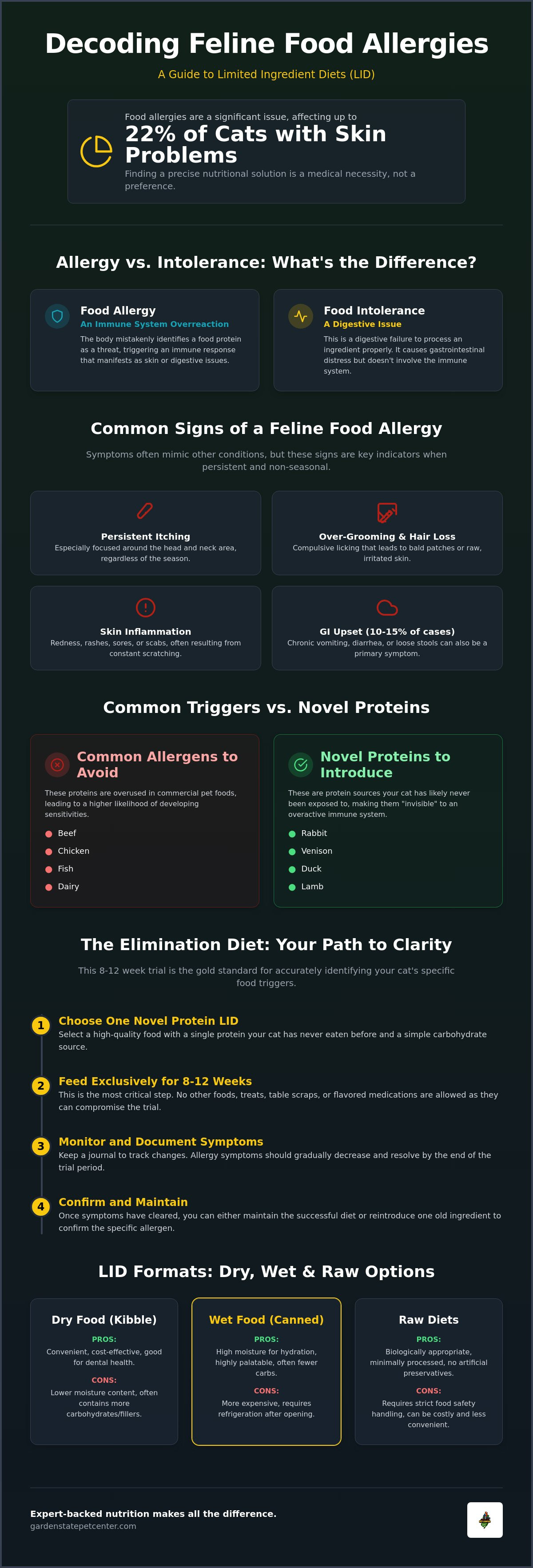
Understand that there is a distinct difference between a true food allergy and a food intolerance. While both cause distress, a food allergy is an immune system overreaction, whereas an intolerance is a digestive failure to process a specific ingredient. When Understanding Feline Food Allergies, we look for primary culprits such as beef, dairy, and fish, which are the most common documented allergens in the feline world. If you're currently managing these sensitivities, exploring our premium cat food collection can provide the clean protein sources your cat needs to thrive.
To better understand this concept, watch this helpful video:
Common Signs Your Cat Has a Food Allergy
Symptoms often manifest in ways that mimic other conditions, making them difficult to pin down without a focused diet. Watch for persistent, non-seasonal itching, particularly focused around the head and neck areas. Unlike seasonal environmental allergies, these symptoms won't disappear with the changing weather. You might also notice your cat "over-grooming" to the point of developing bald patches or raw skin. Beyond skin issues, research indicates that 10% to 15% of cats with food allergies suffer from gastrointestinal distress, including chronic vomiting or loose stools.
Why "Limited" is Better for Sensitive Systems
The "less is more" philosophy serves as the foundation for modern feline wellness. When you reduce the number of components in a bowl, you make it much easier to isolate exactly what is causing a reaction. This clarity is impossible with traditional foods that list dozens of ingredients. By providing a clean, focused nutrient profile, limited ingredient cat food for allergies allows the body to stop reacting and start healing. A limited ingredient diet simplifies the metabolic process for cats by reducing the biological effort required to break down and identify complex protein structures.
Selecting the Right Novel Proteins for Allergy Relief
Novel proteins are meat sources your cat has never consumed before. For many owners, finding the right limited ingredient cat food for allergies starts with identifying a single, unfamiliar protein source that won't trigger an existing immune response. Most commercial diets rely heavily on chicken, beef, or fish. If your cat's immune system has identified these common proteins as "invaders," it will continue to react with skin inflammation or digestive upset every time they eat. By switching to a meat source like rabbit, venison, or duck, you effectively bypass those established triggers.
The goal is to find a protein that is biologically appropriate yet "invisible" to your cat's overactive immune system. When seeking expert-backed nutrition advice, many professionals recommend these exotic or game meats because they haven't been overused in the pet food industry. This lack of exposure is exactly what allows your cat's body to rest and heal. High-quality limited ingredient cat food for allergies should always list the specific animal clearly, avoiding vague terms like "poultry" or "meat by-products" that often hide multiple hidden allergens.
Beyond Chicken and Beef: The Novel Protein Advantage
The biological novelty concept is simple. If the immune system hasn't seen a protein, it won't attack it. Game meats like venison or rabbit are often leaner and more nutrient-dense than standard factory-farmed poultry. For cats with milder sensitivities, lamb or turkey can sometimes serve as effective alternatives, provided they haven't been a staple of the cat's diet in the past. These proteins offer high digestibility, which means the cat's system can break them down efficiently without causing the metabolic stress associated with more complex, processed meat blends.
The Importance of Single-Protein Integrity
Checking the label for single-protein integrity is the most critical step in this process. Many "sensitive skin" formulas still contain "hidden" proteins like chicken fat or fish oil, which can be enough to trigger a reaction in highly sensitive cats. Cross-contamination in large manufacturing facilities is a real risk. This is why we prioritize brands that follow strict cleaning protocols between batches. Be wary of ingredients like "animal fat" or "natural flavors," as these are often catch-all terms for whatever remains are available. If you want to ensure your cat is getting a truly clean meal, you can browse our specialized feline protein options to find a match for your cat's specific needs.
In extreme cases where even common novel proteins fail, exotic options like kangaroo provide a final line of defense. Kangaroo is incredibly lean and almost never found in standard feline diets, making it the ultimate choice for a "clean slate" elimination trial. It provides the essential amino acids your cat needs while offering the highest level of protection against cross-reactive allergens found in more common livestock.
LID Formats: Comparing Dry, Wet, and Raw Options
Choosing the right format for your cat's meal is just as important as the protein source itself. While the focus is often on the meat, the delivery method determines how many fillers, starches, and synthetic additives are included in the recipe. When you're looking for the best limited ingredient cat food for allergies, you'll find that wet, dry, and raw options each offer specific benefits for skin and digestive recovery. The goal is to select a format that minimizes metabolic stress while providing the clean nutrition your cat needs to heal.
Wet food is a favorite among specialists because of its high moisture content and generally minimal filler list. Moisture is a powerful tool for sensitive cats; it helps flush potential allergens through the system and supports kidney health. Brands like FirstMate Pet Food have become leaders in this space by offering simple, high-quality canned LID options. These canned pâtés often have a lower glycemic index than kibble, which reduces the internal inflammation that can make allergic reactions worse. By choosing a high-moisture diet, you're helping your cat maintain a stable internal environment.
Dry LID options provide undeniable convenience and can assist with dental health, but owners must be vigilant about starch content. Even grain-free kibble requires a binder like peas, potatoes, or chickpeas. While these are often safer than corn or wheat, some cats still react to high starch loads. Research from Tufts University on Selecting the Right Novel Proteins emphasizes that a proper diagnosis is key, as grain allergies are actually quite rare compared to protein sensitivities. If you choose dry food, ensure it prioritizes a single animal protein as the first ingredient.
Freeze-Dried Raw: The Gold Standard for Allergies
Freeze-dried and raw diets are gaining popularity for their maximum nutrient retention and lack of artificial processing. Brands like Vital Essentials Pet Food provide pure protein without synthetic additives, colors, or heavy preservatives. These diets contain "living enzymes" that support a healthy gut microbiome, which is your cat's first line of defense against allergens. Because raw diets naturally lack the starches and grains used as binders in kibble, they're often the most effective way to eliminate systemic inflammation. They're incredibly easy to store and serve, offering the benefits of a raw diet with the shelf-stable convenience of dry food.
Wet Food vs. Dry Food for Sensitive Digestion
If your cat suffers from chronic vomiting or loose stools, the choice between wet and dry food can be transformative. Wet food's soft texture and high hydration levels are often easier on a compromised digestive tract. On the other hand, dry food is a practical choice for cats who prefer to graze throughout the day. Regardless of the format you choose, the primary goal of a limited ingredient cat food for allergies remains the same: provide a clean, high-quality protein source that allows your cat's body to return to its natural state of health.
How to Implement a Feline Elimination Diet Trial
Implementing a successful elimination trial requires more than just a new bag of food; it demands a structured, disciplined approach. Before you open a single container of limited ingredient cat food for allergies, establish a clear baseline. Document the frequency of itching, the presence of head and neck redness, and the consistency of stools. Since food allergies affect up to 22% of cats with skin problems, having a detailed record allows you to see if the new diet is actually working or if your pet's symptoms are stemming from environmental triggers instead.
Once you select a novel protein, you must commit to it exclusively for 8 to 12 weeks. This duration is necessary because skin cells and digestive linings take time to regenerate and for the previous allergens to clear the system. During this period, you must eliminate all outside variables. This includes flavored medications, which often use beef or chicken as a base, and every single table scrap. A single mistake can trigger an immune response that resets your progress. Consult with a professional to ensure the chosen diet is nutritionally complete and appropriate for your cat's life stage.
The Transition Period: Moving to New Food Safely
Abrupt changes in diet can cause gastrointestinal upset, masking the very symptoms you're trying to heal. Follow a 7-day transition schedule: mix 25% new food for the first two days, 50% for days three and four, and 75% for days five and six. By day seven, your cat should be eating the new diet exclusively. Some cats experience minor "detox" symptoms, such as slight lethargy, as their system adjusts. For a deeper look at managing these changes, read our guide on Premium Pet Food transition strategies.
Monitoring Progress and Avoiding Hidden Allergens
The most common reason for a failed trial is the "treat trap." Giving your cat a standard biscuit while they are on a strict elimination diet introduces the exact proteins you're trying to avoid. If you want to reward your pet, use allergy-safe, single-ingredient treats from trusted brands like Vital Essentials. Success in a trial looks like reduced redness, less frequent scratching, and significantly firmer stools. If you're ready to start your journey toward a healthier pet, browse our curated selection of LID formulas to find the best limited ingredient cat food for allergies for your cat's specific needs.
Why Expert-Backed Nutrition Makes the Difference
Choosing a limited ingredient cat food for allergies shouldn't feel like a guessing game played with your pet's health. While many big-box retailers offer "sensitive" formulas, these products often lack the ingredient precision required for true recovery. Navigating complex allergy cases requires a deeper understanding of how specific proteins interact with a cat's unique biology. This is where expert-backed nutrition becomes your most valuable tool. By consulting with a professional, you move beyond surface-level symptom management and begin addressing the root cause of your cat's distress.
A holistic approach considers the whole animal rather than just the itchy skin or the upset stomach. We recognize that the gut and the skin are intrinsically linked; a disruption in one often manifests as a crisis in the other. Sourcing your pet's meals from trusted, high-standard manufacturers ensures that the "single protein" claim on the bag is backed by rigorous cleaning protocols and transparent sourcing. We prioritize partnerships with brands that refuse to compromise on quality, giving you peace of mind that every bowl is free from cross-contamination and hidden fillers.
Our Curated Selection of Hypoallergenic Solutions
We take pride in our specialized inventory, carefully selecting brands that meet the highest standards of transparency. Our shelves feature top-tier options like SmallBatch Pet Food and Go! Solutions, both of which are renowned for their clean ingredient lists and focused nutrient profiles. For the most sensitive felines, we often recommend raw or freeze-dried formats. These minimally processed options retain the natural enzymes and amino acids that heat-processed kibble often loses, providing a powerful boost to the immune system. Every brand we carry is vetted to ensure it provides the specialized care your cat deserves.
Personalized Support for Your Cat’s Journey
Every cat is an individual, and a one-size-fits-all product rarely solves a long-term allergy problem. We invite you to utilize our on-site certified pet nutritionist services to develop a customized plan tailored specifically to your cat's history and needs. Our commitment to ongoing education means we stay updated on the latest feline health research, allowing us to serve as a reliable resource for our community. We are here to guide you through every step of the recovery process, from the first day of an elimination trial to the long-term maintenance of a shiny coat and stable digestion. Shop our full collection of premium cat food and start your cat’s recovery today.
Restore Your Cat’s Health with Precision Nutrition
Managing feline sensitivities is a journey that requires patience and the right nutritional partner. By focusing on novel proteins and committing to a structured elimination trial, you can finally end the cycle of itching and digestive upset. Choosing a high-quality limited ingredient cat food for allergies is the most important step toward restoring your pet's vibrant coat and stable health. You have the power to transform their daily life through the simple act of choosing better ingredients.
At Garden State Pet Center, we bring a specialized focus to every bowl. As a trusted family-owned resource since 1990, we specialize in raw and holistic diets that many standard retailers simply don't carry. Our on-site certified pet nutritionist is ready to help you navigate complex cases with a customized plan tailored to your cat's specific requirements. You don't have to face the confusion of complex labels alone. Take the first step toward a happier, healthier companion by exploring our curated selection of professional-grade formulas.
Browse our Expert-Selected Limited Ingredient Cat Foods and start your cat's journey to wellness today.
Frequently Asked Questions
What is the best protein for a cat with severe allergies?
The most effective protein for severe cases is a novel protein your cat has never consumed, such as rabbit, venison, or kangaroo. These meats are "invisible" to an overactive immune system because no prior sensitivity exists. Choosing a limited ingredient cat food for allergies with a single, exotic protein source bypasses common triggers like beef or chicken. This allows the body to stop reacting and begin the healing process immediately.
How long does it take for a limited ingredient diet to work?
Most cats require 8 to 12 weeks on a strict diet before you see a complete resolution of symptoms. While digestive issues might improve within a few days, skin inflammation and itching take much longer to subside. This timeline allows old skin cells to shed and the gut lining to repair itself fully. Consistency is vital; even a small slip-up can reset this biological clock and delay recovery.
Can I give my cat treats while they are on an elimination diet?
Is grain-free cat food the same as limited ingredient cat food?
Grain-free and limited ingredient diets are not the same, though they often overlap. Grain-free food simply replaces corn or wheat with other carbohydrates like potatoes or peas, but it may still contain multiple animal proteins. A limited ingredient cat food for allergies focuses on protein simplicity, usually providing only one animal source to minimize immune triggers. Always check the label for "hidden" meats regardless of the grain status.
What should I do if my cat refuses to eat novel proteins like rabbit or venison?
Try warming the food slightly to enhance its natural aroma or mixing in a small amount of warm water. Cats are often "imprinted" on the texture and smell of their previous food, so a very slow transition over 10 to 14 days is helpful. You might also try switching formats, as a cat who refuses dry venison may find a wet pâté version much more palatable. Persistence and gradual changes are key to success.
Are there specific ingredients I should always avoid for sensitive cats?
Always avoid vague ingredients like "animal fat," "meat by-products," or generic "natural flavors." These catch-all terms often hide multiple protein sources that can trigger a sensitive cat. Look for labels that name the specific animal, such as "duck fat" or "rabbit meal." Avoiding artificial colors and heavy preservatives also helps reduce the overall inflammatory load on your cat's system and supports better long-term health.
Can food allergies develop suddenly in older cats?
Food allergies can develop suddenly in older cats, even if they have eaten the same food for years. Allergies require repeated exposure to a protein before the immune system decides to react. It's common for a cat to thrive on a specific chicken-based diet for several years and then suddenly develop a severe sensitivity. Don't rule out food triggers just because the diet hasn't changed recently.
Do I need a prescription for limited ingredient cat food?
You do not need a prescription to purchase high-quality limited ingredient diets. While some veterinarians sell "hydrolyzed" protein diets, many premium holistic brands offer superior single-protein options that are available over the counter. These commercial LID formulas provide the same level of protein isolation while often using higher-quality, less processed meat sources. Consult with our on-site nutritionist to find the best fit for your cat's specific needs.

Article by
Victor Santucci
Victor Santucci is the owner of Garden State Pet Center in Audubon, NJ, where he specializes in premium pet nutrition, exotic animals, and expert-level care. With years of hands-on experience and a passion for helping pets thrive, Victor is dedicated to educating pet owners on proper nutrition, enrichment, and species-specific care. His mission is simple: provide every pet with the highest quality products and every customer with honest, knowledgeable guidance.
Share this post
- 0 comment
- Tags: Cat Allergies, Cat Health, Elimination Diet, Feline Nutrition, Hypoallergenic Cat Food, Limited Ingredient Cat Food, limited ingredient cat food for allergies, Novel Protein