

Signs of Food Intolerance in Cats: A Complete 2026 Guide to Feline Sensitivities


What if your cat’s chronic vomiting and itchy skin aren’t just "sensitive stomach" quirks, but a direct reaction to the hidden fillers and additives in their bowl? It is incredibly frustrating to watch your companion suffer through endless bouts of diarrhea or constant scratching while you stare at confusing labels that offer no real answers. You want a solution that doesn't involve another expensive vet visit with vague results. Understanding the signs of food intolerance in cats is the first step toward restoring their health and your peace of mind.
We believe that every pet deserves a diet that respects their biology. In this guide, you will learn how to identify these triggers, manage symptoms through expert nutritional insights, and finally resolve the underlying issues. We will explore the latest 2026 labeling standards, the crucial differences between allergies and intolerances, and how professional dietary choices lead to a happy cat with a stable stomach and a shiny coat. Gain the confidence to choose the right ingredients and help your feline friend thrive again.
Key Takeaways
- Distinguish between immune-driven allergies and digestive sensitivities to ensure you’re addressing the actual root cause of your cat’s distress.
- Learn to identify the subtle signs of food intolerance in cats, such as chronic vomiting, frequent hairballs, and targeted skin irritation around the head and neck.
- Identify how common commercial fillers and dairy products can negatively impact an obligate carnivore’s highly specialized digestive tract.
- Master the elimination diet protocol to safely introduce novel proteins and find a nutritional baseline that stops chronic gastrointestinal upset.
- Discover how biologically appropriate raw and freeze-dried nutrition can resolve long-standing sensitivities by preserving vital enzymes and amino acids.
Understanding Food Intolerance vs. Food Allergy in Cats
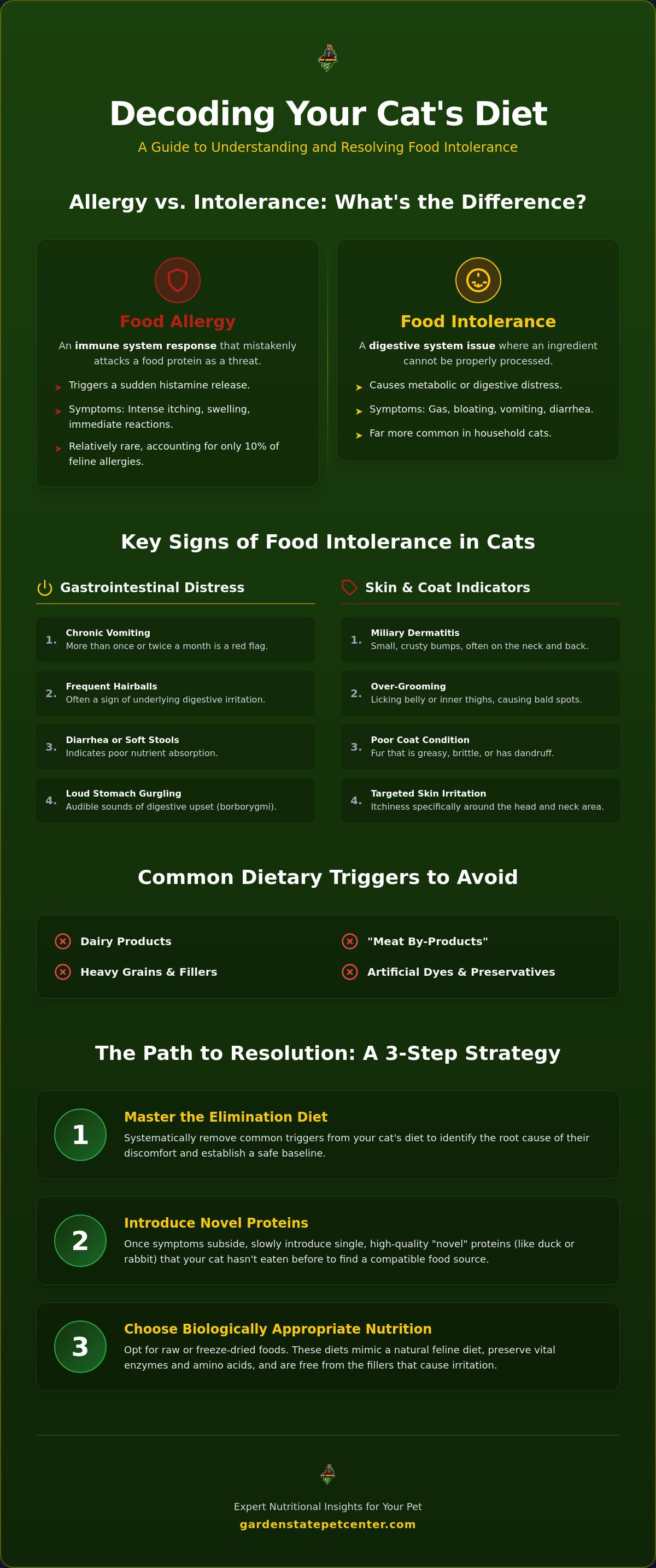
Many pet owners use the terms "allergy" and "intolerance" interchangeably, but they represent two distinct biological processes. A food allergy is a specific immune response where the body mistakenly identifies a protein as a threat and attacks it. In contrast, food intolerance is a mechanical failure of the digestive system to process certain ingredients correctly. While true food allergies account for approximately 10% of allergies seen in feline patients, the actual signs of food intolerance in cats are far more common in daily household life.
The overlap in symptoms makes diagnosis a process of elimination rather than a quick test. Because both conditions can cause vomiting or itchy skin, you must look closer at the underlying cause. Food intolerance often stems from a lack of specific enzymes or a sensitivity to chemical additives rather than an immune system glitch. Over time, a compromised gut microbiome can lead to "leaky gut," where the intestinal lining becomes permeable and allows undigested food particles to trigger systemic inflammation.
To better understand how these reactions differ and how they affect your pet, watch this helpful breakdown:
The Immune System vs. The Digestive Tract
Allergies trigger a sudden histamine release, which often leads to immediate swelling or intense itching. Intolerance causes metabolic distress that typically appears shortly after eating as gas, bloating, or loose stools. Surprisingly, your cat can develop an intolerance to a food they have eaten safely for years. This happens as the digestive tract ages or becomes irritated by repetitive exposure to the same complex proteins and synthetic fillers.
Why Quality Matters More Than Flavor
Often, the problem isn't the chicken or beef itself; it is the quality of the sourcing. Many commercial diets rely on "meat by-products" and chemical preservatives that are difficult for an obligate carnivore to break down. Switching to biologically appropriate nutrition focuses on high-quality, recognizable ingredients that mimic a cat's natural diet. Explore our premium cat food collections to find options that prioritize digestive health over cheap fillers. By removing artificial dyes and heavy grains, you allow your cat’s stomach to reset and heal naturally.
Common Signs of Food Intolerance in Cats
Identifying the signs of food intolerance in cats requires a keen eye for both obvious distress and subtle shifts in your pet's daily routine. While a sudden bout of vomiting is hard to ignore, many owners overlook gradual changes in coat texture or mealtime behavior. Understanding the difference between a true food allergy and a food sensitivity is vital because the latter often presents as a slow "smolder" of symptoms rather than a single explosive reaction. These reactions can affect everything from their energy levels to the way they interact with their family.
Gastrointestinal Distress: Beyond the Occasional Hairball
Many owners accept frequent hairballs or weekly vomiting as a normal part of feline life. This is a common misconception. If your cat vomits more than once or twice a month, it is likely a sign of chronic irritation. Beyond the obvious mess, you might notice "borborygmi," which are loud, gurgling sounds coming from the stomach. You may also find your cat is sensitive to being picked up around the midsection due to abdominal tenderness. Chronic diarrhea or consistently soft stools are equally concerning, as they lead to poor nutrient malabsorption and long-term health issues.
Skin and Coat Indicators
The skin is often the first place internal inflammation becomes visible. One of the most specific signs of food intolerance in cats is miliary dermatitis. These are small, crusty bumps that feel like grains of sand under the fur, typically found along the spine or around the neck. To find relief, cats often over-groom their belly or inner thighs, leading to matted fur or bald patches. A healthy cat should have a sleek, soft coat. If your cat’s fur looks greasy, feels brittle, or is covered in "cat dandruff," their body is likely struggling to process the specific proteins or fats in their current diet.
Behavioral Red Flags and Physical Bloating
Watch your cat after they finish their bowl. Do they immediately find a dark corner to hide in? Post-meal lethargy can indicate that the digestive process is painful or exhausting. Some cats even begin to avoid the food bowl entirely, associating the act of eating with the discomfort that follows. You might also notice physical bloating or excessive gas, which are clear indicators of fermentation in the gut caused by ingredients the cat cannot properly break down. If you notice these patterns, exploring premium nutrition for sensitive cats can often provide immediate relief and restore their natural vitality.
Identifying the Culprits: Common Feline Dietary Triggers
Identifying the specific triggers behind your cat's discomfort is often the most challenging part of the journey. While medical literature on diagnosing feline food allergies often highlights beef or fish, food intolerances are frequently rooted in ingredients that simply shouldn't be in a feline diet to begin with. The most common culprit is dairy. Despite the popular image of a cat with a saucer of milk, most adult cats lack the lactase enzyme. This leads to fermentation in the gut, painful gas, and the classic signs of food intolerance in cats.
Low-quality protein sources and the "meat by-product" mystery also contribute to chronic issues. These rendered ingredients vary wildly in quality and protein structure from one batch to the next. This inconsistency makes it nearly impossible for a sensitive cat to maintain a stable digestive environment. When the body cannot recognize or efficiently break down these mystery proteins, the result is often systemic inflammation and gastrointestinal distress.
The Obligate Carnivore Reality
Your cat's biology hasn't changed in thousands of years. They are obligate carnivores, meaning they lack the specific enzymes required to process high-carbohydrate fillers like corn, wheat, and soy. These plant-based proteins often irritate the feline intestinal lining, leading to "leaky gut" and poor nutrient absorption. To support their natural needs, look for grain-free, high-protein alternatives in our cat collections that prioritize recognizable animal tissue over plant starch. Removing these biological misfits can often resolve the physical signs of food intolerance in cats within weeks.
Chemical Irritants in Commercial Kibble
How to Manage Feline Sensitivities at Home
Managing your cat’s health starts with a clean slate. Once you recognize the signs of food intolerance in cats, the next step is a structured intervention designed to calm their inflamed system. The most effective way to do this is through an elimination diet protocol. This process involves stripping the diet down to a single protein and a single carbohydrate source that your cat has never consumed before. By removing the complex "cocktail" of ingredients found in standard kibble, you allow the digestive tract to rest and reset.
Introducing novel proteins is the cornerstone of this reset. Proteins like rabbit, venison, or duck are excellent choices because your cat’s system is unlikely to have developed a sensitivity to them. However, success depends on a slow transition. Abruptly switching foods can cause "new food" digestive shock, leading to diarrhea that you might mistake for a continued intolerance. Take at least seven to ten days to gradually mix the new food with the old, increasing the ratio of the novel protein every two days.
Conducting a Successful Elimination Trial
Consistency is your best tool during a trial. You must remove all treats, table scraps, and even flavored medications, as a single crumb of a trigger ingredient can reset the clock. Follow these steps for the best results:
- Commit to an 8 to 12 week timeline. While digestive issues may improve in two weeks, skin and coat healing often takes the full three months.
- Keep a daily "poop and skin" diary. Document stool consistency, vomiting frequency, and any changes in scratching or grooming habits.
- Support the transition with cat vitamins and supplements specifically formulated for sensitive systems to ensure no nutritional gaps occur during the restricted diet phase.
Reading Labels Like a Pro
Don't be fooled by flashy marketing on the front of the bag. Flip the package over and look for "single-source protein" or "limited ingredient" claims. Avoid any food that lists vague ingredients like "animal fat," "meat by-products," or "poultry meal." These unnamed sources are often a dumping ground for various proteins that can trigger the signs of food intolerance in cats. Instead, prioritize freeze-dried cat food. This processing method uses minimal heat, preserving the natural enzymes and amino acids that help a sensitive cat digest their meal more efficiently.
Ready to reset your cat's digestive health? Browse our expert-curated selection of novel protein and limited-ingredient diets to find the perfect baseline for your feline friend.
The Holistic Solution: Why Premium Nutrition Matters
Resolving the chronic signs of food intolerance in cats requires more than just a temporary change in protein. It demands a shift toward biologically appropriate nutrition that supports the entire digestive ecosystem. Standard commercial kibble is often processed at extreme temperatures, a method that denatures proteins and destroys the delicate enzymes your cat needs for efficient digestion. By choosing premium, minimally processed options, you provide your pet with the building blocks for long term health rather than just a quick fix for their symptoms.
A holistic approach focuses on restoring the gut microbiome. Incorporating targeted probiotics and digestive enzymes can significantly accelerate the healing of an irritated intestinal lining. These supplements work in tandem with high quality ingredients to ensure that nutrients are actually absorbed rather than passing through as waste. When the gut is balanced, the external signs of food intolerance in cats, such as flaky skin and dull fur, often vanish as the body stops diverting energy toward managing internal inflammation.
The Power of Raw and Gently Cooked Diets
Raw nutrition is the gold standard for feline health because it mimics the diet of a wild carnivore. One of the greatest benefits of raw cat food is its naturally high moisture content. Cats have a low thirst drive and rely on their food for hydration; proper moisture levels support kidney function and keep the digestive tract moving smoothly. Gently cooked diets offer a similar benefit for cats that may prefer a different texture, providing high bioavailability without the heavy starch found in dry food. These diets preserve essential amino acids and taurine, ensuring your cat receives specialized nutrition that is easy on their sensitive stomach.
Freeze-dried nutrition offers another reliable alternative for busy owners. This process removes moisture while keeping the cellular structure of the ingredients intact, effectively locking in the enzymes that high heat cooking destroys. It provides the convenience of a shelf stable food with the nutritional integrity of a raw diet.
Expert Guidance for Your Cat’s Unique Needs
Every cat is an individual, and what works for one may not work for another. Trial and error can be an exhausting and expensive process for both you and your pet. This is where consulting with a professional makes a significant difference. Our on-site certified pet nutritionist can help you navigate the complexities of ingredient labels and develop a customized plan tailored to your cat’s specific sensitivities. We invite you to explore our Premium Pet Food pillar for a deeper look at how specialized sourcing impacts feline wellness.
Our curated selection features industry leading brands like SmallBatch and Carna4, which prioritize clean, transparent sourcing. These manufacturers avoid the synthetic premixes and mystery fillers that often trigger digestive upset. Investing in professional grade nutrition is the fastest path to a happy cat with a stable stomach and a vibrant, healthy life. Visit us to see how the right bowl of food can transform your cat's health today.
Restore Your Cat's Vitality Today
Identifying the subtle signs of food intolerance in cats is the first step toward a more comfortable life for your companion. By transitioning to novel proteins and removing inflammatory fillers, you allow their digestive system to heal and their natural energy to return. Consistency during an elimination trial remains key, as opting for biologically appropriate nutrition provides the enzymes necessary for long term wellness. You don't have to navigate this journey alone.
Garden State Pet Center has specialized in raw, freeze-dried, and holistic diets since 1990. Our on-site certified pet nutritionist is available for professional consultations to help you find the perfect dietary baseline for your cat's unique needs. We also provide nationwide shipping on all premium cat supplies, making expert care accessible from your own home. Take the guesswork out of mealtime and watch your pet thrive on a diet designed for their specific biology.
Browse our curated selection of holistic and raw cat food for sensitive stomachs and start your journey toward a healthier, happier feline friend today. Your cat's path to a stable stomach and a shiny coat begins with the right ingredients.
Frequently Asked Questions
How can I tell if my cat has a food intolerance or just a sensitive stomach?
Food intolerance is a chronic reaction to a specific ingredient, while a sensitive stomach is often a general inability to process low quality or rich foods. You can distinguish them by looking for patterns. If symptoms like vomiting or diarrhea persist across different brands but stop once a specific protein is removed, your cat is likely dealing with an intolerance rather than general sensitivity.
What are the most common ingredients that cause food intolerance in cats?
Dairy, beef, and fish are the most frequent protein triggers, though non protein additives are equally problematic. Artificial thickeners like carrageenan and guar gum are notorious for causing the gastrointestinal signs of food intolerance in cats. Many commercial diets also use corn and wheat fillers that irritate the feline gut lining because cats lack the enzymes to process high carbohydrate loads.
Can a cat suddenly develop a food intolerance to a food they have always eaten?
Yes, cats frequently develop sensitivities to ingredients they have consumed safely for years. This often happens due to repetitive exposure to the same protein structure, which can eventually trigger an inflammatory response. Changes in gut health or a weakening of the microbiome as a cat ages can also cause their system to suddenly reject a familiar recipe.
How long does it take for food intolerance symptoms to disappear after changing diet?
Digestive improvements usually become visible within two weeks, but skin and coat issues require much longer to heal. You should expect to wait 8 to 12 weeks for a full recovery. This extended timeline is necessary for the body to completely flush out old triggers and for new, healthy skin cells and fur to regenerate without inflammation.
Is grain-free food better for cats with food intolerances?
Grain free food is highly beneficial if your cat is specifically reacting to corn, wheat, or soy. These ingredients are common irritants for obligate carnivores. However, a grain free label alone isn't a cure all. You must still ensure the food doesn't contain other signs of food intolerance in cats, such as chemical preservatives or a protein source your cat cannot process.
What is a novel protein, and why is it recommended for sensitive cats?
A novel protein is a meat source that your cat has never consumed before, such as rabbit, venison, or duck. These are recommended for elimination trials because your cat's digestive system hasn't had the opportunity to develop a sensitivity to them. Starting with a "clean slate" protein helps identify if the previous issues were caused by common meats like chicken or beef.
Should I switch my cat to a raw diet if they have chronic diarrhea?
Switching to a raw diet is often the most effective solution for chronic diarrhea. Raw food removes the processed fillers and high heat starches that frequently cause loose stools in sensitive cats. The natural enzymes and high moisture content in raw nutrition support a more stable digestive process that aligns with your cat’s biological requirements as a carnivore.
When should I see a vet versus changing my cat’s food at home?
Consult a vet immediately if your cat experiences rapid weight loss, extreme lethargy, or bloody stools, as these indicate more serious underlying conditions. If symptoms are milder, such as chronic itching or occasional vomiting, you can begin managing the issue at home. Starting a professional nutritional consultation and an elimination diet is a safe way to identify and resolve dietary triggers.

Article by
Victor Santucci
Victor Santucci is the owner of Garden State Pet Center in Audubon, NJ, where he specializes in premium pet nutrition, exotic animals, and expert-level care. With years of hands-on experience and a passion for helping pets thrive, Victor is dedicated to educating pet owners on proper nutrition, enrichment, and species-specific care. His mission is simple: provide every pet with the highest quality products and every customer with honest, knowledgeable guidance.
Share this post
- 0 comment
- Tags: Cat Allergies, Cat Health, Cat Skin Problems, Cat Vomiting, Elimination Diet, Feline Nutrition, Food Intolerance, Pet Care, Sensitive Stomach Cat, signs of food intolerance in cats