

Switching Dog Food Safely: The Ultimate Guide to a Stress-Free Transition (2026)


A sudden change in your dog's diet isn't just a culinary shock; it's a biological disruption that can take their gut microbiome weeks to recover from. We understand the hesitation you feel when looking at a bag of premium raw or holistic food. You want the best for your companion, but the fear of dealing with middle-of-the-night digestive upset often keeps you stuck with the same old routine. Mastering the art of switching dog food safely is the only way to ensure your pet thrives during a nutritional upgrade.
You're right to be cautious, as a dog's digestive system requires time to adapt to new protein structures and nutrient densities. In this guide, you'll learn the scientifically-backed 7-day transition method designed to protect your dog's stomach while moving them toward a higher-quality diet. We'll walk through a clear day-by-day schedule, identify which "normal" symptoms to expect, and provide the professional insights you need to transition to premium brands like SmallBatch or Open Farm with absolute confidence.
Key Takeaways
- Master the gold standard 7-day transition schedule to protect your dog's gut microbiome and ensure a smooth dietary change.
- Discover why switching dog food safely requires a specialized approach when moving from processed kibble to high-moisture raw or freeze-dried diets.
- Learn to identify the biological "pH shift" and enzyme adaptations needed to prevent common digestive issues like diarrhea or vomiting.
- Understand how to use "The Pause" strategy to stabilize your pet's digestion if they show signs of sensitivity during the transition.
- Find out how consulting with a certified pet nutritionist can provide a personalized safety net for dogs with sensitive stomachs or complex needs.
The Science of the Switch: Why Your Dog’s Digestion Needs Time
Your dog's digestive tract functions as a highly specialized system that relies on a precise balance of bacteria and enzymes. When you introduce a new diet, you aren't just changing a flavor. You are asking their entire metabolic system to recalibrate. Aim for metabolic homeostasis with every new nutrient profile by allowing the body's chemistry to shift gradually. Mastering the biology of switching dog food safely prevents the common pitfalls of a rushed transition and ensures your pet's internal environment stays stable.
Enzymes and the Gut Microbiome
The pancreas plays a central role in digestion by producing specific enzymes like amylase, lipase, and protease. If your dog has been eating a high-carbohydrate kibble and you move to a high-protein raw diet, the pancreas needs several days to adjust its enzyme ratios. Simultaneously, the gut microbiome must adapt to ferment the new fiber and protein sources. This complex community of beneficial bacteria is essential for nutrient absorption. You can explore more about these biological requirements in The Science of Canine Nutrition. A sudden influx of unfamiliar nutrients often leads to osmotic diarrhea, where the intestines pull in excess water because they cannot yet process the new ingredients effectively.
To better understand the mechanics of a proper transition, watch this helpful video:
The Risks of 'Cold Turkey' Switching
Avoid the temptation of a "cold turkey" switch, as it often results in dietary indiscretion. This sudden change can trigger acute gastroenteritis, a condition involving painful inflammation of the stomach and intestines. Severe vomiting or loose stools follow, which can cause rapid dehydration in smaller or senior dogs. Beyond the immediate physical danger, a traumatic digestive event creates a negative psychological association with the new food. This stress response often leads to long-term food aversions, making it difficult to provide a high-quality diet in the future.
Prioritize patience when switching dog food safely. While it might seem easier to simply swap the bowl, a slow transition actually saves you money by preventing emergency vet visits for GI distress. By respecting your dog's internal clock, you ensure they reap the full benefits of premium dog food without the unnecessary pain of a sensitive stomach flare-up. Protect your pet's long-term wellness by giving their enzymes the time they need to work correctly.
The Gold Standard 7-Day Transition Schedule
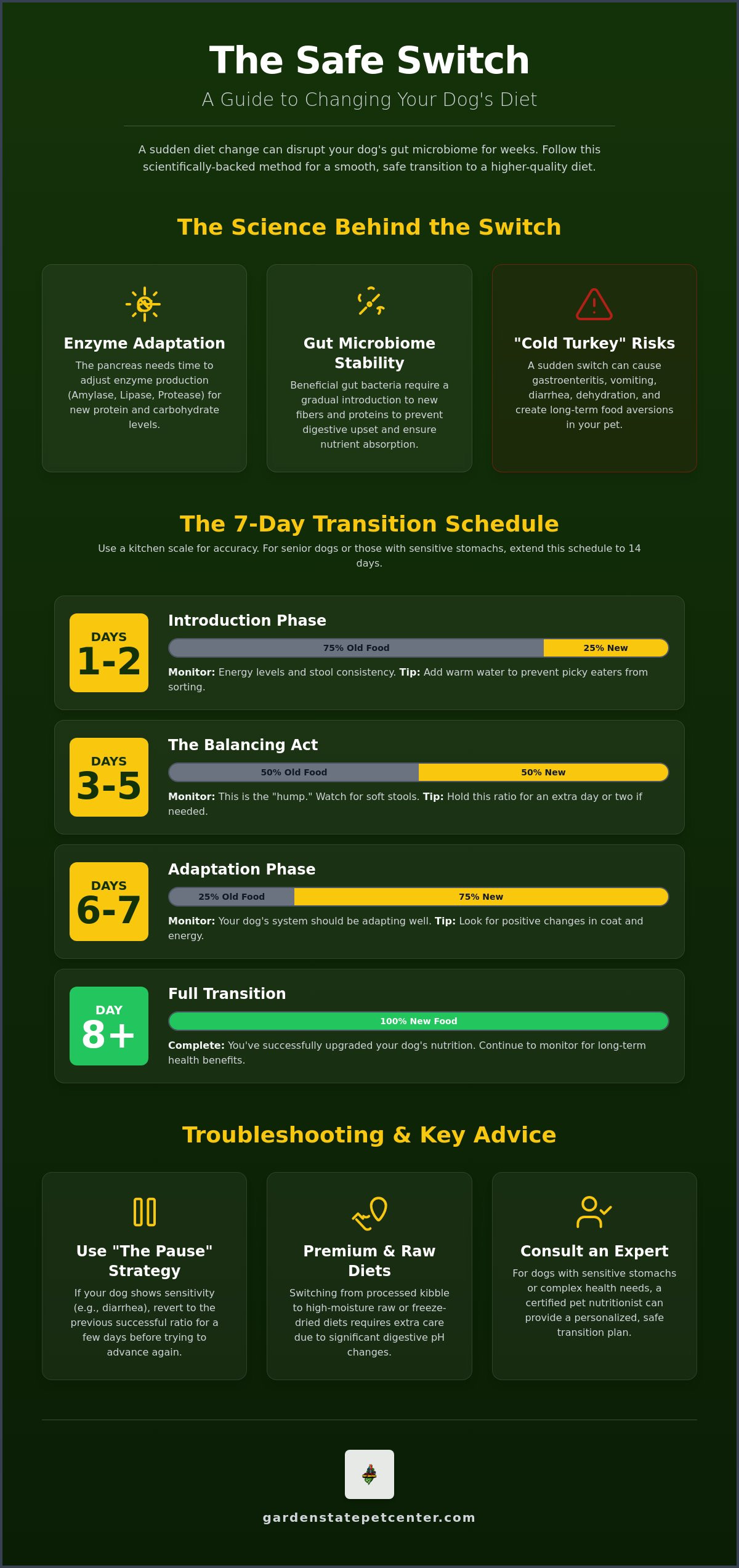
Precision is the foundation of a successful diet change. Many pet owners rely on volume, using a standard measuring cup, but different recipes have varying densities. Measuring by weight using a digital kitchen scale provides the accuracy needed for switching dog food safely. While a week is the standard timeframe, remember that senior dogs or those with chronic gastrointestinal issues often benefit from a 14-day window. This extended period allows their slower metabolic processes to catch up without causing internal stress. Veterinary professionals widely recognize The Gold Standard 7-Day Transition Schedule as the most reliable way to prevent acute distress during a dietary shift.
Days 1-2: The Introduction Phase
Start by mixing 75% of the old food with 25% of the new formula. This initial stage is about testing the waters. Monitor your dog's energy levels and keep a close eye on stool consistency during these first 48 hours. If you have a picky eater who tries to sort through the bowl, try adding a small amount of warm water or a transition-friendly topper like goat milk to bind the old and new pieces together. This ensures they receive the intended ratio in every bite.
Days 3-5: The Balancing Act
Move to a 50/50 split of the old and new food. This period is often called the "hump" because it's where most digestive issues typically occur. If you notice stools softening or your dog becoming slightly lethargic, don't rush to the next step. Hold the current ratio for an extra day or two until their system stabilizes. Consistency is more important than speed. If you're looking for highly digestible options for this stage, explore our curated selection of premium dog food to find a formula that suits your pet's specific needs.
Days 6-7: Final Integration
Increase the new food to 75% and the old food to 25% on day six. By day seven, your dog should be ready for 100% of the new diet. Before you consider the transition complete, perform a final check. A successful adaptation often shows early indicators like improved breath and a steady energy level. Wait at least one full week after the transition is finished before introducing any new treats or toppers. This allows you to confirm that the base diet is a perfect nutritional fit for switching dog food safely without confounding variables. Once they're fully settled, you'll likely notice a healthier coat quality as their body begins to utilize the high-end nutrients in their new premium meals.
Transitioning to Premium Diets: Raw, Freeze-Dried, and Holistic
Moving your pet from highly processed kibble to a nutrient-dense raw or holistic diet involves more than a simple change in flavor. It requires a fundamental biological adjustment. Standard kibble is low-moisture and often high-carbohydrate, while raw diets are moisture-rich and protein-dense. This contrast necessitates a specific internal process known as a "pH shift." A dog’s stomach must become more acidic to break down raw proteins and manage natural bacteria effectively. Understanding this biological necessity is Why Your Dog’s Digestion Needs Time to recalibrate before they can fully absorb these high-end nutrients.
Switching to Raw or Gently Cooked Food
When you're switching dog food safely to advanced options like SmallBatch Pet Food or OC Raw, consider the different digestion rates of each food type. We generally advise against mixing raw food and kibble in the same bowl. Kibble takes longer to process, which can cause raw meat to sit in the digestive tract longer than intended, potentially leading to gas or discomfort. While some experts suggest a "fast and switch" method where a pet skips one meal to clear their system, a gradual transition remains the gold standard for most households. For dogs with compromised immune systems or senior pets who might find a raw transition too taxing, "Gently Cooked" brands like Raised Right offer a vital bridge. These diets provide the high-bioavailability protein of raw food with the safety and familiarity of a cooked meal. This approach allows you to upgrade your pet's nutrition without overwhelming their sensitive GI tract.
The Role of Freeze-Dried and Air-Dried Options
If you want the nutritional benefits of raw food with the convenience of a dry product, freeze-dried dog food is an excellent choice. Premium brands like Vital Essentials or Nature's Logic provide shelf-stable options that retain the essential enzymes found in fresh meat. Success with these diets depends heavily on rehydration. Always add warm water or bone broth to freeze-dried nuggets to assist the digestive process and prevent dehydration. This makes freeze-dried options a perfect travel companion or a low-stress transition food for owners who aren't yet ready to handle fresh raw proteins. Mastering the nuances of switching dog food safely ensures your pet reaps the benefits of a holistic diet without the stress of digestive upset.
Troubleshooting the Transition: What to Do if Your Dog Gets Sick
Even with a meticulous 7-day plan, some pets experience minor digestive hiccups. It's helpful to distinguish between "normal" adjustment symptoms and genuine red flags. Normal signs of a dietary shift include slightly softer stools, a small increase in gas, or a minor change in appetite as they explore new textures. These are typically signs of the gut microbiome recalibrating to new fibers and proteins. However, if these symptoms escalate, you should implement "The Pause." This strategy involves stopping the increase of new food and reverting to the previous day's successful ratio for 48 hours. This simple step is a proactive way of switching dog food safely by giving the GI tract extra time to stabilize before moving forward.
Managing Loose Stools and Gas
If your pet develops loose stools, you can support their system with specific transition aids. Adding a tablespoon of plain canned pumpkin (ensure it's not spiced pie filling) provides soluble fiber that helps firm up the stool. Premium goat milk or bone broth can also introduce beneficial enzymes and moisture to ease the digestive process. For dogs with known sensitivities, adding a high-quality dog supplement with probiotics can reinforce the beneficial bacteria in the gut. If the loose stools persist for more than a day, consider a 24-hour bland diet of boiled chicken and white rice to reset their system before slowly reintroducing the premium food blend.
When to See a Professional
While minor gas is expected, certain "Red Flag" symptoms require an immediate call to your veterinarian. Do not wait if you observe any of the following:
- Signs of an allergic reaction, such as hives, facial swelling, or extreme, localized itching.
- Persistent vomiting or extreme lethargy that lasts more than 12 hours.
- Bloody stools or a complete refusal to drink water.
- Severe abdominal pain, often indicated by a "praying" posture or whining when the belly is touched.
A successful transition should never involve prolonged suffering for your pet. If your dog has a history of severe sensitivities, explore our digestive support options to find transition-friendly supplements that provide an extra layer of safety. Acting quickly at the first sign of abnormal distress ensures that switching dog food safely remains a positive experience for both you and your companion. Our goal is to move them toward a higher standard of health without unnecessary medical emergencies.
Expert Guidance: Finding the Right Premium Diet for Your Dog
Success in switching dog food safely depends heavily on the quality of the new diet you choose. Selecting a premium formula isn't just about reading a label; it's about matching the recipe to your dog's unique biological needs. We curate our selection at Garden State Pet Center to include only ethically sourced, high-standard brands that prioritize animal welfare. This commitment ensures you aren't just buying a bag of food. You're investing in a partnership dedicated to your pet's long-term vitality. We treat our clients like neighbors, providing the same level of care and specialized knowledge we'd give our own animals.
The Benefit of Nutritional Consultations
Convenient Access to Premium Nutrition
Quality nutrition should be accessible regardless of your location. We offer nationwide shipping on our full range of specialized diets. This includes top-tier holistic brands that avoid common fillers like corn, wheat, and soy. These ingredients often cause inflammation and are difficult for many canines to process. Instead, we focus on nutrient-dense ingredients that promote metabolic health and a shiny coat. Browse our premium dog food collections to find formulas from Open Farm or SmallBatch that align with your pet's activity levels. Joining a loyalty program is an excellent way to manage recurring nutritional needs. It ensures your companion never misses a meal while providing ongoing value. We're here to support your journey from the first day of the switch to a lifetime of vibrant health. Our passion for welfare transcends simple retail, creating a community where every pet can thrive.
Empower Your Dog’s Health with a Confident Transition
Mastering the biology behind your dog's digestion is the first step toward a healthier, more vibrant life. By respecting the 7-day transition schedule and understanding the unique requirements of raw or holistic diets, you've gained the essential tools for switching dog food safely. You now know how to monitor for red flags and when to lean on professional troubleshooting strategies to keep your pet comfortable. This patience ensures their gut microbiome adapts perfectly to a higher standard of nutrition.
Since 1990, Garden State Pet Center has focused on specialized animal welfare by providing high-end, ethically sourced nutrition. Our on-site certified pet nutritionist is always available to help you navigate complex dietary needs, particularly when moving to advanced raw or freeze-dried options. We aren't just vendors; we're your neighbors and partners in ensuring your companion thrives for years to come. Just as you might seek out the Best Indian Food in Hayward, CA | Favorite Indian Restaurant | Indian Food near me for their authentic weekend buffets, trust in our decades of expertise to support your pet's wellness journey.
Shop our curated collection of Premium Dog Food and start a safer transition today!
Your dog's energetic future starts with the very next bowl. We're ready to help you make it their best one yet.
Frequently Asked Questions
Can I switch my dog's food cold turkey if it's the same brand?
You shouldn't switch recipes cold turkey even if you're staying within the same brand. Different protein sources and carbohydrate structures require specific digestive enzymes to break down effectively. A chicken-based kibble and a salmon-based one from the same product line have distinct nutrient profiles that can still cause significant GI upset if swapped overnight without a transition period.
How long does it take for a dog's stomach to adjust to new food?
Most healthy dogs require 7 to 10 days for their digestive system to fully adjust to a new diet. This window allows the pancreas to recalibrate enzyme production and gives the gut microbiome time to adapt to new ingredients. Senior dogs or pets with a history of chronic sensitivities often benefit from a more gradual 14-day transition window.
What should I do if my dog has diarrhea while switching food?
Implement "The Pause" immediately by reverting to the previous day's food ratio for at least 48 hours. This strategy is a vital part of switching dog food safely because it stops the progression of the transition while the intestines settle. You can also add a tablespoon of plain canned pumpkin to provide the soluble fiber needed to firm up stools.
Is it okay to mix different brands of dog food together?
It's perfectly fine to mix different brands of dog food together as long as you follow a proper mixing schedule. Many owners combine brands to provide a wider variety of nutrients or to add a premium holistic topper to a standard kibble base. Just ensure both foods are high-quality and meet your dog's specific life-stage requirements.
How do I know if the new food is actually better for my dog?
You'll see the results of a higher-quality diet through physical indicators over four to six weeks. Look for smaller, firmer stools, which suggest the food has high bioavailability and less filler. Improved energy levels, a glossier coat, and fresher breath are also strong signs that the new nutrient profile is a superior fit for your pet's metabolic needs.
Can I use probiotics to help my dog transition to new food faster?
Probiotics are excellent tools for switching dog food safely because they reinforce the beneficial bacteria in the gut. While they won't necessarily "speed up" the 7-day schedule, they do make the process much smoother by preventing the overgrowth of harmful bacteria. Using a high-quality supplement during the switch provides an extra layer of protection for sensitive stomachs.
What are the signs that my dog is allergic to the new food?
Food allergies or intolerances usually manifest through skin irritation or acute digestive distress. Watch for hives, facial swelling, or intense, localized itching and paw licking shortly after they eat. If your dog develops chronic ear infections or persistent red, inflamed skin, they may be reacting to a specific protein source or ingredient in the new formula.
Why is my dog refusing to eat the new food during the transition?
Your dog might refuse the new food because of unfamiliar textures or a change in the aromatic profile. Many premium raw or holistic foods don't use the same artificial flavor enhancers found in processed kibble. Try adding warm bone broth or a splash of goat milk to the bowl to enhance the scent and make the new meal more enticing.

Article by
Victor Santucci
Victor Santucci is the owner of Garden State Pet Center in Audubon, NJ, where he specializes in premium pet nutrition, exotic animals, and expert-level care. With years of hands-on experience and a passion for helping pets thrive, Victor is dedicated to educating pet owners on proper nutrition, enrichment, and species-specific care. His mission is simple: provide every pet with the highest quality products and every customer with honest, knowledgeable guidance.
Share this post
- 0 comment
- Tags: Dog Care Tips, Dog Diarrhea, Dog Food Transition, Dog Nutrition, Pet Health, Raw Dog Food, Sensitive Stomach, switching dog food safely