

How to Build Trust with a Shy Bird: A Gentle, Practical Guide


What if giving your bird more space is the first step toward building a closer bond? When a shy bird avoids your hand or retreats as you approach, it’s natural to wonder whether to try again or pause. Learning how to build trust with a shy bird starts with noticing its comfort signals and letting them guide the pace.
Progress can feel slow, especially when you’re hoping for a calm, confident companion. Trust isn’t built by rushing a bird into handling. Patient, predictable interactions help your bird learn that your presence doesn’t mean pressure. Small signs of ease can be meaningful steps forward.
This guide explains how to make interactions more predictable, approach calmly, and recognize when your bird needs space. You’ll also learn how to build positive associations gradually, without forcing closeness or handling. Respect your bird’s boundaries, keep a steady routine, and let trust grow at its own pace.
Key Takeaways
- Trust means your bird can stay comfortable and make voluntary choices around you, even if it isn’t ready to be handled.
- Consider posture, movement, distance, and willingness together to understand when your bird feels at ease.
- Repeatedly reaching for or handling a shy bird can add pressure. Give it room to move away and choose whether to engage.
- Learning how to build trust with a shy bird starts with quiet presence at a distance it tolerates, followed by gradual progress guided by its comfort.
- Keep interactions consistent, notice small voluntary signs of confidence, and help everyone in the household respect the bird’s choice to disengage.
Why a Shy Bird May Need Time Before Trusting You
Trust isn’t the same as being tame, stepping onto a hand, or accepting cuddles. A bird is building trust when it can stay reasonably comfortable around you and make voluntary choices, such as remaining nearby, watching you, or approaching when it’s ready. The goal of learning how to build trust with a shy bird is to make interactions feel safer, not to reach a required level of handling.
Caution can come from temperament, unfamiliar surroundings, unfamiliar people, or experiences you don’t know about. A bird that moves away isn’t necessarily rejecting you, and a bird that has lived with people for a long time may still prefer distance. Avoid guessing the reason from one moment. Slow progress doesn’t mean a bond is impossible. It means your bird’s comfort, rather than your preferred schedule, needs to guide what happens next.
What shyness can look like in everyday interactions
A shy bird might shift to the far side of a perch when you enter, freeze as you approach, or decline a familiar treat. These are observations, not a complete explanation of what the bird feels. Look at the full interaction: what was happening before you approached, how the bird responded while you were nearby, and whether it returned to its usual activity after you stepped away.
Look for patterns across ordinary moments rather than treating one gesture as a verdict. Bird communication can include visual signals and body language, so the Bird communication overview offers context for why behavior needs to be interpreted as part of a broader exchange. Consider posture, movement, distance, and willingness together. If your presence repeatedly leads the bird to withdraw, give it more room and see whether a calmer approach changes its response.
Why trust should follow the individual bird’s pace
A new room has unfamiliar sounds, routines, and movement. A new person adds another unknown. Even a bird that seems settled may need time to learn what your approach means and whether it can move away without being followed. A fixed number of days or weeks can’t define progress for every bird. Measure readiness by what your bird chooses to do, not by a deadline.
Patience doesn’t mean avoiding all friendly contact. Keep everyday care calm and predictable, speak softly from a comfortable distance, and let the bird opt out of attention. Familiar bird food and supplies can support a consistent care routine, but they don’t replace patient interaction. If your bird stays relaxed, continue at that level. If it retreats or freezes, pause or increase the distance. Small choices, repeated without pressure, give a cautious bird room to become more comfortable.
Read Your Bird’s Body Language and Make the Environment Feel Predictable
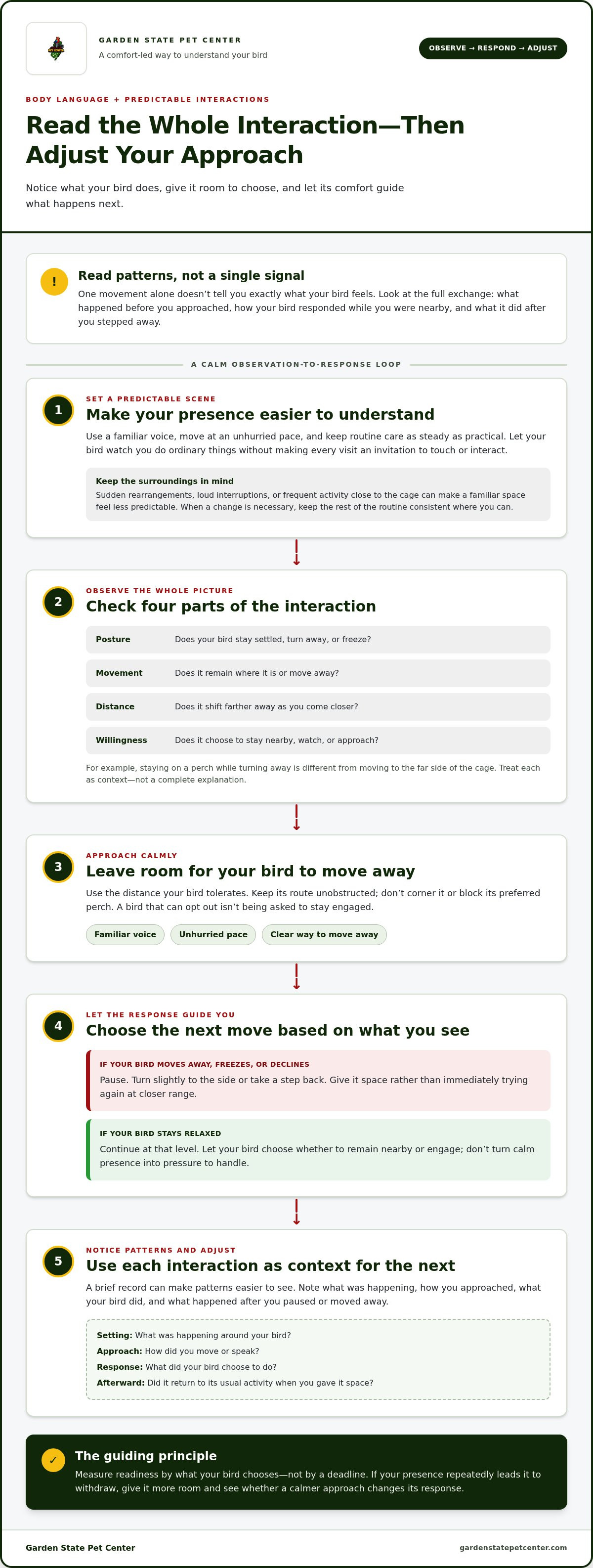
A bird’s comfort is easier to understand when you look at the whole interaction, not one movement in isolation. Notice its posture, where it moves, how much distance it keeps, and whether it chooses to stay or engage. A bird that remains on its perch but turns away may be responding differently from one that moves to the far side of the cage. Neither behavior alone tells you exactly what it feels.
Notice comfort, uncertainty, and requests for space
Build a simple picture of what your bird finds manageable. Jot down what was happening, how you approached, what the bird did, and what happened after you paused or moved away. For example, note whether it stayed settled when you spoke from across the room but moved away when you stepped closer. Patterns give you more useful information than guesses about affection, defiance, or a diagnosis.
If your bird moves away, freezes, or declines to approach, treat that as a reason to reduce pressure. Pause, turn slightly to the side, or take a step back. Approach calmly and leave an unobstructed route for the bird to move away. Don’t corner it or block its preferred perch. If it resumes a normal activity after you give it space, use that as context for a future interaction rather than immediately trying again at closer range.
Make daily interactions easier to predict
Keep ordinary care as steady as practical. Use a familiar voice, move at an unhurried pace, and follow a recognizable pattern for routine tasks. Let your bird watch you go about normal activities without making every visit an invitation to touch or interact. This helps separate your presence from pressure and gives the bird room to observe without needing to respond.
Pay attention to the areas where your bird rests and spends time. Sudden rearrangements, loud interruptions, or frequent activity close to the cage can make a familiar space feel less predictable. When changes are necessary, keep the rest of the routine as consistent as you can and observe your bird’s response. If it becomes more watchful or moves away, slow down and allow it to settle before bringing interaction closer.
As you learn how to build trust with a shy bird, use the same practical check each time: what was the setting, what did the bird do, and did it choose to remain engaged? Keeping a brief record can help you recognize which distance and approach your bird tolerates, without treating every signal as a clear yes or no.
Choose appropriate essentials for routine care, such as bird food and supplies, while remembering that a calm, predictable approach is what makes your presence easier to understand.
Trust-Building Mistakes to Avoid with a Shy Bird
It’s easy to mistake more contact for faster progress. You may reach toward your bird to reassure it or repeat an invitation to step up because the first attempt didn’t work. But if the bird moves away, continuing can teach it that its choice to create distance won’t be respected. Chasing, cornering, or reaching toward a retreating bird can turn an ordinary interaction into one it needs to escape.
Instead, treat withdrawal as useful information. Stop, give the bird room, and consider what made the moment difficult: your distance, movement, timing, or nearby activity. Don’t punish, scold, or try to make the bird “get over it.” Adjust the next interaction so it asks less of the bird and leaves it more control.
When a friendly approach feels like pressure
A slow approach can still feel intrusive if you lean over the bird or move a hand toward it without warning. Stay at a distance the bird tolerates, keep your movements easy to follow, and speak calmly without reaching. If it moves away, don’t follow or offer contact again straight away. End the interaction quietly and allow the bird to settle. Respecting that choice makes your behavior more predictable.
Use this contrast to check your approach:
- Pressure: Moving closer each time the bird retreats, blocking its route, or repeatedly presenting a hand after it turns away.
- Choice: Pausing at a comfortable distance, keeping a clear path away, and ending contact when the bird disengages.
The difference isn’t whether you meant well. It’s whether the bird can opt out without being pursued.
Why progress is not measured by touching or step-up
Touch and stepping onto a hand can be useful goals for some birds, but they aren’t the only signs of a developing relationship. A bird may show growing comfort by choosing to stay nearby, watching you without moving away, or calmly participating in ordinary care. Notice those voluntary behaviors rather than measuring progress only by handling.
For one bird, a positive interaction might mean remaining settled while you change food or water. For another, it might mean approaching when you’re nearby, then choosing to leave. Both responses can show what feels manageable. Don’t turn a calm moment into a demand for more. Let the interaction end while the bird is still comfortable, rather than escalating to a touch or step-up attempt.
Learning how to build trust with a shy bird means making room for its individual preferences. Some birds may become comfortable with handling; others may prefer friendly company without being touched. There’s no need to force a particular outcome to value the bond you’re developing. For bird-care essentials that support your everyday routine, explore bird supplies at Garden State Pet Center.
How to Build Trust with a Shy Bird Step by Step
Think of trust-building as a flexible sequence, not a schedule. Stay at each stage for as long as your bird needs, and move forward only when it remains comfortable. A quiet day or a declined treat isn’t a setback; it’s information about what your bird is ready for right now. If it withdraws, return to an easier step rather than trying to persuade it to continue.
Begin with calm presence and voluntary proximity
Start by sitting near your bird at a distance it already tolerates. Speak softly or read aloud while it carries on with its own activity. Keep your hands to yourself, and let the bird decide whether to look toward you, stay where it is, or come closer. Keep early visits brief enough to finish while things are still calm. Ending without asking for more helps make your presence easier to predict.
Build positive associations without demanding contact
Once your bird seems settled with you nearby, offer a suitable favorite treat from a comfortable distance. You can place it where the bird can choose to take it without approaching your hand. If it declines, leave the treat as appropriate to its regular feeding routine and pause or end the interaction. Don’t repeatedly offer it or move closer to prompt a response. Interest and comfort matter more than whether the treat is taken.
Use this gradual progression, adjusting it to your bird rather than treating it as a checklist with a deadline:
- Observe first. Notice the distance at which your bird can continue its usual activity while you’re present. Begin there, and avoid reaching toward it.
- Repeat calm visits. Sit nearby, use a familiar gentle voice, and allow your bird to watch or ignore you. If it moves away or becomes less settled, increase the distance or end the visit quietly.
- Offer a choice. Present a suitable favorite treat without requiring the bird to approach or take it. Wait without leaning in. A calm refusal is a cue to keep the next interaction just as easy, or easier.
- Adjust one thing at a time. If your bird remains relaxed and shows interest, make only a small change, such as sitting a little closer or offering the treat in a slightly different position. Don’t add a hand target or touch at the same time.
- Let the bird initiate. If it voluntarily approaches, stay still and let it decide how close to come. Keep the interaction brief; don’t turn an approach into an attempt to handle or step it up.
Observe, offer choice, reward voluntary approach, and pause at signs of discomfort. That’s the heart of how to build trust with a shy bird. If your bird withdraws at any stage, calmly return to the last distance or activity it handled comfortably. For bird-care essentials that support a steady routine, explore bird supplies at Garden State Pet Center.
Maintain Your Bond and Keep Trust Growing Over Time
Trust grows through the ordinary interactions you repeat, not just planned practice. Notice small choices: your bird stays nearby while you tidy, watches you without retreating, or chooses to approach and then leave. These moments matter because they’re voluntary. Let them count without immediately raising the challenge. If your bird is comfortable with your presence today, keep the next interaction familiar rather than reaching closer.
Respond calmly when progress slows or changes
A quieter day or a retreat after a step that seemed comfortable doesn’t mean the relationship has failed. Birds can respond differently as their surroundings, energy, or routine changes. Return to an easier interaction your bird handles well, such as calm company at a familiar distance. Don’t repeat the difficult step to test whether the bird will accept it this time. Give it room and observe.
Use the bird’s behavior to guide your next move:
- If it stays settled: Keep the interaction at that level and end on a calm note.
- If it withdraws: Pause, increase your distance, or let the interaction end.
- If it chooses to re-engage: Allow that choice without turning it into a demand for touch or handling.
This approach helps distinguish a temporary pause from a reason to push harder. Consistency means responding calmly to what your bird is showing, not insisting that every interaction look the same.
Prepare for changes in routine with familiar care
A change of setting or caregiver can make familiar interactions feel different. Where practical, keep everyday care patterns recognizable and share simple guidance with household members: approach calmly, give the bird room to disengage, and avoid turning each visit into a handling attempt. Similar responses from the people around your bird can make interactions easier to anticipate.
If your bird will be boarding, familiar care routines can be useful context during the transition. The exotic pet boarding guide discusses boarding for birds and other small animals, helping you think about continuity of care when plans change.
Learning how to build trust with a shy bird is an ongoing practice of noticing, respecting, and adapting. Bird-care essentials can support a steady routine, but they can’t replace patient attention and voluntary interaction. Explore bird care essentials as you continue to create a comfortable setting for your bird.
Keep Building a Relationship on Your Bird’s Terms
Your next step can be small: choose one calm, familiar interaction and let your bird decide how involved it wants to be. Keep noticing what helps it feel at ease, and allow the relationship to grow without measuring it against a schedule or a particular kind of handling. That steady attention is at the heart of how to build trust with a shy bird.
Thoughtful care also includes suitable essentials for your bird’s daily routine. Garden State Pet Center offers bird food and supplies, bird boarding, and in-store wing clipping. These services and supplies support bird care, while trust itself grows through patient, respectful interactions.
Explore bird care essentials and keep creating a comfortable routine for your companion. Every voluntary moment of connection is a reason to keep going gently.
Frequently Asked Questions
How long does it take for a shy bird to trust you?
There’s no set timetable; each bird’s comfort develops at its own pace. Rather than counting days, notice whether your bird can stay settled during familiar parts of your routine, such as you changing its water or moving quietly nearby. If its comfort varies, keep interactions easy and predictable instead of expecting a steady upward trend. Learning how to build trust with a shy bird is about responding to the bird in front of you, not meeting a deadline.
Can a shy bird learn to enjoy being around people?
Yes, a shy bird may become more comfortable sharing space with people, though its preferred level of contact will vary. It might enjoy listening to a familiar voice or watching household activity without wanting hands nearby. Make room for those preferences. A bird’s comfort around people can be meaningful even if it doesn’t seek petting or close handling, so let its voluntary behavior guide how you spend time together.
What should I do if my bird moves away when I approach?
Stop advancing and give your bird room. If you were about to do routine care, pause briefly and consider whether you can approach from a different angle or return when the bird is settled. Keep the path to its preferred perch clear, and avoid following it around the enclosure. The next time, begin farther away. This helps you learn whether distance, direction, or timing made that approach difficult.
Should I offer treats to a shy bird?
Yes, a suitable treat your bird already enjoys can make an interaction more inviting, but it should remain an offer, not a test. Try setting a piece in a familiar feeding spot while you stay at a comfortable distance. Keep treats appropriate to the bird’s usual diet, and don’t reduce its regular food to encourage interest. If the bird declines, leave the choice there and try a calmer opportunity another time.
Can an adult or rehomed bird still build trust with a new owner?
Yes. An adult bird can form a relationship with a new owner, and rehoming doesn’t tell you exactly what the bird has experienced or prefers. Start by learning its existing routine, favorite activities, and responses to everyday care rather than assuming its history. Keep familiar elements steady where possible, and introduce changes gradually. Let the bird’s present behavior, rather than its age or unknown past, shape your approach.
What does it mean if my bird takes a treat but avoids my hand?
It may mean your bird is comfortable eating the treat but isn’t yet comfortable with a hand nearby. Those are separate choices. Try placing the treat on a nearby surface or in its usual dish, then give the bird room to take it. Avoid moving your hand closer just because the bird accepted the food. Over time, observe whether it remains relaxed while your hand is present at a distance.
Can more than one person in a household build trust with a shy bird?
Yes, several household members can develop a relationship with the bird, especially if their approaches are consistent. Agree on practical basics, such as moving slowly, keeping voices calm, and allowing the bird to end an interaction. Each person can spend quiet time nearby without competing for the bird’s attention. If the bird is comfortable with one familiar person but cautious around another, let that relationship grow at its own pace.

Article by
Victor Santucci
Victor Santucci Jr. is the owner of Garden State Pet Center and a Certified Clinical Pet Nutritionist specializing in premium pet nutrition, raw and fresh feeding, holistic pet wellness, birds and exotic animals. Through years of hands-on retail and animal-care experience, Victor helps pet parents make informed decisions about nutrition, enrichment and species-appropriate care.
Share this post
- 0 comment
- Tags: bird body language, bird care, bird training, bonding with birds, gentle pet care, how to build trust with a shy bird, parrot behavior, pet birds, shy bird