

Signs of Nutritional Deficiency in Cats: What to Watch For


Could a dull coat or sudden change in appetite mean your cat isn’t getting the nutrients they need? These signs of nutritional deficiency in cats are worth noticing, but they don’t confirm a diet problem. Illness, stress, age, and other factors can cause similar changes, so it’s understandable to feel unsure about what to do next.
Learn which physical and behavioral changes may point to a nutritional concern, what else could explain them, and when to contact your veterinarian. Symptoms alone can’t diagnose a deficiency, and changing foods or adding supplements without guidance may not help. Feeding a complete, balanced food suited to your cat’s life stage provides a strong foundation. If you’re reviewing your cat’s food or routine, a nutrition consultation with an on-site certified pet nutritionist can help you consider options for your cat’s individual needs, alongside veterinary care when health concerns arise.
Key Takeaways
- Coat, skin, weight, energy, or appetite changes may be among the signs of nutritional deficiency in cats, but they can have other causes.
- Learn why a cat’s species-specific nutrient needs make a complete, balanced diet important.
- Keep a record of your cat’s food, portions, treats, supplements, and when changes began to share with your veterinarian.
- Seek veterinary advice for concerning symptoms before changing your cat’s diet or adding supplements.
- A nutrition consultation can help you review your cat’s feeding routine and discuss food formats in light of their individual needs.
What signs of nutritional deficiency in cats can owners notice?
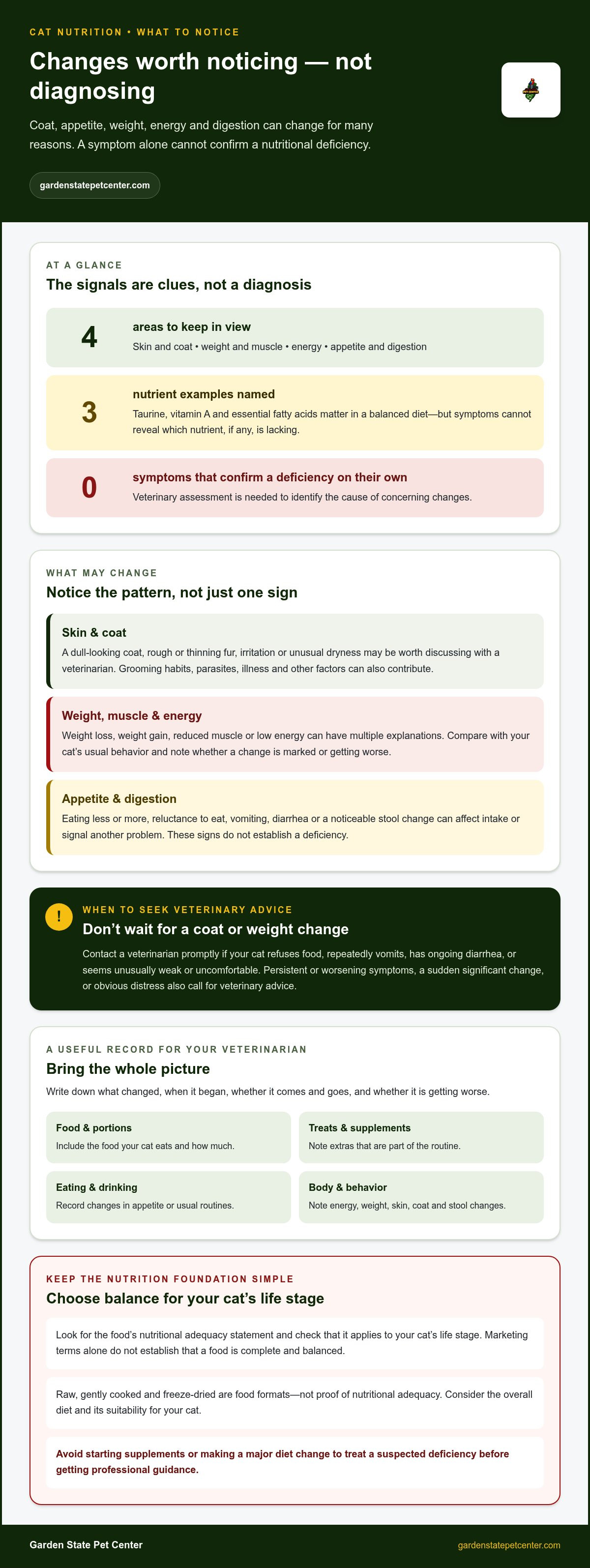
A change in your cat’s appearance or routine can be unsettling, but it doesn’t automatically mean they’re missing a nutrient. Skin and coat issues, weight shifts, low energy, and appetite changes can have many explanations, including health problems unrelated to food. The signs of nutritional deficiency in cats vary with the nutrient involved, how long the shortfall has lasted, its severity, and the individual cat.
Cats have particular dietary needs, and a visible symptom can’t show whether those needs are being met. For an overview of essential nutrients for cats, see this general reference, but don’t use a symptom list to diagnose your pet. Symptoms can raise concern, but only veterinary assessment can identify their cause.
Changes in coat, skin, weight, and energy
A dull-looking coat, rough fur, or thinning may be useful clues to share with a veterinarian. Skin irritation or unusual dryness also deserves attention. None of these changes points to one specific nutrient problem. Grooming habits, parasites, illness, and other factors may contribute.
Notice changes in body shape as well as the number on the scale. Weight loss, weight gain, or reduced muscle can relate to how much a cat eats, but health conditions and other influences matter too. Low energy is similarly nonspecific. Consider what has changed from your cat’s usual behavior, when it began, and whether it is getting worse. A pattern may be more informative than one observation, but discuss any marked change with a veterinarian.
Appetite and digestion changes to take seriously
Pay attention if your cat eats less or more than usual, seems reluctant to eat, vomits, develops diarrhea, or has a noticeable change in stool quality. These signs can affect nutrient intake or indicate a problem, but they don’t establish that a deficiency is present. Note how often symptoms occur and whether your cat’s usual eating and drinking routines have shifted.
A brief, mild change may not tell you much on its own. Persistent or worsening symptoms, a sudden significant change, or symptoms accompanied by obvious distress call for veterinary advice. Contact a veterinarian promptly if your cat refuses food, repeatedly vomits, has ongoing diarrhea, or seems unusually weak or uncomfortable. Don’t wait for a coat or weight change before asking for help.
When you reach out, describe the whole picture rather than focusing on one suspected nutrient. Note when changes began, whether they come and go, and any differences in appetite, energy, weight, skin, coat, or stool. This context can help the veterinarian assess what may be happening and decide on appropriate next steps. Avoid starting supplements or making a major diet change to treat a suspected deficiency before getting professional guidance.
Which nutrients matter, and how can an unbalanced diet affect cats?
A nutritional deficiency develops when a cat doesn’t receive enough of one or more essential nutrients over time. Cats have species-specific needs, so a diet suited to another animal or an improvised feeding routine may not provide the right balance. The signs of nutritional deficiency in cats can’t identify which nutrient is lacking, and symptoms alone can’t confirm that a deficiency exists.
A complete-and-balanced cat food provides essential nutrients in appropriate amounts for the life stage named on its nutritional adequacy statement. AAFCO guidance sets nutrient profiles for cats at different life stages. Look for the food’s adequacy statement rather than relying on marketing words alone.
Essential nutrients and why balance matters
Taurine is an amino acid cats need from their diet. It supports normal heart function, vision, and other body processes, and cats can’t make enough of it to meet their needs. Vitamin A and essential fatty acids also play important roles in normal body function. Their presence and balance in the overall diet matter, which is why adding an individual nutrient without professional advice isn’t a safe shortcut. Cornell’s Feline Health Center offers an overview of what a balanced diet for cats involves.
These examples aren’t a symptom checklist. A change in appearance or behavior can’t reliably show that taurine, vitamin A, or a fatty acid is deficient. Nutrient needs work together, and the effect of an unbalanced diet can depend on what is missing, how much is available, and for how long. A veterinarian can assess a suspected problem rather than infer it from one sign.
How diet quality, life stage, and health can affect nutrition
Check the nutritional adequacy statement on the food label and confirm that it applies to your cat’s life stage. Terms such as “premium” or “natural” describe positioning or ingredients, but don’t by themselves establish that a food is complete and balanced. Age, health, activity, and the amount actually eaten can all affect an individual cat’s needs. Treats and extras matter too if they regularly displace a substantial share of the main diet.
Raw, gently cooked, freeze-dried, and other food formats are options, not proof of nutritional adequacy. Judge the diet by its nutritional statement and suitability for your cat, not by format alone. If you’re reviewing feeding choices, an on-site certified pet nutritionist can help you look over your cat’s current food and routine. A veterinarian should assess suspected medical concerns. You can also explore cat food options as part of a conversation about your cat’s individual needs.
Could another health problem look like nutritional deficiency?
Yes. A symptom that resembles a nutrient deficiency can’t identify its cause. Changes in coat, appetite, energy, or weight may relate to diet, but they can also arise from illness, parasites, dental pain, stress, or another factor affecting how much a cat eats and absorbs. Even signs commonly associated with nutritional concerns aren’t proof that a particular nutrient is missing.
Use your observations to give your veterinarian a clearer picture, not to diagnose your cat at home. Note when each change began, whether it is getting better or worse, and whether several changes appeared together. The table below can help you organize what you’ve noticed and what details may be useful to share. It is not a diagnostic tool.
Why similar signs can have different causes
A rough-looking coat might prompt questions about nutrition, but skin irritation or parasites may also affect coat condition. Appetite can change with dental discomfort or illness, while low energy and weight changes have many possible explanations. Inadequate intake is another consideration, especially if a cat is eating less than usual or has difficulty reaching or keeping food. None of these signs points to one nutrient on its own.
| Observed change | Why it’s nonspecific | Information a veterinarian may need |
|---|---|---|
| Dull coat or skin changes | Nutrition is one possibility, but skin conditions, parasites, grooming changes, and other health issues may also play a role. | When it started, where it appears, whether there is itching, and any recent food or routine changes. |
| Appetite or weight change | Dental discomfort, illness, stress, or reduced access to food can affect eating and body weight. | What and how much your cat eats, how long the change has lasted, and any difficulty chewing or swallowing. |
| Low energy or digestive changes | These can accompany many health concerns and don’t identify a dietary cause by themselves. | How often symptoms occur, whether they are worsening, and any other behavior or routine changes. |
When to arrange veterinary care promptly
Contact a veterinarian promptly for sudden, severe, persistent, or worsening changes. Collapse, difficulty breathing, repeated vomiting, or inability to urinate are urgent concerns. Don’t wait to see whether a food change helps if your cat may have a serious health problem.
Share the full timeline and your notes about meals, appetite, behavior, and symptoms. A veterinarian can assess the possibilities and advise on appropriate next steps. Signs of nutritional deficiency in cats may raise questions about diet, but changing foods or adding supplements shouldn’t substitute for veterinary assessment or delay care.
What should you do if you suspect a nutritional deficiency?
Noticing a change can make it tempting to switch foods or try a supplement right away. Pause before making changes. A steady, practical approach helps protect your cat and gives the veterinarian useful information: observe what’s happening, keep a clear record, arrange veterinary advice, and then review the diet with professional guidance.
Prepare useful information before the appointment
Write down when you first noticed a change and how it has developed. Include appetite, water intake, stool changes, weight trends, energy, and behavior that differs from your cat’s usual routine. Note whether a symptom is constant or comes and goes. Even details that seem small, such as leaving part of a meal uneaten, can help build a clearer picture.
Record the name of every food, treat, and supplement your cat receives, along with approximate amounts and how often you offer them. Bring the packaging or clear photos of the labels, especially the nutritional adequacy statement. Bring your cat’s current food label and a feeding record to the appointment. This makes it easier to discuss the whole routine instead of trying to recall details from memory.
If possible, note recent changes to the feeding routine, such as a new food, different portions, or a change in who feeds your cat. Don’t worry about making a perfect log. A simple dated note on your phone or paper is a useful start.
Review the diet without guessing or overcorrecting
A veterinarian can assess your cat’s health concerns and decide whether further evaluation or testing is needed. Share your notes and ask how to proceed before making a major diet change or adding supplements. Abrupt changes can complicate the picture, and a supplement chosen without guidance may not address the actual issue.
Once immediate health concerns have been considered, a nutrition consultation can help you review food choices, portions, treats, and the overall feeding routine alongside veterinary guidance. An on-site certified pet nutritionist can discuss your cat’s current diet and individual needs, but this support does not replace veterinary assessment or diagnose a medical condition.
If you’re ready to compare options as part of a guided diet review, explore our cat food selection. Bring details of your cat’s current routine to the conversation, and let professional guidance shape any changes rather than trying to correct a suspected deficiency on your own.
How can a balanced feeding routine help support your cat?
A reliable feeding routine starts with food that suits your cat’s life stage and individual needs, offered in amounts guided by the label and your veterinarian. Use the food’s feeding guidance as a starting point, then ask your veterinarian how to adjust portions based on your cat’s body condition, health, and weight trends. No single schedule or food format is right for every cat.
Raw, gently cooked, freeze-dried, and other formats are choices, not guarantees of nutritional adequacy. Check that the food’s nutritional adequacy statement fits your cat, and discuss its suitability with a veterinary professional. A product’s style, ingredient language, or premium positioning alone can’t establish that it provides a complete diet.
Build a consistent, appropriate feeding routine
Measure portions rather than estimating by eye, and keep track of how much your cat actually eats. Observe body condition and weight regularly, sharing concerns or noticeable trends with your veterinarian. Feeding guidance may need to reflect changes in age, health, activity, or appetite, so don’t treat a general serving suggestion as a fixed prescription for every cat.
Consider treats and supplements as part of the whole diet. Frequent extras can change how much of the main food a cat eats, while supplements may add nutrients that are already present. Don’t add or change a supplement to address suspected deficiency without professional advice. Keep a clear record of what your cat receives and include it in diet discussions.
Consistent observation matters, but appearance alone can’t reveal whether nutrient needs are being met. A healthy-looking coat doesn’t replace appropriate food or veterinary care, and changes in weight or energy need context. Routine veterinary checkups offer an opportunity to discuss feeding and body condition, while new or concerning symptoms warrant veterinary advice rather than waiting for the next planned visit.
Get knowledgeable support for food choices
Comparing diets can be difficult when ingredients, formats, and marketing claims vary. An on-site certified pet nutritionist can help review your cat’s current food and feeding routine and discuss options in light of your cat’s individual needs. A nutrition consultation supports food selection; it doesn’t diagnose or treat a medical condition. Keep your veterinarian involved, especially if you’re concerned about signs of nutritional deficiency in cats or your cat has health needs that affect feeding.
Bring your current food details and questions to a consultation. You can discuss the food’s adequacy statement, how portions are measured, and where treats or supplements fit in the routine. This review can help you make informed food decisions without assuming that a particular format or product suits every cat.
If you’d like support thinking through food choices, Explore cat nutrition support. Pair nutrition guidance with regular veterinary care, and contact your veterinarian if a health change concerns you.
Take the Next Step Toward Confident Cat Care
Use your next feeding decision as a chance to build a clearer picture of your cat’s needs. Keep questions that come up between veterinary visits, and bring them to the right professional rather than trying to interpret signs of nutritional deficiency in cats from appearance alone. A thoughtful conversation can help you make informed decisions while keeping your cat’s health at the center.
For food-selection support, Garden State Pet Center’s on-site certified pet nutritionist can discuss your cat’s routine and individual needs alongside veterinary guidance. The curated selection of premium cat foods and cat supplements offers options to consider, not a substitute for veterinary assessment or a reason to add supplements without professional advice.
Explore cat nutrition support and discuss your cat’s food routine with our on-site certified pet nutritionist. Pair that conversation with veterinary care for health concerns.
Frequently Asked Questions
What are the most common signs of nutritional deficiency in cats?
Possible signs include changes in coat or skin, unexpected weight or muscle changes, low energy, and shifts in appetite or digestion. These signs of nutritional deficiency in cats aren’t specific to a nutrient problem and can also occur with unrelated health issues. Notice combinations of symptoms or changes from your cat’s usual routine, and note how long they last rather than drawing conclusions from one observation.
Can a cat have a nutritional deficiency while eating every day?
Yes. Eating daily doesn’t necessarily mean a cat is receiving every nutrient in suitable amounts. For example, a cat may eat regularly but get much of its intake from treats or an unbalanced homemade menu. A cat can also eat less than expected while appearing interested in food. Share the full feeding routine with a veterinarian, including what’s offered and how much your cat actually consumes.
Can nutritional deficiency in cats cause hair loss or a dull coat?
A nutritional problem may contribute to poor coat condition, but hair loss or a dull coat can’t confirm a deficiency. Fleas, skin irritation, overgrooming, and other health concerns can also affect fur. Notice whether hair loss is localized or widespread, whether your cat is scratching, and whether the skin looks different. These observations can help a veterinarian assess the issue without assuming diet is the cause.
How can I tell whether my cat’s food is nutritionally complete?
Look for a nutritional adequacy statement on the package that says the food is complete and balanced for a named life stage, such as adult maintenance or growth. Don’t rely on front-of-package phrases alone. Check that the statement refers to cats and matches your pet’s life stage, and save the packaging or a clear photo. If the wording is confusing, ask your veterinarian to help interpret it.
Should I give my cat vitamins if I suspect a deficiency?
Don’t start vitamins or other supplements to treat a suspected deficiency without veterinary guidance. The right approach depends on what, if anything, is missing, and an unnecessary supplement can disrupt the balance of the overall diet. Tell your veterinarian about every product your cat already receives, including flavored powders or drops. They can advise whether a supplement is appropriate and whether the concern needs further evaluation.
When should I take my cat to the vet for possible nutritional problems?
Arrange veterinary advice for changes that persist, worsen, appear suddenly, or affect your cat’s appetite, weight, or usual behavior. Seek urgent care for collapse, breathing difficulty, repeated vomiting, or inability to urinate. Don’t wait for a diet adjustment to solve a potentially serious problem. For a less urgent concern, bring the food label and a short timeline of changes so the visit can focus on your cat’s situation.

Article by
Victor Santucci
Victor Santucci Jr. is the owner of Garden State Pet Center and a Certified Clinical Pet Nutritionist specializing in premium pet nutrition, raw and fresh feeding, holistic pet wellness, birds and exotic animals. Through years of hands-on retail and animal-care experience, Victor helps pet parents make informed decisions about nutrition, enrichment and species-appropriate care.
Share this post
- 0 comment
- Tags: balanced diet for cats, cat care tips, cat diet, cat nutrition, feline health, nutritional deficiency, pet wellness, signs of nutritional deficiency in cats