

How to Properly Defrost Raw Pet Food: A Safe, Practical Guide


The safest way to thaw raw pet food is also the simplest: let it defrost in the refrigerator. If you’ve wondered whether the counter is fine or need dinner ready sooner, you’re not alone. Learning how to properly defrost raw pet food means controlling temperature and handling, not relying on a kitchen shortcut.
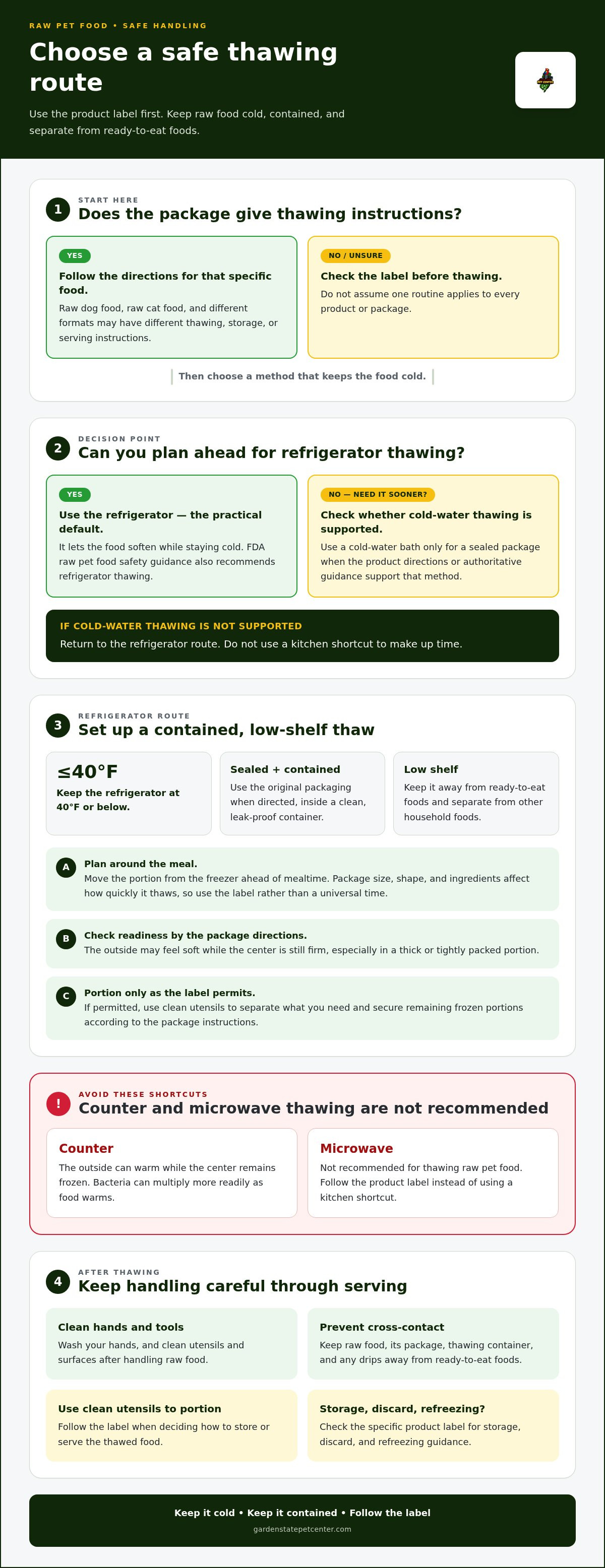
For a straightforward routine, place the food in a sealed, leak-proof container on the refrigerator’s bottom shelf, with the fridge set to 40°F or below. This helps keep raw food separate from other household foods while it thaws. This guide also compares refrigerator and cold-water thawing, explains why counter and microwave thawing aren’t recommended, and covers portions, leftovers, and refreezing according to the product label.
Whether you’re new to raw feeding or refining your routine, planning ahead can make mealtime more manageable. Garden State Pet Center carries raw food options for dogs and cats, and an on-site Certified Pet Nutritionist can help you explore food formats that fit your pet and household routine. Read on for practical steps you can repeat with confidence.
Key Takeaways
- Use a repeatable thawing routine that prioritizes controlled temperatures and careful handling.
- Plan around meal timing and package size so refrigerator thawing fits your household routine.
- Compare refrigerator and sealed-package cold-water thawing, and avoid using the counter as a shortcut.
- Use clean hands and utensils when portioning thawed food, and follow the label for storage and discard guidance.
- Check the specific food’s instructions before deciding how to thaw, store, or refreeze it.
Why properly defrosting raw pet food matters for safe handling
A repeatable thawing routine makes raw-food handling more manageable. The goal isn’t simply to soften a frozen meal. Defrosting means thawing the food while keeping it cold and handling it carefully as a raw animal product. Knowing how to properly defrost raw pet food helps you look beyond serving texture and reduce the chance of spreading germs around your kitchen.
Raw food may carry harmful bacteria. Leaking juices, hands, utensils, or surfaces can transfer bacteria to ready-to-eat foods. Bacteria can also multiply more readily as food warms. Safe thawing means controlling temperature and preventing cross-contact, not just waiting until the center feels soft enough to serve. General Food Safety Guidelines explain why clean handling and keeping foods separate matter.
What makes raw pet food handling different?
Raw dog and cat food contains uncooked animal ingredients, so include the package, thawing container, and any drips in your handling routine. Keep them away from foods eaten without further cooking, such as ready-to-eat items in the refrigerator. This helps reduce household contamination risks while recognizing that pet-food directions may differ from guidance for preparing human meals.
Instructions vary by product and format. Raw dog food and raw cat food may have different thawing, storage, or serving directions. Read the label before opening the package, and follow its product-specific instructions rather than assuming one routine works for every food.
The core principles before thawing
Start with cold, controlled thawing and a clean, dedicated setup. Choose a container that holds the package and any liquid that escapes, and keep the food away from ready-to-eat items. Wash your hands and clean utensils and surfaces after handling. These steps help make the process consistent, even during a busy household routine.
- Keep it cold: Don’t leave raw food in a warm area while deciding how to prepare it.
- Contain it: Place the package in a separate container to limit contact with other foods and refrigerator surfaces.
- Follow the label: Use the instructions for that specific food if they differ from general guidance.
Food choice and daily routine go together. If you’re considering different formats for your dog, explore dry dog food options as part of a broader feeding plan. Whichever format you choose, keep its handling directions close at hand. A reliable routine starts before the food begins to thaw.
How to defrost raw pet food in the refrigerator
For most raw pet food, refrigerator thawing is the practical default. It gives the food time to soften while staying cold. Place it in a covered container in the refrigerator and let the product label guide the details. The FDA’s raw pet food safety guidance also recommends thawing frozen raw pet food in the refrigerator.
Work backward from mealtime instead of waiting until your pet is ready to eat. Package size, shape, and ingredients affect how quickly a portion thaws, so use the food’s own directions rather than relying on a universal thawing time. Aim to have it ready to portion without speeding the process by leaving it somewhere warm.
A simple refrigerator-thawing routine
Keep the package intact if its label permits, then place it in a clean, leak-resistant container. Set the container on a low refrigerator shelf, away from ready-to-eat foods. This contains possible drips and makes the package easier to find and handle. Check the label before starting, especially if it specifies a thawing method or packaging instructions.
- Plan ahead. Choose the portion you expect to serve and move it from the freezer before mealtime, allowing time for gradual thawing.
- Contain the package. Leave it in its original packaging when directed, and place it inside the container to catch leaks.
- Place it carefully. Keep the container on a low shelf, separate from uncovered or ready-to-eat foods.
- Check readiness. Follow the package directions to decide when the portion is ready to open, divide, or serve.
Don’t judge readiness by the outside alone. A package may feel soft while the center is still firm, particularly if it’s thick or tightly packed. Use the label’s guidance and clean utensils when checking or portioning the food.
Thawing only the portion you need
If the package allows it, dividing the food while it’s still frozen can make smaller meals easier to plan. First check the label for portioning directions and whether the packaging can be opened at that stage. If permitted, use clean utensils, separate only what you need, and promptly secure the remaining frozen portions according to the package instructions.
If the food is in a single block or the label doesn’t explain how to divide it, don’t assume it can be safely portioned or stored in a particular way. Follow the product-specific directions. Dog and cat foods, along with different raw formats, may have distinct handling instructions.
Planning portions can also help you choose food that suits your feeding routine. Browse dog food options as you consider what fits your household.
Can you defrost raw pet food faster? Compare the options
Possibly, but choose a method based on the food’s label, not just the clock. Refrigerator thawing remains the steady default because it keeps the food cold as it softens. A cold-water bath for a sealed package may help when you need a meal sooner, provided the product directions or authoritative guidance support that method. Counter thawing isn’t a reliable shortcut: the outside can warm while the center remains frozen.
Use this comparison to choose a method for the situation. If the package gives different directions, follow them.
| Method | Planning needs | Key caution | When to consult label directions |
|---|---|---|---|
| Refrigerator | Plan ahead and allow the package to thaw gradually. | Contain the package and keep it separate from ready-to-eat foods. | Check for product-specific thawing and storage instructions. |
| Cold water | Use when you need a faster option and can supervise the package. | Keep the package sealed, prevent water from touching the food, and change the cold water every 30 minutes. | Use this method only if the label or authoritative guidance supports it. |
| Room-temperature counter | It requires no planning, but isn’t a recommended planned thawing method. | Food surfaces can warm while the center remains frozen. | Don’t use it as an overnight shortcut; follow safer directions on the label. |
When a faster method may be appropriate
A cold-water bath may be suitable when the package is intact and the manufacturer’s directions or authoritative food-safety guidance allow it. Keep the sealed package submerged in cold water, and change the water every 30 minutes so it stays cold. Don’t use this method if the wrapper leaks, is damaged, or can’t be kept sealed. A faster thaw doesn’t remove the need for careful handling once the food is ready.
If you realize a meal is still frozen near feeding time, check the package directions first. If cold-water thawing is permitted, use a clean bowl and monitor the package. Otherwise, stick with refrigerator thawing and adjust the meal plan rather than improvising with warmth.
Why to avoid improvised shortcuts
Don’t leave raw food on the counter as a routine or overnight thaw. Room-temperature air can warm the surface without thawing the portion evenly, making food temperature harder to manage. Warm or hot water can heat the outside too quickly. Avoid microwave thawing unless the food maker specifically directs it; uneven heating can leave parts of the food warmer than others.
The right method for how to properly defrost raw pet food depends on the specific product and a controlled process. When instructions don’t clearly support a quicker option, use refrigerator thawing. It takes more planning, but avoids turning a mealtime rush into a handling risk.
What to do after raw pet food has thawed
Once a portion is thawed, keep handling it carefully through serving and cleanup. Take out only what you need, use clean hands and utensils, and return unused food to cold storage promptly. Follow the package for how long thawed food may be refrigerated and when it should be discarded, since directions vary by product. Don’t assume raw dog food and raw cat food share the same holding period.
Serving portions and managing leftovers
Use a clean utensil to transfer the meal to your pet’s bowl, then close and refrigerate the remaining food according to the label. Keep the package or storage container covered and separate from ready-to-eat foods. Food left in the bowl after serving isn’t the same as untouched package leftovers; discard it according to the product’s directions.
If thawed food has been left at room temperature, act promptly. General food-safety guidance for perishable foods recommends discarding food that has been out for more than two hours, or more than one hour when the temperature is above 90°F. If you’re unsure how long it has been out, don’t rely on smell or appearance to decide whether it’s safe.
Refreezing isn’t a universal yes-or-no decision. Food thawed in the refrigerator may be eligible for refreezing under general food-safety guidance, though quality can decline. Raw pet food may have product-specific directions, so refreeze only if its label permits it. If the package doesn’t explain what to do, avoid guessing and follow the manufacturer’s guidance.
Cleaning up after raw-food preparation
Prompt cleanup helps prevent raw-food contact from spreading across kitchen surfaces. Wash your hands with soap and water after handling the food, then clean the bowl, utensils, and any surfaces or containers that came into contact with it. Keep raw-food tools separate from ready-to-eat food preparation where practical, and clean up spills or drips promptly.
Soap and water are key parts of routine cleanup. For any additional sanitizing step, follow current food-safety guidance and the directions for the surface or product you use rather than improvising a mixture or contact time. Clear the work area before preparing other food, and wash your hands again if you handle the package, bin, or other raw-food equipment during cleanup.
A simple end-of-meal check can help: secure the remaining portion, clear the serving area, wash the bowl and tools, and clean contacted surfaces. These steps make how to properly defrost raw pet food part of a complete handling routine, not just a freezer-to-bowl task. For help exploring raw food and other premium food formats, explore Garden State Pet Center’s food selection.
Build a raw-food thawing routine that fits your pet and household
A dependable routine should fit your pet’s meal schedule, the portion size you use, and the space in your refrigerator. Before the current meal is needed, plan for the next one: check how much food you’ll need, read its package directions, and make room for a contained portion. This small habit can prevent last-minute thawing decisions.
Make the routine manageable
Choose a consistent refrigerator spot where raw food can stay contained and separate from ready-to-eat items. A leak-resistant container keeps the package organized and gives you a clear place to return it after checking the label. If refrigerator space is limited, plan which portion will thaw next rather than moving packages around at mealtime.
Package size matters. A larger portion may need more lead time than a small one, and different shapes or packaging can thaw at different rates. Use the product’s directions to guide your schedule instead of assuming all raw foods will be ready on the same timetable. If the directions are unclear, don’t improvise with warmth; use a controlled method described for that product.
If more than one person feeds your pet, make the routine visible. A note on the freezer or a shared reminder can help everyone know which package is thawing and where it belongs. If you’re comparing feeding formats for your dog, browse the dog food selection alongside raw options.
Get support choosing a food format
Thawing directions depend on the specific food and its packaging. Raw, gently cooked, air-dried, and freeze-dried formats aren’t interchangeable in how they’re stored or prepared, so follow the label for the product you use. Build your routine around those directions, your pet’s meal schedule, and the space you can dedicate to food storage.
If you’re weighing food formats or have questions about how a choice fits your pet’s nutritional needs, the on-site Certified Pet Nutritionist can help with food-selection questions. Nutrition questions and thawing instructions are different: follow the label for handling, and seek knowledgeable guidance when considering what to feed. This keeps both food selection and preparation grounded in the right information.
With a plan for portions, refrigerator space, and label directions, how to properly defrost raw pet food becomes a repeatable part of your household routine rather than a daily scramble. Explore the store’s premium food selection to compare formats and find options that suit your pet and feeding routine.
Make your next meal easier to plan
Turn what you’ve learned about how to properly defrost raw pet food into one small habit: decide which portion comes next before you need it. A phone reminder or a note near the freezer can help make meal planning less rushed and keep your routine consistent.
Food choice is part of that routine, too. Garden State Pet Center offers raw food options for dogs and cats alongside other premium food formats. The on-site Certified Pet Nutritionist can help you think through food-selection questions. Garden State Pet Center is also an Open Farm Certified Obsessed Retailer.
Explore premium pet food and get knowledgeable guidance as you plan a feeding routine that suits your pet. Thoughtful food choices and a routine you can maintain can make mealtimes calmer and more confident.
Frequently Asked Questions
Can you thaw raw pet food on the counter?
No. The counter isn’t a good routine thawing method. Room conditions vary, and the outside of a portion can warm while the center remains frozen. For how to properly defrost raw pet food, use refrigerator thawing and follow the product label. If food has already been left out, don’t decide based on smell or appearance alone. Use current authoritative food-safety advice or the manufacturer’s instructions before serving it.
Can you thaw raw pet food in cold water?
Possibly, but only if the package directions or authoritative guidance support cold-water thawing. Keep the food in a sealed, intact package so water can’t touch it, and monitor the package while it thaws. Once ready, handle the food promptly and follow its instructions for serving or storage. Don’t rely on a universal thawing time: package thickness, portion size, and product directions all affect how quickly it softens.
Can you microwave raw pet food to defrost it?
Microwaving isn’t a good default thawing method for raw pet food. Uneven heating may create warm spots and change the food’s texture, and products can respond differently depending on their ingredients and packaging. Read the label for specific preparation instructions. If it doesn’t direct you to use a microwave, thaw the food in the refrigerator instead. Avoid heating the package unless its manufacturer clearly says that method is suitable.
Can pets eat raw food while it is still partly frozen?
It depends on the food, the portion, and your pet, so follow the product’s serving directions rather than assuming partly frozen food is suitable for every animal. Consider the size and firmness of the remaining frozen center, especially if your pet tends to gulp food. For concerns about chewing, swallowing, or an individual health need, ask your pet’s veterinarian whether that serving texture is appropriate.
What should I do if raw pet food arrives partly thawed?
Inspect the package and follow the seller’s and manufacturer’s handling instructions before deciding whether to feed or refreeze it. Don’t assume partly thawed food is safe just because the package feels cool, or that it can be refrozen without issue. If its handling history is uncertain, use current authoritative food-safety advice before serving it.
Does thawing raw pet food change its nutrition?
There isn’t one nutrition answer that applies to every raw product or thawing method. Ingredients, packaging, and the manufacturer’s preparation guidance differ, so follow the label for storage and thawing rather than assuming a method preserves every nutrient. If you’re asking whether a food meets your pet’s nutritional needs, discuss the complete diet with your veterinarian or a qualified pet nutrition professional. That question is separate from safe handling.
How can I thaw a single serving without defrosting the whole package?
First check whether the package can be divided while frozen and how its directions say to open and store portions. Use clean utensils, take only the serving you need, and promptly secure the remaining food according to the label. Keep the package exposed only as long as needed during portioning. If the instructions don’t explain how to separate portions, follow the manufacturer’s storage guidance rather than guessing.

Article by
Victor Santucci
Victor Santucci Jr. is the owner of Garden State Pet Center and a Certified Clinical Pet Nutritionist specializing in premium pet nutrition, raw and fresh feeding, holistic pet wellness, birds and exotic animals. Through years of hands-on retail and animal-care experience, Victor helps pet parents make informed decisions about nutrition, enrichment and species-appropriate care.
Share this post
- 0 comment
- Tags: defrosting pet food, how to properly defrost raw pet food, pet feeding tips, pet nutrition, raw cat food, raw dog food, raw pet food, safe pet food handling