

Why Is My Bird Plucking Its Feathers? Causes, Signs, and Next Steps


What if the feathers on the cage floor aren’t just part of a normal molt? It can be hard to tell whether your bird is shedding naturally or chewing, fraying, or pulling out feathers. If you’re wondering, “why is my bird plucking its feathers,” consider several possible explanations. Feather damage can be linked to a health problem, diet, stress, or something in your bird’s environment. It isn’t simply a bad habit.
This guide explains how to recognize signs of plucking and possible self-injury, consider contributing factors, and choose sensible next steps. Avoid guessing at the cause. An avian veterinarian can assess your bird and investigate medical concerns before you make major changes to its care.
At home, note changes in feather condition and skin, as well as shifts in routine, diet, or surroundings. These details can help the veterinarian build a clearer picture and guide a plan for your bird’s wellbeing.
Key Takeaways
- When asking “why is my bird plucking its feathers,” remember that damaged feathers are a sign to investigate, not a diagnosis.
- Health, nutrition, behavior, surroundings, and interactions with other birds may all play a part, sometimes in combination.
- A behavioral-looking pattern doesn’t rule out a medical cause. An avian veterinarian can help assess what’s behind the feather damage.
- Record when the behavior began, which areas are affected, how often it happens, and any changes in diet, routine, or health.
- Keep your bird’s routine calm and offer appropriate engagement while the cause is being investigated. Nutrition and grooming alone can’t identify or resolve the underlying issue.
Why is my bird plucking its feathers? Understand the behavior first
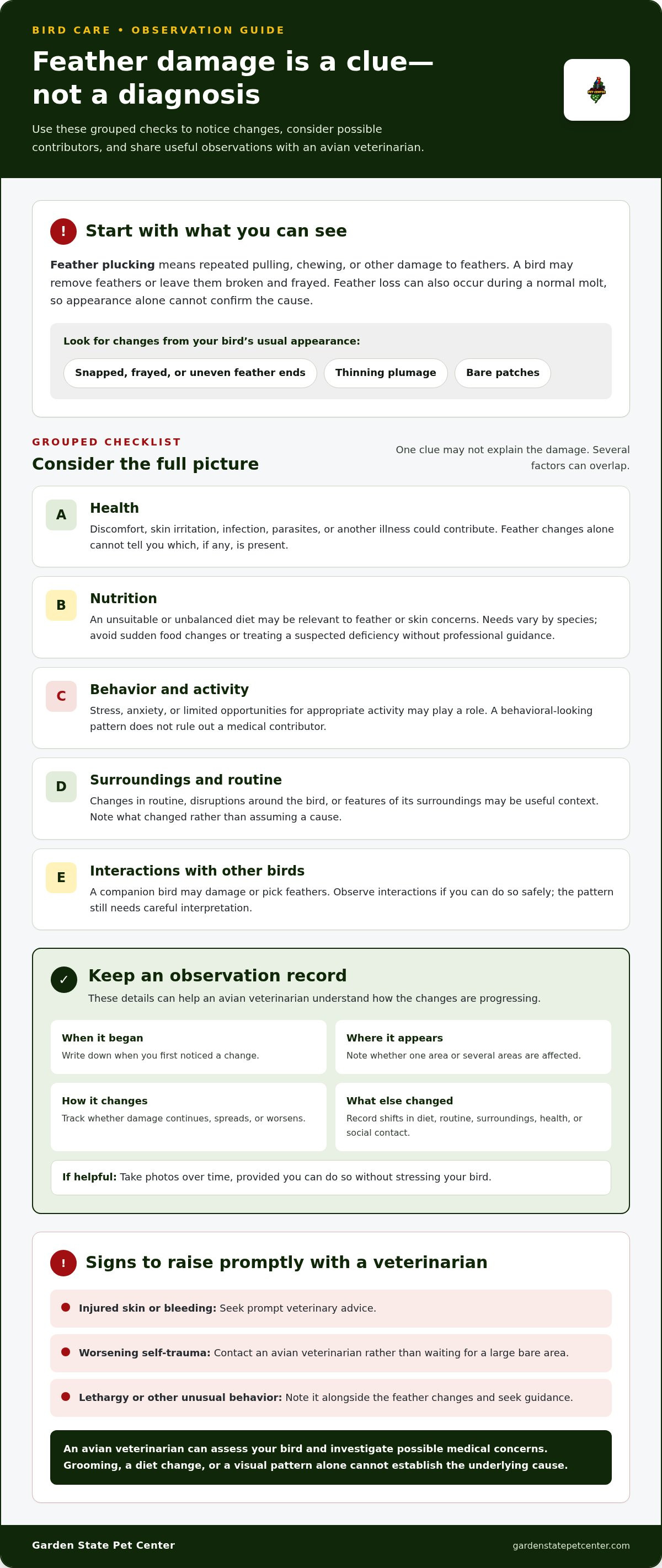
Feather plucking is repeated pulling, chewing, or other damage to feathers. A bird may remove them or leave them broken and frayed. You might notice short, ragged feathers, thinning plumage, or a bare patch. These changes are worth investigating, but they don’t identify an illness or explain what’s causing them. The question “why is my bird plucking its feathers” can’t be answered reliably by appearance alone.
Feather loss can also happen during a normal molt, when old feathers are shed and new ones grow in. The timing and pattern may offer clues, but there’s no single visual check that can confirm what’s normal for your bird. The overview of Feather-plucking in birds describes the behavior and its range of possible contributing factors. An avian veterinarian can assess your bird’s specific signs.
How can I tell feather plucking from ordinary feather loss?
Observe your bird’s behavior and its feathers over time. You may see your bird chewing or pulling at its plumage. Damaged feathers can have snapped, frayed, or uneven ends. Note whether changes appear in one area or across the body, and whether they continue or worsen. These patterns are clues, not proof of a cause. Write down when you first noticed a change and where it appears. Take photos if you can do so without stressing your bird.
Compare what you see with your bird’s usual appearance and behavior rather than relying on a single glance. Molting and feather damage can be difficult to distinguish at home, so share your observations with an avian veterinarian. If you’re reviewing your bird’s surroundings, bird supplies can help you explore care items for its setup, but they can’t replace a health assessment.
Which signs make feather damage more concerning?
Seek prompt veterinary advice if you notice injured skin, bleeding, or worsening self-trauma. Feather changes alongside lethargy also deserve attention. Don’t wait for a large bald area to develop before asking for guidance. Early observations can help a veterinarian understand how the changes are progressing and decide what assessment is appropriate.
- Broken or frayed feathers: Note which areas are affected and whether the damage is spreading.
- Thinning or bare patches: Track when they appear and photograph changes over time.
- Skin injury or bleeding: Contact an avian veterinarian promptly for advice.
- Changes in behavior: Record lethargy or other unusual signs alongside the feather damage.
Routine bird grooming and investigating feather damage are different things. Grooming doesn’t establish why feathers are being pulled or damaged. Treat new or worsening changes as a reason to seek appropriate veterinary guidance.
What causes feather plucking? Consider health, diet, stress, and surroundings
If you’re asking, “why is my bird plucking its feathers,” there isn’t one answer that applies to every bird. Feather damage can have a medical, nutritional, behavioral, or environmental contributor, and several factors may overlap. A bird that seems restless, for example, could also be uncomfortable or unwell. Don’t assume boredom or try to identify a cause from one behavior alone.
An avian veterinarian can investigate underlying causes and determine what your bird needs. The UC Davis overview of causes and treatment for feather-picking in parrots discusses medical and behavioral considerations. Use possible causes as a framework for observations, not as a checklist for diagnosing your bird.
- Health: Discomfort, skin irritation, infection, parasites, or another illness could contribute. A change in feather condition by itself can’t tell you which, if any, is present.
- Nutrition: An unsuitable or unbalanced diet may be one factor in feather or skin concerns. Diet needs vary by species, so avoid making a sudden change or treating a suspected deficiency without professional guidance.
- Behavior: Stress, anxiety, or limited opportunities for appropriate activity may play a role. These possibilities don’t rule out a medical contributor.
- Environment: A change in routine, disruptions around the bird, or features of its surroundings may be relevant context. Note what has changed rather than assuming any one feature is the cause.
- Other birds: A bird sharing space with another may have feathers damaged or picked by its companion. Observe interactions if you can do so safely. The pattern still needs careful interpretation.
Could a health or nutrition issue contribute?
Yes. Skin problems, parasites, infection, pain, or other illness are possibilities to discuss with a veterinarian, not conclusions to draw at home. An unsuitable diet may also be relevant, but changing foods or adding supplements isn’t a substitute for finding out what’s wrong. An avian veterinarian can assess your bird and decide whether an examination or tests are appropriate.
Can stress, boredom, or the bird’s environment play a role?
They may. Limited enrichment, a disrupted routine, or stressful surroundings could contribute. Feather damage between birds is another possibility to discuss. These observations aren’t a reason to blame yourself; they help build a fuller picture. Record changes in daily schedule, social contact, and the bird’s setup, then share that context with the veterinarian.
Consider these categories together. A routine change might coincide with a health problem, while diet or interactions may add useful context without explaining everything. Keep notes on what you observe and avoid treating a possible trigger as a confirmed cause. If you’re reviewing your bird’s setup, bird supplies can be a relevant resource, while veterinary assessment remains central to investigating feather damage.
Is feather plucking just a behavioral problem? Separate assumptions from clues
Feather damage can look like a behavior issue, but appearance alone can’t reveal its cause. A bird chewing its feathers might be responding to stress, discomfort, a skin problem, or another concern. The same visible change can have different explanations. Treat each observation as a clue to share with an avian veterinarian, not as a diagnosis. Veterinary Information Network’s discussion of medical and welfare issues in feather plucking also emphasizes the complexity of the problem.
Use this comparison to check assumptions and choose a sensible next step:
Common assumption: “My bird is bored.”
What it might overlook: Boredom is one possibility, but a medical contributor may also be present.
Useful next step: Note recent changes in activity and enrichment, and arrange veterinary advice if feather damage continues.
Common assumption: “The damaged area tells me what’s wrong.”
What it might overlook: Feather appearance alone can’t identify stress, parasites, infection, or a dietary issue.
Useful next step: Record where and when changes appear, then share the pattern with an avian veterinarian.
Common assumption: “My bird seems fine, so it can wait.”
What it might overlook: Changes in feathers may be noticed before other signs are apparent to an owner.
Useful next step: Monitor activity, eating, and skin condition, and seek veterinary advice if damage persists or worsens.
Does feather plucking automatically mean my bird is bored?
No. Boredom may be one possibility, but plucking alone doesn’t establish it. A recent routine change or reduced engagement can be useful context, while skin irritation, altered eating, or low energy may also call for medical investigation. Don’t make abrupt changes to diet, housing, or routine based only on a guess. Note what you’ve observed and discuss it with an avian veterinarian.
Can a bird look well and still need an assessment?
Yes. Feather changes may be the first concern an owner notices, even if the bird otherwise seems like itself. Watch for shifts in activity, appetite, and skin condition without trying to diagnose from them. Seek veterinary advice if the damage continues, worsens, or involves the skin. Your bird doesn’t need a large bald patch or obvious illness before changing plumage deserves attention.
Investigate the cause; don’t punish or shame the bird. Plucking isn’t a deliberate attempt to misbehave, and punishment can add stress without addressing what’s driving the damage. Focus on calm observation and professional assessment. If you’re reviewing food as one part of your bird’s care, the team at Garden State Pet Center can help with bird food and supplies. Nutrition guidance can complement, but doesn’t replace, veterinary evaluation.
What should I do if my bird is plucking its feathers? Make a useful action plan
If you’re still wondering, “why is my bird plucking its feathers,” turn uncertainty into clear observations and seek veterinary guidance. You don’t need to identify the cause before contacting a veterinarian. A concise record of what you’ve noticed can help an avian veterinarian understand the pattern and decide how to assess your bird.
- Observe calmly. Note when you see feather chewing or pulling, how often it happens, and whether it occurs during a particular part of the day or routine. Don’t provoke or interrupt your bird to test what it will do.
- Document changes. Write down when feather damage first appeared, which areas are affected, and whether it’s spreading or becoming more frequent. Record recent changes in food, surroundings, daily schedule, or contact with other birds, along with any other changes you’ve noticed.
- Check for visible injury. Look for bleeding, open or irritated skin, and changes in your bird’s general wellbeing. Avoid handling or restraining your bird to inspect a sensitive area if that causes distress.
- Contact an avian veterinarian. Share your notes and explain whether the damage is continuing, worsening, or accompanied by other signs. The veterinarian can determine what examination or follow-up is appropriate.
What information should I record before seeking advice?
Keep notes brief and specific. Include when the changes started, how often they happen, which areas are affected, and any changes in food or routine. Add shifts in activity or eating. If your bird lives with another bird, note relevant changes in their interactions. Clear photos may help show how feathers or skin change over time, but take them only if you can do so without distressing your bird. Bring your notes and images when you seek advice.
When should an avian veterinarian be involved?
Contact an avian veterinarian if feather damage is persistent, worsening, or unexplained. Bleeding, open skin, or a marked change in your bird’s wellbeing calls for prompt veterinary advice. Don’t wait for extensive feather loss before reaching out. Examination, diagnosis, and treatment decisions belong to a qualified veterinarian. Avoid applying creams, sprays, supplements, or other products, and don’t attempt treatment unless the veterinarian directs you.
While arranging advice, keep your bird’s routine as steady as you can and continue noting changes. If you’re reviewing food or supplies as part of your observations, explore bird-care food and supplies at Garden State Pet Center. Nutrition guidance and care items can support your bird’s overall routine, but they don’t replace veterinary assessment of feather damage.
How to support your bird while the cause is being investigated
While you work with an avian veterinarian to understand why your bird is plucking its feathers, aim for steady, supportive care rather than a quick fix. Keep familiar routines where possible, offer calm interaction, and provide safe, species-appropriate opportunities to explore, chew, or forage. These steps can support your bird’s wellbeing, but they don’t replace an assessment or establish the reason for feather damage.
What supportive care can owners review at home
Notice whether your bird has regular interaction and appropriate enrichment, and keep track of its daily routine. Record what it eats and any changes you’ve made, but avoid changing several things at once. If you suspect a health concern, ask the veterinarian how to adjust care while it’s being investigated. A measured approach helps you see what changes and gives the veterinarian clearer context.
- Keep a predictable routine: Note changes in sleep, activity, interaction, and time spent in the bird’s usual environment.
- Offer appropriate engagement: Consider safe, species-suitable enrichment, and observe whether your bird chooses to interact with it.
- Make changes thoughtfully: Avoid sudden diet or setup changes based on a guess. Follow veterinary guidance when a health issue is suspected.
- Continue observing: Record any changes in feather condition, skin, eating, or activity and share them with the veterinarian.
Where nutrition and grooming fit into the bigger picture
Nutrition is one part of overall care, not a diagnosis or guaranteed solution for plucking. Species-appropriate formulated food and suitable fresh foods may be part of a bird’s general diet, but needs differ. Discuss your bird’s current food and any planned changes with an avian veterinarian. Garden State Pet Center’s team includes a Certified Pet Nutritionist, and its bird food and care supplies can support owners reviewing their bird’s routine and setup.
Routine grooming is also distinct from investigating feather damage. Grooming doesn’t identify why a bird is pulling, chewing, or breaking feathers, and it can’t substitute for veterinary assessment. If feather changes are continuing or worsening, prioritize veterinary guidance rather than relying on grooming or new supplies to address the underlying cause. Share your observations about diet, routine, and behavior so any care adjustments can be considered in context.
Small, consistent steps can make the investigation more manageable: keep your bird’s routine calm, note what you observe, and use professional veterinary guidance to shape changes. Bird-care supplies can support your bird’s everyday environment, while the focus remains on finding out what may be contributing to the feather damage.
Take the next step with steady, informed care
Uncertainty can feel overwhelming, but you don’t have to solve the question “why is my bird plucking its feathers” on your own. Keep working with an avian veterinarian, and use what you learn to shape thoughtful changes over time. Your observations and a consistent routine can help you stay focused on your bird’s needs without chasing quick fixes.
Everyday care can still have a place alongside veterinary guidance. Garden State Pet Center’s team includes a Certified Pet Nutritionist who can offer nutrition-related guidance, while bird food and supplies can support your review of your bird’s daily care. Grooming is a separate routine service, not a way to diagnose or resolve the cause of feather damage.
Make a note of a question for the veterinarian, review your bird’s routine, or explore supplies that fit its everyday needs. Explore bird food and care supplies at Garden State Pet Center as one practical step in supporting your bird’s daily care.
Frequently Asked Questions
Can feather plucking be caused by stress?
Yes, stress can be one possible contributor, but it can’t be confirmed from feather damage alone. A move, visitors, construction noise, or a changed household schedule may be useful context to record. Notice whether your bird’s behavior changes around these events, but don’t assume timing proves cause and effect. An avian veterinarian can help assess the full picture and advise whether health factors also need investigation.
Is feather plucking the same as molting?
No. Molting is the natural replacement of old feathers, while plucking involves a bird damaging or removing feathers. During a molt, you may notice shed feathers alongside new growth, sometimes emerging in protective sheaths. That observation alone can’t confirm what’s happening. If you see persistent chewing, damaged skin, or unusual bare areas, note the changes and ask an avian veterinarian for guidance.
What happens if my bird plucks its skin?
Skin damage needs prompt veterinary advice, especially if you see bleeding or an open wound. Repeated injury can worsen, and a veterinarian should assess the bird rather than relying on appearance to identify the cause. Keep your bird calm and avoid applying human creams, antiseptics, or other products unless a veterinarian directs you. If your bird is actively bleeding or seems markedly unwell, contact a veterinarian promptly.
Can another bird cause my bird to lose feathers?
Yes. A cage mate may damage or pull another bird’s feathers, though feather loss can have other explanations too. If you keep multiple birds, observe their interactions from a distance and note whether one bird approaches or preens the affected area. A short video may help document what you see, provided recording doesn’t disturb them. If you observe injury, seek veterinary advice about safe next steps.
How can I tell whether my bird is chewing or pulling out feathers?
Watch your bird during its normal routine, without handling or provoking it. Chewing may leave feathers ragged or shortened, while pulling may coincide with a feather coming free. Either pattern can be hard to interpret from the cage floor. If you can, note what you directly observe and take a brief video from a comfortable distance. These details can help an avian veterinarian assess the behavior.
Can changing my bird’s food stop feather plucking?
Changing food might help only if diet is part of the issue, so a new food isn’t a guaranteed fix. Before making changes, write down your bird’s current foods, treats, and typical eating pattern. Ask an avian veterinarian whether the diet needs adjustment for your bird’s species and health. A nutrition professional can offer diet guidance, but feather damage still needs proper assessment to identify possible causes.
Should I cover my bird’s cage to stop feather plucking?
Covering the cage isn’t a reliable way to stop feather plucking, and it won’t identify what’s driving the behavior. If a cover is already part of your bird’s usual sleep routine, keep that routine consistent rather than suddenly using it to suppress activity. Notice whether feather damage occurs at particular times, and discuss any sleep or schedule changes with an avian veterinarian before making major adjustments.

Article by
Victor Santucci
Victor Santucci Jr. is the owner of Garden State Pet Center and a Certified Clinical Pet Nutritionist specializing in premium pet nutrition, raw and fresh feeding, holistic pet wellness, birds and exotic animals. Through years of hands-on retail and animal-care experience, Victor helps pet parents make informed decisions about nutrition, enrichment and species-appropriate care.
Share this post
- 0 comment
- Tags: avian veterinarian, bird behavior, bird care, bird health, feather loss, feather plucking, parrot care, pet birds, why is my bird plucking its feathers