

2026 Pet Food Labels: A Clear Guide for Pet Parents


What if the boldest words on a pet food package tell you less than the small print? If ingredient lists, nutrient percentages, and promises like “complete” or “natural” leave you unsure what suits your pet, you’re not alone. Understanding pet food labels 2026 means looking past the marketing and reading the details in a useful order, especially as updated label designs begin appearing during a gradual transition.
This guide shows you how to find key information quickly, understand what nutrition statements and the guaranteed analysis can and can’t tell you, and compare foods without treating dry, raw, freeze-dried, or gently cooked formats as interchangeable by percentage alone. Start by identifying the food and its intended species and life stage, then check nutritional adequacy, interpret key nutrients, and evaluate marketing claims. If a label still raises questions, you’ll know what to ask next and when to seek tailored guidance. Garden State Pet Center’s on-site Certified Pet Nutritionist can help pet parents understand dog and cat food options, including raw, freeze-dried, and gently cooked diets.
Key Takeaways
- Scan the package in order: identify the food, intended pet, nutrition information, and feeding directions.
- Use the nutritional adequacy statement to assess whether a food is intended for your pet’s species and life stage.
- Read guaranteed analysis as minimums or maximums for specific nutrients, not as a complete picture of the food’s nutrition.
- When understanding pet food labels 2026, compare foods thoughtfully: moisture levels can affect nutrient percentages across different formats.
- Look beyond phrases like “premium” or “natural,” and bring unclear labels or follow-up questions to a Certified Pet Nutritionist.
Understanding a Pet Food Label: What Information Appears on the Package?
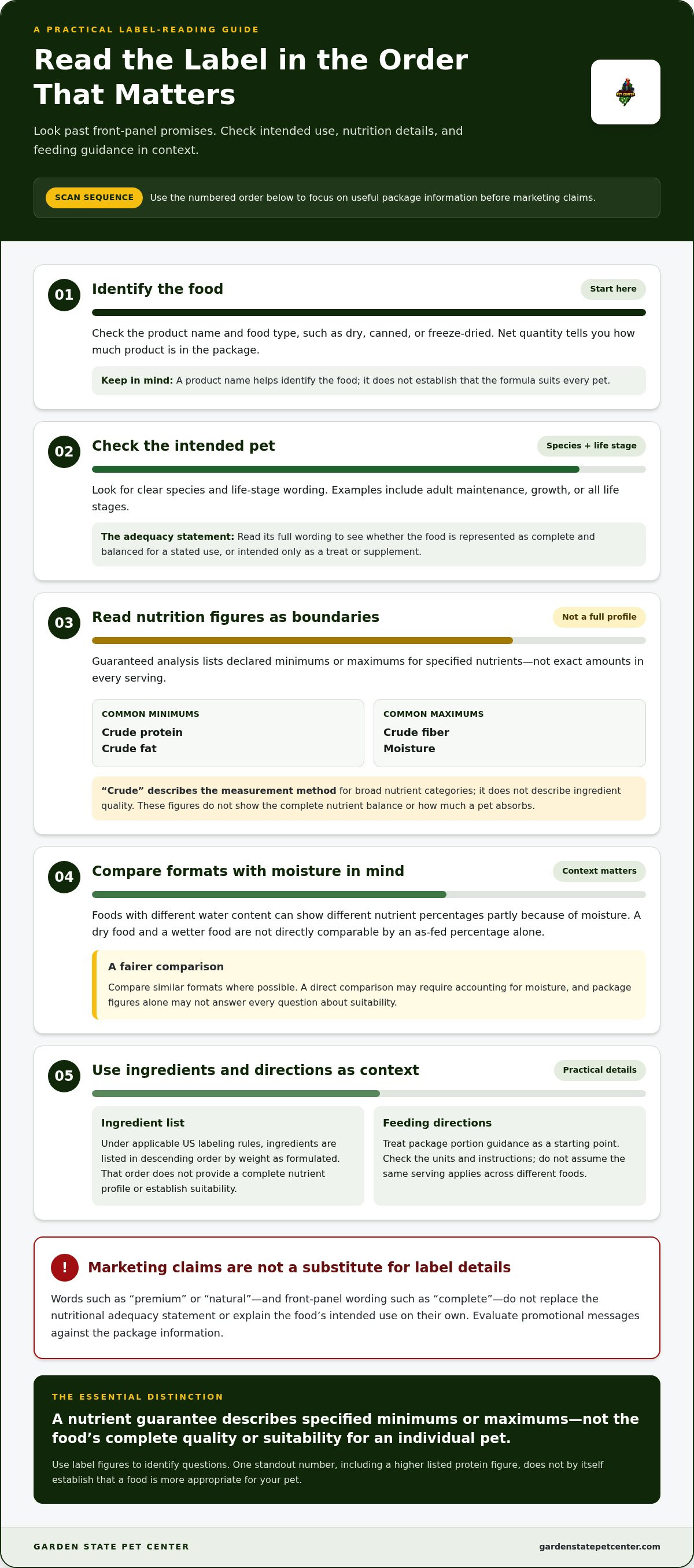
A pet food label combines information used to identify and describe the food with optional promotional material. To focus on details that help you assess a product, scan the package in a consistent order:
- Product identity: Check the product name and food type, such as dry, canned, or freeze-dried.
- Intended pet: Look for the species and any life-stage wording that identifies who the food is intended for.
- Nutrition information: Find the nutritional adequacy statement and nutrient details, then read them in context.
- Feeding directions: Review the package’s portion guidance and any relevant instructions.
This sequence helps separate practical details from persuasion. A front-panel phrase may stand out, while information that helps you assess intended use appears elsewhere on the package. Promotional material may also appear in product listings, advertisements, or displays. Treat those messages as claims to evaluate, not as substitutes for reading the label. For background on food types, ingredients, and the broader category, see Pet Food Wikipedia.
Pet food labels give shoppers product identity, intended species and life stage, nutrition information, ingredient details, net quantity, manufacturer or distributor information, and feeding directions. Use that checklist to keep your comparison focused. Understanding pet food labels 2026 starts with knowing where these details appear, not judging a food by its front-panel wording.
Which details help identify the food and its intended pet?
Start with the product name, then check nearby wording for the species and intended use. A name that mentions a particular animal or food type helps identify the product, but it doesn’t establish that the formula suits every pet of that species. Look for clear species and life-stage language, such as whether the food is intended for adult maintenance or growth.
Net quantity tells you how much product the package contains. Manufacturer or distributor details identify the business responsible for the product information. These details help identify the product, but they don’t tell you whether it meets your pet’s nutritional needs. Words such as “complete” or “premium” don’t replace the nutrition statement or explain its intended use on their own.
Where should readers find ingredients and feeding directions?
Turn the package over or check its side panels. The ingredient list, nutrition statement, and feeding directions commonly appear away from the main display panel, though exact placement varies. Under applicable US labeling rules, ingredients are listed in descending order by weight as formulated. This order shows which ingredients weigh more in the recipe, but it doesn’t provide a complete picture of the food’s nutrient profile or suitability.
Feeding directions offer a starting point for portioning. Check the units and any guidance on adjusting amounts for your pet. Don’t assume the same scoop or serving applies across different foods. For example, use the details on each package as you browse the dry dog food selection, including intended use and feeding information. Labels differ across formats, so read the package in front of you rather than relying on the product name or a nearby claim.
How to Interpret Guaranteed Analysis and Nutritional Adequacy
The guaranteed analysis lists declared minimums or maximums for specified nutrients. It helps you understand what the package guarantees, but it isn’t a complete nutrient profile or a full measure of whether the food suits your pet. For a consumer-friendly explanation of label components, consult the AAFCO Pet Food Labeling Guide.
What does guaranteed analysis tell you about nutrients?
Read each figure as a boundary, not an exact amount in every serving. Crude protein and crude fat are commonly listed as minimums, while crude fiber and moisture are commonly listed as maximums. “Crude” refers to the method used to measure these broad nutrient categories, not to ingredient quality.
Protein and fat figures provide a broad view of those nutrients. Crude fiber gives an estimate of fiber, and moisture indicates the food’s water content. These figures help you read the panel, but they don’t show the full balance of nutrients or how much of each nutrient a pet absorbs.
Moisture also matters when comparing foods. A dry food and a food with more water may show different nutrient percentages partly because their water content differs. Compare similar formats where possible, and don’t rank foods by a single as-fed percentage. A direct comparison may require accounting for moisture, and the package figures alone may not answer every question about suitability.
A nutrient guarantee describes specified minimums or maximums, not the food’s complete quality or suitability for an individual pet.
Use the analysis to identify questions, rather than deciding based on one standout number. For example, a higher listed protein figure doesn’t by itself establish that a food is more appropriate for your pet.
What does the nutritional adequacy statement mean?
Find the nutritional adequacy statement and read the full wording. It indicates whether the food is represented as complete and balanced for a stated use, rather than intended only as a treat or supplement. Check the species and life stage named in the statement. Terms such as “adult maintenance,” “growth,” or “all life stages” describe different intended uses, so consider whether the stated use fits your pet.
Read the statement alongside the rest of the package. A product name or promotional phrase may sound broad, while the adequacy statement offers a more specific clue about the food’s represented nutritional role. If the wording is unfamiliar or your pet’s needs are more specific, note the exact phrase and discuss it with a Certified Pet Nutritionist. Garden State Pet Center’s on-site Certified Pet Nutritionist can provide guidance as you consider dog and cat food options.
For understanding pet food labels 2026, keep the order clear: review nutrient guarantees, account for moisture when comparing formats, then use the adequacy statement to understand the food’s represented use. These details help inform your questions without asking the label to say more than it does.
Pet Food Label Claims: Separate Useful Details from Marketing
Promotional wording can draw your eye, but it doesn’t answer every practical question about a food. Use it as a prompt to look for supporting details elsewhere on the package. The table below pairs label information worth verifying with phrases that need context.
| Label detail to verify | Promotional phrase requiring context |
|---|---|
| Species and life-stage wording that identifies the food’s intended use | “For all pets” or other broad descriptions that may not clarify suitability |
| The nutritional adequacy statement and its stated purpose | “Complete,” “balanced,” or similar wording without reading the full statement |
| The ingredient list and the exact named ingredients | Ingredient highlights on the front panel that show only selected components |
| Specific nutrient information and feeding directions | “Premium,” “natural,” or “wholesome” as a stand-in for nutrition details |
A front-of-package claim is one piece of label evidence, not a complete account of a food’s ingredients, nutritional adequacy, or suitability for an individual pet.
How should you interpret words such as natural or premium?
Words like “premium” and “natural” can describe how a product is presented, but they don’t establish by themselves that it meets a particular nutritional need. Their meaning may depend on the claim and applicable guidance, so don’t assume a familiar phrase carries the same significance on every package. Check the full ingredient list and nutrition statement, then consider whether the stated use fits your pet.
Product names and ingredient wording also deserve a careful read. A named ingredient in a product title or highlighted on the front may be relevant, but it doesn’t reveal the whole recipe or the food’s complete nutritional profile. Look for the corresponding ingredient in the list, then review the package’s other details. For understanding pet food labels 2026, treat claims as clues to verify rather than shortcuts to a decision.
When does a health or treatment claim deserve closer attention?
General descriptions of a food differ from wording that appears to promise diagnosis, prevention, or treatment of disease. The FDA explains that animal foods and drug claims are treated differently, and a claim suggesting a product will treat or prevent disease may raise regulatory concerns. Review the FDA’s pet food guidance for current information, and don’t interpret a marketing phrase as a medical recommendation.
If your pet has a diagnosed condition or a prescribed diet, speak with your veterinarian before changing foods. Bring the package or a clear record of its claims and nutrition information so your veterinarian can consider the exact product in light of your pet’s care. For broader questions about comparing food options, a Certified Pet Nutritionist can help you organize what the label says and prepare useful follow-up questions. You can also explore pet nutrition guidance as a supportive next step.
How to Compare Pet Food Labels for Your Individual Pet
Compare packages against your pet’s needs, not against a slogan or a single nutrient figure. Keep packages or label photos side by side and move through this checklist in order. It helps you spot mismatches before spending time on finer details.
- Match species and life stage. Start with the animal the food is intended for, then check its life-stage wording against your pet’s age and needs. A cat food and a dog food aren’t interchangeable, and a life-stage mismatch is a reason to pause.
- Compare nutritional adequacy statements. Before looking at nutrient figures or package claims, check whether each food is represented as complete and balanced for the same intended use. Compare the full wording, including species and life stage, rather than relying on a product name.
- Review ingredient and nutrient information. Compare the same kinds of details on both packages. Note the ingredients, guaranteed analysis, and any other nutrition information, but don’t treat one highlighted ingredient or percentage as the whole story.
- Account for food format and moisture. Identify whether each option is dry, raw, freeze-dried, or gently cooked. Differences in moisture can affect guaranteed-analysis percentages, so figures from different formats may not be directly comparable as printed.
- Read directions and claims last. Consider the feeding directions for each specific product, then assess promotional wording in light of the details you’ve already checked.
Which label details should match the pet first?
Species and life stage come first because they set the context for comparing foods. If your pet has an allergy, illness, or other medical concern, general label reading can help you prepare questions, but it can’t replace individualized veterinary advice. For an exotic or small animal, use species-appropriate food information rather than comparing its diet with dog or cat foods.
How can readers compare foods in different formats?
Keep the comparison consistent: review intended use, adequacy statement, ingredients, nutrient information, and feeding directions for each format. For example, a dry food and a gently cooked food may display different moisture levels, so their guaranteed-analysis percentages alone don’t establish which is nutritionally preferable. No single format is best for every pet. For cat-specific comparisons, review the cat food selection and read each package on its own terms.
Understanding pet food labels 2026 is most useful when you consider label details together and match them to the individual animal. If a package leaves you uncertain, note the exact wording and bring your questions to a qualified nutrition professional. Explore pet nutrition options for supportive guidance as you compare foods.
Make Label Reading Easier with Trusted Nutrition Guidance
Once you’ve read a few packages, use the same sequence each time: identify the food, check its nutritional adequacy statement, interpret nutrient information in context, and assess promotional claims. This routine keeps your attention on what the label communicates and helps you spot questions that need a more tailored answer. It also gives you a clear way to compare dry, raw, freeze-dried, and gently cooked foods without assuming one format suits every pet.
A label can clarify a food’s intended use, but choosing among options may still raise questions. A Certified Pet Nutritionist can explain label wording, compare product details, and help you frame useful follow-up questions. This guidance supports your decision-making while keeping your pet’s individual circumstances in view.
What questions can you bring to a nutrition consultation?
Bring the package, a photo, or the exact wording that prompted your question. For example, ask how the species and life-stage statements relate to your pet, what a nutrition statement means in practical terms, or how to compare information across different food formats. If two labels seem to point in different directions, describe what you’ve noticed rather than deciding based on one claim or nutrient figure.
For a diagnosed condition, symptoms that concern you, or a decision about a prescribed diet, consult your pet’s veterinarian. A nutrition consultation can help you understand product information and organize questions, but it doesn’t replace veterinary advice for medical concerns.
How can ongoing label reading build confidence?
Keep a simple record of foods you’re considering. Save or photograph the package panels, including the intended-use wording, adequacy statement, ingredient list, nutrient information, and feeding directions. When you review options later, compare the same details rather than relying on memory or a changing front-of-package message. Note the food’s format too, since moisture differences can make guaranteed-analysis percentages harder to compare directly.
For a dog-specific review, the dog food collection offers a place to consider options while keeping the intended species in focus. Use each product’s own label for its details. If you’re comparing a food your pet eats now with another option, record what you want to understand, such as whether the stated life stage matches or how the feeding directions differ. These notes make a conversation with a nutrition professional more focused.
Understanding pet food labels 2026 is less about memorizing every phrase and more about asking clear questions in a consistent order. Garden State Pet Center’s on-site Certified Pet Nutritionist can offer guidance as you review dog and cat food choices, including raw, freeze-dried, and gently cooked formats. Explore premium pet food options at your own pace. Informed questions are a practical starting point for thoughtful food choices, and you don’t have to interpret every detail alone.
Make Your Next Food Choice with Confidence
Let label reading become a useful habit, not a test you have to pass. As your pet’s needs or food options change, keep package details handy and bring forward the questions that matter to you. Understanding pet food labels 2026 can help you feel prepared to weigh your options, while individualized decisions should reflect your pet’s circumstances and veterinary guidance when needed.
For a thoughtful next step, explore Garden State Pet Center’s premium food options. The store is an Open Farm Certified Obsessed Retailer that champions sustainability and ethical pet care, and an on-site Certified Pet Nutritionist offers guidance to help you understand food choices and frame follow-up questions.
Explore premium pet food options and get guidance from Garden State Pet Center’s Certified Pet Nutritionist by calling (856) 617-6871. A clear question is a strong place to start.
Frequently Asked Questions
How do I read a pet food label?
Read the package in a deliberate sequence: identify the product and intended animal first, then find the nutritional adequacy statement before considering nutrient figures. Next, review ingredients and feeding directions. This order helps keep a prominent flavor or ingredient highlight from taking priority over the food’s stated purpose. For understanding pet food labels 2026, compare the same details on each package, and save a photo if you want to revisit a product later.
What does guaranteed analysis mean on pet food?
Guaranteed analysis lists minimums or maximums for specified nutrients, rather than exact amounts in each serving. Common entries include crude protein and crude fat as minimum guarantees, and crude fiber and moisture as maximum guarantees. Treat the figures as boundaries for those listed categories. They don’t show every nutrient or provide a complete nutrient profile, so use them alongside the adequacy statement and other package information.
What is the nutritional adequacy statement on a pet food label?
The nutritional adequacy statement explains whether a food is represented as complete and balanced for a stated use, such as a particular species or life stage. Read the whole statement, especially if your pet is growing, an adult, or at another life stage. Label terminology and guidance can change, so consult current AAFCO wording if a phrase is unfamiliar. This statement helps clarify intended use, but it doesn’t tailor a diet to an individual pet’s medical needs.
Are ingredients listed by weight on pet food labels?
Generally, ingredients on US pet food labels are listed in descending order by weight as formulated. That order can help you understand which ingredients contribute more weight to the recipe, but it doesn’t reveal their proportions or establish overall nutritional value. Because labeling requirements and their wording should be checked against current official guidance, consult FDA or AAFCO materials before relying on a specific interpretation. Read the ingredient list alongside the food’s other label information.
Can you compare guaranteed analysis between dry and wet pet food?
Compare the percentages cautiously: foods with different moisture levels may show different guaranteed-analysis figures partly because of their water content. A dry food and a wet food therefore aren’t directly comparable by the printed percentages alone. Don’t assume the higher number means a food is better or more suitable. First check each food’s intended use, then seek qualified guidance if you need a closer nutrient comparison across formats.
Does “natural” or “premium” on a pet food label guarantee it is right for my pet?
No. “Natural” and “premium” are promotional descriptions, not a guarantee that a food matches your pet’s species, life stage, or individual needs. Read the full nutrition statement and ingredient list, and consider specific wording in context rather than treating a front-panel phrase as proof of suitability. If a claim is unclear, write it down and ask a pet nutrition professional to help you understand what the package does and doesn’t say.
Should I ask a veterinarian or a pet nutritionist about a food label?
For help understanding label wording or comparing general food options, a Certified Pet Nutritionist can offer nutrition guidance and help you frame follow-up questions. For a diagnosed condition, symptoms, treatment decisions, or a prescribed diet, consult your pet’s veterinarian. Bring the package or a clear label photo so the discussion can focus on the exact food and wording. Nutrition guidance can complement veterinary care, but it doesn’t replace medical advice.

Article by
Victor Santucci
Victor Santucci Jr. is the owner of Garden State Pet Center and a Certified Clinical Pet Nutritionist specializing in premium pet nutrition, raw and fresh feeding, holistic pet wellness, birds and exotic animals. Through years of hands-on retail and animal-care experience, Victor helps pet parents make informed decisions about nutrition, enrichment and species-appropriate care.
Share this post
- 0 comment
- Tags: 2026 pet trends, cat food, dog food, guaranteed analysis, pet food guide, pet food labels, pet health, pet nutrition, understanding pet food labels 2026