

The Ultimate Healthy Rabbit Diet Plan: A 2026 Nutritional Guide


Did you know that up to 90% of your rabbit's daily intake should consist of nothing but high-quality grass hay? It's common to feel a sense of uncertainty when choosing the right vegetables or measuring out pellets, especially when the fear of GI stasis is a constant concern. You want the absolute best for your companion, but the volume of conflicting nutritional advice can be overwhelming. Establishing a consistent healthy rabbit diet plan is the most effective way to ensure your pet remains vibrant, active, and well-nourished for years to come.
We're here to provide the specialized expertise you need to feed with total confidence. This guide delivers a clear, professional framework for daily nutrition based on the latest 2026 standards for fiber and protein intake. You'll discover a structured feeding schedule, a curated list of safe leafy greens, and the premium supplements that support optimal digestive health. Let's master the art of rabbit nutrition together and build a foundation of wellness for your long-eared friend.
Key Takeaways
- Understand the precise ratio of hay, greens, and pellets necessary to maintain critical gut motility.
- Learn how a structured daily routine helps you detect early warning signs of illness through appetite monitoring.
- Identify the best dark leafy greens for a weekly rotation that ensures nutritional variety without digestive upset.
- Uncover the truth behind common dietary myths that could be compromising your pet's dental and metabolic health.
- Implement a healthy rabbit diet plan that combines high-quality nutrition with holistic care for maximum longevity.
The Foundation of a Healthy Rabbit Diet Plan
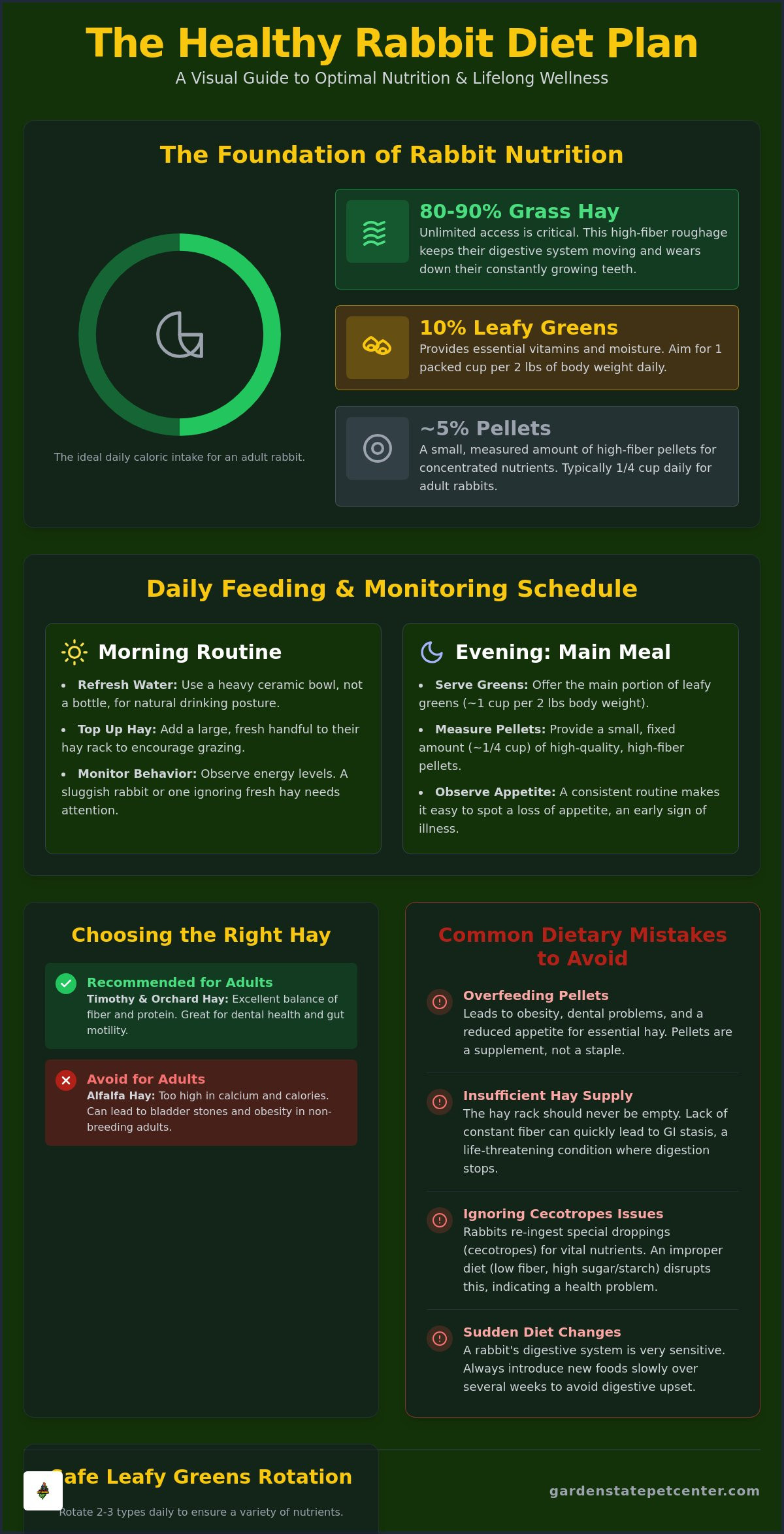
Rabbits are designed by nature to be grazing animals, meaning their bodies are built for a constant intake of roughage. A comprehensive guide to domestic rabbit care confirms that their complex digestive tracts require non-stop movement to stay functional. To achieve this, a healthy rabbit diet plan must prioritize fiber above all else. The standard benchmark for an adult rabbit involves a daily intake of 80 to 90 percent high-quality grass hay, supplemented by 10 percent leafy greens and a small 5 percent portion of fortified pellets.
This ratio isn't just a suggestion; it's a biological requirement for survival. Long-stem fiber keeps the cecum, which is a large fermentation vat in their gut, functioning correctly. Without it, gut motility slows down, leading to life-threatening complications. Additionally, because a rabbit's teeth grow continuously throughout their life, the abrasive action of chewing tough hay is the only natural way to grind down their molars. This prevents painful dental spurs that can stop a rabbit from eating entirely. Providing "unlimited access" means your rabbit should never see the bottom of their hay rack. It's the most reliable way to keep their system moving and their teeth healthy.
To better understand how these components work together, watch this helpful video:
Choosing the Right Hay Varieties
Most adult rabbits thrive on 2nd cut Timothy hay because it offers the perfect balance of fiber and protein. If you have allergies or a picky eater, Orchard grass is an excellent, softer alternative that provides similar nutritional value. You should generally avoid Alfalfa hay for adults. It's too high in calcium and calories, which can lead to bladder stones or obesity. When you're shopping for small animal supplies, look for hay that smells fresh like a meadow. It should have a vibrant green color and be free from excessive dust or mold. High-quality hay shouldn't feel brittle or look like yellow straw.
Understanding Rabbit Digestion and Cecotropes
Rabbits practice a unique process called hindgut fermentation. You might notice your pet consuming small, soft, dark bunches of droppings that look like tiny grapes; these are cecotropes. They are packed with essential B vitamins and protein that the rabbit missed the first time through the digestive tract. A high-fiber diet ensures these are produced and consumed correctly. When fiber levels drop, the delicate balance of gut bacteria shifts. This imbalance is often the primary trigger for GI stasis, a condition where the digestive system shuts down completely. Maintaining a strict healthy rabbit diet plan is your best defense against this silent killer.
A Step-by-Step Daily Rabbit Feeding Schedule
Creating a predictable rhythm is one of the kindest things you can do for your pet. Rabbits are sensitive to change, and a consistent routine significantly reduces their stress levels. By following a structured healthy rabbit diet plan, you also gain a powerful diagnostic tool. When you know exactly when your rabbit usually eats, you'll immediately notice if they skip a meal, which is often the first sign of a health issue. This predictability makes you a more proactive partner in your pet's wellness.
Morning: Maintenance and Monitoring
Start your day by refreshing their water supply. It's best to use a heavy ceramic bowl rather than a drip bottle. Bowls allow rabbits to drink in a more natural, lapping position and are much easier to keep clean. Check the hay rack and add a large fresh handful, even if it isn't empty. The scent of new hay often encourages them to start grazing immediately. Pay close attention to their energy levels during this time. A rabbit that ignores its morning hay or moves sluggishly needs immediate attention, as their sensitive systems can't afford to go long without food intake.
Evening: The Nutritional Main Event
The evening is typically the best time to offer fresh greens and measured pellets. According to RSPCA rabbit feeding guidelines, you should aim for approximately one packed cup of leafy greens for every two pounds of body weight. While pellets are tasty, they shouldn't be the bulk of the meal. Most adult rabbits only need about 1/4 cup of high-quality pellets daily. Overfeeding pellets is a common mistake that leads to obesity and a lack of interest in life-saving hay. If you need help selecting the right fortified options, our small animal collection features specialized food designed for nutritional precision.
You can make dinner more engaging by using foraging toys or hiding pellets inside hay cubes. This provides vital mental stimulation and mimics their natural behavior in the wild. Before you head to bed, do one final "hay buffet" check. Rabbits are active overnight and will need plenty of roughage to keep their digestion moving while you sleep. Ensuring they have a mountain of fresh hay before you turn out the lights is the final step in a successful healthy rabbit diet plan. This nightly habit prevents the digestive slowdowns that often lead to emergency vet visits.
Selecting Safe Greens and Premium Supplements
Choosing the right fresh foods is where many owners feel the most pressure. To build a truly healthy rabbit diet plan, you should implement a "Weekly Rotation" strategy. By offering three different types of greens each week, you provide a broad spectrum of vitamins and minerals while preventing your pet from becoming a picky eater. Always follow the "One New Food" rule when expanding their menu. Introduce a single new vegetable in a small amount and monitor their droppings for 24 hours. This cautious approach protects their sensitive gut flora from sudden shifts that could lead to discomfort or diarrhea.
It's vital to clear up a common misconception: carrots and fruit are not staples. While popular culture often depicts rabbits munching on carrots, these are actually high-sugar treats that can cause obesity and tooth decay. Treat them like candy. Offer no more than a teaspoon-sized piece once or twice a week. Focus instead on the low-sugar options that provide the crunch and hydration your rabbit needs to thrive without compromising their metabolic health.
The Green Leafy Hierarchy
Premium Pellets and Holistic Additives
A holistic pellet should be a uniform, green nugget. Avoid "muesli" mixes containing corn, seeds, or colorful pieces. These products encourage selective feeding, where rabbits pick out the fatty bits and leave the nutrition behind. This leads to severe deficiencies and dental issues over time. High-fiber pellets are essential for maintaining the digestive momentum we established in the previous sections. For aging pets or those recovering from illness, adding high-quality Small Animal Vitamins & Supplements can bridge nutritional gaps and support long-term vitality. You can find a detailed rabbit diet plan that outlines specific pellet measurements based on your rabbit's exact weight to ensure they never overindulge in these concentrated nutrients.
Common Dietary Mistakes and How to Avoid Them
Even the most dedicated owners can fall victim to common myths that compromise a healthy rabbit diet plan. Perhaps the most persistent is the "Carrot Myth." While pop culture suggests carrots are a staple, their high sugar content makes them more like a dessert than a dinner. Feeding too many carrots or commercial yogurt drops leads to "Treat Overload." This habit is a primary driver of obesity and painful dental disease in domestic rabbits. Stick to leafy greens and keep the sweet stuff to a bare minimum.
Some human foods are strictly off-limits. Never offer your rabbit chocolate, cookies, or crackers, as their systems cannot process processed sugars or complex starches. Avocado is another hidden danger; it contains persin, which is toxic to many small animals. If you have a picky eater who refuses their essential hay, don't give in by offering more pellets or treats. Instead, try rubbing a small piece of banana on the hay or mixing in fragrant herbs like mint to entice them back to their fiber foundation. If you need high-quality options to tempt a stubborn pet, shop our premium small animal food and treats to find a flavor they'll love.
Spotting the Signs of Nutritional Imbalance
Monitoring your rabbit's output is the best way to gauge their health. Soft, mushy stools that stick to their fur usually indicate too much protein or sugar in the diet. This is different from diarrhea, which is watery and represents a critical medical emergency. You should also perform a "rib check" weekly. When you run your hands along their sides, you should feel the ribs easily under a thin layer of fat, similar to the knuckles on the back of your hand. If the ribs are buried, it's time to cut back on pellets. Keep an eye out for dull fur or lethargy, as these often signal a vitamin deficiency or a lack of variety in their greens.
Transitioning to a New Diet Safely
Sudden changes are dangerous for a rabbit's sensitive gut. If you're switching pellet brands or introducing a new healthy rabbit diet plan, use a 7 to 10 day transition period. Start by mixing 25 percent of the new food with 75 percent of the old. Gradually increase the ratio every few days. This slow progression allows the beneficial bacteria in the cecum to adjust without triggering a life-threatening gut shut-down. Always monitor their droppings during this phase. If you notice a decrease in size or frequency, slow the transition down even further. Patience is the key to preventing GI stasis during any dietary shift.
Advancing Your Rabbit’s Health with Holistic Care
A truly healthy rabbit diet plan serves as the foundation for a long life, but specialized care extends beyond the food bowl. To maximize your pet's longevity, consider how professional expertise can refine your daily routine. Consulting with a certified pet nutritionist is a proactive step that can transform your rabbit's health, especially if they struggle with chronic issues like bladder sludge or recurring digestive slowdowns. These experts provide clinical precision that helps you adjust fiber and mineral levels to suit your pet's unique metabolic needs. Think of premium nutrition and professional guidance as a preventative investment that reduces the likelihood of emergency vet visits later in life.
Consistency is equally important when you are away from home. Relying on a neighbor to follow a complex feeding schedule can be risky. Professional boarding services offer a reliable solution, ensuring your rabbit's specific dietary ratios are maintained with clinical accuracy. This specialized care provides peace of mind, knowing that your pet's gut motility remains a top priority even in your absence. By combining a high-end diet with professional support, you create a comprehensive wellness strategy that supports every facet of your rabbit's biological needs.
The Importance of Professional Grooming
Grooming is a critical component of digestive health that many owners overlook. Rabbits are fastidious self-groomers, but they lack the ability to vomit. During molting seasons, they can ingest significant amounts of fur. If this fur mixes with a diet that is even slightly low in fiber, it can lead to "wool block," a dangerous mechanical obstruction in the digestive tract. Regular, professional brushing is the best way to remove excess fur before your rabbit swallows it. You can learn more about Small Animal Grooming to understand how these services support optimal health and prevent life-threatening blockages.
Consulting the Experts for Specialized Needs
Every rabbit is an individual, and their nutritional requirements can shift as they age or recover from illness. Seeking a nutritional consultation allows you to move past generic advice and implement a plan tailored to your pet's specific life stage. This is the ideal time to integrate high-end, holistic Small Animal Food that prioritizes ingredient transparency and biological appropriateness. As you finalize your healthy rabbit diet plan, use this checklist to ensure ongoing success:
- Daily: Provide unlimited grass hay and fresh, filtered water in a ceramic bowl.
- Weekly: Perform a "rib check" to monitor weight and rotate three types of leafy greens.
- Monthly: Schedule a professional grooming session during heavy molting periods.
- Annually: Review your rabbit's nutritional goals with a knowledgeable expert to adjust for aging.
By staying engaged with your local exotic animal experts and prioritizing specialized care, you ensure your rabbit doesn't just survive, but truly thrives in your home.
Build a Vibrant Future for Your Rabbit
Mastering your pet's nutrition is the most impactful step you can take to ensure they enjoy a long and energetic life. By prioritizing unlimited grass hay and maintaining a strict daily schedule, you build a biological defense against digestive complications. Remember that a successful healthy rabbit diet plan relies on the quality of every ingredient, from the freshness of the Timothy hay to the nutrient density of fortified pellets. Avoiding high-sugar myths and focusing on diverse, safe greens will keep your companion thriving for years to come.
Our team has provided family-owned expertise since 1990, helping owners navigate the specific needs of exotic pets with confidence. We specialize in holistic and raw diets, and our on-site certified pet nutritionist is available to help you refine your rabbit's meal plan for optimal results. Explore our curated selection of Premium Small Animal Food and Supplements to find the perfect foundation for your pet's wellness. Your rabbit depends on your knowledge for their vitality, and we are ready to serve as your partner in their lifelong care.
Frequently Asked Questions
Is it okay to give my rabbit unlimited pellets if they are high quality?
No, you shouldn't provide unlimited pellets to an adult rabbit. While high-quality pellets are part of a healthy rabbit diet plan, they are nutrient-dense and can quickly cause obesity if not measured. Overfeeding pellets often causes rabbits to ignore their hay, which is vital for dental wear. Stick to a measured portion, usually 1/4 cup per day for most average-sized adults, to ensure they stay lean and active.
Can rabbits eat iceberg lettuce as part of their diet plan?
Avoid feeding iceberg lettuce entirely. It contains lactucarium, which can be harmful in large quantities, and offers almost no nutritional value. It's essentially just water and fiber-less bulk. Instead, choose dark leafy greens like Romaine or red leaf lettuce. These provide the vitamins your pet needs without the risks associated with light-colored, watery varieties.
How much water should a healthy rabbit drink every day?
A healthy rabbit typically drinks between 50 and 150 milliliters of water per kilogram of body weight each day. This amount can fluctuate based on the temperature and how many fresh, hydrating greens they consume. Always provide water in a heavy ceramic bowl rather than a bottle. It's easier for them to stay hydrated when they can lap water naturally and comfortably.
What should I do if my rabbit stops eating their hay?
If your rabbit stops eating hay, treat it as a potential medical emergency. This behavior often signals dental pain or the beginning of GI stasis. Try offering a different variety, like Orchard grass or botanical hay, to entice them. If they continue to refuse hay for more than twelve hours, contact a specialized veterinarian immediately to rule out serious health complications.
Are fruit treats like apples and bananas safe for daily feeding?
Fruit should never be a daily staple in a healthy rabbit diet plan. While apples and bananas are safe in small amounts, their high sugar content can disrupt gut bacteria and lead to weight gain. Limit fruit portions to about one teaspoon per two pounds of body weight. Treat these items as occasional rewards rather than a core part of their nutritional routine.
How do I know if my rabbit is overweight from their diet?
Perform a "rib check" to determine if your rabbit is carrying excess weight. Gently feel their sides; you should be able to feel the ribs under a thin layer of fat, similar to the knuckles on a closed fist. If you have to press hard to find the ribs, or if they aren't palpable at all, your rabbit is likely overweight and needs a diet adjustment.
Can I feed my rabbit grass from my lawn instead of store-bought hay?
You can feed fresh lawn grass only if you are certain it's free from pesticides, herbicides, and animal waste. Grass from roadsides or public parks is often contaminated with exhaust fumes or chemicals. While fresh grass is excellent, it doesn't replace the need for cured hay. Hay provides the consistent, concentrated fiber required to maintain proper gut motility and dental health.
What are the best vegetables for a rabbit with a sensitive stomach?
Herbs are the safest choice for rabbits with sensitive digestive systems. Cilantro, basil, and mint are generally well-tolerated and rarely cause gas or bloating. Avoid "gassy" vegetables like broccoli, cabbage, or cauliflower if your rabbit is prone to stomach upset. Always introduce any new vegetable slowly, starting with just one sprig to ensure their system handles it comfortably.

Article by
Victor Santucci
Victor Santucci is the owner of Garden State Pet Center in Audubon, NJ, where he specializes in premium pet nutrition, exotic animals, and expert-level care. With years of hands-on experience and a passion for helping pets thrive, Victor is dedicated to educating pet owners on proper nutrition, enrichment, and species-specific care. His mission is simple: provide every pet with the highest quality products and every customer with honest, knowledgeable guidance.
Share this post
- 0 comment
- Tags: Bunny Food, GI Stasis, healthy rabbit diet plan, Pet Health, Pet Nutrition, Rabbit Care, Rabbit Diet, Rabbit Hay, What to Feed Rabbits