

Human Grade Dog Food vs. Kibble: Which Is Best for Your Dog in 2026?


Is your dog’s dinner truly "human-grade," or are you simply paying a premium for clever marketing? With the human-grade pet food market valued at $2.25 billion in 2026, the choice between human grade dog food vs kibble has become a major point of confusion for pet parents. It’s natural to feel overwhelmed by technical AAFCO definitions while worrying about how processed fillers might impact your dog’s long-term health. You want a clear path to better vitality and coat health that doesn't force a compromise between high-quality nutrition and your household budget.
We believe that every pet deserves the same level of care and ingredient transparency that we expect for ourselves. This guide will help you discover the critical differences between human-grade standards and traditional kibble to ensure your dog thrives. We’ll break down the new 2026 Pet Nutrition Facts labels, explain the science of bioavailability, and share practical strategies like bowl boosting to help you provide elite nutrition at any price point.
Key Takeaways
- Identify the legal AAFCO standards that distinguish genuine human-grade products from traditional feed-grade ingredients.
- Understand how the debate of human grade dog food vs kibble hinges on bioavailability and how high-heat processing impacts nutrient absorption.
- Compare the practical costs and storage requirements of fresh food versus premium, shelf-stable kibble options.
- Master the "25% Rule" for bowl boosting to provide high-end nutrition and improved coat health on a manageable budget.
- Learn how specialized nutritional consultations and expert curation help you navigate complex ingredient labels with professional confidence.
Defining the Standards: What Really Separates Human-Grade from Kibble?
Understanding the core differences in human grade dog food vs kibble starts with looking past the pretty packaging. Most owners assume "premium" means high quality, but the law sees things differently. To grasp Dog Food Basics, you have to look at the Association of American Feed Control Officials (AAFCO) standards. These rules dictate exactly what can go into the bowl and, more importantly, where that food is prepared. It's the difference between a product held to human safety standards and one regulated as animal feed.
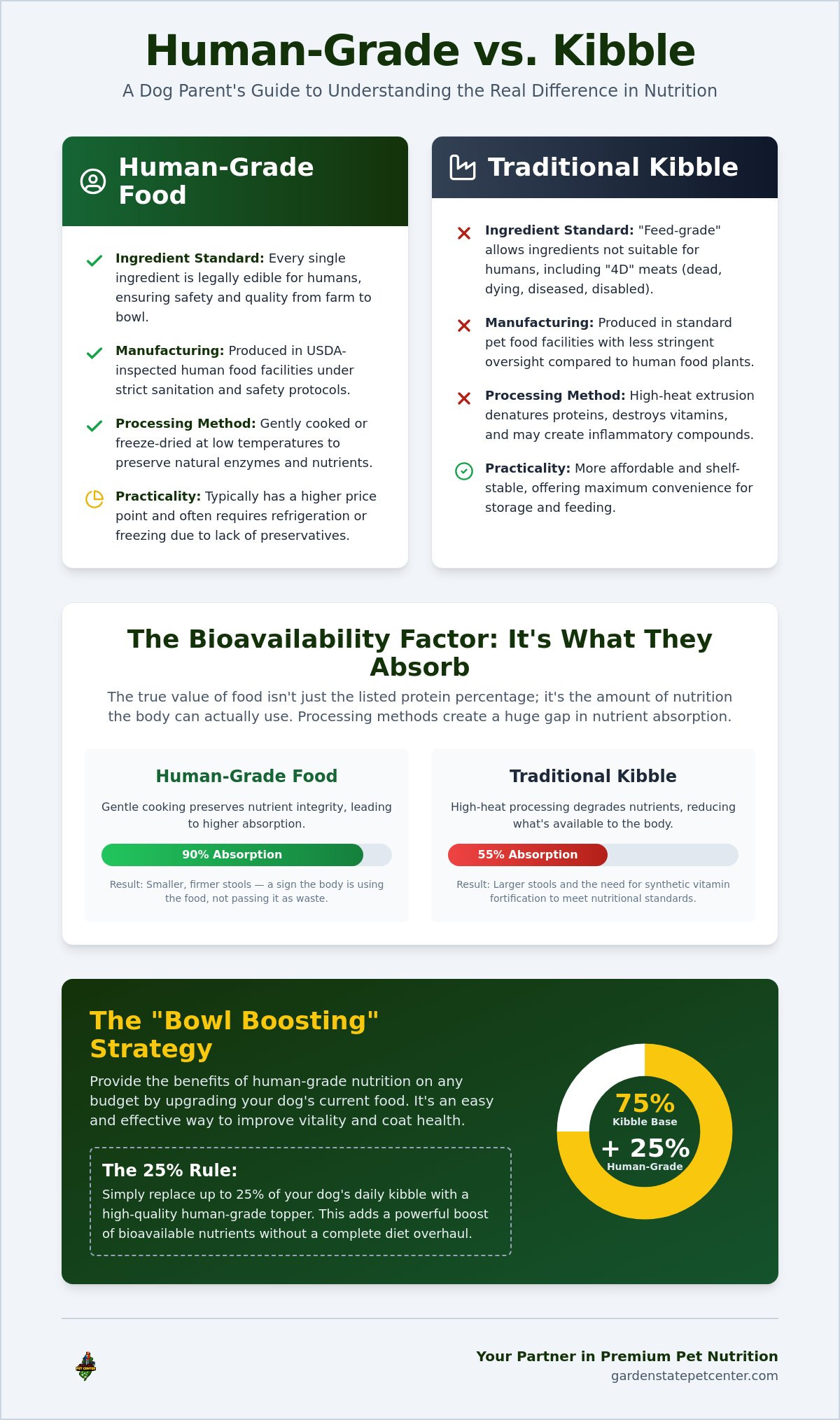
A product only earns the "human-grade" label if every single ingredient is legally edible for humans. This isn't just about the meat; it includes every vitamin, mineral, and thickening agent in the recipe. These foods must be manufactured, packed, and stored in facilities that meet federal regulations for human food production. This requires constant USDA oversight and rigorous sanitation protocols that standard pet food plants don't have to follow.
To better understand this concept, watch this helpful video:
The Legal Reality of "Human Grade" Labels
The term "human-grade" is a voluntary claim, but it's strictly enforced. If a batch of high-quality beef starts at a USDA-inspected plant but is transported to a standard pet food factory, it legally loses its human-grade status. This ensures a transparent supply chain where every step follows human safety protocols. Many people worry these diets are just expensive "table scraps," but that's a myth. These are scientifically formulated, complete meals designed for long-term health, not just leftovers from a kitchen floor.
What is Feed Grade Pet Food?
Traditional kibble is usually classified as "feed grade." This standard allows for ingredients that wouldn't be allowed on your own dinner plate. This includes "4D" meat sources, which refer to animals that were dead, dying, diseased, or disabled before processing. To make these materials safe for consumption, they undergo high-heat rendering. This process kills pathogens but also strips away natural nutrients. Because of this intense heat, feed-grade kibble often requires heavy synthetic vitamin fortification. When you browse our premium dog food options, we focus on helping you find the most transparent labels available. Choosing between human grade dog food vs kibble is ultimately about the safety and integrity of the entire manufacturing journey.
The Bioavailability Factor: Why Ingredient Quality Affects Longevity
Most pet parents look at the protein percentage on a bag and assume they're seeing the full nutritional picture. However, the real secret to health isn't just what your dog swallows; it's what their body actually absorbs. This concept is known as bioavailability. When comparing human grade dog food vs kibble, the processing methods used for each create a massive gap in how much nutrition reaches the bloodstream. High-quality ingredients are useless if the manufacturing process makes them impossible to digest.
Traditional kibble is made through extrusion. This process uses high heat and intense pressure to create those uniform crunchy shapes. While efficient for shelf life, this heat can denature proteins and destroy delicate vitamins. It also triggers the Maillard reaction. This chemical interaction between amino acids and sugars gives kibble its flavor, but it can also produce compounds that may contribute to inflammation over time. According to FDA regulations for pet food, manufacturers must ensure safety, but they aren't required to prove how much of the listed nutrition is actually bioavailable after this intense processing.
Processing Methods and Nutrient Loss
Contrast the high-heat extrusion of kibble with the "gently cooked" or "freeze-dried" methods used in human-grade options. These lower-temperature techniques preserve natural enzymes and keep amino acid profiles intact. You'll often see the results in the backyard. Because your dog absorbs more of a human-grade meal, they produce smaller, firmer stools. This is a direct sign that the body is utilizing the food rather than passing it as waste. If you're curious about how these different textures might work for your pup, you can explore our premium dog food collections to see the variety of processing styles available.
Long-term Health Benefits of HG Ingredients
Choosing human-grade ingredients provides your dog with whole-food nutrition that supports the immune system and maintains lean muscle mass. Rendered meats found in standard kibble often lack the specific amino acids needed for optimal repair and growth. From a holistic perspective, our certified pet nutritionists often point out that a shiny coat and clear skin are the first outward signs of a highly bioavailable diet. When the body doesn't have to work overtime to filter out processed fillers and synthetic additives, it can focus its energy on vitality and longevity. Selecting human grade dog food vs kibble isn't just about the meal today; it's an investment in your dog's health years down the road.
Practical Comparison: Cost, Convenience, and Shelf Life
Deciding between human grade dog food vs kibble often comes down to the daily reality of your lifestyle and budget. While we all want the absolute best for our pets, the logistics of storage and the monthly price tag are major factors. According to veterinary nutritionists on human-grade food, the label itself doesn't always guarantee a balanced meal, so you must look at how each option fits your dog's specific needs. Fresh human-grade diets offer incredible palatability for picky eaters because the aroma and texture mimic real kitchen food. However, they require a commitment to fridge space and meal prep that doesn't exist with traditional options.
Kibble remains the king of convenience for a reason. It's shelf-stable, easy to measure, and perfect for owners who travel or use automatic feeders. When you look at the monthly cost for a 40-pound dog, premium kibble typically ranges from $70 to $100. In contrast, a full fresh-food diet can easily exceed $200 per month. This price gap is the primary reason many owners feel stuck between choosing high quality and staying within a reasonable budget.
Storage and Handling Requirements
The physical footprint of your dog's food matters. Choosing dry dog food allows you to buy in bulk and store it in a simple pantry container for weeks. Gently cooked human-grade diets arrive frozen or refrigerated. This means you need dedicated freezer space and a plan for thawing meals safely. If you want the benefits of human-grade ingredients without the "fridge fatigue," freeze-dried options provide a shelf-stable alternative. These give you the high-integrity ingredients of a fresh diet with the lightweight convenience of a dry product.
Cost-Benefit Analysis for the Modern Owner
Think of your dog's diet as a long-term investment in their health. While the upfront cost of human-grade food is higher, many owners find that better nutrition leads to fewer veterinary visits for skin allergies, digestive issues, and joint inflammation. We encourage you to calculate the "cost per calorie" rather than just the "cost per bag." High-quality food is more nutrient-dense, so you often feed less than you would with a filler-heavy brand. Viewing Premium Pet Food as a proactive health measure can change your perspective on the monthly bill. Balancing the human grade dog food vs kibble debate isn't about being perfect; it's about finding the highest quality you can consistently provide.
The "Bowl Boosting" Strategy: Upgrading Kibble on a Budget
Many pet owners believe the choice between human grade dog food vs kibble is a binary one. They assume they must either stick to a traditional bag or commit to a full fresh-food subscription. This isn't the case. You can significantly improve your dog's vitality by adopting a "bowl boosting" strategy. This hybrid approach allows you to introduce the high-integrity ingredients of human-grade food without the full expense of a total diet overhaul. Even small changes can lead to noticeable improvements in coat shine and energy levels.
The "25% Rule" is a great starting point for most households. By replacing just a quarter of your dog's standard meal with fresh or minimally processed toppers, you introduce live enzymes and diverse proteins that processed kibble lacks. This rotational feeding helps build a more resilient gut microbiome by exposing your dog to different nutrient profiles. Common boosters include:
- Goat Milk: Often called "universal milk," it's packed with probiotics and electrolytes that support digestion.
- Bone Broth: Provides natural collagen for joint health and essential hydration for dogs on dry diets.
- Freeze-Dried Raw: Offers the benefits of raw nutrition in a convenient, shelf-stable form that's easy to portion.
Remember to adjust your dog's total calorie intake when adding these extras. If you add 100 calories of toppers, you must remove 100 calories of kibble to maintain a healthy weight. Precision is key to avoiding accidental overfeeding.
Safe Ways to Mix HG and Kibble
Some dogs have sensitive digestive systems that struggle when processing different food types simultaneously. High-carb kibble and high-fat fresh ingredients digest at different rates. If your dog experiences gas or loose stools, try feeding kibble for breakfast and human-grade food for dinner instead of mixing them in one bowl. Utilizing freeze-dried dog food as a high-value topper is an excellent way to bridge this gap safely. These nuggets are easy to crumble and provide a concentrated burst of nutrition that most dogs find irresistible without causing the digestive upset sometimes associated with wet toppers.
Affordable Entry Points into Human-Grade
You don't need a subscription service to access elite nutrition. Brands like SmallBatch Pet Food and Open Farm Pet Food offer transparent sourcing that meets the highest standards. You can also use "gently cooked" meals as occasional enhancers on weekends or during high-activity periods. When reading labels for HG-quality kibble, look for named animal proteins as the first three ingredients and avoid generic terms like "meat meal" or "animal fat." A quality label will always be specific about where the protein comes from.
Ready to customize your dog's diet for maximum health? Explore our curated selection of human-grade toppers and boosters to start your bowl-boosting journey today.
Navigating Premium Nutrition: How We Curate Human-Grade Options
Choosing between human grade dog food vs kibble involves more than just comparing price tags; it requires a partner who understands the nuances of pet biology. At Garden State Pet Center, we act as that knowledgeable expert for our community. We don't simply stock shelves with every trending brand. Instead, we employ a rigorous selection process that prioritizes ingredient transparency and manufacturing safety. Our commitment to welfare means we only offer products that meet our high standards for nutritional integrity, ensuring your dog receives the specialized care they deserve.
Our inventory features a diverse range of options, from raw and gently cooked meals to air-dried and freeze-dried excellence. We focus on brands that mirror our own passion for excellence, such as Fromm, Open Farm, and Vital Essentials. By maintaining these professional standards, we help you avoid the confusion of misleading marketing. Whether you're looking for a shelf-stable solution or a fresh-frozen diet, our dog food collections are curated to support long-term health and vitality.
Expert Consultations for Your Dog’s Diet
Conflicting labels and complex AAFCO definitions often leave pet parents feeling overwhelmed. Our on-site certified pet nutritionist provides the professional clarity you need to make the best choice for your household. We offer personalized nutritional consultations to help you build a feeding plan based on your dog's specific age, breed, and activity level. This proactive approach ensures you aren't just buying food, but investing in a strategy that improves your dog's coat health and energy. This expert guidance makes the debate of human grade dog food vs kibble much easier to manage. Consult with our team today and explore our variety of holistic pet food to find the perfect formula for your pup’s unique needs.
Trusting the Source: Locally Owned, Nationally Delivered
Experience the benefits of shopping with a specialized neighbor who has deep industry knowledge. We combine the warm hospitality of a local expert with a modern, tech-savvy approach that includes nationwide shipping. This allows pet owners across the country to access our elite selection of high-end nutrition. We take pride in being a service-oriented resource that cares about the animals we serve long after the sale is complete. Our focus on reliability and specialized care sets us apart from generalist retailers. Take the next step in your dog's nutritional journey with a partner you can trust. Shop the complete dog collection now and discover the difference that professional curation brings to your dog's bowl.
Empower Your Dog's Health Through Informed Nutritional Choices
Choosing between human grade dog food vs kibble doesn't have to be an all-or-nothing decision. You now understand the legal transparency of human-grade standards and how high bioavailability supports your dog's long-term vitality. Whether you commit to a full fresh-food diet or use the "25% Rule" to boost a high-quality kibble base, focusing on ingredient integrity leads to a shinier coat and improved energy levels. Every small upgrade you make today serves as a proactive investment in your dog's future wellness.
Since 1990, Garden State Pet Center has specialized in raw, freeze-dried, and holistic diets for pets with sensitive needs. Our on-site Certified Pet Nutritionist is ready to help you navigate these choices with professional precision and warm, community-focused expertise. We take the guesswork out of the transition by providing only the most reliable brands that meet our rigorous curation standards. Browse our curated collection of Premium Human-Grade and Holistic Dog Foods to find the perfect fit for your pup's unique lifestyle. Your dog's health is a lifelong journey, and we're honored to be your partner every step of the way.
Frequently Asked Questions
Is human-grade dog food worth the extra cost?
Yes, human-grade food is a valuable investment for owners prioritizing long-term health and reduced veterinary visits. These diets offer superior bioavailability, which means your dog's body utilizes more of the nutrients in every bite. While the monthly cost is higher than standard options, the nutrient density often allows for slightly smaller portions. Choosing these high-integrity ingredients helps prevent many chronic issues associated with heavily processed fillers and low-quality proteins.
Can I feed my dog a mix of human-grade food and kibble?
Mixing these two options is an excellent way to provide high-end nutrition while staying within a manageable budget. This "bowl boosting" method allows your dog to benefit from fresh enzymes and diverse proteins while keeping the convenience of a dry base. It's a proactive step that improves mealtime excitement and gut health. Just remember to calculate the total calories carefully to ensure your dog maintains a healthy weight during the transition.
Does human-grade dog food need to be refrigerated?
Refrigeration requirements depend entirely on the format of the food you choose. Gently cooked and fresh human-grade diets must be kept in the fridge or freezer to maintain safety and freshness. However, freeze-dried and air-dried human-grade options are shelf-stable and can be stored in your pantry just like traditional dry food. Always check the specific handling instructions on the packaging to ensure the integrity of the ingredients remains intact.
Is all human-grade dog food grain-free?
No, human-grade diets are available in both grain-free and grain-inclusive varieties to suit different nutritional needs. The "human-grade" label refers to the quality of the ingredients and the safety of the manufacturing facility, not a specific macronutrient ratio. You can find recipes featuring wholesome grains like quinoa, oats, or brown rice alongside grain-free options that use sweet potatoes or legumes. Consult with our team to determine which profile best fits your dog's activity level.
What is the difference between fresh dog food and human-grade dog food?
"Fresh" describes the texture and minimal processing of the food, whereas "human-grade" is a legal standard regarding ingredient safety. A food can be fresh but still made with feed-grade ingredients that aren't legally edible for humans. Conversely, a shelf-stable freeze-dried product can be legally human-grade if every ingredient and the facility meet USDA standards. Understanding this distinction helps you look past marketing buzzwords to find truly high-quality nutrition.
Can human-grade dog food help with my dog’s allergies?
Many pet parents report significant improvements in skin and digestive allergies after switching to human-grade options. These foods lack the processed fillers and "4D" meat sources often found in standard feed-grade products that can trigger sensitivities. Because the ingredients are cleaner and more bioavailable, the immune system doesn't have to work as hard to filter out synthetic additives. This often results in clearer skin, a shinier coat, and much more consistent digestion.
How do I transition my dog from kibble to a human-grade diet?
Transition your dog slowly over seven to ten days to allow their digestive system to adapt to the new nutrient density. Start by mixing 25% of the human-grade food with 75% of their current kibble for the first few days. Gradually increase the portion of the new food every two days until the old food is completely replaced. This patient approach prevents stomach upset and helps your dog's gut microbiome adjust to the high-quality ingredients.
Is kibble actually "bad" for dogs if it is high quality?
High-quality kibble isn't inherently "bad," but it is more processed than fresh or freeze-dried alternatives. The central debate of human grade dog food vs kibble involves the high-heat extrusion process, which can denature proteins and destroy delicate enzymes. While premium kibble provides a complete and balanced meal, it lacks the natural moisture and live nutrients found in minimally processed diets. Many owners find that adding human-grade toppers to a kibble base provides a perfect nutritional balance.

Article by
Victor Santucci
Victor Santucci is the owner of Garden State Pet Center in Audubon, NJ, where he specializes in premium pet nutrition, exotic animals, and expert-level care. With years of hands-on experience and a passion for helping pets thrive, Victor is dedicated to educating pet owners on proper nutrition, enrichment, and species-specific care. His mission is simple: provide every pet with the highest quality products and every customer with honest, knowledgeable guidance.
Share this post
- 0 comment
- Tags: AAFCO, Bowl Boosting, Dog Food, Dog Health, Fresh Dog Food, Human Grade Dog Food, human grade dog food vs kibble, Kibble, Pet Nutrition