

Canine Nutrition: A Practical Guide to Feeding Your Dog Well


The most appealing dog food format isn’t automatically the right one for your dog. Good Canine Nutrition starts with nutritional adequacy and your dog’s individual needs, not a persuasive package or a single ingredient claim.
Advice about grains, raw feeding, and “premium” ingredients can be contradictory. It’s also easy to be unsure how age, activity, portions, or a food label should affect your choice. This guide explains what a complete and balanced diet means, how to compare food formats, and how to build a feeding routine that suits your dog.
You’ll find practical ways to assess life-stage needs, label details, portions, and food transitions, along with guidance on when a health concern calls for veterinary advice. If you’re weighing options, a personalized pet nutritional consultation with an on-site certified pet nutritionist can help you apply those criteria to your dog’s needs. The goal is a clear, informed approach to feeding that keeps your dog’s well-being at the center.
Key Takeaways
- Canine Nutrition decisions should reflect your dog’s life stage, activity, body condition, and individual health needs.
- Look beyond ingredient order and marketing claims to assess a food’s nutritional adequacy and suitability.
- Compare dry, wet, raw, and freeze-dried formats by practical needs and nutrition, not processing method alone.
- Use package feeding directions as a starting point, then measure portions and monitor your dog’s response.
- A personalized discussion with an on-site certified pet nutritionist can help you weigh food options and feeding priorities.
What Does Canine Nutrition Mean for Your Dog’s Everyday Health?
Canine Nutrition is the balance of energy and essential nutrients a dog needs to support daily activity, growth, and overall health. The right feeding plan varies from dog to dog. Age, size, activity level, body condition, and health all help determine which food and portions may be appropriate.
Think of the main diet as the foundation. Treats, toppers, and supplements can have a place, but they aren’t automatically complete meals or necessary for every dog. Adding extras without considering the overall diet can change its nutritional balance. For a general overview of food types and ingredients, see Dog food on Wikipedia.
What does “complete and balanced” mean on dog food?
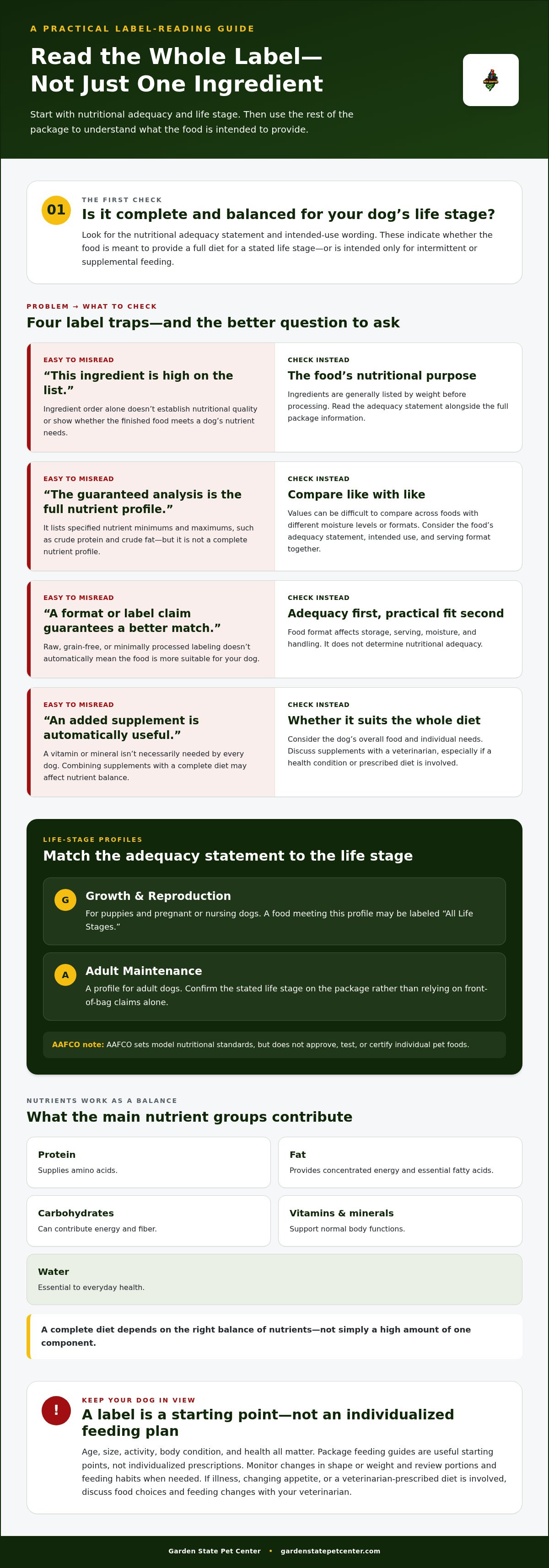
A nutritional adequacy statement indicates whether a food is intended to provide a dog’s full diet for a stated life stage, rather than serve only as a treat or topper. Look for wording that identifies the food as complete and balanced and names the life stage it supports. AAFCO’s nutrient profiles distinguish Growth & Reproduction, for puppies and pregnant or nursing dogs, from Adult Maintenance. A food meeting the Growth & Reproduction profile may be labeled for “All Life Stages.”
AAFCO sets model nutritional standards, but it doesn’t approve, test, or certify individual pet foods. Read the adequacy statement alongside the package’s intended-use wording instead of relying on front-of-bag claims alone.
Why do dogs have different nutritional needs?
A growing puppy has different needs from an adult dog, and activity affects how much energy a dog uses. Size can also matter when selecting a feeding plan, but weight alone doesn’t tell the whole story. Body condition offers a practical checkpoint: watch for changes in your dog’s shape or weight, then review portions and feeding habits if needed. Package feeding guides are useful starting points, not individualized prescriptions.
Keep health in view. An illness, changing appetite, or veterinarian-prescribed diet can affect what’s suitable, so discuss food choices and feeding changes with your veterinarian when a health concern is involved. General nutrition guidance can help you compare options, but it can’t diagnose or treat a condition. For an individual product and diet discussion, a pet nutritional consultation with an on-site certified pet nutritionist can help you consider your dog’s needs alongside veterinary guidance.
Which Nutrients and Label Details Matter Most in Canine Nutrition?
Read the label as a whole, not as a scorecard for individual ingredients. Protein supplies amino acids; fat provides concentrated energy and essential fatty acids; carbohydrates can contribute energy and fiber. Vitamins and minerals support normal body functions, while water is essential to everyday health. A complete diet needs the right balance of nutrients, not simply a high amount of one component.
Nutritional adequacy means a food is formulated or substantiated to provide the nutrients needed for its stated life stage when fed as directed. Look for the nutritional adequacy statement and intended life stage on the package. AAFCO’s established profiles include Growth & Reproduction and Adult Maintenance; foods meeting the former may be labeled for All Life Stages. AAFCO sets model standards, but doesn’t approve or certify individual foods.
How should dog owners read a food label?
Start with the intended use and adequacy statement. Confirm that the food is described as complete and balanced for the life stage you’re feeding, rather than labeled for intermittent or supplemental feeding. The guaranteed analysis lists specified nutrient minimums and maximums, such as crude protein and crude fat. It isn’t a full nutrient profile, and values can be difficult to compare across foods with different moisture levels or formats.
Ingredient lists provide context, but order alone doesn’t establish nutritional quality or suitability. Ingredients are generally listed by weight before processing, so a prominent ingredient doesn’t show how the finished food meets a dog’s nutrient needs. Compare similar foods and serving formats, and consider the adequacy statement alongside the full package information. The FDA’s pet food guidance explains how food safety and labeling fit into the broader regulatory picture.
Do ingredients or supplements tell the whole story?
No single ingredient proves a food is complete, and an ingredient’s presence or position doesn’t tell you whether the overall diet suits your dog. Assess the formulation and its stated nutritional purpose. Apply the same care to supplements: an added vitamin or mineral isn’t automatically useful for every dog, and combining supplements with a complete diet may affect nutrient balance. Discuss supplements with a veterinarian, especially if your dog has a health condition or follows a prescribed diet.
For a practical label comparison, explore the dog food selection and discuss your priorities with an on-site certified pet nutritionist.
How Do Dry, Wet, Raw, and Freeze-Dried Dog Foods Compare?
Food format affects storage, serving, moisture, and handling, but it doesn’t determine nutritional adequacy. For Canine Nutrition, first check whether a food is complete and balanced for your dog’s life stage. Then consider how well the format fits your routine and your dog’s needs. Raw, grain-free, or minimally processed labeling doesn’t automatically mean a food is a better match.
What are the practical differences between common food formats?
Compare the everyday trade-offs, then read each product’s storage directions and nutritional adequacy statement. Gently cooked, air-dried, and freeze-dried foods use different processes, so don’t assume they have the same handling instructions or serving requirements.
| Format | Practical considerations | Questions to review |
|---|---|---|
| Dry | Usually simple to portion and store; keep it sealed as directed. | Is it complete and balanced for my dog’s life stage? |
| Wet | Moist and served from packaging; follow directions for unused portions. | How should opened food be stored, and what is the serving guidance? |
| Gently cooked | Follow package directions for storage, thawing, and serving. | Is the food’s nutritional adequacy stated for my dog’s life stage? |
| Air-dried | Check package instructions for storage and portioning. | What does the label say about complete feeding? |
| Freeze-dried | Follow instructions for serving and any preparation, including whether water is needed. | Is it a complete diet or intended for supplemental feeding? |
| Raw | Requires careful handling and attention to storage and serving instructions. | Can my household manage safe handling, and is this diet suitable for my dog? |
Ready to compare formats? Browse the dog food selection and use the label criteria above to narrow your options.
What should owners consider before feeding raw food?
Raw animal foods can carry germs that may spread through food, surfaces, hands, or contact with a dog’s waste. The CDC advises extra caution in households with young children, older adults, pregnant people, or anyone with a weakened immune system. Wash hands and clean food-preparation surfaces and bowls thoroughly, and follow the product’s storage and handling instructions. Read the CDC’s pet food safety guidance for practical steps.
Discuss raw feeding with your veterinarian if your dog has a health condition or someone in the household may be more vulnerable to foodborne illness. A food’s processing method, including raw or grain-free labeling, can’t establish by itself whether the diet is appropriate. Review the complete diet and your dog’s circumstances together.
How Can You Build and Monitor a Feeding Routine?
A reliable feeding routine makes it easier to see what’s working and notice when your dog’s needs may have changed. Use these steps to create a plan you can maintain and adjust thoughtfully.
- Review your dog’s needs. Consider life stage, activity, body condition, health, and any veterinary dietary advice. A puppy, an active adult, and a dog with a health concern may need different feeding plans.
- Use the package guide as a starting point. Follow the food’s feeding directions, then account for your dog’s individual circumstances. The guide isn’t a personalized prescription.
- Measure meals and include extras. Use a consistent measuring method for each serving. Count treats and toppers as part of the overall routine, since extras can add up and affect the balance of the diet.
- Monitor and adjust with care. Watch appetite, stool, body condition, and energy. Record changes and seek professional guidance before making major adjustments, especially if a health issue is involved.
How should owners approach portions and feeding frequency?
Start with the package’s portion guidance and feeding directions, then consider whether the plan fits your dog’s age, activity, and body condition. Feeding frequency varies with life stage and individual circumstances, so follow veterinary advice where provided. Measuring consistently helps you track what your dog is actually eating, especially when serving sizes vary.
If you change foods, introduce the new food gradually rather than switching abruptly. There isn’t one transition schedule that suits every dog. Follow the food’s directions, observe your dog’s response, and consult your veterinarian if digestive problems occur or your dog has a prescribed diet.
How can you tell when a feeding plan needs review?
Persistent appetite changes, ongoing digestive issues, or unexpected changes in body condition are good reasons to seek advice. Contact your veterinarian for urgent or concerning symptoms rather than relying on a retail nutrition discussion. For non-urgent food questions, a pet nutritional consultation can help you review feeding priorities alongside veterinary guidance.
Before a consultation, note the food and serving amount, treats or toppers, feeding routine, and any changes you’ve observed. This snapshot can make it easier to discuss patterns and decide what to review next. To compare dog food options as you shape your routine, browse the dog food selection.
Where Can You Get Practical Help Choosing Canine Nutrition Options?
Comparing foods gets easier when you know your priorities. A pet nutritional consultation can help you discuss your dog’s current food, daily routine, preferences, and questions, then compare food categories and product information against those needs. It can be particularly useful when you’re weighing different formats or deciding which label details deserve attention.
What can a pet nutrition consultation help you consider?
An on-site certified pet nutritionist can help you review options such as raw, gently cooked, air-dried, and freeze-dried foods, and talk through practical feeding priorities. Bring your dog’s circumstances into the discussion so it stays focused on what may fit your household and routine. Nutrition guidance supports informed food choices, but it doesn’t diagnose or treat illness.
If your dog has a medical condition or follows a prescribed diet, coordinate food decisions with your veterinarian. Your veterinarian should guide diagnosis, treatment, and oversight of prescribed diets. A nutrition discussion can help you understand product information and prepare questions, while clinical decisions remain with your veterinary team.
What should you bring to a nutrition discussion?
Bring useful details, not just a list of foods you’ve seen advertised. Photograph or bring the current food label, including its nutritional adequacy statement and feeding directions. Note the treats, toppers, and supplements your dog receives, along with the usual routine, preferences, and any changes you’ve observed in appetite, digestion, or body condition. Write down your questions in advance.
This information gives you a practical basis for comparing options and identifying what needs veterinary follow-up. As you assess labels, focus on complete-diet claims and your dog’s individual needs rather than marketing language alone.
Ready to put those criteria to work? Explore dog food options, then bring product questions to a pet nutritional consultation. Review your dog’s current routine, gather the label and feeding notes, and discuss health-related concerns with your veterinarian.
Make Your Dog’s Feeding Plan Work for Them
Good Canine Nutrition starts with a complete, balanced diet that fits your dog’s life stage and individual needs. Look beyond ingredient claims: check the nutritional adequacy statement, compare food formats by practical considerations, and use package feeding guidance as a starting point. Measure meals and monitor your dog’s appetite, digestion, and body condition so you can spot when the routine may need review.
There’s no single format that suits every dog. Raw and freeze-dried foods are among the options to assess alongside your dog’s needs, household routines, and any veterinary guidance. An on-site certified pet nutritionist can help you discuss products and feeding priorities, while medical concerns and prescribed diets should remain guided by your veterinarian.
Ready to compare options and get personalized nutrition guidance? Explore dog food options and get personalized nutrition guidance. Start by reviewing your dog’s routine and gathering the food label, then discuss any health-related concerns with your veterinarian.
Frequently Asked Questions
Is grain-free food better for dogs?
No, grain-free food isn’t automatically better. Grain-free describes a formulation choice, not a guarantee of nutritional quality or suitability for an individual dog. Consider your dog’s needs, the food’s nutritional adequacy, and any health concerns instead of focusing on one marketing phrase. Don’t switch diets solely because of online claims. If you’re considering a major change or your dog has health concerns, discuss the choice with your veterinarian.
Can dogs eat a raw diet safely?
A raw diet requires careful consideration because handling and storage can create food-safety concerns for both pets and people. Raw doesn’t automatically mean complete or healthier, and the diet still needs to provide appropriate nutrition for your individual dog. Review current veterinary guidance, follow the product’s storage and handling instructions, and talk with your veterinarian before making a change, especially if your dog or someone in your household has special health considerations.
How much should I feed my dog each day?
The right amount depends on the food’s energy content and your dog’s life stage, activity, body condition, and other individual needs. Use the package feeding guide as a starting point, not a personalized prescription, and include treats in the overall routine. Measure portions consistently and monitor your dog over time. If you notice persistent changes in weight or appetite, ask your veterinarian to help assess what may be affecting your dog.
What happens if I change my dog’s food suddenly?
Some dogs may have digestive changes after an abrupt food switch, while others may seem unaffected. A gradual transition is commonly used, but the right approach can depend on your dog and the reason for changing foods. Follow the new food’s instructions and watch your dog’s response. Contact your veterinarian if symptoms are severe, persistent, or occur alongside other signs of illness, rather than continuing a change without guidance.
Are supplements necessary for dogs eating complete food?
Not necessarily. A food labeled complete and balanced is intended to provide the nutrients specified for its stated life stage when fed as directed. Adding supplements without a clear reason may be unhelpful or unsuitable for some dogs. Ask your veterinarian before adding vitamins or other supplements, particularly if your dog has a medical condition or eats a prescribed diet. Keep a record of any supplements already included in your dog’s routine.
How can I tell whether dog food is nutritionally complete?
Check the package for nutritional adequacy information and the life stage the food is intended to support, then review its feeding directions. Ingredient names alone can’t show whether the overall food is complete or appropriate for your dog. Canine Nutrition depends on the whole diet, not a single prominent ingredient. If the label is unclear or your dog has specific health needs, discuss the packaging information with your veterinarian or a qualified nutrition professional.
Should puppies and senior dogs eat different food?
Not always, but nutritional needs can change across life stages, so check that the food’s adequacy statement matches your dog’s stage. Puppies need food intended for growth, while age alone doesn’t determine what an older dog should eat. Body condition, activity, and health matter too. Talk with your veterinarian before changing diets if your dog’s needs are shifting, especially if you notice symptoms or your dog has an existing medical condition.

Article by
Victor Santucci
Victor Santucci Jr. is the owner of Garden State Pet Center and a Certified Clinical Pet Nutritionist specializing in premium pet nutrition, raw and fresh feeding, holistic pet wellness, birds and exotic animals. Through years of hands-on retail and animal-care experience, Victor helps pet parents make informed decisions about nutrition, enrichment and species-appropriate care.
Share this post
- 0 comment
- Tags: Canine Nutrition, dog diet, dog feeding tips, dog food, dog food labels, pet health, pet wellness, raw feeding