


What Is a Biologically Appropriate Raw Food Diet? A Guide for Pet Parents


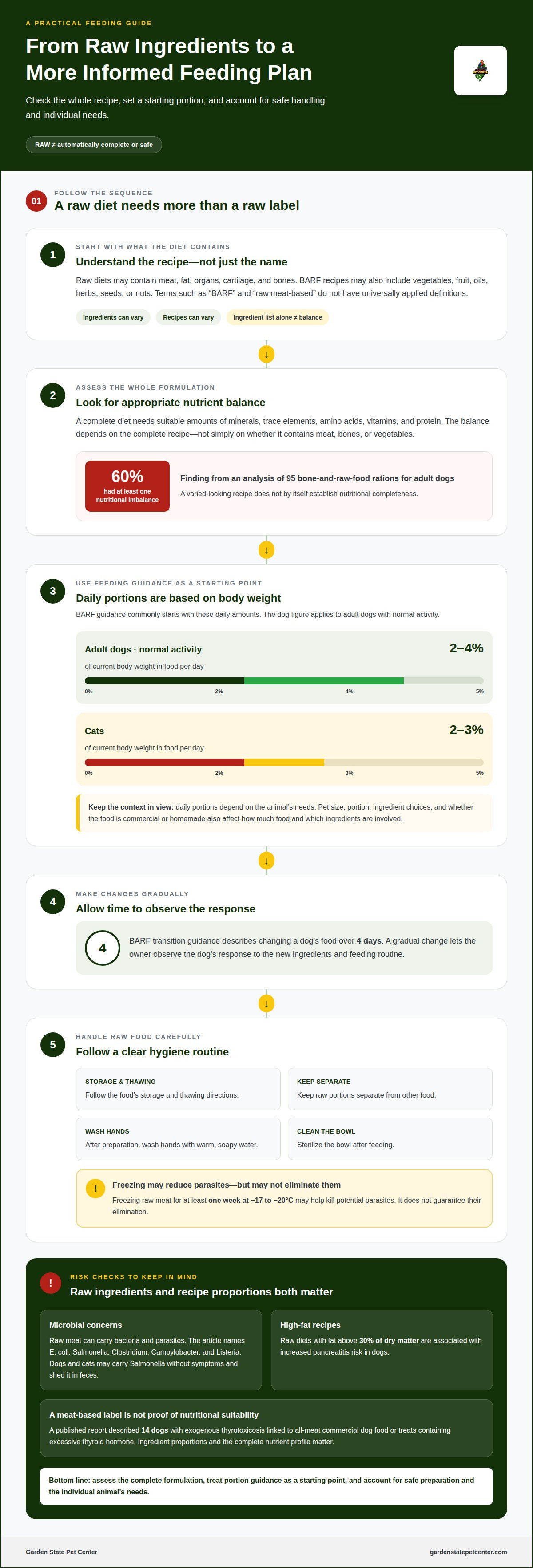
Raw doesn’t automatically mean biologically appropriate or nutritionally complete. To understand what a biologically appropriate raw food diet is, look beyond the word “raw”: it generally centers on uncooked animal-derived ingredients, while BARF may also include produce and other components. BARF feeding guidance commonly starts adult dogs with normal activity at 2-4% of their current body weight in food per day, and cats at 2-3% per day.
It makes sense to ask whether raw ingredients better reflect an animal’s natural diet. But the label alone can’t tell you whether a food provides the right nutrients or has been prepared and handled safely.
This guide explains what BARF means, how raw diets are formulated, and why daily portions depend on an animal’s needs. It also covers nutritional balance, food-safety concerns, and potential health risks to help you understand the trade-offs before considering a diet change.
Key Takeaways
- Learn what raw diets and BARF can contain, and why the terms don’t always describe the same approach.
- Recognize why ingredient variety alone doesn’t ensure a diet provides balanced nutrition.
- Understand the factors that shape daily portions and why a feeding guide is only a starting point.
- Identify food-safety and bone-related risks to consider before choosing raw feeding.
- Explore how Garden State Pet Center’s premium pet food selection can support informed decisions about your pet’s nutrition.
WHAT IS A BIOLOGICALLY APPROPRIATE RAW DIET?
A biologically appropriate raw food diet centers on uncooked ingredients from domesticated or wild-caught food animals. Raw pet foods can include meat, fat, organs, cartilage, and bones from farm animals, horses, game, or fish. Unlike dry dog food, these diets are served raw or minimally processed, though recipes and terminology vary.
“BARF” commonly means “Bones And Raw Food” or “Biologically Appropriate Raw Food.” BARF, raw meat-based diet, and raw and minimally processed food have no universally applied definitions. Their meanings vary among manufacturers, researchers, consumers, and regulators. A useful general description is uncooked or unheated meat, tissues, organs, and bones, sometimes combined with cereals or vegetables.
BARF ingredients may include muscle meat, meaty bones, tripe, leaf stomach, cartilage, and organs. Recipes may also include vegetables, fruit, oils, herbs, seeds, or nuts. One recipe might combine muscle meat with organs and vegetables, while another uses different animal proteins and plant ingredients. The ingredient list alone cannot show whether the complete diet is nutritionally balanced.
Plant ingredients can supply nutrients that raw meat may not. Plant ingredients can contribute nutrients that may be absent from raw meat. A complete diet also needs appropriate amounts of minerals, trace elements, amino acids, vitamins, and protein. The balance depends on the whole recipe, not simply on whether it contains meat, bones, or vegetables. Dog diets can vary substantially in ingredients and nutritional composition.
How much does a biologically appropriate raw food diet cost in the United States? There is no single set cost. It depends on the pet’s size, daily portion, ingredient choices, and whether the food is commercial or homemade. These factors determine the quantity of food required and the ingredients in the diet.
How should raw dog food be handled, stored, and thawed safely? Follow the food’s storage and thawing directions, keep raw portions separate from other food, wash hands with warm, soapy water after preparation, and sterilize the bowl after feeding. Freezing raw meat for at least one week at -17 to -20 degrees C may help kill potential parasites, but freezing can reduce parasites without eliminating them.
How do you transition a dog to this diet? BARF transition guidance describes changing a dog’s food over 4 days. A gradual change lets the owner observe how the dog responds to the new ingredients and feeding routine.
Nutritional disorders associated with raw diets
Raw diets can vary in nutrient balance and microbial safety depending on their formulation and handling. Considering both helps explain why ingredients alone cannot establish whether a diet is suitable for an individual pet.
Completeness and Nutritional Deficiencies
Nutritional completeness means a diet provides appropriate amounts of essential nutrients for the animal eating it. Homemade recipes can become imbalanced when ingredients or proportions change, so dogs and cats may not receive what their needs require. In an analysis of 95 bone-and-raw-food rations for adult dogs, 60% had at least one nutritional imbalance. That finding makes formulation more useful to assess than a recipe’s appealing ingredient list.
Bacterial and Parasite Risks
Raw meat can carry harmful bacteria and parasites that cooking may reduce. Raw meat intended for people can contain E. coli, Salmonella, Clostridium, Campylobacter, and Listeria. Dogs and cats may carry Salmonella without symptoms and shed it in their feces, creating a household hygiene concern. Freezing can reduce some parasites, but may not eliminate them.
Raw, cooked, and kibble diets differ in processing, but that difference alone does not show whether a recipe is balanced. Cooked food has been heated, kibble is processed into dry food, and raw diets use uncooked ingredients. Each still needs to provide suitable nutrients for the animal it is intended for. Texture and processing method cannot replace information about formulation.
Imbalances can have specific consequences. A published report described 14 dogs with exogenous thyrotoxicosis linked to all-meat commercial dog food or treats containing excessive thyroid hormone. This example shows why meat-based does not automatically mean nutritionally appropriate. Organs and other ingredients also need measured proportions, rather than being added without regard to the complete recipe.
Fat content is another formulation consideration. Raw diets with fat above 30% of dry matter are associated with increased pancreatitis risk in dogs. A diet’s suitability therefore depends on its complete nutrient profile and the animal’s individual needs, not simply its protein source. A veterinarian or animal nutrition expert can help assess those needs before a diet change.
Treat processing as one aspect of a food, not a guarantee of nutritional quality. An ingredient label alone does not show whether a finished food is nutritionally complete. Compare the diet’s intended use and nutrient information, and consider how a change affects the pet’s overall feeding plan.
For guidance tailored to an animal’s needs, a pet nutritional consultation can help assess diet choices and formulation considerations.
Meaning of BARF and raw meat-based diets
BARF describes a raw-feeding approach, while raw meat-based diets can differ in ingredients and proportions. The model’s ratios illustrate how its components fit together.
BARF Meaning and Origins
BARF means “Bones And Raw Food” or “Biologically Appropriate Raw Food.” The trend of feeding raw foods to dogs reportedly began in the early 1990s. Knowing both expansions helps clarify why a barf diet may emphasize bones, while another description highlights a biological approach. Neither name alone defines every recipe, so ingredient lists and feeding guidance still matter.
Muscle Meat in BARF Diets
In the BARF model guideline for adult dogs, muscle meat is the largest animal-food component. It can include skeletal muscle from food animals, along with tissues such as fat and cartilage. This proportion matters because a recipe based mainly on muscle meat is not automatically balanced. Organs, bones, and plant ingredients each have a role in the model’s overall formulation.
BARF Feeding Ratios
The BARF model guideline divides an adult dog’s daily intake among animal and plant ingredients. These starting proportions show the model’s structure, not a universal recipe for every dog.
- Muscle meat: 70%.
- Raw edible bone: 10%, though some dogs may do well with 12% to 15%.
- Liver: 5%, with other secreting organs at 5%.
- Vegetables: 7%, seeds or nuts: 2%, and fruit: 1%.
BARF feeding experts suggest adult dogs with normal activity receive 2-4% of their current body weight in food per day. The daily amount and ingredient proportions are separate considerations. A percentage-based guide describes quantity, while the model’s ratios describe the mixture.
BARF Pet Food Products
Commercial BARF products may contain uncooked meat, organs, and bones, and some recipes also include cereals or vegetables. Some products are prepared mixtures; others contain only selected ingredients. That distinction matters: a meat or organ blend is not necessarily formulated to meet an animal’s full nutritional requirements. Commercial diets may demonstrate nutritional adequacy through AAFCO feeding trials or finished-product analysis against AAFCO nutrient profiles.
Handling raw meat is an important part of the decision because raw ingredients can carry Salmonella and other pathogens. BARF is an alternative feeding approach, but its name does not establish ingredient quality, nutritional completeness, or suitability for an individual dog.
An internet survey about reasons for choosing BARF diets was carried out in Austria and Germany in 2011. Dogs have adapted to eating omnivorous diets during millions of years of domestication, and starchy vegetables should be boiled or baked until fully cooked before feeding to dogs.
Raw meat should be frozen for at least one week before feeding it to dogs or cats to help kill potential parasites. However, feeding pets raw meat increases the risk of exposure to pathogenic bacteria. Raw meat can allow Salmonella to multiply, potentially causing salmonellosis.
Raw feeding considerations for animals with disease
A raw-feeding plan needs to account for health, life stage, and household exposure. An animal’s health can affect which ingredients and handling practices are appropriate.
Nutritional Requirements and Plan Balance
A balanced raw feeding plan supplies appropriate amounts of protein, fats, vitamins, minerals, and other essential nutrients. Requirements vary with the animal’s age, health, and activity, so a puppy’s plan differs from an adult dog’s. BARF guidance suggests puppies receive about 5-7% of current body weight in food, while adult dogs with normal activity receive 2-4% per day. These are feeding guides, not proof of nutritional completeness.
For cats, BARF guidance suggests 2-3% of current body weight per day. The actual plan also depends on body condition and the diet’s ingredients. A veterinarian or animal nutrition expert can assess individual nutritional needs before a switch. A blood count can help identify current diseases that may affect diet decisions.
Risks for Vulnerable Household Members
Raw pet food can expose people to bacteria carried in the food or shed in an animal’s feces. Children, older adults, pregnant people, and immunosuppressed people should take extra precautions around raw food. Dogs and cats may carry Salmonella without appearing ill, so careful handwashing and cleaning food bowls matter even when a pet seems well.
Raw feeding requires particular care when an animal has gastrointestinal disease. Raw meat should not be given when intestinal flora is disturbed or intestinal mucosal permeability may be increased, especially if the animal has bloody vomit or diarrhea. Bones can cause mouth injuries, tooth fractures, obstruction, constipation, ileus, or gastrointestinal perforation, so they are a separate concern for pets with health problems.
Veterinary Recommendations on Raw Feeding
Veterinarians and animal nutrition experts recommend assessing a pet’s individual nutritional needs before starting BARF. Disease, life stage, and current symptoms can affect whether a feeding plan is suitable. Annual physical exams and health screening are recommended for pets eating commercial or home-prepared biologically appropriate raw diets.
Use veterinary checkups to discuss the animal’s current health, diet ingredients, and any signs such as bloody diarrhea. Raw meat can contain viruses, bacteria, and parasites, so handling and household exposure are relevant topics. A feeding guide or calculator can estimate portions from body weight, but it cannot assess disease or confirm that the diet meets an individual animal’s needs.
Small animals also have species-specific nutritional needs, and their feeding plan depends on their health. Do not apply a dog or cat feeding percentage to them. Keep the plan specific to the animal, its condition, and the foods it eats.
Meaning of biologically appropriate raw food
“Biologically appropriate” describes a feeding philosophy, not a single standardized recipe. In practice, the approach connects an animal’s food with its biology and may emphasize uncooked ingredients from domestic or wild-caught food animals. The phrase alone does not establish which ingredients a product contains, how it was handled, or whether it meets an animal’s nutritional needs. Treat it as a description of an approach, then assess the food itself.
Definitions of BARF, raw meat-based diets, and raw and minimally processed foods vary among manufacturers, researchers, consumers, and regulators. As a result, two packages can use similar language while describing different formulations. One might contain meat and organs; another might include bones, vegetables, or other ingredients. The label is a starting point, but it does not mean the products are interchangeable.
“Raw and Minimally Processed,” or RAMP, is a proposed working term for raw pet foods. It shifts attention from a broad claim about biological appropriateness toward the food’s processing. A product can be raw while still containing several ingredients and undergoing processing steps. RAMP is a useful way to discuss the category, not proof of nutritional completeness, safety, or suitability for a particular animal.
“Fresh” and “natural” also have meanings that do not automatically match “raw.” AAFCO’s definition of fresh pet food excludes freezing, cooking, drying, rendering, hydrolysis, added salt or curing agents, preservatives, and preservation methods beyond refrigeration. Its definition of natural ingredients refers to ingredients in their unprocessed state. These terms describe different aspects of food, so one label should not stand in for another.
Consider a raw food containing muscle meat, organs, and vegetables. Its ingredients show what is present; its nutritional profile describes the amounts and balance of nutrients it supplies. A food can fit a raw-feeding philosophy without meeting every animal’s requirements. Likewise, “biologically appropriate” does not identify a specific standard or independently establish a product’s composition.
The clearest approach is to separate three questions: Is the food raw or processed? What ingredients does it contain? Is its nutritional formulation suitable for the animal? These questions help clarify marketing terms without treating them as guarantees. “Raw,” “fresh,” “natural,” and “biologically appropriate” may overlap in everyday descriptions, but each communicates a different idea. Read each term in context, then assess the food itself.
Garden State Pet Center
Garden State Pet Center offers a curated selection of premium pet foods, including raw, freeze-dried, and gently cooked options. Its on-site Certified Pet Nutritionist can help you compare food choices and consider how ingredients and feeding styles relate to your pet’s needs. The aim is an informed discussion, not the assumption that one diet suits every pet.
Bring questions about terms you’ve encountered, such as “raw,” “complete,” or “biologically appropriate,” to help guide your next steps. Garden State Pet Center also serves families with exotic birds and small animals, whose care needs differ from those of dogs and cats. Contact Garden State Pet Center to discuss your pet food questions with the on-site Certified Pet Nutritionist.
Make your next feeding decision with confidence
Use your interest in raw feeding to start a thoughtful conversation about your pet’s needs. Understanding what a biologically appropriate raw food diet means can help you ask focused questions about ingredients, nutrition, and daily routines. Bring details that matter in your household, including your pet’s current food and any health considerations, so the discussion can focus on your priorities.
Garden State Pet Center offers Premium Pet Food and Pet Toys and Accessories, and welcomes families who care for Exotic Birds. Its broad pet-care setting can help you explore food choices alongside the everyday needs of your animals. Take the next step at a pace that feels right for you, with your pet’s well-being guiding the decision.
Contact Garden State Pet Center to talk through your pet food questions and find a clear path forward.
Frequently Asked Questions
How much BARF food should your pet get per day?
For adult dogs with normal activity, BARF feeding guidance suggests 2-4% of current body weight daily; cats are commonly guided at 2-3%, and puppies at about 5-7%. Treat these figures as starting points, not fixed portions. Weigh the food and track body condition, growth, appetite, and activity. A pet gaining or losing weight may need a different amount, even when the formula’s percentage appears suitable.
What does biologically appropriate raw food diet mean?
It generally means a feeding approach based on uncooked animal-derived foods, sometimes combined with plant ingredients. The phrase does not identify a single recipe or guarantee a particular nutrient profile. Two foods described this way, for example, may differ in their animal proteins, organ content, added produce, and formulation. Read the product’s ingredient and nutritional information to understand what the term means for that specific food.
What foods are included in a biologically appropriate raw food diet for dogs?
Common ingredients include muscle meat, edible bones, organs such as liver, and sometimes vegetables, fruit, oils, herbs, seeds, or nuts. Recipes may use ingredients from different food animals, so the source protein can vary. Check whether the food is a complete meal or an ingredient meant to be combined with other foods. A meat-only product, for example, should not be assumed to meet a dog’s full dietary needs.
What is the BARF diet ratio of meat, bones, organs, and vegetables?
A common adult-dog model allocates 70% to muscle meat, 10% to raw edible bone, 5% to liver, 5% to other secreting organs, and 7% to vegetables. It also includes 2% seeds or nuts and 1% fruit. These model proportions describe a particular approach, not a universal prescription. Recipe formulation and the dog’s needs influence whether the resulting diet is appropriate.
How do you formulate a nutritionally complete raw diet for dogs?
Start with the dog’s life stage, health, and energy needs, then formulate the whole recipe to provide suitable nutrients rather than choosing ingredients by appearance. For commercial food, look for evidence of nutritional adequacy through AAFCO feeding trials or finished-product analysis against AAFCO nutrient profiles. For a homemade plan, work with a veterinarian or animal nutrition expert. Changing one ingredient can affect the recipe’s overall nutrient balance.

Article by
Victor Santucci
Victor Santucci Jr. is the owner of Garden State Pet Center and a Certified Clinical Pet Nutritionist specializing in premium pet nutrition, raw and fresh feeding, holistic pet wellness, birds and exotic animals. Through years of hands-on retail and animal-care experience, Victor helps pet parents make informed decisions about nutrition, enrichment and species-appropriate care.
Share this post
- 0 comment
- Tags: BARF diet, cat nutrition, dog nutrition, feeding portions, pet food safety, pet nutrition, raw feeding, raw pet food, what is a biologically appropriate raw food diet