


Cleaning and Sanitizing After Raw Feeding: A Guide to Pet Food Hygiene


A wiped-down counter isn’t enough after raw feeding. Cleaning and sanitizing after raw feeding starts with washing your hands with soap and water for at least 20 seconds, then washing food-contact surfaces and tools with hot, soapy water before applying disinfectant. The Centers for Disease Control and Prevention recommends washing hands after handling raw dog food.
It’s easy to focus on the feeding bowl, but bacteria can also spread through hands, utensils, cutting boards, and nearby surfaces. Keep raw food separate from ready-to-eat meals, and clean every item that touches it to help prevent cross-contamination.
This guide explains when to wash your hands, how to separate raw and ready-to-eat foods, and how to clean and sanitize bowls, utensils, cutting boards, and countertops. You’ll also learn how to handle dishcloths and keep children away from the feeding area during preparation and cleanup. A consistent routine makes raw-feeding cleanup a practical part of caring for your pet and keeping the kitchen orderly.
Key Takeaways
- Build handwashing into cleanup after handling pet food, treats, or animal waste.
- Keep raw-food preparation separate from ready-to-eat meals to help limit cross-contamination.
- Give every bowl, utensil, cutting board, and countertop that touched raw food a thorough clean.
- Keep children away from the feeding and cleanup area until it’s clean and ready for normal use.
- Handle floor spills promptly, removing residue before sanitizing the affected area.
Handwashing after handling pet food, treats, or animal waste
Wash your hands after handling pet food, treats, animal feed, or animal waste. To clean the kitchen sink, remove food residue, wash the basin and faucet handles with hot, soapy water, then apply disinfectant according to its label.
Handwashing after raw food handling
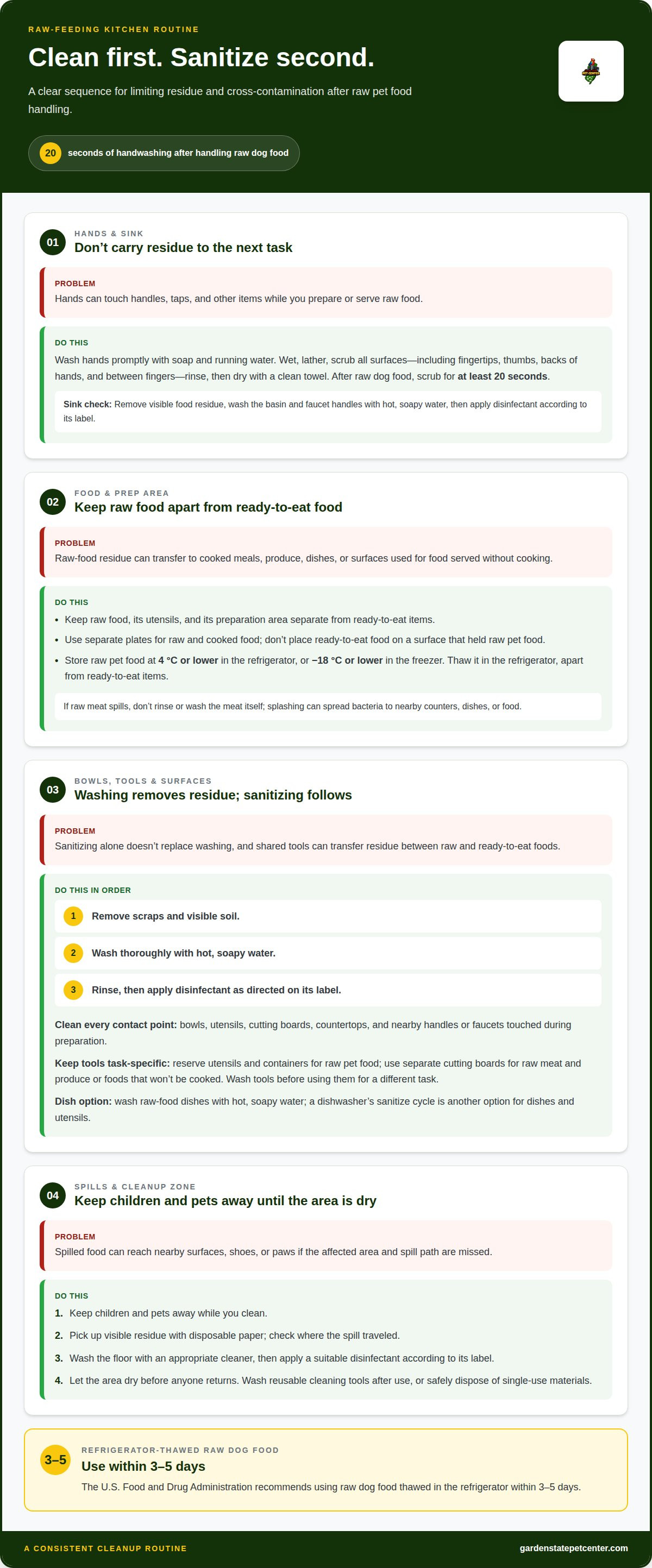
Handwashing after raw food handling means washing hands promptly after touching raw pet food, its packaging, or feeding dishes. The Centers for Disease Control and Prevention recommends washing hands with soap for at least 20 seconds after handling raw dog food. Make this a distinct step after serving the meal, rather than moving directly from the bowl to another kitchen task.
Soap-and-water handwashing
Soap-and-water handwashing uses running water and soap to clean hands after contact with pet food, treats, animal feed, or animal waste. Wet your hands, lather with soap, scrub all surfaces, rinse, and dry them with a clean towel. The 20-second scrub matters after raw dog food because hands can touch handles, taps, and other items during preparation.
Wash your fingertips, thumbs, the backs of your hands, and between your fingers. Pay particular attention after scooping food, opening a raw-food package, handling a bowl, or wiping up residue. If food-soiled hands touch the faucet, clean its handles as part of washing the sink. Wash your hands again before preparing your own meal or touching ready-to-eat food.
Wash your hands promptly after cleaning the feeding area or handling your pet’s waste, even if you used a scoop or bag. Tools and packaging don’t replace handwashing: set them aside for cleaning or disposal, then wash before touching cupboards, phones, or food containers. Following these steps in order helps keep residue from spreading beyond the feeding area.
Clean the sink after rinsing feeding items or washing your hands if raw-food residue may have reached the basin or faucet. Remove visible debris, wash affected surfaces with hot, soapy water, then apply disinfectant according to its label. Keep a clean towel handy for drying your hands, and replace it if it becomes soiled during cleanup.
Food storage also affects the cleanup routine. The U.S. Food and Drug Administration recommends using raw dog food thawed in the refrigerator within 3-5 days. Keep packages and dishes contained during handling, and wash your hands after putting food away or serving it. If your routine also includes dry meals, keeping their serving area separate from raw-food cleanup can make kitchen tasks easier to organize; dry dog food options are one category to consider in that plan.
Preventing cross-contamination between raw and ready-to-eat food
Keep raw pet food, its utensils, and its preparation area separate from ready-to-eat food. Store it at 4 °C or lower in the refrigerator, or -18 °C or lower in the freezer; thaw it in the refrigerator, apart from ready-to-eat items.
Surface washing after raw meat contact
Wash countertops and other surfaces touched during raw-food preparation with hot, soapy water before applying disinfectant according to its label. Removing visible soil first is important. Clean the spot where a raw-food package rested, along with nearby handles or faucets touched during preparation.
Keep raw food separate from cooked meals, produce, and other foods served without cooking. Use separate plates for raw and cooked food, and don’t put ready-to-eat items on a surface that held raw pet food. If raw meat spills, don’t rinse or wash the meat itself. Washing can splash bacteria onto nearby counters, dishes, or food.
Designated utensils and containers
Reserve specific utensils and containers for handling raw pet food. Dedicated tools help stop residue from transferring to plates or utensils used for ready-to-eat food. Keep raw-food dishes separate from family meal dishes, and wash them with hot, soapy water after use. A dishwasher’s sanitize cycle is another option for raw-food dishes and utensils.
Use separate cutting boards for raw meat and produce or foods that won’t be cooked. Keep each board for its intended task instead of switching between tasks without washing it. The same applies to serving spoons: never use a raw-food utensil to handle cooked food. Wash any tool thoroughly before using it for a different task.
Spill cleanup and floor sanitizing
For a spill, keep children and pets away while you collect the food and clean the area. Use disposable paper to pick up visible residue, then wash the floor with an appropriate cleaner. Apply a suitable disinfectant according to its label, and let the area dry before allowing anyone back.
Check the spill’s path before cleaning. Raw food can fall from a bowl onto the floor, then transfer to shoes or paws. Clean the spot and any nearby surfaces the spill reached. Don’t sweep or rinse residue toward another food-preparation area. Wash reusable cleaning tools after use, or dispose of single-use materials safely.
Keep raw-food storage and serving routines consistent. Return unused food to the refrigerator or freezer promptly, and thaw it in a separate container or tray to catch drips. Keep raw-food dishes away from ready-to-eat ingredients during meal preparation. After serving, clean the bowl and the surface beneath it before setting out other food. These boundaries limit raw-food contact to a defined area.
Cleaning utensils, cutting boards, and countertops
After use, wash every utensil, cutting board, dish, and countertop that touched raw food. Hot, soapy water removes food residue; sanitizing comes after washing, not instead of it. Follow a clear sequence: remove scraps, wash thoroughly, rinse, then use disinfectant as directed on its label. This helps keep residue away from ready-to-eat food.
Start with items that touched raw pet food directly, such as a serving spoon, bowl, or cutting board. Wash each with hot, soapy water after every use. Do the same for plates and utensils that touched raw meat, poultry, seafood, eggs, or flour. Don’t place a used item beside clean dishes, where residue could transfer before cleanup.
Keep cutting boards separate by task. Use one for raw meat and another for fresh produce or foods that won’t be cooked. Don’t use a board that held raw food to chop vegetables, even if it looks clean. Wash it thoroughly first. Replace worn boards, since damaged surfaces can be harder to clean thoroughly.
To clean a countertop, remove visible scraps before washing the entire affected area. Use hot, soapy water over the spot where the package, bowl, or utensils rested, including nearby areas touched by hands or tools. Then apply an appropriate disinfectant according to its label. Washing first matters because spraying alone can leave food residue on the surface.
Choose cleanup cloths carefully. A sponge or dishcloth can pick up residue from a board or counter and spread it elsewhere. Use disposable paper to collect raw-meat juices rather than wiping them with a sponge. Wash reusable dishcloths often in the washing machine’s hot cycle. Replace sponges regularly; one recommendation is every one to two weeks.
Keep used items visibly separate from clean ones during cleanup. Place washed utensils on a clean drying area, not beside a bowl that still needs washing. Raw-food dishes and utensils can go through a dishwasher’s sanitize cycle. You can also wash by hand with hot, soapy water, scrubbing handles and crevices where food may cling.
After handling dirty tools or wiping surfaces, wash your hands. Check the cutting board, counter, and utensils before returning them to regular kitchen use. If residue remains, wash the item again. A consistent routine after each use helps prevent raw-food equipment from becoming an unnoticed source of contact with ready-to-eat ingredients.
Keeping children away from feeding and cleanup
Bacteria from raw pet food can reach children through contaminated hands, bowls, counters, or floors. Keep children, pregnant people, older adults, and immunocompromised people away from feeding and cleanup to limit contact with raw-food residue.
Set a clear boundary before opening a package or preparing a meal. Keep children out of the kitchen or feeding area until cleanup is complete. A closed door, safety gate, or another adult supervising in a separate room can help maintain that boundary. Don’t rely on a child to avoid a bowl or spilled food while moving through the space.
Choose a feeding spot that’s easy to separate from family food preparation. Place the pet’s bowl in a defined area, away from dining tables and kitchen counters. Keep children from touching the bowl, food packaging, utensils, or floor beneath the feeding spot. If a child enters during feeding, pause and move the child away before continuing.
Keep cleanup simple and predictable. First, move children away from the area. Then collect food scraps, wash the bowl and nearby surfaces, and set cleaning tools aside. Don’t ask children to carry a used dish, hold a cloth, or pick up dropped food. These tasks can transfer residue to hands, clothing, toys, or other objects they touch.
Consider what children might touch next. A toy beside the feeding station, a chair handled with food-soiled hands, or a cupboard handle touched during preparation may also need cleaning. Wash affected surfaces and objects with hot, soapy water. Apply disinfectant where appropriate, following its label. Keep children away until surfaces are clean and dry.
Use handwashing as the point when shared activities can resume. After handling raw food or cleaning the feeding area, wash your hands with soap and water before helping a child with a snack, bottle, or toy. If a child touches a bowl or spill, wash their hands promptly. Keep a clean towel handy, and don’t use a cloth that touched raw-food residue.
Plan the routine around your household’s needs. If a pregnant person or someone immunocompromised usually prepares meals, another household member can handle raw-food cleanup. Keep raw food and used dishes contained during cleanup. A consistent boundary followed by thorough cleaning helps limit accidental contact without asking children to make food-safety decisions.
Contact with contaminated hands, bowls, surfaces, or floors can expose these groups to bacteria from raw pet food. Keeping them away during feeding and cleanup helps limit that exposure.
How should you clean spills and sanitize floors after raw feeding?
Keep people and pets away from a raw-food spill until cleanup is complete. Pick up visible food with disposable paper, then wash the affected floor with hot, soapy water. Cleaning removes residue; follow with a disinfectant suitable for the floor, using the product’s label directions.
Work from the spill’s outer edge toward the center to contain residue. This helps prevent a cloth or mop from dragging food across a larger area. If a spill occurs near a feeding bowl, clean the full area where food splashed, including the bowl’s resting place and any nearby floor the mess reached.
- Move children and pets out of the cleanup area.
- Pick up food and visible residue with disposable paper.
- Wash the affected floor with hot, soapy water.
- Apply a suitable disinfectant according to its label.
- Let the floor dry before allowing people or pets back.
Use a separate disposable towel for each visible patch instead of spreading residue with repeated wipes. Put used paper directly in the trash, then wash your hands. Clean a reusable mop or cloth before using it elsewhere. Don’t use the same mop head on kitchen floors and other rooms without washing it first.
Floor materials can respond differently to cleaning products. Read the label and follow its directions for the specific surface, such as sealed tile or an unfinished floor. Don’t use a disinfectant in a way the label doesn’t permit. If the spill reaches a floor seam, grout line, or the edge beneath a cabinet, include that area in the wash.
Check the area after cleaning for visible food, damp residue, or a trail leading away from the feeding spot. Wash away any remaining residue before applying disinfectant. Keep the bowl and used cleanup materials off the cleaned floor while it dries. Wash the bowl separately, and return it only when the surrounding area is ready.
A planned feeding station can make spills easier to contain. Keep the bowl in one defined place, and have disposable paper and floor-safe cleaning supplies ready before serving. For help choosing a pet-food routine that suits your household, explore feeding options.
Garden State Pet Center
Garden State Pet Center can help you consider pet-food choices as you build a feeding routine for your household. Its selection of Premium Pet Food and Pet Toys and Accessories supports everyday care, while the cleaning steps above help keep feeding and cleanup organized.
Turn to Garden State Pet Center when exploring food options or looking for practical supplies for your pet’s routine. Considering food, feeding equipment, and cleanup together can make it easier to plan a setup that works for your home.
Contact Garden State Pet Center to discuss your pet-care needs.
Make a routine that works for your household
Build a feeding routine that works for everyone at home. Choose a consistent feeding spot and make cleanup part of the same daily rhythm. As your pet’s needs or household routines change, adjust the setup to keep safe handling practical and straightforward.
Garden State Pet Center offers Premium Pet Food and Pet Toys and Accessories, as well as specialized care for Exotic Birds. These offerings support pets’ everyday needs, while a consistent cleanup routine helps keep the home orderly.
Use this guidance as a starting point, then adapt your approach to your kitchen, feeding area, and family. The key is consistency: make cleaning and sanitizing after raw feeding part of your pet-care routine, not an afterthought.
Connect with Garden State Pet Center to discuss your pet-care needs and take the next step with confidence.
Frequently Asked Questions
How should you clean and sanitize surfaces after preparing raw pet food?
To clean and sanitize after raw feeding, first remove food scraps and wash the surface with hot, soapy water. Then apply a suitable disinfectant, following its label for surface use and wet contact time. Include nearby spots touched by packaging or hands, such as a counter edge or cupboard handle. Keep food and clean utensils off the treated area until the product directions allow it to be used again.
What is the difference between cleaning and sanitizing after handling raw meat?
Cleaning and sanitizing after raw feeding are separate steps. Cleaning removes visible residue with soap and water; sanitizing or disinfecting means applying a product to the cleaned surface. This distinction matters when raw-food juices dry on a counter. Wash the spot first, then apply a product labeled for that surface. Spraying over stuck-on food won’t remove the residue beneath it.
Which disinfectants are effective against bacteria in raw pet food, and how long should they remain wet?
Choose a disinfectant whose label identifies the relevant bacteria and allows use on the surface you’re treating. Wet contact time varies by product, so follow its label rather than a general timing rule. Keep children and pets away while the treated area is wet. Don’t return bowls, food, or utensils to the surface until the label directions allow it.
How should you safely wash bowls, utensils, cutting boards, and pet food containers used for raw feeding?
After use, wash each item with hot, soapy water, paying attention to edges, corners, and container lids where food can collect. Keep used items separate from clean dishes, then let washed pieces dry in a clean place. Use separate cutting boards for raw meat and foods that won’t be cooked. Replace containers with cracks or worn areas that may retain residue.
Can raw pet food bowls and utensils be washed in a dishwasher?
Yes. Raw-food bowls and utensils can go through a dishwasher’s sanitize cycle. Scrape off remaining food before loading, and prevent dirty items from contacting clean dishes during handling. If an item isn’t dishwasher-safe, wash it by hand with hot, soapy water. Check care instructions for each dish or utensil, especially if its material or finish may not be suitable for dishwasher cleaning.

Article by
Victor Santucci
Victor Santucci Jr. is the owner of Garden State Pet Center and a Certified Clinical Pet Nutritionist specializing in premium pet nutrition, raw and fresh feeding, holistic pet wellness, birds and exotic animals. Through years of hands-on retail and animal-care experience, Victor helps pet parents make informed decisions about nutrition, enrichment and species-appropriate care.
Share this post
- 0 comment
- Tags: cleaning and sanitizing after raw feeding, cross-contamination, handwashing, kitchen cleaning, pet bowls, pet food hygiene, pet food safety, raw feeding