

Avian Nutrition: A Practical Guide to Feeding Pet Birds Well


A full food bowl doesn’t always mean a well-nourished bird. Avian Nutrition can feel confusing when advice about seeds, pellets, and fresh foods points in different directions. The right balance depends on more than what your bird likes to eat: a seed-heavy menu, for example, may leave nutritional gaps.
Before changing a familiar routine, consider your bird’s species, age, health, and current diet. A plan that suits one bird may not suit another, and a bird accustomed to specific foods may take time to accept new ones.
This guide explains the roles of formulated foods, seeds, fresh options, and treats, and how life stage and individual circumstances can affect feeding. You’ll also learn how to approach diet changes carefully, what to observe, and when to seek guidance from an avian veterinarian. A pet nutritional consultation with an on-site certified pet nutritionist can support general feeding decisions, but it doesn’t replace veterinary care.
Key Takeaways
- Avian Nutrition means matching food choices to an individual bird’s needs, not following one universal menu.
- Pellets, seeds, fresh foods, and treats can play different roles. Read labels and ingredient lists rather than relying on a food’s name alone.
- Consider species and feeding habits when reviewing a diet. A generic seed mix isn’t automatically complete for every bird.
- For a diet change, record what your bird currently eats, offer an appropriate new option, and monitor actual intake.
- Use a pet nutrition consultation for general feeding guidance, and seek veterinary evaluation when health concerns arise.
Avian Nutrition Basics: What Makes a Bird Diet Balanced?
Start with a few reliable principles: provide suitable nutrients, choose foods that fit the bird, and account for individual needs. There isn’t one menu for every pet bird. Species, age, health, activity level, and advice from an avian veterinarian can all shape what belongs in the bowl.
Balanced avian nutrition is a suitable combination of foods and nutrients that meets an individual bird’s needs for its species, life stage, and health. The goal isn’t to offer the longest list of ingredients. It’s to choose appropriate foods for their intended roles and keep fresh water clean, accessible, and regularly refreshed.
What nutrients do pet birds need?
Birds need protein to support body tissues, carbohydrates and fats for energy, and vitamins and minerals for essential body functions. Water is just as important. Keep it clean and accessible, and refresh it regularly. Nutrient sources and needs vary by species and life stage, so a young, growing bird may have different needs from a healthy adult.
Food categories can help you compare options, but they don’t determine a complete diet on their own. The general overview of Bird food describes seeds, pellets, and other foods. Your bird’s specific diet still needs to suit its circumstances. Explore suitable choices in our bird food collection. Bird vitamins and supplements may have a role when appropriate, but they don’t replace a well-planned diet or veterinary care. Ask an avian veterinarian before using them to address a suspected deficiency.
Why one feeding formula does not fit every bird
Parrots and songbirds are broad groups, not single dietary templates. Natural feeding patterns can provide useful context, but a wild bird’s food sources don’t automatically translate into a complete captive diet. Even birds in the same group can differ in age, health, activity, and established eating habits.
Use species information as a starting point, then consider the individual bird. A parrot’s natural interest in varied foods, for example, can inform enrichment, but it doesn’t determine a balanced daily menu. An avian veterinarian can help assess health-related needs, while a pet nutritional consultation with an on-site certified pet nutritionist can support general feeding decisions. Reliable guidance and careful observation help make feeding more thoughtful and less dependent on guesswork.
Bird Food Types Explained: Pellets, Seeds, Produce, and Treats
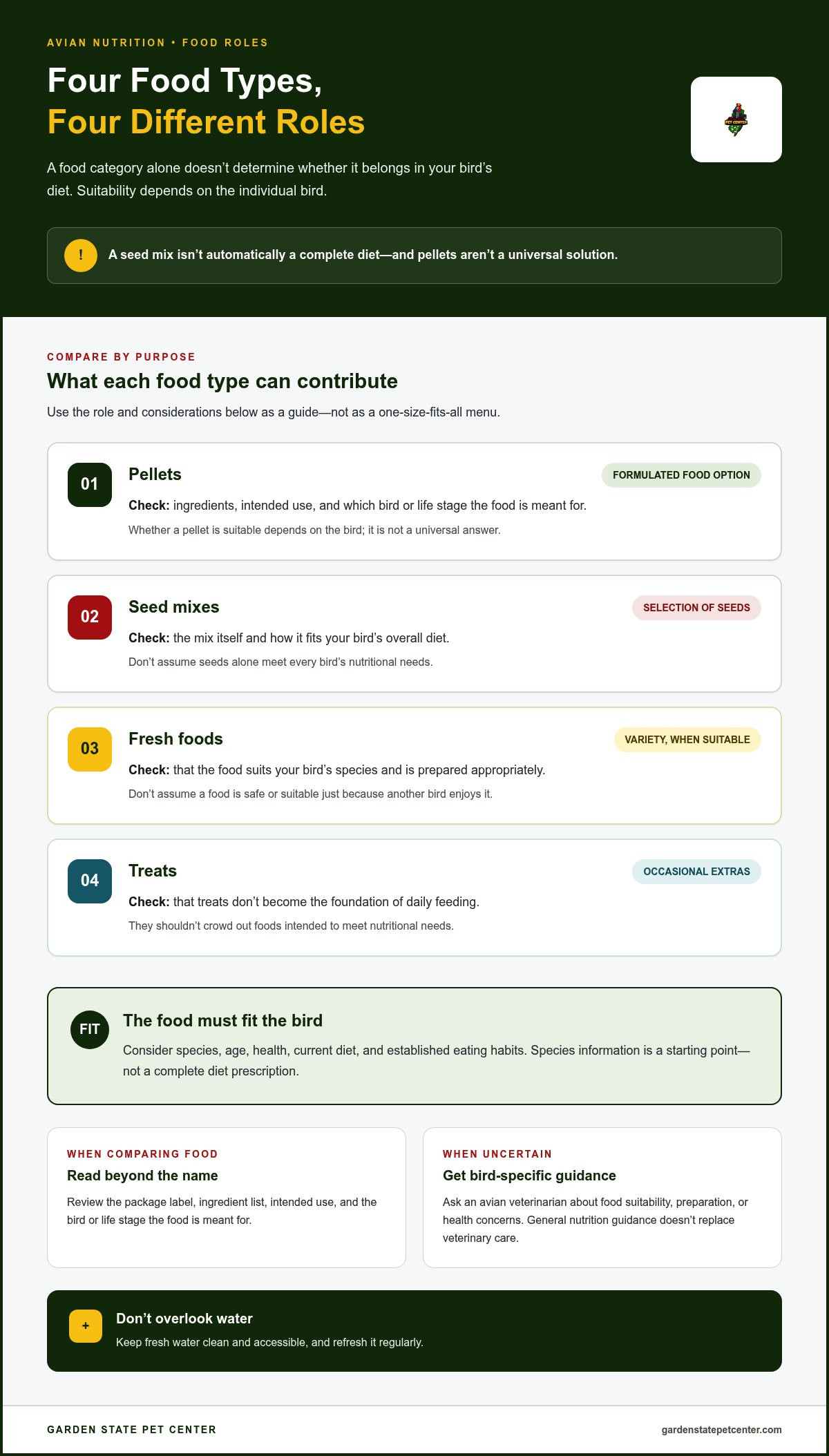
Bird food comes in several forms, and each can serve a different purpose. Pellets are formulated foods; seed mixes combine different seeds; fresh foods add variety when they’re suitable for a particular bird; and treats are best viewed as extras. No category is automatically right for every bird. When comparing options, consider your bird’s current diet and health, and read the package label and ingredient list rather than relying on the food’s name alone.
As you compare options, browse the bird food collection with your bird’s needs in mind.
How do pellets and seeds differ?
Pellets are made as formulated foods, while seed mixes contain a selection of seeds. Ingredients and intended use can vary, so check the label for the bird or life stage the food is meant for and how it should fit into a diet. A seed mix isn’t automatically a complete diet, and pellets aren’t a universal solution. Your bird’s existing eating habits and health matter when deciding whether a food is appropriate, especially if you’re considering a change.
| Food category | Typical role | Points to consider |
|---|---|---|
| Pellets | Formulated food option | Review ingredients and intended use; suitability depends on the bird. |
| Seed mixes | Seed-based food option | Check the mix and don’t assume seeds alone meet every bird’s needs. |
| Fresh foods | Variety where appropriate | Confirm the food is suitable for the species and prepare it appropriately. |
| Treats | Occasional extras | Keep them from displacing balanced daily food. |
Can birds eat fresh foods and treats?
Some fresh foods may suit a bird’s diet, but appropriate choices depend on species and individual circumstances. Confirm which foods are suitable and how to prepare them with an avian veterinarian, particularly if your bird has health concerns. Don’t assume a food is safe for your bird simply because another bird enjoys it.
Treats can add variety, but they shouldn’t become the foundation of daily feeding or crowd out foods intended to meet nutritional needs. Offer them thoughtfully and observe what your bird actually eats. If you’re unsure whether an ingredient, preparation method, or treat suits your bird, seek species-specific veterinary guidance before offering it. Reading labels and getting professional advice can help you make deliberate choices instead of relying on a single food category as the answer for every bird.
How Species and Feeding Habits Change Avian Nutrition
A generic seed mix isn’t automatically a complete diet for every pet bird. Birds differ in their natural feeding patterns, but those patterns are only one part of the picture. A food that seems familiar or appealing may not provide a suitable diet for a particular bird on its own.
Species identification is the starting point for a feeding plan, not a complete diet prescription. Use it to guide questions about food choices, then account for the bird’s size, age, health, preferences, and actual intake. This individual approach is central to sound Avian Nutrition.
| Bird group | Broad feeding context | Planning consideration |
|---|---|---|
| Parrots | Different parrot species have varied natural feeding patterns and food preferences. | Don’t assume one food mix suits every parrot; consider the individual species and bird. |
| Budgies | Budgies are small parrots, but their needs and preferences aren’t interchangeable with those of larger parrots. | Choose foods with the budgie’s size, health, and current diet in mind. |
| Finches and canaries | These songbirds differ from parrots in feeding habits and food preferences. | Use guidance specific to the bird rather than relying on a general parrot-food approach. |
Do parrots and budgies need the same food?
They share a broad classification, but that doesn’t mean they need identical meals. A budgie’s small size, preferences, and health can make its feeding plan different from that of a larger parrot. Parrots are also a diverse group, so a broad label isn’t a precise guide to ingredients or portions. Consult an avian veterinarian who can account for your bird’s species and circumstances.
Natural feeding patterns can help explain why birds show interest in different foods or ways of eating. In captivity, however, those patterns don’t dictate a complete menu. Consider them alongside appropriate food options, the bird’s current diet, and professional advice.
How should owners account for age and health?
Needs can shift as a bird grows, ages, or enters a breeding stage. Health concerns may also affect which foods are suitable. If your bird is unwell or you suspect a diet-related problem, consult an avian veterinarian for evaluation and guidance. Don’t start supplements or a therapeutic diet without professional assessment.
For general feeding decisions, a pet nutritional consultation with an on-site certified pet nutritionist can help you review options. This support complements, but doesn’t replace, veterinary diagnosis or treatment.
How to Introduce Diet Changes and Monitor Your Bird
A new food may take time for a bird to recognize as food, and a change that works for one bird may not suit another. A gradual transition can be a cautious approach, but there’s no single schedule for every species or situation. Ask an avian veterinarian to guide the timing, especially if your bird has a health concern or relies on a restricted diet.
How can owners encourage a bird to try a new food?
Start by recording what your bird currently eats. Note what you offer and, as best you can, what the bird actually consumes. Then offer an appropriate new option as part of a calm, familiar feeding routine while continuing to provide accepted food. Don’t withhold familiar food to force a change.
Observe what happens instead of assuming that food left in the bowl has been eaten. A bird may move food around, drop it, or leave it untouched. Keep track of the new food offered and what is eaten, along with appetite, droppings, and body condition. These notes can help you describe changes accurately to a veterinarian, but they can’t diagnose a problem at home.
Which changes should prompt professional advice?
Contact an avian veterinarian if your bird refuses food, eats noticeably less, has an unexpected weight change, or develops altered droppings. A single change doesn’t establish its cause, and diet alone shouldn’t be used to treat suspected illness. A veterinarian can assess your bird and recommend suitable nutritional next steps. Don’t wait for a transition to finish if you’re concerned about your bird’s intake or wellbeing.
Change the diet thoughtfully: document current food, offer a veterinarian-approved option, observe what your bird eats, and seek guidance if anything concerns you. The appropriate pace depends on the bird, so confirm species-specific timing with an avian veterinarian. Careful observation supports better Avian Nutrition decisions without guesswork.
As you consider suitable options with professional guidance, explore bird food options.
Build a Thoughtful Avian Nutrition Plan with Expert Support
A practical feeding plan starts with what you know about your bird. Identify its species, age, and life stage, then write down its current foods, routine, and preferences. Set a clear goal, such as reviewing food variety or considering an appropriate new option. Make changes thoughtfully and keep observing what your bird actually eats.
Bring useful details to a nutrition conversation: a current food list, feeding routine, and notes about appetite and preferences. Include relevant veterinary recommendations and health concerns, too. This information helps distinguish general feeding questions from issues that need medical attention.
When can a nutrition consultation help?
A pet nutritional consultation can help you review general feeding choices and consider how food options may fit your bird’s circumstances. Garden State Pet Center offers pet nutritional consultations guided by an on-site certified pet nutritionist, along with bird food and bird vitamins and supplements. Supplements aren’t a substitute for a balanced diet or professional assessment, so don’t add them to address a suspected deficiency without guidance.
A nutrition consultation doesn’t replace veterinary diagnosis or treatment. Contact an avian veterinarian about health concerns, unexpected changes in appetite or body condition, or a therapeutic diet. Regular veterinary checkups also provide an opportunity to discuss your bird’s individual health and nutrition needs.
How to keep a feeding routine consistent
Review food labels when choosing or replacing foods, and keep observing what your bird accepts and eats. Update your notes if routines or needs change. If you introduce a new option, follow veterinary guidance on whether and how to make the change, and watch for shifts in appetite, droppings, or body condition. These observations are useful information to share, not a way to diagnose illness.
- Identify: Record your bird’s species, age, and relevant health context.
- Review: List current foods, routine, preferences, and veterinary recommendations.
- Set a goal: Decide what feeding question you want to address.
- Monitor: Note acceptance and changes, and seek veterinary advice if concerned.
Thoughtful Avian Nutrition is an ongoing practice, not a one-time food choice. For general feeding support, bring your questions to a pet nutritional consultation; for medical concerns, start with an avian veterinarian. Explore bird food options as you build a routine suited to your bird.
Take the Next Step Toward Better Bird Feeding
Good Avian Nutrition starts with choices suited to your bird, not a one-size-fits-all menu. Consider the bird’s species, life stage, health, and current eating habits, then make diet changes carefully and monitor what it actually eats. Pellets, seeds, fresh foods, and treats can play different roles, so review options with your bird’s individual needs in mind.
For general feeding support, Garden State Pet Center offers pet nutritional consultations guided by an on-site certified pet nutritionist, along with bird food, parrot food, and bird vitamins and supplements. A consultation can help you consider feeding options, while an avian veterinarian remains the right resource for health concerns, diagnosis, or treatment.
Explore bird food and nutrition resources and take one thoughtful step toward a feeding routine that supports your bird’s wellbeing. Careful observation and the right guidance can help you make informed choices with greater confidence.
Frequently Asked Questions
What is the healthiest diet for a pet bird?
The healthiest diet is one suited to your bird’s species, life stage, health, and daily habits. It may include appropriately formulated food alongside other suitable options, rather than relying on a single food category. Fresh water should always be available. Because individual needs vary, ask an avian veterinarian about your bird’s diet, especially if it has health concerns or is entering a new life stage.
Can birds eat only seeds?
A seed-only diet shouldn’t be assumed to provide everything a pet bird needs. Seed mixes vary, and suitability depends on the bird and the rest of its feeding plan. Review the food label and discuss your bird’s current diet with an avian veterinarian before making changes. A bird that has eaten seeds for a long time may need a carefully managed transition, not sudden removal of familiar food.
How do I switch my bird from seeds to pellets?
Introduce an appropriate pellet gradually, following advice suited to your bird’s species and health. Keep accepted food available while you offer the new option, and record what’s offered and what’s actually eaten. Birds may handle or drop unfamiliar food without consuming it. No transition schedule fits every bird. If intake falls, your bird refuses food, or you’re concerned, contact an avian veterinarian promptly.
What fruits and vegetables can birds eat?
Suitable choices depend on the bird, so confirm safe foods and preparation with an avian veterinarian. Some birds may be offered options such as leafy greens, carrot, or small pieces of fruit, but these examples aren’t a complete menu or a recommendation for every species. Wash fresh produce and prepare it as advised for your bird. If you’re uncertain about a particular food, check before offering it.
Do pet birds need vitamin or mineral supplements?
Not every bird needs supplements, and the right choice depends on its diet and health. Don’t use vitamins or minerals to compensate for an unbalanced feeding plan or treat a suspected deficiency without professional advice. Ask an avian veterinarian whether supplementation is appropriate for your bird. Garden State Pet Center carries bird vitamins and supplements, and a pet nutritional consultation can support general feeding decisions without replacing veterinary assessment or treatment.
How can I tell if my bird is getting enough to eat?
Track what you offer and what your bird actually consumes instead of judging by a bowl that looks full or empty. Observe appetite, droppings, and body condition, and note changes over time. These observations can help you share useful information with your veterinarian, but they can’t confirm on their own that your bird is getting enough nutrition. Ask your veterinarian how to monitor your bird’s weight and condition safely.
When should I ask a veterinarian about my bird’s diet?
Ask an avian veterinarian if your bird eats less, refuses food, has unexpected weight changes, or develops altered droppings. Seek guidance before major changes if your bird has a health condition, is breeding, or is growing. A veterinarian can assess the bird and recommend appropriate nutritional next steps. A pet nutritional consultation can help with general food choices, but it doesn’t replace veterinary diagnosis or treatment.

Article by
Victor Santucci
Victor Santucci is the owner of Garden State Pet Center in Audubon, NJ, where he specializes in premium pet nutrition, exotic animals, and expert-level care. With years of hands-on experience and a passion for helping pets thrive, Victor is dedicated to educating pet owners on proper nutrition, enrichment, and species-specific care. His mission is simple: provide every pet with the highest quality products and every customer with honest, knowledgeable guidance.
Share this post
- 0 comment
- Tags: Avian Nutrition, bird care, bird diet tips, bird food, bird health, feeding guide, pet birds