


Solutions Pet Food Raw Goat Milk: A Practical Buyer’s Guide


Could a raw goat milk product add variety to a pet’s meals without becoming the meal itself? If you’re researching solutions pet food raw goat milk, that distinction matters: a topper is an optional complement, while a suitable complete and balanced diet should remain the foundation. Raw ingredients also call for careful attention to food handling, storage, and your pet’s individual health and digestion.
It’s reasonable to wonder whether goat milk is appropriate for your dog or cat, what to look for on a label, and how to try a new food without disrupting an established routine. This guide explains what raw goat milk can and can’t do as a topper, which product details to review, and how to introduce it cautiously. You’ll also learn why raw-food safety deserves attention and when to seek veterinary guidance, especially if your pet has specific dietary needs. A gradual approach and a careful label review can help you make a considered choice while keeping your pet’s regular diet at the center.
Key Takeaways
- Think of solutions pet food raw goat milk as a possible topper, not a substitute for a suitable complete diet.
- Read the product label for species suitability, ingredients, storage directions, and manufacturer feeding guidance.
- Introduce any new topper cautiously and watch how your pet responds. Consult a veterinarian about individual dietary needs.
- A nutritional consultation with an on-site certified pet nutritionist can help you consider how a topper fits your pet’s overall feeding plan.
What Is Solutions Pet Food Raw Goat Milk, and What Role Can It Play?
When researching a new topper, compare it with the food your pet already eats. The phrase solutions pet food raw goat milk describes a brand and product category shoppers may be looking for, but the current product label is what identifies its ingredients, intended species, and directions for use. Don’t infer those details from the general category or from another product in the same range.
Goat milk is milk produced by goats; its composition and production are described in this Goat milk overview. For a particular pet-food product, rely on its packaging and manufacturer guidance rather than general descriptions of milk.
For a concise introduction from the manufacturer, watch this overview:
How a milk topper differs from complete pet food
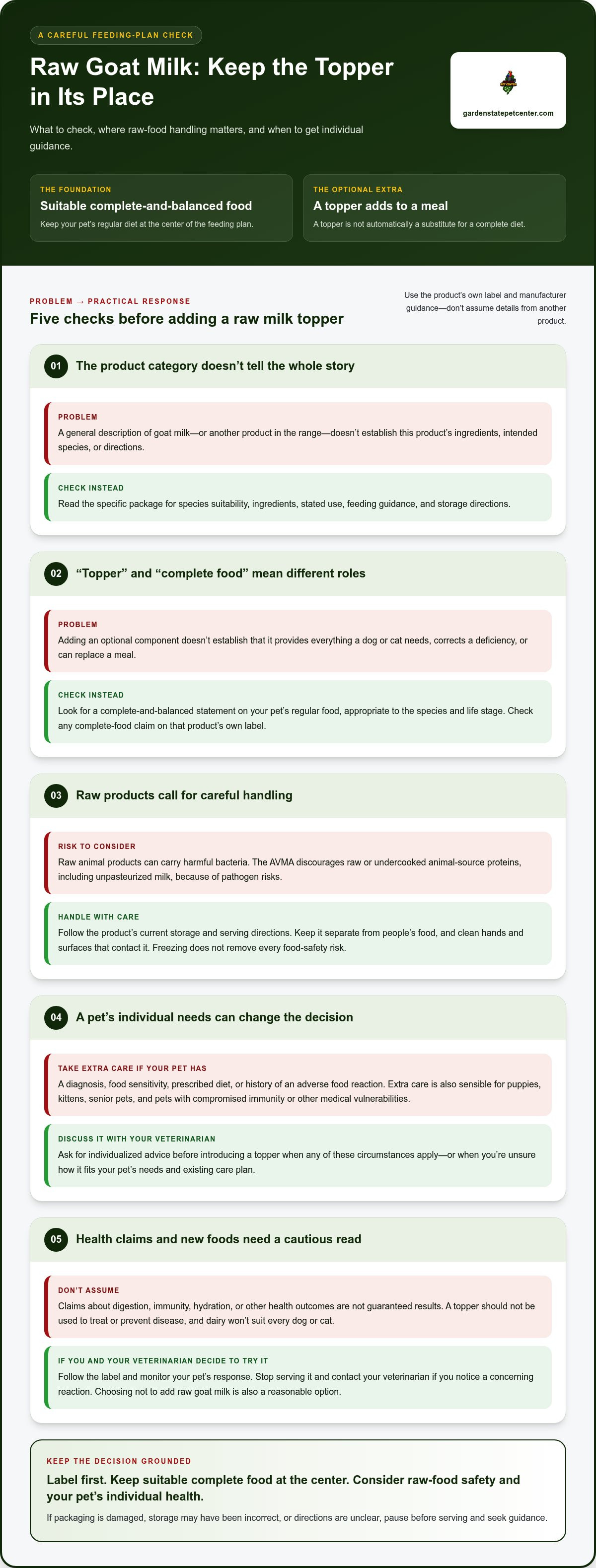
A topper adds to a meal; a complete diet is formulated to provide the nutrients needed as the pet’s main food. The practical difference is variety versus nutritional foundation. A topper may change a meal’s texture or add an optional component, but that alone doesn’t establish that it provides everything a dog or cat needs.
Check your pet’s regular food label for a complete-and-balanced statement appropriate to the species and life stage. Don’t assume goat milk replaces a meal or corrects a nutritional deficiency. If you’re reviewing everyday food options, explore dog dry food as one category of regular diet choices.
Which pets and feeding situations call for extra care?
Age, health conditions, food sensitivities, and a prescribed diet can all affect whether adding a new food makes sense. Ask your veterinarian before introducing a topper if any of these apply, or if you’re unsure how it fits your pet’s individual needs. Dairy won’t suit every dog or cat, and choosing not to add it is a reasonable decision.
Start with the label, keep suitable complete food at the center of the feeding plan, and don’t treat a supplemental product as a nutritional fix. That distinction helps you assess solutions pet food raw goat milk thoughtfully, without disrupting a familiar routine or making assumptions about what your pet needs.
Raw Goat Milk for Pets: Consider Nutrition, Safety, and Individual Needs
Raw goat milk may appeal to guardians looking for another way to vary a pet’s meals, but “raw” deserves careful consideration. Raw animal products can carry harmful bacteria, and handling them can create food-safety concerns for pets and people in the household. The American Veterinary Medical Association discourages feeding raw or undercooked animal-source proteins, including unpasteurized milk, because of pathogen risks. Review the AVMA policy on raw diets as you weigh those concerns against your preferences.
Claims that goat milk supports digestion, immunity, hydration, or other health outcomes shouldn’t be treated as guaranteed results. A pet’s response can vary, and a topper shouldn’t be used to treat or prevent disease. General product information describes an item, but a veterinarian can advise whether it suits an individual pet’s health needs.
What to know about raw-food handling
Handle a raw product carefully and follow its current label for storage and serving instructions. Keep it separate from foods intended for people, and clean hands and surfaces that come into contact with it. Don’t assume freezing removes every food-safety risk. If the package is damaged, the product has been stored incorrectly, or the directions are unclear, pause before serving and seek guidance.
For solutions pet food raw goat milk, use the specific product’s packaging and current manufacturer guidance for handling details. Don’t infer storage, thawing, or serving instructions from another raw food or from general advice about goat milk.
When to discuss a new topper with a veterinarian
Get individualized advice before adding a topper if your pet has a diagnosis, food sensitivity, prescribed diet, or history of an adverse reaction to food. Extra care is also sensible for puppies, kittens, senior pets, and animals with compromised immunity or other medical vulnerabilities. A veterinarian can help you consider whether a new food fits your pet’s overall needs and existing care plan.
If you try a new food after discussing its suitability, follow the label and monitor your pet’s response. Stop serving it and contact your veterinarian if you notice a concerning reaction. Choosing not to add raw goat milk is also a sound option; a familiar, suitable diet may be the right fit for your pet.
For help thinking through food choices alongside your pet’s existing diet, explore pet nutrition consultations.
How to Evaluate Solutions Pet Food Raw Goat Milk Against Other Toppers
Compare any topper with your pet’s regular food by first identifying each product’s intended role. The label is the best place to start: check species suitability, ingredients, feeding guidance, and storage directions. Products with similar descriptions can still differ in formulation and intended use, so review each label separately.
Which label details should shoppers compare?
Look for whether the package describes the food as a topper, supplement, or complete food. Then read the full ingredient list and directions for that specific product. Don’t rely on nutrient figures or claims from another product in the same category. If the package describes the food as complete and balanced, check the statement on that product’s own label and note the species and life stage it applies to.
| Comparison point | Topper | Complete food |
|---|---|---|
| Intended role | An optional addition to a meal | Designed to serve as the pet’s main diet |
| Label | Review its stated use, ingredients, and directions | Look for a complete-and-balanced statement relevant to the pet |
| Feeding context | Use according to the product’s guidance alongside the regular diet | Provides the foundation of the feeding plan when suitable |
For broader context on choosing a suitable diet, read our premium pet food guide.
How does goat milk compare with other food toppers?
Goat milk, broth, and other topper categories differ in ingredients, texture, format, and handling needs. Raw, freeze-dried, and cooked foods aren’t interchangeable: each format has its own label directions, storage requirements, and intended use. For raw products, consider food-safety precautions alongside your pet’s needs. The FDA guidance on raw pet food explains potential safety risks and handling considerations.
Evaluate solutions pet food raw goat milk by the current product label, not by assumptions about goat milk or raw foods generally. If you’re comparing a topper with your dog’s everyday diet, browse dog dry food options as one example of regular-food choices. Keep the distinction clear: a topper is an addition, while a suitable complete food remains the dietary foundation.
How to Introduce a New Pet-Food Topper Carefully
A measured introduction makes it easier to notice how a new food fits your pet’s routine. Before offering solutions pet food raw goat milk or another topper, check the product’s current label, consider your pet’s health and diet, and decide how you’ll monitor their response. A topper should remain an addition, not displace a suitable complete diet unless your veterinarian recommends a change.
A cautious introduction routine
Take these steps before adding a topper:
- Review the label. Confirm the product is suitable for your pet’s species, then read its ingredients, storage details, and serving directions.
- Consider your pet’s situation. If your pet has a medical condition, food sensitivity, prescribed diet, or history of a reaction, consult your veterinarian first.
- Follow current guidance. Use the manufacturer’s directions for the product you have. Don’t estimate a serving amount or borrow instructions from a different food.
- Keep the routine steady. Avoid changing several foods or treats at once. This makes it easier to identify what may be related to a change in your pet’s response.
Go slowly and stay observant. If you’re unsure whether a topper fits your pet’s meal plan, pause and seek individualized advice rather than adjusting the main diet on your own.
What to monitor after adding a topper
Watch your pet during and after meals, and note any changes. A simple record can help you describe what happened and when if you need to discuss it with your veterinarian.
- Appetite or willingness to eat the regular meal
- Stool consistency or changes in bathroom habits
- Signs of discomfort or an unusual response after eating
- Any other noticeable change from your pet’s usual behavior
Individual responses vary. A pet accepting a topper, or showing no obvious change, doesn’t prove a particular health benefit. Stop offering the new food and contact your veterinarian if concerning symptoms or a significant reaction occur. Seek prompt veterinary advice for severe or worsening symptoms.
Keep the complete diet at the center of the plan, and let your pet’s response guide whether you continue. For help considering food choices in context, explore pet nutrition consultations.
Choose a Thoughtful Feeding Plan with Solutions Pet Food Guidance
A considered feeding plan starts with the details: read the product label, keep a suitable complete food as the foundation, and weigh your individual pet’s needs before adding a topper. When researching solutions pet food raw goat milk, use the current package and manufacturer guidance for product-specific information rather than relying on assumptions about ingredients or feeding directions.
A topper may not suit every pet, and it shouldn’t replace a complete diet without professional guidance. If you’re uncertain how a new food fits your pet’s routine, a nutrition consultation can help you organize the questions you want to address.
When expert nutrition guidance can help
Garden State Pet Center offers pet nutritional consultations with an on-site certified pet nutritionist. A consultation can help you organize questions about food choices, feeding goals, and how an optional topper may fit alongside your pet’s regular diet. Bring the current food label and the topper label so the discussion can focus on the details of the products you’re considering.
Nutrition guidance can support food decisions, but it doesn’t replace veterinary diagnosis or treatment. For a health concern, prescribed diet, or possible reaction to food, work with your veterinarian. For broader reading, explore our guide to specialized premium pet nutrition.
Next steps for comparing pet-food options
Before a consultation, note your pet’s age, current food, relevant dietary restrictions, and the questions you want answered. Include the product’s species suitability, ingredient list, intended role, and manufacturer directions in your review. Recommendations should reflect your pet’s needs and verified product information, not generalized promises about what a topper can do.
Garden State Pet Center ships pet supplies nationwide. Shipping availability doesn’t determine whether a specific product is right for your pet, so use the label and your pet’s needs to guide your choice. Take a measured approach: preserve a suitable complete diet, consider individual circumstances, and seek veterinary advice when health needs call for it.
Ready to compare food choices? Explore premium pet food options.
Make Your Next Feeding Choice with Confidence
Raw goat milk is best considered as a possible topper, not a replacement for a suitable complete diet. Before choosing a product in the solutions pet food raw goat milk category, read its specific label, follow current handling and feeding directions, and consider your pet’s health, age, and dietary needs. If there’s any uncertainty about how it fits your pet’s health needs, your veterinarian can offer individualized advice.
Garden State Pet Center carries Solutions Pet Food among its pet-food brands and offers nutritional consultations with an on-site certified pet nutritionist. Bring your pet’s current food label and questions to help keep the discussion practical and focused on your feeding goals. Pet supplies ship nationwide, making it easy to explore food options.
Take a thoughtful next step: Explore premium pet food options. Careful label checks and appropriate guidance can help you choose a feeding plan that reflects your pet’s individual needs.
Frequently Asked Questions
Is raw goat milk a complete food for dogs or cats?
Raw goat milk shouldn’t be assumed to be a complete food for dogs or cats. Treat it as a possible supplemental topper unless the specific product label clearly identifies it as complete and balanced for the relevant species and life stage. Keep a suitable complete diet as your pet’s nutritional foundation, and don’t use milk to replace meals or correct a suspected deficiency without veterinary guidance.
Can dogs and cats have raw goat milk?
Some products are intended for dogs, cats, or both, so check the specific label for species suitability before offering one. Raw milk also carries food-safety concerns; the American Veterinary Medical Association discourages feeding raw animal-source products. Ask your veterinarian first if your pet has a health condition, food sensitivity, prescribed diet, or other individual needs. It’s also reasonable to decide that raw milk isn’t right for your pet.
What are the benefits of raw goat milk for pets?
Raw goat milk may offer an optional way to add variety or change the texture of a meal, if the product label supports that use and it suits your pet. Don’t assume it improves digestion, immunity, hydration, or another health outcome. Claims about benefits aren’t a substitute for evidence about the specific product or advice tailored to your pet. Consider solutions pet food raw goat milk as a topper, not a treatment.
How much raw goat milk should I give my pet?
Follow the current feeding directions on the specific product label, since serving guidance can vary by product and pet. Don’t guess an amount or transfer instructions from another brand or format. If your pet is young, senior, medically vulnerable, on a prescribed diet, or has a history of food reactions, ask your veterinarian before offering it. Keep a suitable complete diet in place unless your veterinarian advises otherwise.
Is raw goat milk safe for pets with sensitive stomachs?
It may not suit every pet with a sensitive stomach, and raw milk has additional food-safety considerations. Check with your veterinarian before introducing it if your pet has a diagnosed digestive condition, known food sensitivity, or previous adverse reaction. If your veterinarian agrees it’s appropriate, follow the product directions and monitor your pet. Stop offering it and seek veterinary advice if concerning symptoms appear.
How should raw goat milk be stored and served?
Use the storage, thawing, and serving instructions on the current product label. Directions can differ across products, so don’t assume one raw milk product should be handled like another. Because it’s a raw animal product, take care to avoid cross-contamination and follow current food-safety guidance. If the label is damaged or you’re unsure the product was stored as directed, don’t serve it until safe handling is clear.
Can I mix goat milk with my pet’s regular food?
You can mix a topper with regular food if the product label supports that use and it’s suitable for your pet. Follow the manufacturer’s directions, introduce it cautiously, and observe appetite, stool, and signs of discomfort. Keep your pet’s suitable complete food as the foundation, and don’t let a topper replace meals without professional guidance. Ask your veterinarian if your pet has a prescribed diet or specific health needs.

Article by
Victor Santucci
Victor Santucci is the owner of Garden State Pet Center in Audubon, NJ, where he specializes in premium pet nutrition, exotic animals, and expert-level care. With years of hands-on experience and a passion for helping pets thrive, Victor is dedicated to educating pet owners on proper nutrition, enrichment, and species-specific care. His mission is simple: provide every pet with the highest quality products and every customer with honest, knowledgeable guidance.
Share this post
- 0 comment
- Tags: cat food toppers, dog food toppers, pet food safety, pet nutrition, raw feeding, raw goat milk, solutions pet food, solutions pet food raw goat milk