

Freeze Dried Beef Liver Dog Treats: How to Choose the Right Option


What if a short ingredient list still leaves important questions unanswered? When comparing freeze dried beef liver dog treats, clear labeling is only the starting point. Processing claims, feeding directions, storage instructions, and your dog’s individual needs all matter, especially if your companion has food sensitivities or a delicate digestion.
It’s understandable to wonder how often to offer liver treats. Beef liver is nutrient-dense, so these bites are best treated as a small complement to a balanced diet, not a meal replacement. The right choice should also suit your dog’s size, routine, and dietary restrictions, with ingredients and feeding directions you can understand.
This guide explains how to assess ingredient lists, understand what labels do and don’t tell you about processing and sourcing, and choose a treat format that suits your dog. You’ll also learn how to use feeding directions thoughtfully and when to take extra care with sensitivities. At Garden State Pet Center, our curated selection of dog treats and on-site certified pet nutritionist support a practical approach to food choices. Use these pointers to choose a treat that complements your dog’s overall diet.
Key Takeaways
- Learn what sets freeze-dried liver treats apart from complete dog food and why they serve a different role in your dog’s diet.
- Use a label checklist to assess ingredients, feeding directions, storage guidance, and manufacturer details.
- Compare freeze dried beef liver dog treats with baked, jerky, and training treats to find a format that fits your routine.
- Follow package serving guidance and account for treats as part of your dog’s daily food allowance.
- Consider your dog’s size, sensitivities, and dietary needs before choosing a treat.
What Are Freeze-Dried Beef Liver Dog Treats, and What Makes Them Different?
Freeze dried beef liver dog treats are pieces of beef liver preserved by removing most of their moisture while the liver is frozen. When processed, packaged, and stored as directed, they are a shelf-stable treat. Beef liver is an organ-meat ingredient, not a complete nutritional plan, so these treats generally complement a dog’s regular food rather than replace it.
Freeze-drying affects a treat’s texture and storage needs, but the method alone doesn’t tell you everything about quality or safety. Ingredients, handling, packaging, and feeding guidance can differ by manufacturer. Read the specific package instead of relying on the format’s name.
For a visual overview of the method, watch this short video:
How does freeze-drying change a beef liver treat?
In freeze-drying, food is frozen and then placed under low pressure so ice turns directly into water vapor. This moisture-removal method, also called lyophilization, is outlined in the freeze-drying process overview. The result is often a light, dry piece that can be stored without refrigeration until opened, if the product’s packaging and label instructions support that use. Freeze-drying should not be assumed to eliminate every pathogen.
This differs from baked treats, which are cooked with heat; dehydrated treats, which lose moisture through drying; and raw-frozen options, which remain frozen and require freezer storage. Each format has its own texture and handling routine. Processes and safeguards vary, so check the label and follow its storage directions.
Are liver treats snacks or a substitute for dog food?
Usually, they’re snacks or training rewards. A treat’s ingredients alone don’t establish that it provides complete and balanced nutrition. Check the product’s intended-use statement and feeding directions. Don’t use a treat as a meal replacement unless its label specifically identifies it as a complete food and provides appropriate directions.
Choose treats with your dog’s overall diet and individual needs in mind. Consider how your dog’s regular food and treats work together. You can browse the dog food and treat collection to compare options for your companion.
How to Read a Freeze-Dried Beef Liver Treat Label
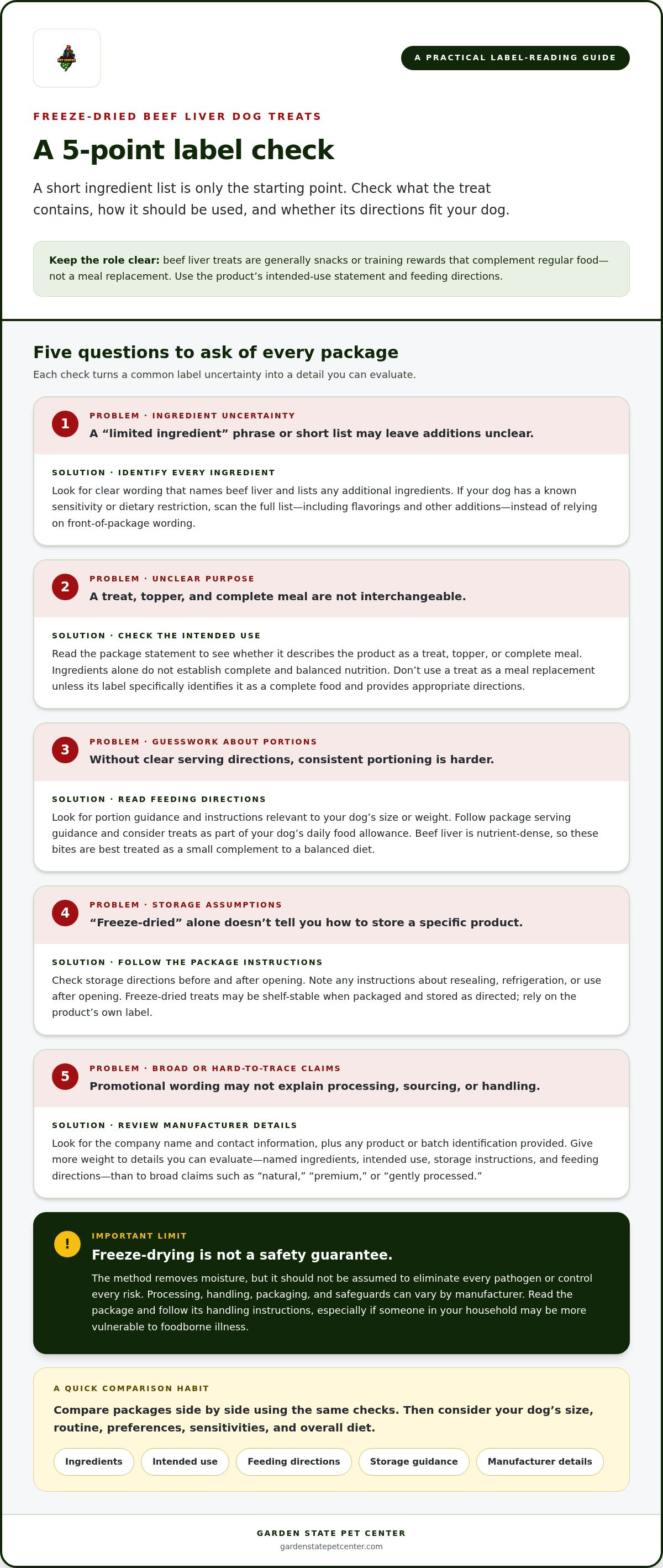
The package label is a starting point for comparison, not a guarantee of quality or a substitute for deciding whether a treat suits your dog. A short ingredient list may be easier to assess, but it doesn’t by itself prove safety, suitability, or superior quality. Use the same checklist for each package so you compare useful details rather than front-of-bag claims.
A quick label checklist
- 1. Identify every ingredient. Look for clear wording that names beef liver and lists any additional ingredients. If your dog has a known sensitivity or dietary restriction, scan the full list, including flavorings and other additions, rather than relying on “limited ingredient” language.
- 2. Check the intended use. See whether the package describes the product as a treat, topper, or complete meal. Don’t assume those categories are interchangeable.
- 3. Read feeding directions. Look for portion guidance and instructions relevant to your dog’s size or weight. If directions are absent or unclear, it will be harder to portion the treat consistently.
- 4. Find storage instructions. Follow the package’s directions for storing the product before and after opening. Note any guidance about resealing, refrigeration, or use after opening.
- 5. Review manufacturer details. Look for the company name and contact information, plus any product or batch identification provided. These details help distinguish specific, traceable information from broad promotional wording.
Separate facts from marketing claims
Words such as “natural,” “premium,” or “gently processed” may sound reassuring, but they don’t explain exactly how ingredients were handled or establish how a product was made. Give more weight to details you can evaluate on the label, including named ingredients, intended use, storage instructions, and feeding directions. Claims about sourcing, testing, or processing should be clear and product-specific. Don’t infer them from the freeze-dried format alone.
Freeze-drying by itself doesn’t confirm that a treat is free from harmful bacteria or that every risk has been controlled. The Journal of the American Veterinary Medical Association discusses potential risks of raw meat-based products, including possible microbial contamination. Read the package carefully and follow its handling instructions, especially if anyone in your household may be more vulnerable to foodborne illness.
Compare labels side by side, then consider how each option fits your dog’s diet and sensitivities. Browse the dog food and treat collection to explore options for your companion.
Beef Liver Treats Compared With Other Dog Treat Options
No single treat format suits every dog. Compare ingredients, texture, portability, and purpose, then consider your companion’s preferences and overall diet. The label is the best source for a product’s ingredients, calorie content, and serving size because recipes and portions vary.
| Treat format | Typical texture and ingredients | Practical fit |
|---|---|---|
| Freeze-dried liver | Often light and crisp; check whether the ingredient list is liver alone or includes additions. | May be easy to carry and break into smaller pieces, though pieces can crumble. |
| Baked treats | Usually firm or crunchy, with ingredients that vary by recipe. | Useful for a familiar, easy-to-handle reward; size and texture differ across products. |
| Jerky | Often chewy, with meat and other ingredients depending on the label. | May suit dogs who enjoy chewing, but larger pieces may need to be divided. |
| Training treats | Often made in small pieces, with varied ingredients and textures. | Convenient for frequent rewards; check the portion and calories when giving several. |
When might freeze-dried liver suit a dog’s routine?
Freeze dried beef liver dog treats can be practical for training or outings if the package is easy to carry and the pieces can be divided to suit your dog. Their strong aroma and flavor may appeal to some dogs, though preferences vary. Small pieces can make repeated rewards easier to manage, provided you portion them thoughtfully.
Keep track of every reward, not just the main treat. Count treats within your dog’s daily food allowance and use package directions to guide portions. A concentrated ingredient or small piece isn’t automatically calorie-free.
When could another format be a better fit?
Choose based on your dog’s chewing style, texture preference, sensitivities, and routine. A dog who struggles with crisp, crumbly pieces may do better with a different texture. A dog with ingredient sensitivities may need a treat whose label fits their dietary restrictions. For dogs on a medical diet, treat choices can affect the overall plan, so seek individualized guidance from the professional overseeing that diet.
Compare dog treats and food options in the dog food and treat collection, keeping your dog’s needs and each product’s label in view.
How Much Beef Liver Treat Can a Dog Have?
There isn’t one serving size or schedule that suits every dog. The right amount depends on factors such as your dog’s size, regular diet, activity, and individual health needs. Because beef liver is nutrient-dense, treat portions deserve attention. Use the package’s feeding guidance as your starting point, and don’t assume a small-looking piece is suitable in unlimited amounts.
Count treats as part of your dog’s daily food allowance. If you use several rewards during training, include them alongside other snacks rather than treating each as a separate extra. Check the package for portion recommendations and any information that helps you estimate how much you’re offering. If directions are unclear, don’t guess at a regular serving.
How should owners introduce a new liver treat?
Start cautiously and follow the package guidance. Offer a small amount, then observe your dog’s response before making it a regular reward. Keep the rest of the diet familiar during this introduction. Adding multiple new foods or treats at once makes it harder to identify what may have caused a reaction.
If you notice a concerning change after offering the treat, stop giving it and seek veterinary advice. Keep the package available so you can refer to its ingredient list and feeding directions.
Is beef liver suitable for every dog?
No treat is automatically a good fit for every dog. Beef liver may not suit a dog with a relevant allergy or sensitivity, and extra ingredients can also matter. Review the full label against your dog’s known dietary restrictions. Individual tolerance varies, so pay attention to how your dog responds rather than relying only on another dog’s experience.
Take extra care if your dog has a medical condition or eats a prescribed diet. Even a small treat can affect an individualized feeding plan, so ask your veterinarian whether it fits and how to account for it. Treats shouldn’t displace a complete, balanced diet or become a meal substitute unless the product is specifically labeled for that purpose.
For a thoughtful next step, browse the dog food and treat collection and compare options with your dog’s routine and dietary needs in mind.
Choose Freeze-Dried Beef Liver Treats With Confidence
A confident choice comes from matching the package to your dog, not relying on a broad claim about freeze-dried treats as a category. Compare current labels and look for details you can use: what’s in the treat, how it’s intended to be fed, and how to store it. Your dog’s preferences and dietary needs matter just as much as the format.
Final pre-purchase checklist
- Ingredients: Confirm the list clearly identifies beef liver and check every other ingredient against your dog’s known sensitivities and dietary restrictions.
- Intended use: Make sure the package describes the product as a treat or another appropriate use, rather than assuming it can replace a meal.
- Feeding directions: Review the portion guidance and consider whether you can follow it consistently alongside your dog’s meals and other rewards.
- Handling and storage: Read the package instructions for keeping the product before and after opening. Choose a format you can store and portion as directed.
- Dog-specific fit: Consider your dog’s size, preferences, sensitivities, and any prescribed diet. If a medical condition or dietary plan is involved, ask your veterinarian whether the treat fits.
Keep treats in balance
Freeze dried beef liver dog treats are best considered one part of a broader feeding routine, not a substitute for a complete, balanced daily diet. Track portions throughout the day, including training rewards and snacks from other sources. If your dog eats a prescribed diet, check with the professional guiding that plan before adding a new treat.
Garden State Pet Center’s on-site certified pet nutritionist supports a considered approach to food and treat choices, helping owners think about how options fit each pet’s overall routine. Keep your dog’s needs in focus, and compare the treat’s label with the ingredients and feeding guidance for their regular food.
Use the checklist as you compare packages, and choose an option whose ingredients, directions, and storage requirements work for both you and your dog. Browse the dog food and treat collection to explore options for your companion.
Choose a Treat That Fits Your Dog
Choosing freeze dried beef liver dog treats starts with more than the ingredient name. Compare current labels for clear ingredients, intended use, feeding directions, and storage guidance. Then consider your dog’s size, preferences, sensitivities, and overall diet. Liver treats complement meals, so keep portions in view and seek individualized advice for dogs with medical conditions or prescribed diets.
Garden State Pet Center offers a curated selection of premium pet foods and dog treats, along with guidance from an on-site certified pet nutritionist. That perspective can help owners consider how food and treat choices fit their companion’s routine.
Take the next step with confidence. Explore dog food and treats, compare options, and choose a reward that suits your dog. A little label-reading can make treat time a more considered part of everyday care.
Frequently Asked Questions
Are freeze-dried beef liver treats safe for dogs?
They can be suitable for some dogs when the product is handled and fed according to its label, but no treat is right for every dog. Check the ingredients, feeding directions, and storage guidance, and consider your dog’s sensitivities and health needs. Freeze-drying doesn’t guarantee that a treat is free from harmful bacteria. Introduce a new treat cautiously, and stop offering it if you notice a concerning reaction.
Can puppies eat freeze-dried beef liver dog treats?
Some puppies may be able to have them, but suitability depends on the puppy’s age, size, diet, and ability to handle the treat’s texture. Check that the package’s feeding directions are appropriate, and offer only a portion your puppy can manage. Ask your veterinarian before introducing a new treat if your puppy has health concerns or a special diet. Keep treats supplementary to complete puppy food.
How much beef liver treat can I give my dog?
Follow the package’s serving guidance rather than using a universal amount. The appropriate portion can vary with your dog’s size, usual diet, and individual needs. Since treats add to daily intake, count liver bites along with training rewards and other snacks when considering your dog’s overall food allowance. If directions are unclear or your dog has a medical condition, get individualized guidance before making the treat a regular part of the routine.
How often can dogs have freeze-dried liver treats?
There’s no single frequency that suits every dog. Use the package’s feeding directions and consider how the treat fits with your dog’s regular meals and other rewards. A nutrient-dense treat should complement, not replace, a complete, balanced diet. If you use rewards often during training, keep track of the total offered. For dogs on a prescribed diet, ask the veterinarian overseeing that plan before adding treats.
Does freeze-drying make beef liver treats safe from bacteria?
No. Freeze-drying removes moisture, but you shouldn’t assume the process eliminates all harmful bacteria. Product handling and safety practices vary, so review the package’s specific information and follow its storage and handling instructions. Treat the label as a guide, not proof that every risk has been removed. Use clean hands and avoid offering the treat if its packaging or contents appear damaged or the product hasn’t been stored as directed.
Can dogs with food allergies eat beef liver treats?
Not necessarily. A dog with a beef allergy may not tolerate beef liver, and other ingredients or handling details could matter for dogs with specific sensitivities. Read the full ingredient list and compare it with your dog’s known restrictions. Don’t use a new treat to test a suspected allergy. If your dog has a diagnosed allergy, a history of reactions, or a medical diet, ask your veterinarian whether the treat is appropriate.
How should I store freeze-dried beef liver dog treats?
Follow the storage instructions printed on the package, including any directions for after opening. Keep the treat in its original packaging when possible so you can refer to those instructions, and close or reseal it as directed. Check whether the label gives specific guidance about moisture, temperature, or refrigeration instead of assuming every product is stored the same way. Keep treats safely out of your dog’s reach between servings.

Article by
Victor Santucci
Victor Santucci is the owner of Garden State Pet Center in Audubon, NJ, where he specializes in premium pet nutrition, exotic animals, and expert-level care. With years of hands-on experience and a passion for helping pets thrive, Victor is dedicated to educating pet owners on proper nutrition, enrichment, and species-specific care. His mission is simple: provide every pet with the highest quality products and every customer with honest, knowledgeable guidance.
Share this post
- 0 comment
- Tags: beef liver, dog food tips, dog health, dog treats, freeze dried beef liver dog treats, freeze dried treats, pet nutrition, training treats