

Probiotic Supplements for Cats: A Practical 2026 Buying Guide


The probiotic with the biggest number on the label may not be the best fit for your cat. Choosing probiotic supplements for cats can feel confusing when strain names, CFU counts, and broad benefit claims compete for attention, especially because evidence varies from one product to another.
It’s sensible to want a clear answer before adding anything to your cat’s routine. A probiotic may be worth discussing for certain digestive concerns, but it isn’t a cure-all. A supplement shouldn’t take the place of veterinary care when your cat is unwell.
This practical 2026 buying guide explains what feline probiotics are and how they may work, what research can and can’t tell you, and which label details deserve a closer look. You’ll learn why the named strain matters, how to assess product information and serving instructions, and why a higher CFU count alone doesn’t guarantee a better choice. Most importantly, you’ll know when to pause and ask your veterinarian, so your next step is guided by your cat’s needs rather than a label’s promises.
Key Takeaways
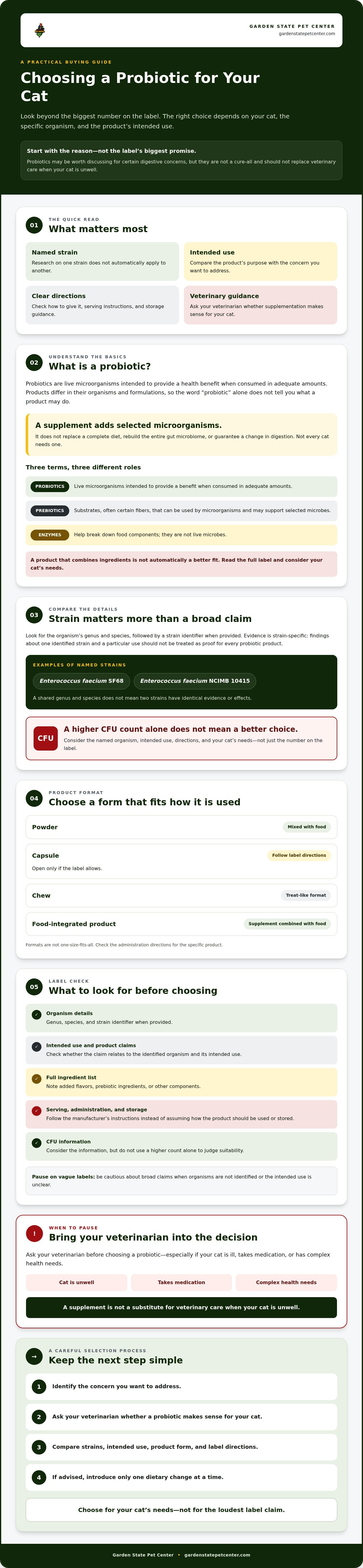
- Learn what probiotics do in a cat’s gut, and why a healthy cat may not need a supplement.
- Compare strains and product forms according to the intended use, rather than assuming one format suits every cat.
- Check the label for strain details, directions, storage instructions, and CFU information. A higher number alone doesn’t establish suitability.
- Before choosing probiotic supplements for cats, ask your veterinarian, especially if your cat is ill, takes medication, or has complex health needs.
- Use a careful selection process: identify the concern, get veterinary guidance, compare labels, and introduce only one dietary change at a time if advised.
What Are Cat Probiotics and How Do They Work?
Probiotics are live microorganisms intended to provide a health benefit when consumed in adequate amounts. For cats, the term covers different organisms and formulations, so the word “probiotic” alone doesn’t tell you what a product may do. The broad definition of Probiotics offers useful background, but product effects depend on the specific organism, formulation, and intended use.
A cat’s gut microbiome is the community of microorganisms living in the digestive tract. These microbes are part of a complex system that interacts with digestion and the gut environment. A probiotic supplement adds selected microorganisms; it doesn’t replace a complete diet, and not every cat needs one. Since normal digestion and individual needs vary, consider a supplement in the context of your cat’s overall health and care.
For a visual overview, watch this video, then assess any product claims against your cat’s needs and your veterinarian’s guidance:
How Do Probiotics Relate to a Cat’s Gut Microbiome?
Think of the microbiome as a living community, not a single “good bacteria” switch. A probiotic introduces particular microorganisms, but it doesn’t rebuild the entire community or guarantee a change in digestion. Evidence and claims need to be considered for the specific organism and intended use. Findings about one strain, for example, shouldn’t automatically be applied to every product containing probiotics.
Probiotics add selected live microorganisms; they don’t replace a balanced diet or routine veterinary care. If you’re considering probiotic supplements for cats, start by identifying why you’re considering one and ask whether supplementation makes sense for your cat.
Are Probiotics the Same as Prebiotics or Digestive Enzymes?
No. The terms describe different roles:
- Probiotics are live microorganisms intended to provide a benefit when consumed in adequate amounts.
- Prebiotics are substrates, often certain fibers, that can be used by microorganisms and may support selected microbes.
- Digestive enzymes help break down food components. They aren’t live microbes and aren’t the same as probiotics.
Some products combine probiotics with prebiotic ingredients or other components. Read the full label to see what’s included and what the product is intended for. A combination isn’t automatically a better fit. The ingredients and directions still need to match your cat’s needs.
Which Feline Probiotic Strains and Product Forms Should You Compare?
Compare the organism and the reason for using it before weighing format or marketing claims. Probiotic research is strain specific: a finding about one identified strain doesn’t automatically apply to a different strain, even if both share the same genus and species. The veterinary overview Probiotics for pets also emphasizes discussing probiotic use with a veterinarian.
Why Do Strain Names and Intended Uses Matter?
Look for the organism’s genus and species, followed by a strain identifier if the label provides one. For example, Enterococcus faecium SF68 and Enterococcus faecium NCIMB 10415 include strain identifiers. Research involving a named strain and a particular use shouldn’t be treated as proof that every probiotic product has the same effect. Be cautious about broad claims if the label doesn’t identify its organisms or explain the product’s intended use.
| What to compare | What to look for |
|---|---|
| Strain or organism | Genus, species, and strain identifier, when provided. Check whether the claim relates to that specific organism and intended use. |
| Format | Powders may be mixed with food; capsules may be given as directed or opened only if the label allows; chews offer a treat-like format; food-integrated products combine the supplement with food. |
| Label transparency | A clear ingredient list, identified organisms, intended use, and any added flavors or other components. |
| Manufacturer directions | Serving instructions, how to administer the product, and storage guidance. Follow the label rather than assuming formats are interchangeable. |
Which Supplement Format May Fit Your Cat’s Routine?
Choose a format your cat can reliably take, while following its specific directions. A powder may be practical for a cat that accepts it mixed into food, while a chew may suit one that readily takes treats. Capsules can require a different approach, and food-integrated formats may affect how you serve a meal. No format is universally best. Check the ingredients for flavors or other components that matter to your cat, and ask your veterinarian if you’re unsure whether a format or ingredient is appropriate.
If you’re comparing probiotic supplements for cats, focus on whether the strain, intended use, and directions are clear, not just on the format. Garden State Pet Center’s cat vitamins and supplements category may be useful to review. Confirm current availability of any probiotic product before relying on it as an option.
How Can You Judge a Cat Probiotic Label and Product Quality?
A clear label helps you assess what a supplement contains and how it should be handled, but it can’t prove that the product is right for your cat. The veterinary overview of what probiotics are offers helpful background; use it alongside the product’s own details and veterinary advice. In the United States, the FDA regulates these products according to their intended use, and they aren’t pre-approved for safety or effectiveness before sale.
Before choosing probiotic supplements for cats, scan the label for the essentials below. If a key detail is missing, ask the manufacturer rather than guessing.
- Organism and strain: Look for the genus, species, and strain identifier, when provided.
- Intended use: Check what the product is meant to support and whether the claim relates to its listed organisms.
- Serving directions: Confirm the amount, frequency, and method of administration.
- Storage guidance: Follow instructions on refrigeration, temperature, and keeping the container closed.
- Expiry and contact details: Check the expiry date and make sure the manufacturer provides a way to ask questions.
What Should a Cat Probiotic Label Tell You?
Labels may also state CFU, short for colony-forming units. This is an estimate of viable microorganisms able to form colonies under specified conditions. Check how the amount is presented, such as per serving, and follow the product’s directions rather than comparing figures without context.
A CFU count alone can’t tell you whether a probiotic is suitable, well-supported, or high quality. A large number doesn’t make up for an unidentified strain, unclear serving instructions, or storage requirements you can’t follow.
Which Quality Claims Need a Closer Look?
Separate checkable details from broad marketing language. Words such as “natural” or “veterinarian-formulated” aren’t, by themselves, proof of effectiveness. Look for specific information about the organisms, intended use, storage, and quality controls. If strain identity or handling instructions are unclear, contact the manufacturer and ask for clarification.
A National Animal Supplement Council (NASC) Quality Seal indicates that a member company has passed a third-party audit and follows the council’s quality, labeling, and adverse-event reporting standards. It’s a useful quality signal, not a certification that the product will work for your cat. Assess the full label, and ask your veterinarian whether the product’s intended use makes sense for your cat.
Are Probiotic Supplements Safe for Cats, and When Should You Call a Vet?
Over-the-counter doesn’t mean risk-free or appropriate for every cat. Products can differ in their organisms, ingredients, directions, and quality controls, and a supplement may not suit your cat’s health needs. Discuss probiotic supplements for cats with a veterinarian before starting one, particularly if your cat is ill, takes medication, follows a prescribed diet, or has a complex health history.
Can Every Cat Take the Same Probiotic Supplement?
No single product or serving amount is right for every cat. Age, health status, current diet, medications, and other care can all affect whether a particular supplement is suitable. Ask your veterinarian to review the specific product and its intended use, and follow their advice alongside the manufacturer’s directions. Don’t substitute a supplement for prescribed care or change another treatment without veterinary guidance.
Questions about ingredients, storage, or how to read a label can help you compare products. But a supplement choice shouldn’t distract from a health concern that needs professional assessment. If you’re considering a product because your cat has symptoms, describe those symptoms to your veterinarian before starting it.
What Should You Do if Digestive Symptoms Continue?
Contact a veterinarian if digestive symptoms persist, are severe, or get worse. Don’t wait to see whether a supplement helps if your cat seems seriously unwell, and don’t let trying a probiotic delay veterinary assessment. Your veterinarian can advise how promptly your cat should be seen based on the signs and your cat’s overall condition.
Prepare a clear account to make that conversation more useful. Note when the symptoms began, how they’ve changed, recent food or diet changes, and any supplements or medications your cat has received. Bring the product packaging or a photo of its label, including the ingredient list and directions. These details can help your veterinarian assess the situation and discuss an appropriate next step.
For general nutrition questions, a knowledgeable pet nutrition resource may help you understand food and supplement labels, but it can’t diagnose an illness or replace veterinary advice. You can review the cat vitamins and supplements category for general product information. Confirm whether a probiotic is currently available, and consult your veterinarian before choosing one for a health concern.
How to Choose and Introduce a Cat Probiotic Supplement
Use a deliberate process rather than choosing by a high CFU number or broad marketing claim. The right next step may be to hold off on a supplement until you’ve discussed your cat’s needs with a veterinarian.
What Questions Should You Ask Before Buying?
Before comparing products, be clear about the concern you want to address. Ask what evidence applies to the specific organism and intended use, and whether the format, ingredients, and storage directions fit your cat and household. Your veterinarian can help assess the choice in light of your cat’s health history and current care.
- Define the concern. Note what prompted you to consider a probiotic, and whether your cat has symptoms that need veterinary attention.
- Consult your veterinarian. Ask whether a supplement is appropriate, and bring up relevant health conditions, medications, and diet.
- Compare labels. Check the organism and strain information, intended use, full ingredient list, directions, expiry date, and storage requirements.
- Follow the agreed plan. If your veterinarian approves, use the product exactly as directed and introduce only one dietary change at a time.
How Can You Make the Next Step Easier?
Keep a simple record as you introduce a product: note when you started, how you’re giving it, and any changes you observe. If your cat has concerning or worsening changes, contact your veterinarian rather than continuing or adjusting the supplement on your own. Avoid changing several foods or supplements at once, since that can make it harder to track what your cat is responding to.
For a product comparison, Garden State Pet Center offers a cat vitamins and supplements category. Confirm whether a feline probiotic is currently available before considering a purchase. The store also has access to an on-site certified pet nutritionist; clarify the scope of their guidance, and use it as a nutrition resource rather than a substitute for veterinary diagnosis or care.
Choosing a probiotic and choosing a complete diet are separate decisions. For broader food-selection context, consult a veterinarian about your cat’s nutritional needs and how any food changes fit with the supplement plan.
Choose Your Cat’s Next Step with Care
Probiotic supplements for cats aren’t one-size-fits-all. Focus on the specific strain and intended use, read the label for clear directions and storage details, and remember that a CFU count alone can’t establish whether a product is suitable. Most importantly, talk with your veterinarian before starting a supplement, especially if your cat has health concerns or takes medication.
If you decide to compare products, take your cat’s needs and your veterinarian’s guidance with you. Garden State Pet Center offers cat vitamins and supplements, but confirm whether probiotic products are currently stocked before considering a purchase. The on-site certified pet nutritionist may be a resource for nutrition questions; clarify the scope of their guidance, which doesn’t replace veterinary diagnosis or care.
Explore Garden State Pet Center for cat nutrition and supplement resources. With a careful choice and your veterinarian’s input, you can make a confident decision that keeps your cat’s individual needs at the center.
Frequently Asked Questions
Do probiotic supplements for cats actually work?
Some may help in specific situations, but benefits depend on the exact strain, product, and intended use. Feline research includes specific strains, such as Enterococcus faecium SF68, but findings shouldn’t be assumed to apply to every supplement. Evidence varies across products, and a probiotic isn’t a cure-all. Ask your veterinarian whether a product has relevant support for your cat’s needs before starting it.
Can I give my cat a human probiotic?
Don’t give your cat a human probiotic unless your veterinarian approves that specific product. Human and feline products may differ in organisms, concentration, serving directions, and additional ingredients. A product intended for people may not be suitable for your cat, even if the label highlights familiar probiotic strains. Share the full ingredient list and label with your veterinarian so they can advise whether it fits your cat’s health and care plan.
How do I choose a probiotic supplement for my cat?
Start by identifying the concern and asking your veterinarian whether a probiotic is appropriate. Compare labels for named organisms and strain identifiers, intended use, complete ingredients, serving directions, storage instructions, and expiry information. Check that the product’s claim relates to its listed strain, rather than relying on broad promises or a high CFU number alone. Choose a format you can administer as directed and that suits your cat’s routine.
How long does it take for probiotics to work in cats?
There’s no reliable timeline that applies to every cat or probiotic. Response can depend on the product, the reason it’s being used, and your cat’s individual health. Follow the product directions and the plan agreed with your veterinarian, but don’t keep waiting for a supplement to help if symptoms persist, worsen, or become severe. Ask your veterinarian when to check in and whether to continue using the product.
Are cat probiotics safe to give every day?
Daily use isn’t automatically appropriate just because a probiotic is sold over the counter. Follow the label and your veterinarian’s advice about how often to give it and whether ongoing use makes sense for your cat. Ask first if your cat has an existing health condition, takes medication, or has other complex care needs. Don’t increase the amount or extend use beyond the directions without professional guidance.
Can I mix a cat probiotic supplement into food?
You can mix a probiotic into food only if its label allows that method. Powders may be designed for mixing, while capsules or other formats may have different instructions. Use the stated serving directions, and make sure your cat eats the portion containing the supplement. If your cat refuses the food or you’re unsure how to administer the product, ask your veterinarian or contact the manufacturer for clarification.
When should I ask a veterinarian about probiotics for my cat?
Ask your veterinarian before starting a probiotic, especially if your cat is ill, takes medication, or has a complex health history. Contact them if digestive symptoms persist, become severe, or worsen. A supplement shouldn’t delay an assessment or replace prescribed care. To support the conversation, note your cat’s symptoms, when they began, any recent diet changes, and the products or medications your cat has received.

Article by
Victor Santucci
Victor Santucci is the owner of Garden State Pet Center in Audubon, NJ, where he specializes in premium pet nutrition, exotic animals, and expert-level care. With years of hands-on experience and a passion for helping pets thrive, Victor is dedicated to educating pet owners on proper nutrition, enrichment, and species-specific care. His mission is simple: provide every pet with the highest quality products and every customer with honest, knowledgeable guidance.
Share this post
- 0 comment
- Tags: cat digestive care, cat health, cat supplements, feline gut health, feline nutrition, pet wellness, probiotic supplements for cats