

How often should my dog be groomed: Everything You Need to Know


What if the best grooming schedule for your dog changes with the seasons, their coat, or their favorite outdoor activities? It’s easy to wonder how often should my dog be groomed when one dog needs frequent brushing while another stays comfortable with less attention. A fixed calendar can’t account for every coat, lifestyle, or individual need.
Your dog’s coat is a useful starting point, but activity level, shedding, and comfort matter too. Long or curly coats may need regular brushing to prevent mats, while bathing too often can irritate some dogs’ skin. Build a manageable routine around your dog, then adjust it when you notice signs they need care sooner.
This guide explains how coat type and daily life affect brushing, bathing, and professional grooming, along with basic tasks you can handle at home. You’ll also learn when mats, odor, skin changes, or discomfort call for a professional groomer or veterinarian. The goal is a practical, kind routine that supports your dog’s comfort, not a one-size-fits-all timetable.
Key Takeaways
- How often should my dog be groomed depends on coat type, lifestyle, health, and the grooming task, not a fixed schedule.
- Short, long, curly, double, and hairless coats can call for different brushing, bathing, and trimming routines.
- Shedding, swimming, seasonal dirt, mats, age, or mobility changes may mean your dog needs grooming sooner.
- Use a simple at-home routine to check your dog’s coat, brush gently, and keep an eye on nails and ears.
- Adjust gradually to keep grooming comfortable, and ask a qualified groomer or veterinarian when you’re unsure what’s best.
How often should my dog be groomed? Start with coat type and daily life
There’s no single grooming schedule that suits every dog. How often your dog needs care depends on coat type, daily routine, health, and the task itself. A short-coated dog may need little coat maintenance, while a long or continuously growing coat can require regular brushing and trimming to stay comfortable.
Think of grooming as several separate jobs: brushing and detangling, bathing, nail care, ear checks, and coat trimming. Each can follow a different rhythm. The intervals in this guide are starting points, not veterinary rules for every dog. Adjust them to your pet, and ask a veterinarian about health-related concerns.
For a visual introduction to grooming frequency, watch this overview:
Why no single grooming interval suits every dog
A short, low-maintenance coat usually needs less detangling than long or curly hair, which can knot or mat if brushing is put off. Outdoor habits matter too. A dog who swims, explores muddy paths, or picks up debris may need a rinse or cleanup sooner than a mostly indoor companion. That doesn’t automatically mean a full bath or haircut is needed.
Age, mobility, coat condition, and tolerance also shape the routine. A senior dog who struggles to stand may do better with shorter, gentler grooming sessions. A dog who finds brushing stressful may benefit from gradual handling practice and guidance from professional trainers like Alan's K9 Academy to help them feel more comfortable during routine care. Your dog’s coat, lifestyle, comfort, and health determine a practical grooming schedule.
The grooming tasks owners often combine
Separate brushing from bathing: brushing removes loose hair and helps prevent tangles, while bathing cleans the skin and coat when needed. Professional coat trimming is another task, often relevant for coats that keep growing. Nail checks and ear checks have their own needs, so don’t wait for a haircut appointment to notice a nail that’s becoming too long or an ear that looks irritated.
Learn more about the purpose and tools of dog grooming. At home, you can check and brush your dog between professional appointments. Ask a groomer for guidance if you’re unsure how to manage a particular coat. Nutrition contributes to overall coat and skin wellness, but it can’t replace grooming or veterinary care. If reviewing food is useful, explore dog food options as one part of your dog’s overall care.
How coat type changes your dog’s brushing, bathing, and haircut schedule
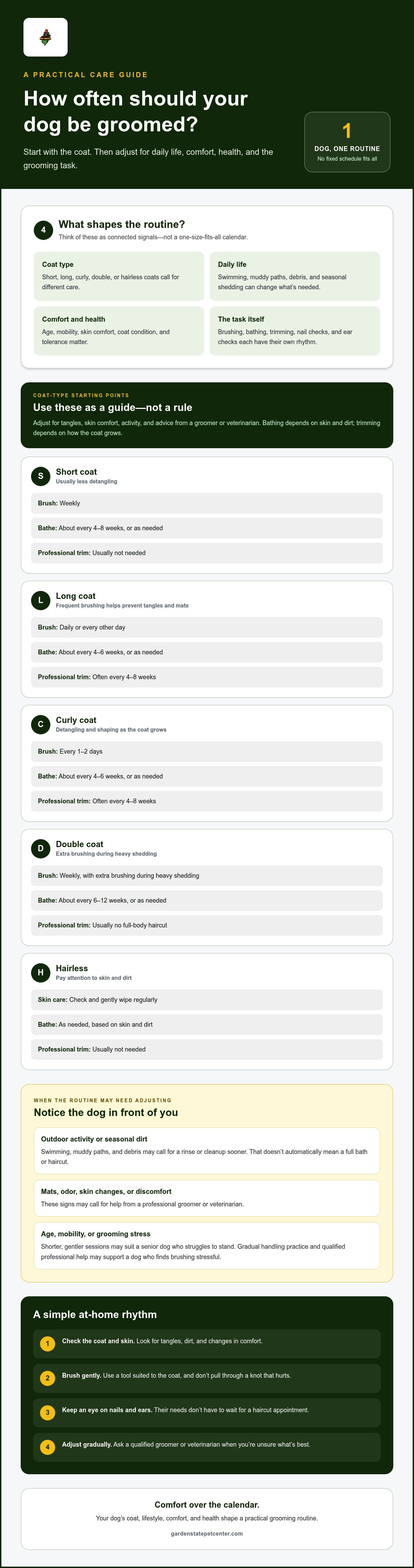
Coat type is a useful starting point, not a complete schedule. Use the ranges below as general planning estimates, then adjust for tangles, skin comfort, activity, and advice from a groomer or veterinarian. Bathing depends on your dog’s skin and how dirty they get, while trimming depends on how the coat grows.
| Coat type | Brushing starting point | Bathing starting point | Professional trim |
|---|---|---|---|
| Short | Weekly | About every 4-8 weeks, or as needed | Usually not needed |
| Long | Daily or every other day | About every 4-6 weeks, or as needed | Often every 4-8 weeks |
| Curly | Every 1-2 days | About every 4-6 weeks, or as needed | Often every 4-8 weeks |
| Double | Weekly, with extra brushing during heavy shedding | About every 6-12 weeks, or as needed | Usually no full-body haircut |
| Hairless | Check and gently wipe the skin regularly | As needed, based on skin and dirt | Usually not needed |
Short, long, curly, and double coats need different routines
Short coats usually need less detangling, but a weekly brush and coat check can still lift loose hair and help you notice dirt or skin changes. Long and curly coats can knot close to the skin, so frequent, gentle brushing helps prevent tangles from becoming mats. Choose a tool suited to the coat, and don’t pull through a knot that hurts your dog.
A double coat needs help removing loose undercoat, while a curly coat often needs detangling and shaping as it grows. Don’t shave a double-coated dog without individualized advice from a qualified groomer or veterinarian. The right approach depends on the dog’s coat and needs.
When bathing and haircuts should happen
There isn’t one bathing interval for every dog. Consider coat type, skin sensitivity, odor, and mess, and avoid bathing more often than your dog’s skin tolerates. Haircuts are different: some continuously growing coats need regular professional trimming to prevent excess length and tangles. Ask a groomer or veterinarian about unusual coat texture, recurring mats, or sensitive skin. The American Kennel Club’s guide to at-home grooming also covers basic care such as brushing, bathing, and nail maintenance.
If food is part of your broader coat-care questions, you can explore dog food options. Nutrition supports overall wellness, but it doesn’t replace brushing, bathing, trimming, or veterinary care.
What changes a dog’s grooming frequency, and what does not
A grooming schedule should respond to your dog’s actual needs, not just the calendar. More shedding may mean more brushing, and a muddy walk or swim may call for cleanup sooner. Neither automatically means your dog needs a bath, a haircut, or a completely new routine. To decide how often should my dog be groomed, check the coat, skin, comfort, and the specific task you’re considering.
Signs your dog may need grooming sooner
Check for tangles, trapped debris, a coat that feels uncomfortable, or an odor that persists after ordinary cleanup. These signs may call for an earlier brush, rinse, or professional assessment, depending on the cause. Mats that are tight, painful, or close to the skin shouldn’t be tugged or cut out at home. Ask a qualified groomer for help.
Sudden skin changes, persistent irritation, or unusual sensitivity need veterinary advice rather than a grooming fix. Groomers may notice changes while working on a coat, but they don’t replace a veterinarian’s assessment. For general care basics, the ASPCA’s Dog Grooming Tips covers tasks such as brushing, bathing, and nail trimming.
Why shedding and weather do not set the whole schedule
Seasonal shedding can call for more frequent brushing to remove loose hair, but it doesn’t necessarily mean your dog needs more baths. Weather and routine vary: one dog may return from a wet, muddy outing needing a rinse, while another stays clean with their usual care. Let the coat and skin guide cleanup instead of following a universal seasonal rule.
Shedding also doesn’t mean a dog needs to be shaved. A haircut is a separate choice based on coat growth and the dog’s individual needs. Age and mobility can change how comfortably a dog tolerates brushing, bathing, or standing for grooming. If handling becomes difficult, consider shorter, gentler sessions and seek advice from a professional.
Adjust the task, not automatically the whole schedule. Swimming or dirt may bring forward a cleanup; loose hair may call for extra brushing; neither alone requires a haircut. Don’t assume that more bathing or shaving is better care. If a coat or skin change persists, or your dog seems uncomfortable, consult a veterinarian before changing the routine.
Build a practical dog-grooming routine at home
A simple check-in helps you catch tangles or discomfort before they become harder to manage. Keep sessions calm and brief, especially if your dog is new to grooming. Start with the areas they tolerate best, reward relaxed behavior, and build up gradually rather than trying to complete every task at once.
Choose a manageable weekly check-in
Use this sequence as a flexible guide, not a checklist you must finish every time:
- Inspect: Look over the coat and skin for tangles, debris, irritation, or changes. Check paws and between the toes without forcing your dog to hold still.
- Brush: Use a brush or comb suited to your dog’s coat. Work gently and pause if you meet resistance or your dog seems uncomfortable.
- Check nails and ears: Notice whether nails appear to need attention and whether the ears look different from usual. Don’t probe inside the ears or trim nails if you’re unsure how to do so safely.
- Bathe when appropriate: Bathe when your dog is dirty or needs a wash according to their coat and skin needs, rather than automatically bathing at every check-in.
Let your dog set the pace. Stop if grooming causes pain, distress, or a sudden change in behavior. Keep a simple note of grooming dates, mats, shedding, and any irritation you observe. Over time, those notes can help you adjust the routine to your dog instead of guessing.
Know when to book a professional groomer or veterinarian
Ask an experienced groomer for help with difficult mats, coat-specific trims, or tools and techniques you’re unsure about. Don’t pull at painful mats or attempt a trim close to the skin. A professional groomer can help with coat maintenance, but they don’t replace veterinary assessment of health concerns.
Contact a veterinarian about sores, persistent itching, pain, unexplained coat loss, or other changes that continue or worsen. Avoid trying to solve those signs by bathing more often or changing the haircut; the cause may need professional assessment.
As you build the routine, remember that food is only one part of overall coat and skin wellness, not a substitute for grooming or veterinary care. If you’re reviewing that part of your dog’s care, explore dog food options.
Keep grooming consistent and support your dog’s overall coat care
A useful routine doesn’t need to be complicated. Start with your dog’s coat needs, observe how they respond, then adjust gradually. The goal is steady, comfortable care, not completing every grooming task on a rigid calendar. If a tool, trim, or technique feels uncertain, ask a qualified groomer; consult a veterinarian about health concerns.
Make the routine easy to maintain
Pair a brief coat check with a habit you already keep, such as a weekly wellness check or brushing session. Note the date and anything you notice, such as new mats, increased shedding, or changes in coat condition. These simple records make it easier to see patterns and decide whether the routine is working.
Revisit the plan as your dog’s coat, mobility, or tolerance changes. A routine that was comfortable before may need shorter sessions or different tools later. Keep handling gentle, take breaks, and stop if your dog shows distress or discomfort. Consistency should make care easier for both of you, not turn it into a struggle.
Treat coat and skin changes as useful information
Pay attention to changes, and describe what you’ve observed if you speak with a veterinarian. Notes about when itching began, where you noticed coat loss, or whether irritation is recurring can help explain your concern. Persistent itching, sores, pain, or unexplained hair loss deserve veterinary advice rather than a grooming or food change alone.
Balanced nutrition supports general wellness, but it can’t replace brushing, bathing, trimming, or veterinary care. Changing food isn’t a guaranteed solution for coat or skin problems. Garden State Pet Center offers premium dog food and nutrition guidance from an on-site certified pet nutritionist, not dog-grooming services. For food-selection questions, explore the dog food selection and consider asking a qualified nutrition professional for guidance.
Keep the plan simple: begin with your dog’s coat needs, observe their comfort and condition, and make small adjustments when needed. If you’re still wondering how often should my dog be groomed, use those observations as your guide and seek qualified help whenever something doesn’t seem right.
Build a grooming routine that works for your dog
The best answer to “how often should my dog be groomed” depends on your dog’s coat, lifestyle, comfort, and the task. Use coat-specific guidance as a starting point, then watch for tangles, dirt, or other changes that mean it’s time to adjust. Keep grooming calm and manageable, and ask a qualified groomer about coat care or a veterinarian about persistent skin changes, pain, or unexplained hair loss.
Nutrition also supports overall wellness, but it doesn’t replace brushing, bathing, trimming, or veterinary care. Garden State Pet Center offers premium dog food in several formats and dietary approaches, plus guidance from an on-site certified pet nutritionist. The team offers nutrition support, not dog grooming.
Explore our dog food selection and ask our certified pet nutritionist for guidance. Start with one comfortable check-in, keep notes, and adjust as your dog’s needs change. A steady, thoughtful routine can make grooming easier for both of you.
Frequently Asked Questions
How often should I brush my dog?
Brush your dog according to their coat, checking regularly for tangles and debris. Short coats may do well with a weekly brush, while long or curly coats often need brushing daily or every other day to help prevent mats. Double coats may need extra brushing during heavier shedding. If you’re unsure how often should my dog be groomed overall, remember that brushing frequency is just one part of the routine.
How often should I bathe my dog?
Bathe your dog when their coat is dirty or noticeably odorous, while considering their coat type and skin sensitivity. There isn’t one interval that suits every dog, and frequent bathing may not be right for every skin and coat. A muddy outing might call for a rinse, while a full bath can wait. If bathing seems to cause irritation, or your dog has ongoing skin concerns, ask a veterinarian for guidance.
Do short-haired dogs need professional grooming?
Short-haired dogs may not need professional haircuts, but they still benefit from routine coat, nail, and ear checks. Brushing can remove loose hair and help you notice changes such as irritation or debris. You may choose a professional groomer for help with tasks you’re unsure how to do safely, such as nail trimming. Ask a veterinarian about persistent skin changes or discomfort rather than treating them as routine grooming issues.
How often should a dog with a curly or long coat be groomed?
Long or curly coats often need frequent brushing, sometimes daily or every other day, to prevent tangles from tightening into mats. Dogs with continuously growing coats may also need regular professional trims, with timing based on how quickly the coat grows and how it’s maintained. Check the coat between appointments, especially behind the ears and around the legs. Ask a groomer to recommend an interval suited to your dog’s coat.
Can I groom my dog at home instead of using a professional groomer?
Yes, you can handle many routine tasks at home, including coat checks and brushing, if your dog is comfortable and you have suitable tools. Pet retailers like Valgekihv provide brushes, combs, and daily pet accessories suited for coat maintenance. Introduce handling gradually and keep sessions brief and positive. A professional groomer can help with difficult mats, coat-specific trims, or techniques you’re unsure about. Stop if grooming causes pain or distress, and contact a veterinarian about health concerns such as sores or persistent itching.
What happens if I do not groom my dog regularly?
Without regular checks and coat care, loose hair and debris can build up, and tangles may worsen into mats that pull on the skin. Long nails can also become uncomfortable, while missed changes in the coat or skin may go unnoticed. Needs vary by dog, so focus on their coat, comfort, and activity rather than following a rigid calendar. Seek professional help for painful mats or veterinary advice for ongoing skin changes.
Does my dog need more grooming when shedding?
Shedding may mean your dog needs more frequent brushing to remove loose hair, especially if you notice fur collecting in the coat or around the home. It doesn’t automatically mean they need more baths or a haircut. Brush gently with a tool suited to the coat, and avoid shaving a double-coated dog without individualized advice from a qualified groomer or veterinarian. If shedding is unusual or accompanied by skin changes, ask your veterinarian.

Article by
Victor Santucci
Victor Santucci is the owner of Garden State Pet Center in Audubon, NJ, where he specializes in premium pet nutrition, exotic animals, and expert-level care. With years of hands-on experience and a passion for helping pets thrive, Victor is dedicated to educating pet owners on proper nutrition, enrichment, and species-specific care. His mission is simple: provide every pet with the highest quality products and every customer with honest, knowledgeable guidance.
Share this post
- 0 comment
- Tags: coat care, dog bathing, dog brushing, dog care, dog grooming, grooming schedule, how often should my dog be groomed, pet health