

Chinchilla Food and Pellets: A Practical Buying Guide


Could the right chinchilla food and pellets still be the wrong choice if they crowd out hay? It’s easy to focus on the pellet bag, especially when ingredient lists and food formats make comparisons confusing. Pellets are a measured supplement, not a replacement for the high-fiber grass hay that should anchor a chinchilla’s diet.
Choosing thoughtfully means looking beyond the claims on the front of the bag. This guide explains how hay, plain pellets, and occasional treats fit together, and how to compare labels without getting lost in the details. You’ll also learn how to introduce a new food gradually and when a change in eating or digestion calls for guidance from an exotic-animal veterinarian.
Key Takeaways
- Check that a food is specifically formulated for chinchillas, and look for clear feeding directions rather than relying on packaging claims.
- Compare chinchilla food and pellets by species suitability and format. Uniform pellets can help reduce selective eating from mixed foods.
- Introduce food changes gradually unless your veterinarian gives different instructions, and watch for changes in appetite, water intake, or droppings.
- Separate routine adult feeding choices from special dietary needs that call for advice from an exotic-animal veterinarian.
- Check whether chinchilla-specific options are currently available. A small-animal food category does not mean every food in it suits chinchillas.
Chinchilla food and pellets: what belongs in a balanced diet?
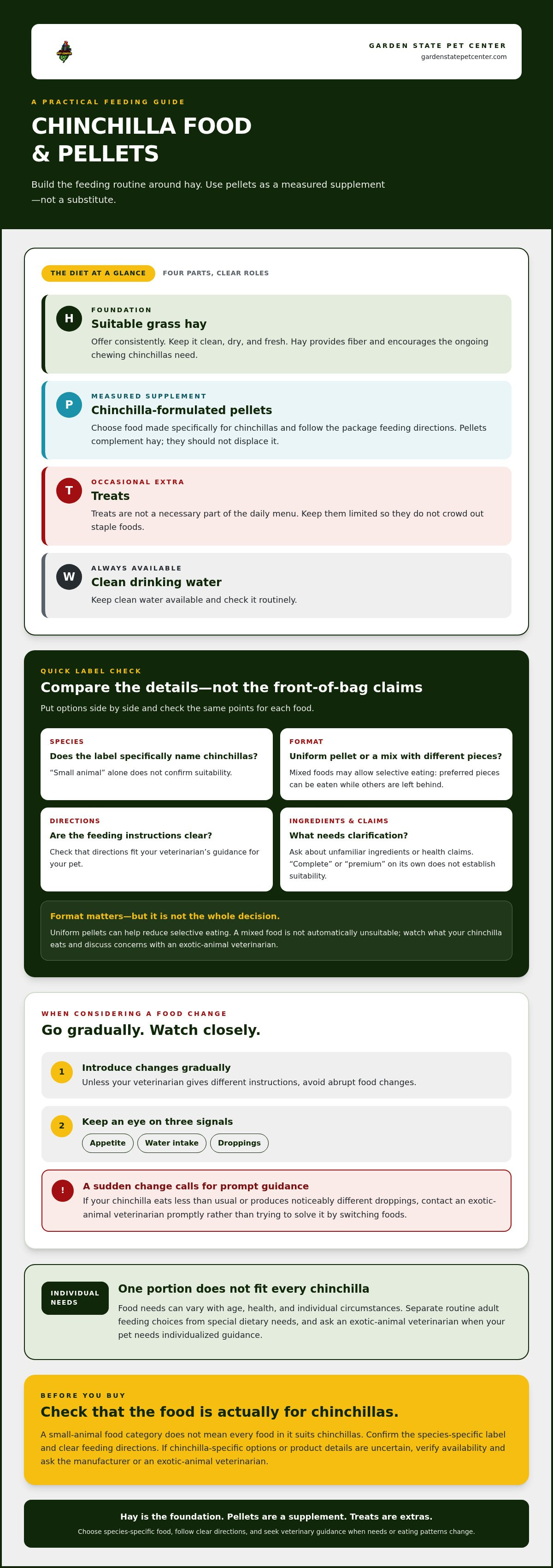
Hay is the foundation of a chinchilla’s diet. Pellets are a measured addition, not a replacement. A steady supply of suitable grass hay provides fiber and encourages the ongoing chewing chinchillas need. A sudden change in appetite or droppings warrants prompt advice from an exotic-animal veterinarian.
Food needs can vary with age, health, and individual circumstances, so don’t assume one pellet portion fits every chinchilla. The natural diet of chinchillas provides background, but domestic feeding choices should follow species-specific food directions and veterinary advice when needed.
For a visual introduction to chinchilla feeding, watch this video:
Why hay matters more than the pellet bag
Offer suitable grass hay consistently, and check that it’s clean, dry, and fresh. Hay supports regular chewing and normal digestive function, so pellets shouldn’t take its place in the feeding routine. If your chinchilla eats less than usual or produces noticeably different droppings, contact an exotic-animal veterinarian promptly instead of trying to solve the change by switching foods.
Where pellets, water, and treats fit
Choose pellets formulated specifically for chinchillas and follow the package feeding directions. Pellets complement hay with a consistent portion of formulated food, but they shouldn’t displace the hay your pet needs to chew throughout the day. Keep clean drinking water available and check it routinely. Treats are extras, not a necessary part of the daily menu, so don’t let them crowd out staple foods.
At a glance
- Staple food: Suitable grass hay, offered consistently.
- Supplementary food: Chinchilla-formulated pellets, fed according to the label.
- Occasional extra: Treats, kept limited rather than used as a meal.
Check species suitability before buying. Small-animal foods aren’t automatically right for chinchillas. Garden State Pet Center’s dry dog food category is a separate offering, not chinchilla food. Look for a chinchilla-specific label and clear directions, and ask about current chinchilla options if availability is uncertain.
How to compare chinchilla pellets and food labels
Compare the label, not just the package design or words like “complete” and “premium.” First, confirm the food is explicitly formulated for chinchillas. A product labeled only for small animals may be intended for another species, so don’t assume it’s suitable. For context, review veterinary guidance on chinchilla diet alongside the manufacturer’s feeding instructions.
Next, check the ingredients and directions. Ingredients are listed by name, but unfamiliar terms and broad claims can be difficult to assess without context. A claim about dental or digestive benefits doesn’t, by itself, show whether a food is appropriate for your chinchilla or how to feed it. If something is unclear, ask the manufacturer or an exotic-animal veterinarian rather than relying on marketing language.
Use a simple label comparison
Put options side by side and record the same details for each. This makes differences easier to spot and helps you identify questions to ask before choosing.
- Product format: Is it a uniform pellet or a mix with visibly different pieces?
- Intended animal: Does the label specifically name chinchillas?
- Feeding directions: Are the instructions clear, and do they fit your veterinarian’s guidance for your pet?
- Questions to verify: What do unfamiliar ingredients mean? Are specific health claims supported? Is the food appropriate for your chinchilla’s age or needs?
Pellets versus mixed foods
Uniform pellets offer a consistent format, while a mixed or muesli-style food may contain pieces a chinchilla can pick through. Selective eating can mean preferred bits are eaten while others are left behind, so your pet may not consume the mix as intended. That doesn’t automatically make every mixed food unsuitable. It does make it important to watch what your chinchilla eats and discuss the format with an exotic-animal veterinarian if you have concerns.
Use the same checks for any chinchilla food and pellets you’re considering: species suitability, ingredients, format, and clear directions. Don’t choose based on a single headline claim or assume food made for another small animal meets a chinchilla’s needs.
To compare options, browse small animal food and check whether a current item is specifically formulated for chinchillas. Verify availability and whether a consultation can address your question before making a choice.
Which chinchilla food suits your pet’s needs?
Choose based on species suitability and consistency, not attractive packaging or an unverified “best” ranking. Start with food labeled specifically for chinchillas, then compare its format and feeding directions with your pet’s current routine. Food marketed for another small-animal species isn’t automatically a suitable alternative.
For practical background on feeding, consult Purdue University's chinchilla feeding guide. Use specialist resources to inform your questions, but consider your chinchilla’s circumstances rather than treating general recommendations as a personal prescription.
Choosing food for an adult chinchilla
For a healthy adult, prioritize chinchilla-specific food with clear feeding directions. If your pet is eating well and maintaining a steady routine, avoid changing foods just because a new package makes broader claims or looks more appealing. Consistency makes changes in appetite or acceptance easier to notice. Before feeding a product labeled for another species, check with an exotic-animal veterinarian.
Garden State Pet Center offers a small-animal food category. The category alone doesn’t confirm that a particular item is suitable for chinchillas, so check the product’s species labeling and current availability before choosing.
When individual needs change the decision
Age, health history, and body condition can affect feeding recommendations. Pregnancy, illness, or weight concerns may call for individual guidance, not an improvised switch to a special formula or a different portion. If you’re considering a food change because of symptoms, medical history, or a change in condition, ask an exotic-animal veterinarian what’s appropriate for your pet.
- Routine choice: Check for a chinchilla-specific label and follow its directions.
- Potential change: Have a clear reason and plan to keep the transition consistent.
- Special concern: Get veterinary guidance before changing the diet.
Label-reading tips can help you compare formats and instructions, but they aren’t chinchilla-specific medical advice. Verify that any option is appropriate for chinchillas before buying. For a needs-first starting point, browse Garden State Pet Center’s small-animal food selection and confirm that the item you’re considering is formulated for chinchillas.
How to introduce new chinchilla food safely
Change chinchilla food and pellets carefully. Abrupt diet changes may be poorly tolerated, and there isn’t one transition schedule that suits every chinchilla. Follow your veterinarian’s instructions first, especially if the change relates to a health concern.
A gradual food transition
Before starting, check that the replacement food is explicitly formulated for chinchillas and appropriate for your pet. Keep the familiar diet available as you introduce the new food gradually, following your veterinarian’s guidance on pace and approach. Avoid relying on a fixed day-by-day ratio from a general article, since your chinchilla’s health and eating habits may affect the plan.
Use this checklist to keep the process consistent:
- Confirm the choice. Check the species label and feeding directions. Ask your veterinarian if you’re unsure whether the food is suitable.
- Make the change gradually. Introduce the new food alongside the familiar diet according to professional instructions. Don’t make several diet changes at once.
- Observe and record. Note what your chinchilla eats, its water intake and droppings, and whether it accepts the new food. These details can help you describe any change clearly to a veterinarian.
- Pause and seek advice if concerns arise. If your pet eats less, refuses food, or seems unwell, contact a veterinarian rather than trying another food as a remedy.
Signs that call for veterinary help
Watch for reduced eating, unusual droppings, or marked changes in behavior. These signs can have different causes, so don’t assume they’re simply an adjustment to a new food. Contact an exotic-animal veterinarian promptly if your chinchilla stops eating or seems unwell. A retailer or article can offer general feeding information, but it can’t examine or diagnose your pet.
Keep the transition steady and your observations practical. If you’re checking which food is specifically formulated for chinchillas, ask Garden State Pet Center about current chinchilla-specific options. Confirm suitability and availability before buying. For concerns about appetite, digestion, or health, contact a veterinarian.
Choose chinchilla food with informed, ongoing support
A thoughtful food choice starts with a few reliable checks, not a promise on the front of the bag. Confirm that the food is formulated specifically for chinchillas, suits the format you plan to use, and comes with clear directions. Also consider whether you can maintain a steady supply. A food that’s appropriate on paper may be a poor fit if it’s frequently unavailable and requires repeated changes.
Questions to ask before choosing a bag
Read the full label and make sure you understand how the food is intended to be fed. Check the ingredients and storage instructions, and verify current availability instead of assuming every product in a small-animal range is chinchilla-specific. If your pet has a health concern, bring the current food label and feeding routine to an exotic-animal veterinarian.
- Species: Does the label specifically name chinchillas?
- Format and directions: Is the food in a suitable format, with clear feeding instructions?
- Storage: How should the food be stored to maintain its quality?
- Continuity: Is the specific chinchilla food currently available, and can you replenish it reliably?
Keep the package or take a photo of the ingredient list and feeding directions. This makes it easier to compare options or discuss a planned change with a veterinarian. For chinchilla food and pellets, clear species labeling and a practical feeding plan matter more than an eye-catching claim.
Find support for your chinchilla’s food choice
Garden State Pet Center offers a small-animal food selection, but not every item in that category is necessarily appropriate for chinchillas. Check for current chinchilla-specific options before choosing. The store also offers pet nutritional consultations. Ask whether the consultation covers your chinchilla, and remember that nutrition support doesn’t replace veterinary assessment or diagnosis.
For broader label-reading context, consult a premium pet food guide. Use general food-selection advice as a starting point, then confirm species suitability and ask a qualified veterinarian about medical or diet-related concerns.
Explore small animal food and ask our team about current options and whether a nutritional consultation can address your question.
Make your next chinchilla food choice with confidence
Keep the essentials in view: hay anchors a balanced routine, while chinchilla-formulated pellets are a measured complement. Compare labels for species suitability, ingredients, and clear feeding directions, and don’t choose by packaging claims alone. If you change foods, make the transition gradually and watch your chinchilla’s appetite and droppings. Contact an exotic-animal veterinarian about health concerns or special dietary needs.
Garden State Pet Center carries small-animal food, though you’ll need to confirm whether a current option is formulated specifically for chinchillas. An on-site certified pet nutritionist is available; ask whether consultations cover chinchilla food questions. For help exploring options, explore small animal food and ask our team.
A careful label check and a steady routine can help you make informed choices while keeping your chinchilla’s individual needs in view.
Frequently Asked Questions
What is the best food for a chinchilla?
A balanced chinchilla diet is built around suitable grass hay, with chinchilla-formulated pellets as a measured complement. Keep clean drinking water available, and treat extras as occasional additions rather than substitutes for staple foods. Check the pellet label for species suitability and clear feeding directions. The right choice can depend on your pet’s age and health, so ask an exotic-animal veterinarian about individual needs.
Can chinchillas eat pellets instead of hay?
No. Pellets aren’t a substitute for hay. Suitable grass hay provides fiber and encourages ongoing chewing, while chinchilla-formulated pellets provide supplementary food when fed according to the label. Offer hay consistently and keep clean water available. If your chinchilla stops eating hay or pellets, or its droppings change, contact an exotic-animal veterinarian rather than replacing one food with another.
How much food should a chinchilla eat each day?
There isn’t one daily pellet portion that’s right for every chinchilla. Follow the feeding directions on a chinchilla-specific pellet label, and ask an exotic-animal veterinarian to tailor advice to your pet’s age, health, and body condition. Offer suitable grass hay consistently and provide clean water. Avoid increasing pellets or treats simply because your pet seems interested. Monitor its usual eating habits and discuss concerns with a veterinarian.
Are mixed foods or muesli suitable for chinchillas?
Mixed or muesli-style foods can make it easier for a chinchilla to pick out preferred pieces and leave others behind. This selective eating may mean it doesn’t consume the mix as intended. Uniform pellets can help provide consistency, but assess each food by its chinchilla-specific labeling and feeding directions rather than assuming every mix is unsuitable. Ask an exotic-animal veterinarian if you’re unsure what fits your pet’s needs.
Can chinchillas eat food made for rabbits or guinea pigs?
Don’t assume rabbit or guinea pig food is appropriate for a chinchilla just because all of these animals are small herbivores. Their diets may differ, and a general small-animal label doesn’t confirm suitability. Choose food explicitly formulated for chinchillas and follow its directions. If you’re considering another species’ food because your usual option is unavailable, check with an exotic-animal veterinarian before switching.
How do you switch a chinchilla to a new food?
Introduce a new chinchilla-specific food gradually alongside the familiar diet, following veterinary instructions first. There’s no single transition timeline that suits every pet, so avoid relying on fixed day-by-day ratios without professional guidance. As you make the change, monitor appetite, water intake, droppings, and willingness to eat the new food. If your chinchilla eats less or seems unwell, contact an exotic-animal veterinarian rather than trying another food.
What should I do if my chinchilla stops eating?
Contact an exotic-animal veterinarian promptly if your chinchilla stops eating, especially if you also notice unusual droppings or a marked behavior change. Don’t wait for a food switch to fix the problem or try to diagnose the cause at home. Tell the veterinarian what your pet has been eating and when you noticed the change. A retailer or article can share general feeding information, but can’t diagnose your chinchilla.

Article by
Victor Santucci
Victor Santucci is the owner of Garden State Pet Center in Audubon, NJ, where he specializes in premium pet nutrition, exotic animals, and expert-level care. With years of hands-on experience and a passion for helping pets thrive, Victor is dedicated to educating pet owners on proper nutrition, enrichment, and species-specific care. His mission is simple: provide every pet with the highest quality products and every customer with honest, knowledgeable guidance.
Share this post
- 0 comment
- Tags: chinchilla care, chinchilla diet, chinchilla food and pellets, chinchilla pellets, chinchillas, feeding guide, pet nutrition, small animal food