

Best Timothy Hay Treats for Rabbits: 2026 Buyer's Guide


What if the snacks designed to reward your bunny are quietly sabotaging their digestive system? Walk down any commercial pet aisle and you'll find shelves packed with colorful bags containing hidden molasses, corn, seeds, and refined starches. Selecting genuinely healthy timothy hay treats for rabbits shouldn't feel like an endless guessing game. The best treats never compete with essential daily forage; they actively reinforce it.
As a dedicated rabbit parent, you want to provide enriching daily snacks without risking gastrointestinal stasis or painful dental overgrowth, even if you care for a notoriously picky eater. You shouldn't have to second-guess the ingredient panel. In this guide, you'll discover how to choose nutrient-dense, high-fiber treats that support long-term gut motility and natural tooth wear while filtering out deceptive binders. We'll break down the practical differences between compressed cubes, baked biscuits, and loose hay toppers so you can build a safe, wholesome routine your rabbit loves.
Key Takeaways
- Protect your bunny's gut motility by choosing rewards formulated to fuel cecal fermentation rather than displacing vital dietary fiber.
- Learn how to evaluate timothy hay treats for rabbits across compressed cubes, baked biscuits, and loose botanical toppers to target optimal dental wear.
- Spot hidden digestive disruptors on product labels, including deceptive binders like molasses, cane syrup, cornstarch, and refined wheat flour.
- Build a structured four-step daily enrichment routine that prevents selective eating while keeping loose hay at eighty percent or more of your rabbit's intake.
- Discover the nutritional standards independent specialists use to source pure, species-appropriate Western Timothy grass snacks.
Why Timothy Hay Treats Are Essential for Rabbit Health
Rabbits are obligate herbivores with a digestive tract engineered for continuous, high-fiber forage. Unlike dogs or cats that thrive on nutrient-dense meals eaten hours apart, lagomorphs require a steady intake of long-stem fiber to keep their gastrointestinal systems in motion. High-quality timothy hay treats for rabbits are high-fiber, grass-based rewards that support cecal fermentation while satisfying your pet's natural instinct to forage. Introducing these specialized snacks prevents the serious digestive fallout linked to sugary commercial treats while respecting foundational rabbit dietary needs.
Supporting Cecal Digestion and Preventing GI Stasis
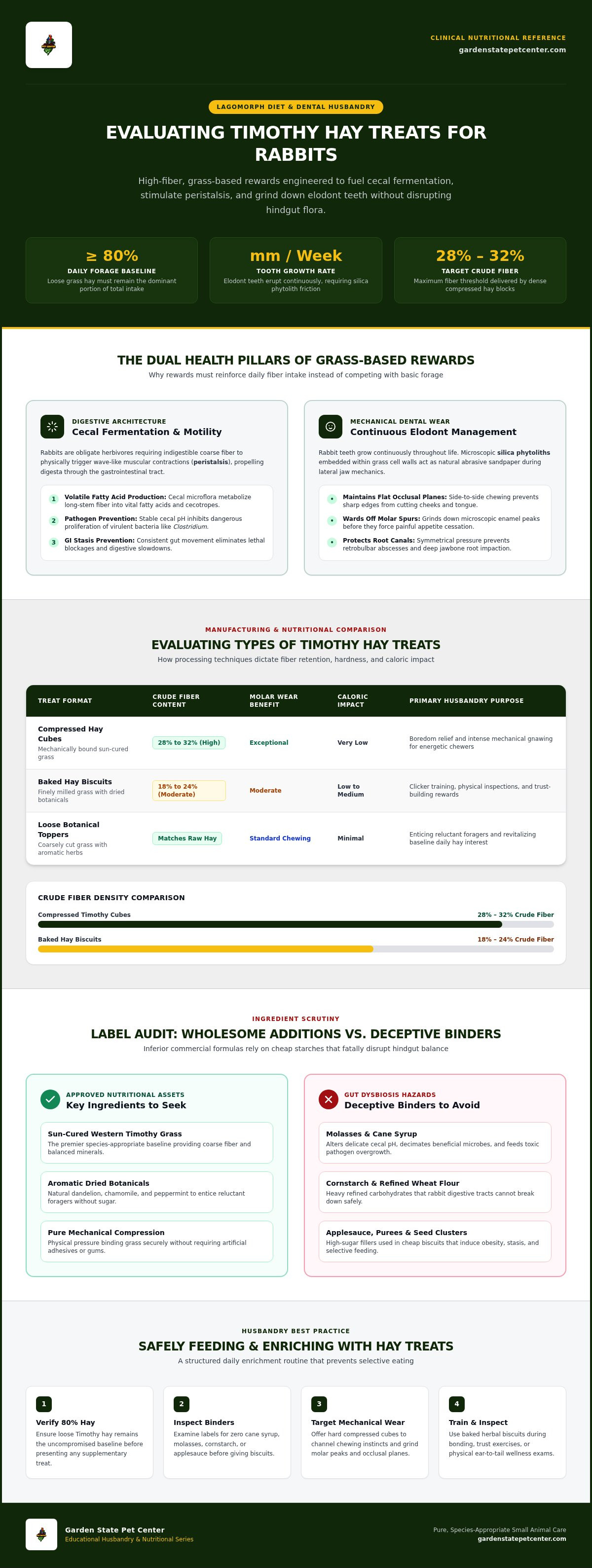
Indigestible coarse fiber physically stimulates gut motility, powering the wave-like muscular contractions called peristalsis that push matter through the intestines. Within the cecum, specialized bacterial flora ferment this fibrous intake into critical volatile fatty acids and nutrient-dense cecotropes. Offering starches, sugary fruit pastes, or seed clusters alters cecal pH, killing off beneficial microbes and fostering toxic pathogens like Clostridium. Selecting properly curated small animal treats made of genuine grass ensures supplemental enrichment never disrupts this fragile hindgut balance.
Promoting Continuous Dental Wear on Incisors and Molars
A rabbit's teeth are elodont, meaning they grow continuously throughout the animal's life at a rate of several millimeters per week. Microscopic silica phytoliths embedded inside grass cell walls act like microscopic sandpaper against tooth enamel. Chewing hard, compressed forage rewards forces lateral, side-to-side jaw mechanics across rear cheek teeth. This mechanical grinding delivers measurable physiological advantages:
- Maintains flat occlusal planes: Lateral jaw action prevents sharp edges from slicing into sensitive tongue and cheek tissues.
- Wards off molar spurs: Consistent gnawing grinds down microscopic peaks before they form debilitating spurs that halt eating.
- Protects root canals: Balanced biting pressure prevents retrobulbar abscesses and painful root impaction into the jawbone.
Delivering timothy hay treats for rabbits in dense formats keeps both front incisors and hidden back molars cleanly filed down, merging daily bonding moments with indispensable veterinary wellness care.
Evaluating Types of Timothy Hay Treats: Comparison and Textures
Walk through any pet supply aisle and you will find treats marketed under identical grass-based banners, yet their manufacturing processes create radically different nutritional profiles. Processing techniques directly dictate fiber retention, caloric density, and physical hardness. Understanding these differences allows you to choose timothy hay treats for rabbits that match your companion's specific chewing style, metabolic rate, and dental requirements rather than relying on unvetted marketing claims.
Compressed Timothy Hay Blocks and Cubes
Mechanical compression binds sun-cured grass into dense, solid geometric blocks without needing starches, molasses, or synthetic gums. These hard cubes force forceful chewing, delivering superb wear for both incisors and back cheek teeth. Energetic chewers benefit tremendously from this durable format because it channels natural destructive impulses into hours of safe, fiber-dense oral exercise.
Baked Timothy Biscuits and Herbal Hay Medleys
Finely milled grass combined with dried botanicals like dandelion, chamomile, or peppermint creates an aromatic baked reward. These biscuits are ideal for clicker training, physical health inspections, and trust building. Examine package labels with precision; inferior formulas rely on applesauce, wheat flour, or high-sugar fruit purees to hold their shape during baking.
Loose botanical toppers present another versatile option, blending fragrant herbs into coarsely cut grass strands to stimulate reluctant foragers. As detailed in the MSU Extension on rabbit feeding, grass forage forms the baseline of proper lagomorph nutrition, making treat selection an extension of basic husbandry.
| Treat Format | Crude Fiber Content | Molar Wear Benefit | Caloric Impact | Primary Purpose |
|---|---|---|---|---|
| Compressed Hay Cubes | High (28% to 32%) | Exceptional | Very Low | Boredom relief and intense mechanical gnawing |
| Baked Hay Biscuits | Moderate (18% to 24%) | Moderate | Low to Medium | Interactive bonding, recall training, and medication delivery |
| Loose Botanical Blends | High (25% to 30%) | High | Very Low | Foraging enrichment and encouraging picky eaters to consume loose hay |
Younger, energetic lagomorphs often relish tackling sturdy cubes, while senior bunnies with compromised chewing capabilities usually do better with delicate baked bites or herbal toppers. If you want to sample balanced, high-fiber options vetted by small mammal specialists, consider browsing the curated small animal collection to find the ideal texture match for your pet's routine.
Key Ingredients to Seek and Harmful Additives to Avoid
Reading pet food labels requires a vigilant eye because attractive exterior marketing frequently disguises biologically unsuitable ingredients. The first listed ingredient on wholesome timothy hay treats for rabbits should always be genuine, sun-cured Western Timothy grass (Phleum pratense). Manufacturers often dilute product quality with cheap fillers that compromise gut health. Inspecting the guaranteed analysis and ingredient hierarchy protects your companion from gastrointestinal distress.
Green Flag Ingredients: Wholesome Botanical Additions
Superior treats feature pure first-cut or second-cut Timothy grass paired with dried therapeutic botanicals. These additions replicate wild meadow foraging without introducing excessive starches or simple sugars. Look for these beneficial whole-plant inclusions on the ingredient panel:
- Dandelion greens and root: Delivers natural inulin to support gut flora alongside gentle kidney support.
- Marigold (Calendula) petals: Provides natural carotenoids and offers mild anti-inflammatory properties for oral tissue.
- Plantain leaf and nettle: Rich in astringent mucilage and minerals that assist mucosal lining protection within the digestive tract.
- Rosehips: Offers a trace source of natural bioflavonoids without the concentrated sugar shock of dried orchard fruit.
Red Flag Additives: The Dangerous Fillers to Reject
Mass-market manufacturers frequently rely on inexpensive binding agents to press treats into durable shapes. Avoid any treat listing cane molasses, corn syrup, maltodextrin, wheat flour, or potato starch. These simple carbohydrates pass unabsorbed into the cecum, where they trigger dysbiosis, gas accumulation, and painful bloat. Commercial yogurt drops, colored cereal puffs, and honey-dipped sticks represent severe health hazards that should never enter a rabbit's enclosure.
Seed-laden snacks and whole dried corn kernels pose an even more immediate physical danger to lagomorphs. High-fat seeds, corn kernels, and peanut fragments cannot be broken down by a rabbit's digestive tract, triggering acute, potentially fatal physical impactions within the narrow ileocecal valve. Ingredients like dehulled soybean meal and wheat middlings are also frequent culprits, artificially inflating crude protein percentages while stripping out the coarse long-stem fiber required for proper peristalsis.
When selecting timothy hay treats for rabbits, prioritize short, transparent formulas that feature grass first, botanicals second, and zero artificial binders.
How to Safely Feed and Enrich Rabbits with Hay Treats
Even the highest-quality timothy hay treats for rabbits must complement loose grass hay, which should always comprise at least eighty percent of your rabbit's daily diet. Unmetered snacking leads to selective eating habits and unnecessary weight gain, even when snacks are made from pure grass forage. Follow this four-step enrichment routine to keep your companion enthusiastic, active, and nutritionally balanced:
- Step 1: Morning hay inspection: Confirm your rabbit has eaten their primary allotment of loose hay before offering any supplemental snacks.
- Step 2: Measured portions: Calculate snack portions strictly according to your rabbit's target adult body weight.
- Step 3: Interactive delivery: Integrate treats into physical enrichment activities rather than placing them in a stationary food bowl.
- Step 4: Litter box audit: Check droppings daily to confirm fecal pellets remain plump, dry, and uniformly shaped.
Portion Control Guidelines and Feeding Frequency
Limit compressed hay cubes to one or two blocks per day for an average adult rabbit. If you use baked biscuits, break them into thumbnail-sized pieces for clicker training sessions, recall drills, or physical wellness checks. Closely track digestive output whenever you introduce new timothy hay treats for rabbits. If you notice uneaten, sticky, or unformed cecotropes smeared on the cage floor, immediately eliminate supplemental snacks and consult your feeding log.
Interactive Foraging and Boredom-Busting Enrichment
Companion rabbits thrive when they use natural problem-solving behaviors to locate rewards. Skip the ceramic dish and hide compressed hay cubes inside untreated cardboard rolls or woven willow chew balls. This forces your rabbit to toss, roll, and chew through safe physical barriers to access the tasty grass center.
Loose herbal toppers work wonders when scattered across a dedicated snuffle mat or buried beneath a fresh mound of feeding hay. Rooting through the strands to discover hidden calendula or mint petals keeps indoor rabbits occupied for hours. Rotate treat formats throughout the week to stimulate their curiosity. If you want to expand your pet's physical activity, explore our complete selection of enrichment toys and healthy small animal treats to keep your companion lively and active.
Choosing Premium Rabbit Care and Nutrition from Garden State Pet Center
Mass-market pet retailers often treat small herbivores as an afterthought, stocking shelves with whatever looks colorful rather than what keeps a sensitive gut moving. Dedicated independent care ensures your lagomorph receives properly curated, species-appropriate products designed for delicate digestive tracts. Since 1990, Garden State Pet Center has evaluated small mammal nutrition against strict quality, safety, and biological criteria, offering pet parents a reliable alternative to mass-produced treats filled with empty binders.
Strict Quality Curation for Sensitive Small Herbivores
Every product accepted into our inventory undergoes thorough vetting to weed out dangerous ingredients before they reach your home. We actively reject items formulated with cane molasses, cheap seed fillers, artificial colorants, and refined starches that risk triggering gut stasis. Instead, our team prioritizes clean, high-fiber forage options that foster long-term dental health and smooth cecal digestion. When you browse our catalog of premium small animal food and supplies, you find wholesome formulas chosen to protect your bunny's long-term vitality.
Convenient Nationwide Shipping and Dedicated Pet Support
High-quality nutrition should never be hard to find, regardless of where you live. Our fast nationwide shipping safely delivers fresh, fragrant hay treats and specialized diets straight to your doorstep so you never have to compromise on dietary standards. Proper care also goes beyond what sits on the shelf. Decades of small mammal experience back our inventory, giving rabbit guardians direct access to knowledgeable support specialists who understand the subtle differences between compressed cubes, baked biscuits, and botanical toppers.
Our attentive team is always ready to assist you in selecting the right timothy hay treats for rabbits to suit every life stage, whether you are helping a young rabbit build good chewing habits or keeping a senior bunny engaged. Investing in pure, species-appropriate forage rewards provides both enrichment and peace of mind, ensuring every bonding moment actively champions your rabbit's health.
Give Your Rabbit Wholesome Daily Enrichment
Prioritizing fiber-rich nutrition transforms snack time into a powerful tool for your rabbit's lifelong vitality. By choosing wholesome timothy hay treats for rabbits, you protect delicate cecal gut flora, stimulate essential digestive motility, and encourage the continuous lateral jaw grinding required to keep elodont teeth properly worn down. Ditching high-sugar fruit pastes, seed clusters, and commercial starch binders removes the guesswork, keeping your companion safe from gastrointestinal stasis.
As a family-owned and trusted specialty pet provider since 1990, Garden State Pet Center upholds strict nutritional standards that exclude harmful sugars, seeds, and synthetic fillers. Every snack in our small animal department is carefully vetted by experienced specialists and supported by fast nationwide shipping across the United States. Ready to upgrade your bunny's daily foraging routine? Explore our complete collection to Shop Premium Small Animal Treats and Supplies and give your companion the wholesome, species-appropriate rewards they truly deserve.
Frequently Asked Questions
Can rabbits eat Timothy hay treats every single day?
Yes, rabbits can enjoy timothy hay treats for rabbits daily as long as they contain no added sugars, starches, or artificial binders. Keep portions to one or two compressed cubes or thumbnail-sized bites per day. These snacks should supplement their diet without replacing loose hay. If your rabbit starts ignoring their main hay rack or produces softer droppings, pause treat feeding immediately until their normal appetite and digestion reset.
Are compressed Timothy hay cubes as good as loose Timothy hay?
Compressed cubes provide fantastic molar grinding and dental wear, but they cannot replace loose, long-strand hay. Rabbits need the physical length of loose grass strands to optimize hindgut motility and cecal fermentation. Cubes break down into shorter particles when chewed, reducing their ability to stimulate peristalsis. Treat cubes work best as a supplemental enrichment tool rather than a substitute for the unlimited loose hay your bunny requires daily.
What treats are completely unsafe or toxic for pet rabbits?
Never feed yogurt drops, seed sticks, corn kernels, nuts, chocolate, or processed human snacks like crackers and bread. High-fat seeds and dried corn can cause fatal intestinal impactions because a rabbit's narrow digestive tract cannot process them. Commercial dairy drops disrupt cecal microflora, causing explosive bacterial overgrowth. Additionally, avoid toxic botanicals and produce such as avocado, onion, garlic, rhubarb leaves, and fruit seeds or pits.
How do Timothy hay treats help prevent rabbit GI stasis?
High-fiber snacks promote continuous gut motility by delivering the abrasive, indigestible roughage necessary to trigger intestinal contractions. Unlike fruit or grain snacks that alter cecal pH and cause painful gas, pure grass rewards nourish beneficial hindgut bacteria. Using wholesome timothy hay treats for rabbits maintains physical movement through the digestive system, reducing hair accumulation in the stomach and preventing the dangerous gut slowdown known as gastrointestinal stasis.
Can baby rabbits under six months have Timothy hay treats?
Young bunnies under six months require alfalfa hay and nutrient-dense growth pellets to support their rapid skeletal and muscle development. While nibbling a plain Timothy cube won't harm them, complex treats with dried herbs or rich botanicals can easily trigger diarrhea in immature digestive tracts. Wait until your rabbit reaches six months of age to transition them toward grass hay and carefully introduce structured treat portions.
Why is my rabbit ignoring loose hay but eating hay treats?
Rabbits often prefer treats because baked bites or herbal medleys offer enhanced aromatics, concentrated flavor, and an appealing crunch. However, refusing loose hay while seeking treats can also signal dental issues like painful molar spurs that make chewing long strands uncomfortable. Inspect your pet's loose hay for freshness, dust, and mold. If offering fresh green hay doesn't encourage normal chewing, schedule an oral examination with your rabbit-savvy vet.
What is the difference between first-cut and second-cut Timothy treats?
First-cut Timothy is harvested early in the growing season, resulting in coarser, fibrous stems, larger seed heads, and lower protein. This makes first-cut treats ideal for grinding down overgrown teeth. Second-cut harvest yields a softer, leafier texture with a sweeter aroma and deep green color. Picky eaters typically favor second-cut botanical biscuits, while rabbits needing serious dental maintenance benefit far more from dense, first-cut compressed hay cubes.

Article by
Victor Santucci
Victor Santucci is the owner of Garden State Pet Center in Audubon, NJ, where he specializes in premium pet nutrition, exotic animals, and expert-level care. With years of hands-on experience and a passion for helping pets thrive, Victor is dedicated to educating pet owners on proper nutrition, enrichment, and species-specific care. His mission is simple: provide every pet with the highest quality products and every customer with honest, knowledgeable guidance.
Share this post
- 0 comment
- Tags: bunny snacks, dental health for rabbits, GI stasis prevention, hay cubes, rabbit care, rabbit enrichment, rabbit nutrition, timothy hay treats, timothy hay treats for rabbits