


Flight Cages for Parakeets: 2026 Buying Guide


Did you know a standard budgie's wingspan can reach up to 14 inches? Most traditional bird cages actually prevent your pet from ever reaching a full, healthy flight stroke. It's a common frustration for bird owners who want the best for their feathered companions but feel stuck between cramped decorative models and bulky industrial eyesores. Finding high-quality flight cages for parakeets shouldn't be a guessing game of safety versus style.
We understand that your bird's health is your top priority. You're likely worried about toxic zinc coatings or the terrifying possibility of a bird getting its head stuck in wide bar spacing. This 2026 guide is here to help you select the perfect enclosure that balances safety, space, and enrichment so your parakeet thrives for years to come. We'll explore the latest standards for lead-free powder coatings, the mandatory 1/2-inch bar spacing threshold, and the horizontal designs that allow for natural movement. Our expertise will help you turn a simple cage into a professional, easy-to-clean habitat that fits your home aesthetic perfectly.
Key Takeaways
- Prioritize horizontal width over vertical height to support a parakeet's natural lateral flight and full wing extension.
- Select flight cages for parakeets with a strict 1/2-inch bar spacing to eliminate the risk of dangerous head entrapment.
- Maximize usable interior space by choosing flat-top cage styles over decorative dome or pagoda designs.
- Follow the "Two-Perch Rule" by placing perches at opposite ends of the cage to keep the central flight path unobstructed.
- Support long-term wellness by combining a spacious habitat with varied perch textures and professional grooming services.
What is a Flight Cage and Why Does Your Parakeet Need One?
Choosing the right housing is the single most important decision you'll make for your bird's welfare. While many people think of a cage as just a place for a pet to sleep, specialized flight cages for parakeets serve as a permanent habitat that encourages natural behaviors. Unlike a small "sleeping cage" used only for overnight rest, a true flight cage provides enough horizontal space for your bird to fly between perches without its wingtips touching the bars. You can view our curated range of bird enclosures to see how these professional dimensions look in practice.
To better understand this concept, watch this helpful video:
Maintaining a healthy weight is a constant challenge for companion birds. In the wild, parakeets are active foragers that cover miles every day. In a domestic setting, flight cages for parakeets provide the only way to prevent the muscle atrophy and obesity that plague sedentary birds. Adequate flight volume also supports the avian respiratory system, which relies on the movement of air sacs during vigorous wing flapping. When a bird can't fly, its entire physiological system slows down, increasing the risk of chronic illness. From a psychological perspective, a spacious enclosure reduces the stress that causes cage aggression and feather plucking.
Flight Volume vs. Vertical Height
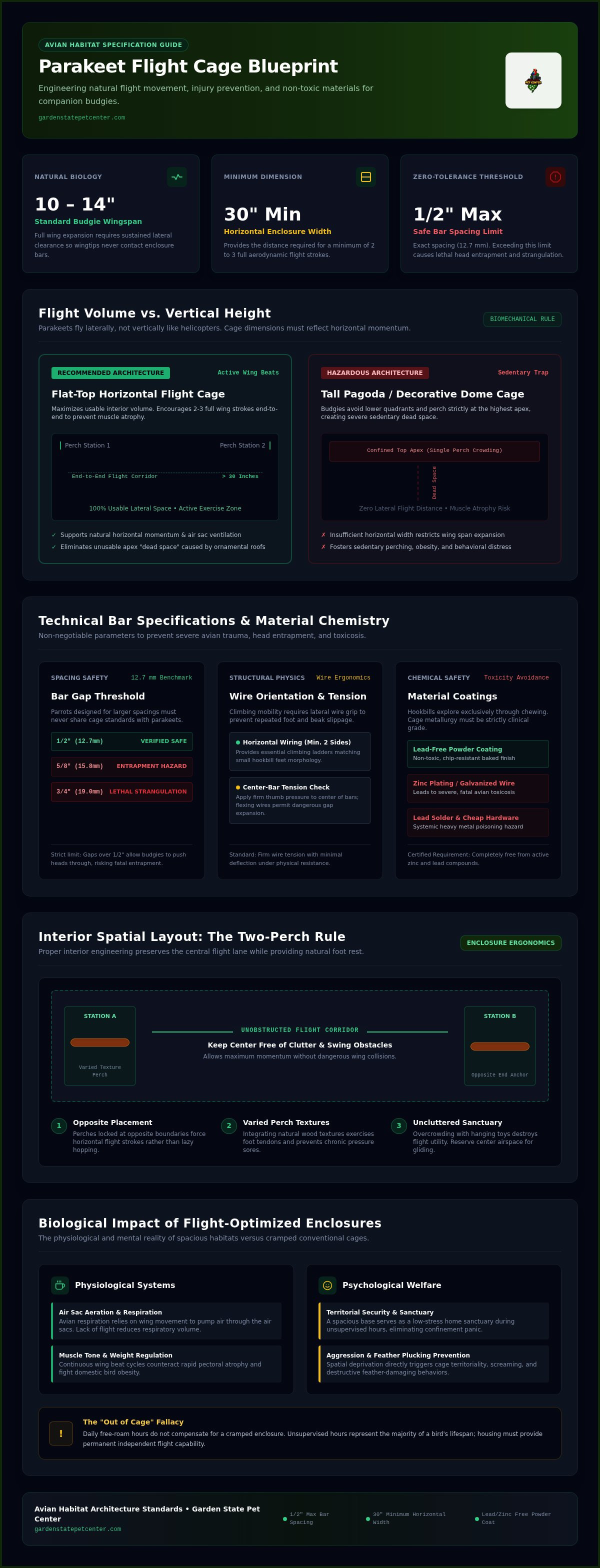
Parakeets don't fly like helicopters; they don't move straight up and down. They are lateral fliers that require a long, horizontal path to gain momentum. Tall, narrow cages create "dead space" where the bird simply sits on the highest perch and ignores the rest of the enclosure. For a single bird with a wingspan of 10 to 14 inches, you need a minimum horizontal width of 30 inches. This allows them to perform at least two or three full wing beats before reaching the other side, which is essential for maintaining muscle tone.
The "Out of Cage" Fallacy
Even if your bird enjoys several hours of free-roam time, they still need a spacious home base. A bird's cage is its sanctuary. It's where they eat, sleep, and find security when they feel overwhelmed. Relying on "out of cage" time to make up for a tiny enclosure is a mistake because it leaves the bird confined during unsupervised hours. A large flight cage ensures they stay active and safe even when you aren't home to watch them. It provides a consistent territory where they can play and forage without constant human supervision.
Technical Specifications: Bar Spacing and Material Safety
Safety is the foundation of any high-quality habitat. When you begin comparing flight cages for parakeets, the technical specifications are far more than just a list of dimensions. They are the safeguards that prevent tragic accidents and long-term health complications. A well-constructed enclosure should feel sturdy, look professional, and prioritize the unique physical needs of small hookbills. If you're ready to upgrade your bird's home, you can explore our selection of bird cages and enclosures designed with these exact safety standards in mind.
The Danger of Improper Bar Spacing
For budgies and other small parakeets, bar spacing is a non-negotiable safety metric. The verified maximum safe spacing is 1/2 inch (12.7 mm). Anything wider, such as 5/8-inch or 3/4-inch spacing intended for larger parrots, creates a lethal risk of head entrapment. A parakeet may attempt to squeeze through the bars, leading to strangulation or broken necks if they become stuck. You should always test the bar tension of a new cage by applying firm pressure to the center of the bars; if they flex easily, the spacing could temporarily widen enough to trap a curious bird.
Horizontal bars provide natural rungs for a parakeet's feet and beak to grip, while vertical bars offer no lateral support and often lead to frustrating slips during climbing. Look for cages that feature at least two sides with horizontal wiring to encourage active movement and climbing exercise throughout the day.
Durability and Maintenance Standards
The materials used in your cage construction directly impact your bird's longevity. Zinc and lead are common heavy metals found in low-quality coatings and galvanized hardware, which lead to fatal avian toxicosis. Clinical standards identify blood serum levels above 2.0 ppm of zinc as diagnostic of toxicity. To avoid this "new wire disease," choose enclosures made from 304-grade medical stainless steel or wrought iron treated with non-toxic, lead-free powder coating. For 2026, the industry standard remains high-heat-treated powder coating, which is flake-resistant and stands up to the powerful beaks of active parakeets.
- Dual Tray Systems: Look for a design that separates the bottom safety grille from the waste tray by a 1-to-2-inch buffer.
- Safety Latches: Ensure all doors use bird-proof "land-and-lock" mechanisms rather than simple tension springs.
- Non-Toxic Hardware: Verify that hinges, food bowl holders, and toy clips are made from stainless steel rather than zinc-plated alloys.
Hygiene is just as vital as structural safety. Pull-out metal trays and removable bottom grates allow you to clean the enclosure without reaching inside and disrupting your bird's territory. These features save time and ensure that your parakeet isn't walking in fallen droppings or foraging in spoiled food, which is essential for preventing bacterial infections.
Comparing Flight Cage Styles: Finding the Best Fit
While dimensions and bar spacing provide the foundation of a safe habitat, the physical silhouette of your enclosure determines how it functions in your daily life. Selecting the right style of flight cages for parakeets involves balancing your bird's need for unobstructed space with your home's layout. Many owners are initially drawn to decorative dome-top or pagoda-style cages because they look like classic furniture. However, these curved designs often create "dead space" at the top where birds cannot comfortably fly or perch. Rectangular models are almost always superior for supporting the lateral flight patterns parakeets use in the wild.
For households with multiple birds, breeder-style flight cages offer excellent versatility. These models typically feature a slide-out central divider. This allows you to create two separate living areas for bird introductions or to manage occasional territorial disputes. When the divider is removed, it transforms back into a single, expansive corridor that maximizes flight volume. This modular approach is much more efficient than buying several smaller cages that clutter your living space.
The Case for Flat-Top Enclosures
Flat-top enclosures are the professional choice for functional bird keeping. Unlike dome-tops, a flat roof serves as a secondary landing platform during supervised out-of-cage time. You can easily place a tabletop play gym or a foraging station on the roof, creating a centralized activity hub. This design also ensures better light penetration to the bottom of the habitat, as there are no decorative peaks to cast shadows. If you use specialized avian UV lighting, flat-top cages provide a stable, level surface for mounting fixtures at the correct distance to ensure your bird receives the full spectrum of health benefits.
Integrated Stand Benefits
High-quality flight cages for parakeets usually include a dedicated rolling stand with heavy-duty casters. This setup isn't just about mobility; it's about social bonding. A stand keeps the habitat at an ergonomic eye level, which is essential for building trust with your bird. Parakeets feel more secure when they aren't positioned low to the ground where they might feel vulnerable. These stands also provide a practical storage shelf for your Premium Pet Food, toys, and cleaning accessories. Being able to move the entire enclosure easily makes deep cleaning the surrounding area much faster and allows you to reposition your bird for social interaction or better sunlight throughout the day.
Optimizing the Interior: Perch Placement and Flight Paths
Arranging the interior of flight cages for parakeets is just as critical as the external dimensions. If you clutter the central area with ladders and swings, you effectively negate the benefit of a wide enclosure. The goal is to create an environment that encourages movement while maintaining a safe, open corridor for flapping. Proper layout ensures your bird doesn't just sit in one spot but actively uses every cubic inch of its habitat.
Creating a Dynamic Flight Path
The "Two-Perch Rule" is the most effective way to optimize flight. Place two main perches at the extreme lateral ends of the cage. This setup forces your bird to fly across the entire horizontal width to move between resting spots. Ensure there is enough wing clearance by keeping the middle third of the cage completely free of hanging accessories. If you want to include ladders or swings, stagger them along the back wall or at different heights to encourage vertical climbing without blocking the primary flight path.
Foot health is another vital consideration that depends on your interior choices. Using uniform wooden dowels creates constant pressure on the same part of the foot, which often leads to pododermatitis, also known as bumblefoot. Avian veterinarians recommend using varied diameters between 3/8-inch and 3/4-inch to keep the feet healthy. Consider these essential perch types:
- Natural Wood: Untreated hardwoods like manzanita or dragonwood provide the varied textures needed for foot exercise.
- Cotton Rope: These offer a soft surface for resting and help reduce joint strain in older birds.
- Calcium Perches: These serve a dual purpose by maintaining beak health and providing essential minerals.
Foraging and Enrichment Layouts
Once the flight path is clear, you can strategically place Bird Toys to stimulate cognitive health. Foraging mimics the natural wild behavior of parakeets that spend much of their day searching for food on the ground or in trees. By placing foraging toys near the bottom of the cage, you encourage your bird to explore the lower levels of its home. Comfort items, such as soft resting spots, should stay at the highest points where birds feel most secure during rest.
Food and water station logistics are often overlooked. Don't place bowls directly under perches, as this leads to immediate contamination from droppings. Instead, mount them on the sides of the cage in the lower half to prevent "waste rain" and to encourage your bird to descend from its favorite high perches. Rotating your layout every few months is a simple way to prevent boredom and discourage territorial aggression. If you're looking for new ways to keep your pet engaged, browse our collection of avian enrichment tools to find the perfect fit for your bird's personality.
Long-Term Care and Avian Health Integration
Your choice of habitat is the cornerstone of a proactive wellness plan. High-quality flight cages for parakeets provide the physical foundation for a long, healthy life, but they work best when integrated with professional care routines. Think of the enclosure as a gym; it provides the equipment, but you must still manage the overall health schedule. Investing in a durable, medical-grade habitat now prevents the stress and expense of frequent replacements as cheaper models begin to rust or flake.
Physical activity within a spacious corridor helps you monitor your bird's condition. If you notice a sudden decrease in flight stamina or a change in how your bird grips its perches, it's often an early warning sign of underlying health changes. While a large cage encourages self-maintenance, Professional Bird Grooming Services remains a vital component of avian care. Properly trimmed nails prevent painful snags on cage bars or toys, while expert beak maintenance ensures your pet can forage and eat comfortably.
Habitat Hygiene and Disease Prevention
Maintaining a large enclosure doesn't have to be overwhelming if you follow a structured rhythm. Replace tray liners daily to prevent the buildup of bacteria and mold. Perform a deep scrub once a week using avian-safe disinfectants that won't irritate sensitive respiratory systems. If you're housing multiple birds in a single flight cage, Avian DNA Sexing is a critical diagnostic tool. It allows you to tailor nutrition for egg-laying females and helps you manage social dynamics to reduce territorial stress within the group.
The Garden State Pet Center Standard
We pride ourselves on being more than just a retailer; we're a service-oriented resource for the avian community. Our team carefully vets every habitat we carry to ensure it meets the highest standards for non-toxic materials and structural integrity. We understand that selecting flight cages for parakeets involves many variables, from bar gauge to door mechanisms. Our experts are ready to guide you through these choices to find the perfect forever home for your companion. With our nationwide shipping, you can access premium avian enclosures and accessories no matter where you're located.
Elevate Your Bird's Daily Experience
Selecting the right habitat is the most significant step toward ensuring your parakeet lives a vibrant, active life. By prioritizing horizontal flight paths and strictly adhering to the 1/2-inch bar spacing standard, you eliminate the most common risks to avian safety. A high-quality enclosure isn't just a purchase; it's a commitment to your pet's physiological and psychological well-being. The right environment allows your bird to display natural behaviors, reducing stress and promoting long-term health.
At Garden State Pet Center, we bring decades of exotic bird expertise to every product we offer. Our team has carefully vetted our entire inventory for non-toxic materials and lead-free powder coatings, ensuring your pet's environment remains a safe sanctuary. Whether you're a first-time owner or a seasoned hobbyist, our reliable flight cages for parakeets are designed to meet the highest industry standards for 2026. We provide nationwide shipping on all bird enclosures to help you provide the specialized care your parakeet deserves.
Shop Our Curated Collection of Premium Bird Cages to find the perfect home for your feathered companion. Your bird's journey to a healthier, happier life starts with a solid foundation.
Frequently Asked Questions
What is the absolute minimum size for a parakeet flight cage?
The absolute minimum size for a parakeet flight cage is 30 inches in width, 18 inches in depth, and 18 inches in height. This horizontal width is essential because it allows a budgie to perform at least two full wing beats between perches. While tall cages look impressive, they often provide dead space that birds rarely use. Always prioritize the widest footprint possible to ensure your pet maintains healthy muscle tone and respiratory function.
Can I use a flight cage designed for larger parrots for my parakeet?
You should never use a cage designed for larger parrots for your parakeet due to dangerous bar spacing. High-quality flight cages for parakeets must have a strict 1/2-inch maximum gap between bars. Larger cages often have 3/4-inch or 1-inch spacing, which creates a high risk of fatal head entrapment. Even if the cage is massive, the risk of your bird getting stuck or escaping makes it entirely unsuitable for smaller species.
How often should I clean a large flight cage?
You should perform a basic cleaning every day and a comprehensive deep clean once a week. Daily maintenance involves replacing tray liners and washing food and water bowls to prevent bacterial growth. Once a week, remove all perches and toys to scrub the bars with an avian-safe disinfectant. Regular hygiene prevents respiratory issues and keeps the environment fresh, which is especially important for large, permanent habitats kept in your main living area.
Is powder coating safe if my parakeet chews on the bars?
High-quality powder coating is safe for parakeets that chew on bars, provided it is verified as lead-free and non-toxic. At Garden State Pet Center, we vet all our enclosures for these safety standards to prevent heavy metal poisoning. Modern powder coatings are heat-treated to be extremely durable and flake-resistant. This ensures that even the most active chewers don't ingest harmful materials during their daily climbing and play sessions.
Do I need a different cage if I have two parakeets instead of one?
If you house two parakeets, you don't necessarily need a different style of cage, but you must ensure the width is at least 30 to 32 inches. A bonded pair needs enough room to fly past one another without colliding. While the minimum requirements for one bird are similar to those for two, adding a second bird means you'll need more perches at opposite ends to prevent territorial disputes over prime resting spots.
What is the best material for a bird cage stand?
Wrought iron or powder-coated steel is the best material for a bird cage stand because of its stability and weight. Parakeets are active, and a flimsy stand can wobble or tip during vigorous flight. Look for stands that include heavy-duty, 360-degree casters for easy mobility. This allows you to move the habitat for cleaning or social interaction while providing a sturdy shelf for storing your bird's premium food and accessories.
Can I put my parakeet in a flight cage immediately after purchase?
You can place your parakeet in a flight cage after purchase, but you should always wash the new enclosure first. Manufacturing processes often leave behind dust or residues that can irritate a bird's sensitive lungs. Use a mild soap and water solution followed by a thorough rinse. If you're introducing a new bird to your home, remember to follow standard quarantine protocols before moving them into a shared flight cage with existing pets.
Are horizontal bars better than vertical bars for budgies?
Horizontal bars are significantly better than vertical bars for budgies and other small parakeets. These birds are natural climbers that use their beaks and feet to navigate their environment. Horizontal wiring provides stable rungs that allow them to move easily across the cage walls. Vertical bars are much harder to grip and often cause birds to slip, which can lead to frustration or accidental falls during high-energy play sessions.

Article by
Victor Santucci
Victor Santucci is the owner of Garden State Pet Center in Audubon, NJ, where he specializes in premium pet nutrition, exotic animals, and expert-level care. With years of hands-on experience and a passion for helping pets thrive, Victor is dedicated to educating pet owners on proper nutrition, enrichment, and species-specific care. His mission is simple: provide every pet with the highest quality products and every customer with honest, knowledgeable guidance.
Share this post
- 0 comment
- Tags: bird care, budgie cages, cage buying guide, flight cages for parakeets, parakeet cage setup, parakeet wellness, pet bird housing