


2026 Organic Chicken Feed Guide for Backyard Flocks


The USDA organic seal on your poultry bag doesn't guarantee your birds are getting the nutrition they need if that feed has been sitting in a warehouse for six months. It's frustrating to invest in your flock's health only to deal with dusty, nearly expired bags or chickens that simply refuse to eat what you've bought. You want vibrant feathers and those deep, sunset-orange yolks, but high shipping costs and poor quality control often stand in the way. Finding high-quality organic chicken feed online shouldn't feel like a gamble with your birds' well-being.
We're here to help you navigate these challenges by showing you how to select the highest-quality organic poultry nutrition and have fresh-milled rations delivered directly to your door. You'll discover the secrets to choosing feed that stays fresh and provides the bio-available nutrients your hens require. This guide covers everything from the latest 2026 USDA standards and life-stage protein requirements to the best ways to eliminate waste and maximize egg production. Let's ensure your backyard flock thrives with the specialized care they deserve.
Key Takeaways
- Understand the strict USDA certification standards that distinguish true organic poultry feed from simple non-GMO alternatives.
- Identify the ideal protein and calcium ratios needed to produce larger eggs with darker, more nutrient-dense yolks.
- Compare mash, pellet, and crumble textures to reduce feed waste and match your birds' natural foraging preferences.
- Learn how to verify milling dates when purchasing organic chicken feed online to ensure your flock receives maximum nutritional potency.
- Leverage the expertise of a certified pet nutritionist to build a holistic nutrition plan that promotes vibrant plumage and overall bird health.
Why Source Organic Chicken Feed Online? The Quality Standard
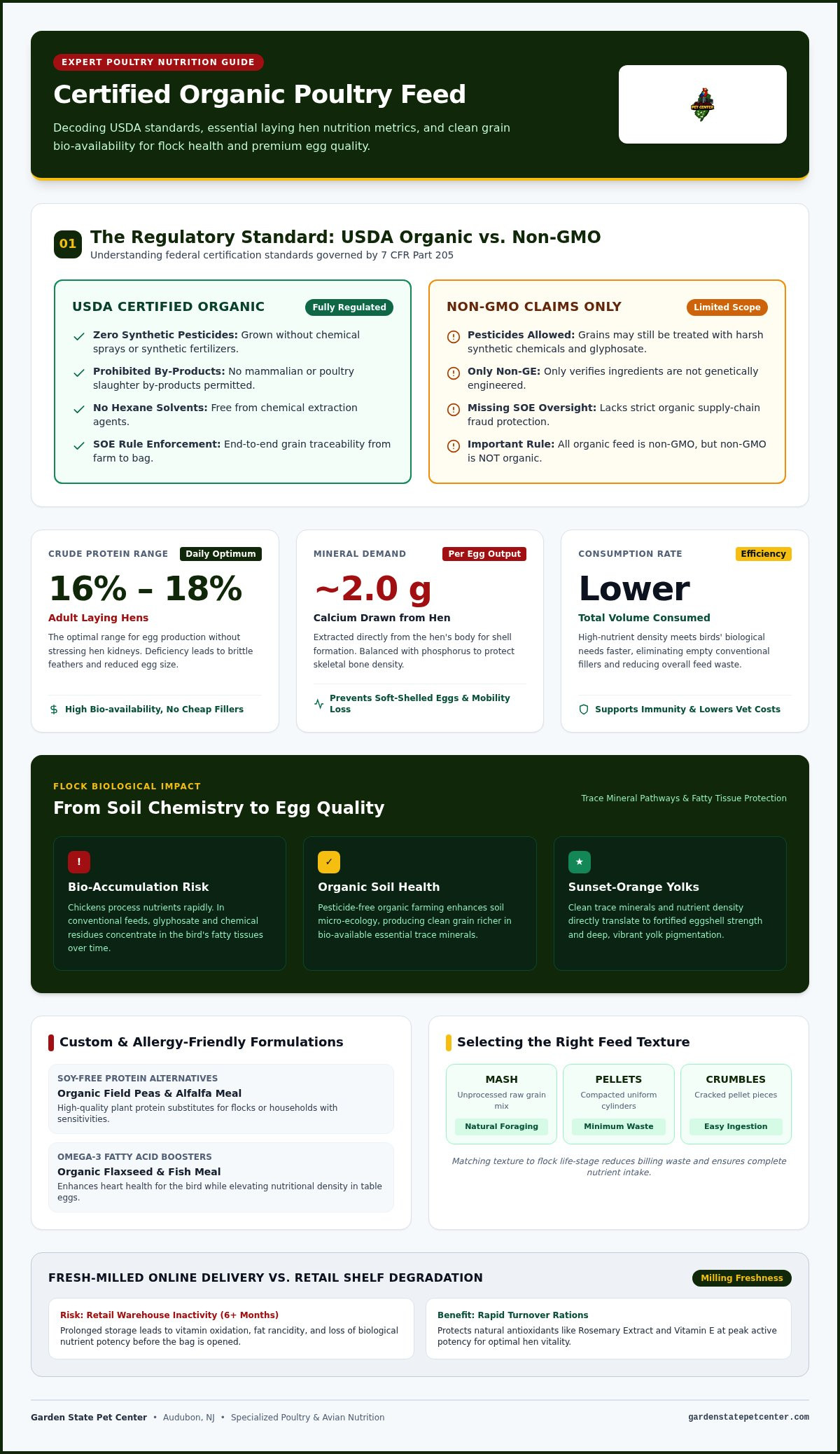
Choosing the right fuel for your flock starts with understanding the labels. When you see the USDA Organic seal, it guarantees the ingredients were grown without synthetic pesticides, fertilizers, or genetically modified organisms. This certification, governed by 7 CFR Part 205, also prohibits the use of mammalian or poultry slaughter by-products and chemical extraction solvents like hexane. Sourcing organic chicken feed online from specialized providers ensures you're getting a product that meets these rigorous national standards without the compromise of mystery fillers.
Don't confuse "Non-GMO" with "Certified Organic." While all organic feed is non-GMO, the reverse isn't true. A non-GMO bag might still contain grains treated with harsh synthetic chemicals during the growing process. Organic certification requires end-to-end traceability, especially under the Strengthening Organic Enforcement (SOE) rule. This ensures every grain in the poultry feed formulations you buy has been tracked from the farm to your doorstep, protecting your birds from fraudulent imports.
The Benefits of Pesticide-Free Grains
Eliminating glyphosate from your birds' diet is a proactive step for long-term health. Because chickens are efficient at processing nutrients, they're also prone to the bio-accumulation of toxins where harmful chemical residues concentrate in the bird's fatty tissues over time. Organic farming practices focus on soil health, which translates to grains richer in trace minerals. These minerals eventually find their way into your eggs, resulting in stronger shells and those sought-after vibrant yolks that indicate a nutrient-dense diet.
Organic vs. Conventional: A Cost-Benefit Analysis
Many flock owners worry about the higher price point of premium rations. However, high-nutrient organic feed often lacks the empty fillers found in conventional brands. Birds frequently consume less total volume because their nutritional requirements are met more efficiently. This preventative approach to nutrition can also reduce potential veterinary costs by supporting a robust immune system. For more context on why high-end ingredients matter for all types of animals, check out the Garden State Pet Center Premium Pet Food Guide.
Freshness is the final piece of the quality puzzle. Big-box retail shelves often hold bags for months, leading to vitamin degradation and stale fats. When you order organic chicken feed online through a dedicated partner, you're accessing inventory that turns over quickly. Specialized online animal feed retailers such as Liken emphasize this direct-to-consumer model, helping keepers bypass stale warehouse stock in favor of transparently sourced, high-grade nutrition. This means the natural antioxidants like rosemary extract and Vitamin E are still at peak potency when the bag arrives, providing the energy your hens need to stay productive and healthy.
Decoding the Label: Essential Nutrients for Poultry Health
Reading the back of the bag is just as vital as checking the front. When you buy organic chicken feed online, you'll see a guaranteed analysis section. For adult laying hens, the crude protein sweet spot sits between 16% and 18%. This range provides enough fuel for daily egg production without putting undue stress on their kidneys. If protein levels drop too low, egg size decreases and feathers may become brittle. High-quality mixes focus on bio-available protein rather than cheap fillers that pass through the bird without being absorbed.
Eggshells require significant minerals. A single egg takes about 2 grams of calcium from a hen's body. Premium rations ensure a proper balance of calcium and phosphorus to maintain bone density while supporting shell strength. Following the USDA organic standards for livestock and poultry, these minerals must come from clean, approved sources. This ensures your birds aren't ingesting heavy metals or synthetic additives often found in low-grade conventional supplements. Proper mineral ratios prevent soft-shelled eggs and keep your hens mobile and active.
You might notice a rise in soy-free or corn-free formulations. These are excellent choices if you have human family members with sensitivities or if you're looking for specific yolk profiles. Soy-free mixes often use organic field peas or alfalfa meal as protein substitutes. To boost the nutritional value of your eggs, look for ingredients like organic flaxseed or fish meal. These provide essential Omega-3 fatty acids that benefit both the bird's heart health and the quality of the food on your table. Explore our curated selection of premium poultry nutrition options to find the perfect match for your flock's current life stage.
Protein and Amino Acid Profiles
Amino acids are the building blocks of life. Methionine and Lysine are particularly critical because chickens can't produce them naturally. In organic diets, synthetic methionine is strictly capped at 2 pounds per ton for layers, so high-quality protein sources like organic sunflower meal or crab meal are used to fill the gap. Matching the protein percentage to your flock's age is the best way to ensure steady growth and consistent laying.
| Life Stage | Crude Protein % | Calcium % |
|---|---|---|
| Chick Starter (0-8 weeks) | 18% - 22% | 0.8% - 1.2% |
| Grower/Developer (8-18 weeks) | 15% - 18% | 0.8% - 1.2% |
| Layer (18+ weeks) | 16% - 18% | 3.25% - 4.5% |
Vitamins and Probiotics for Immune Support
A healthy gut is a healthy bird. Many premium organic feeds now include prebiotics and probiotics to support the digestive tract. This is especially helpful during times of stress, like molting or extreme weather changes. Vitamin E and Selenium also play a major role in reproductive health and immune response. Our on-site certified pet nutritionist often recommends choosing a feed that includes these elements rather than adding them separately. This prevents you from accidentally diluting the carefully balanced ration your birds need to thrive.
Mash, Pellets, or Crumbles: Selecting the Right Texture
The physical form of your feed is just as important as the ingredients inside. When you browse for organic chicken feed online, you'll generally find three textures: mash, pellets, and crumbles. Mash consists of whole or cracked grains that haven't been processed into a uniform shape. While it encourages natural foraging, it often leads to selective feeding. Birds will pick out the "tasty" bits, like sunflower seeds or cracked corn, and leave the essential vitamin-rich mineral dust at the bottom of the feeder. Pellets solve this by compressing the entire backyard flock nutritional requirements into one uniform cylinder, ensuring every bite is balanced.
Fermenting feed has become a popular gut-health hack for backyard keepers. If you plan to ferment, mash is your best friend. Because it isn't heat-treated or compressed, it retains more natural enzymes and absorbs water efficiently, creating a probiotic-rich "porridge" that chickens love. However, if you prefer dry feeding and want to minimize waste, pellets are the gold standard. They flow easily through gravity feeders and are harder for birds to flick out of the tray, which helps keep your coop cleaner and reduces the attraction of pests.
Organic Starter and Grower Diets
Young birds require a texture they can easily manage with their small beaks. Crumbles are the industry standard for organic chick starters because they provide the high-protein density needed for rapid organ development in a bite-sized format. Around week eight, you should transition your flock to a grower mash or pellet. This stage focuses on sustained skeletal framing rather than the rapid growth of the first few weeks. You can find specialized Chicken Food collection options tailored for these early life stages to ensure a smooth transition.
Layer Feed: Sustaining Peak Production
Once your hens reach 18 weeks, their needs shift toward consistent egg production. Layer pellets are often preferred for high-production breeds because they allow birds to consume their daily requirements quickly. This is vital during short winter days when foraging time is limited. Remember that while organic grains provide the foundation, you must still offer free-choice grit and oyster shell. Grit helps the gizzard grind down grains, while oyster shell provides the slow-release calcium needed for strong shells overnight. Choosing the right texture of organic chicken feed online ensures your hens spend less time sorting through their food and more time producing high-quality eggs for your family.
Ordering Online: Ensuring Freshness and Value
Buying organic chicken feed online offers a level of quality control that local big-box stores often lack. The most critical piece of information on any bag isn't the "Best By" date, but the milling date. Because certified organic rations use natural antioxidants like rosemary extract instead of synthetic preservatives like ethoxyquin, the nutritional potency begins to decline faster. Always look for a milling date within the last 30 to 60 days to ensure your birds get the maximum vitamin benefit. A bag that has sat in a humid warehouse for six months won't provide the same results for your flock's feather quality or egg production.
Logistics matter when shipping heavy bags. High-quality vendors offer transparent shipping policies that include insurance for torn bags. It's common for a 40 or 50 pound bag to experience some rough handling during transit. Ensure your provider stands behind their packaging and offers proactive support if a delivery arrives compromised. To get the best value, consider "Subscribe and Save" models. These recurring shipments not only reduce the cost per pound but also ensure you never run out of fresh feed, keeping your birds on a consistent nutritional schedule without sudden diet changes.
Maximizing Your Online Purchase
Before you hit the checkout button, review the shipping zones and weight limits. Some retailers apply freight surcharges for single bags over 40 pounds, while others offer free shipping thresholds that make bulk orders more economical. Use this checklist for a smooth experience:
- Verify the mill date guarantee before ordering.
- Check for bag size options that match your flock's monthly consumption rate.
- Confirm shipping insurance coverage for potential transit damage.
Bundling your order can save on total shipping costs and streamline your errands. Consider adding items from our Bird Toys and Accessories collection to your recurring feed delivery to keep your backyard flock engaged and active.
Maintaining Feed Integrity at Home
Once your order arrives, your storage method determines how long those nutrients last. Organic oils are highly susceptible to oxidation, which can lead to rancidity if the feed is exposed to heat or direct sunlight. Transfer your feed into airtight, pest proof containers immediately. While conventional feeds with synthetic preservatives might last six months or longer, organic milled feed has an active shelf life of 90 to 120 days. Keeping your bins in a cool, dark area is mandatory for preserving the fatty acids and vitamins your birds need for peak health.
Ready to upgrade your flock's nutrition? Order your fresh milled organic poultry supplies today and experience the difference that professional curation makes for your birds.
Why Garden State Pet Center is Your Partner in Poultry Nutrition
We aren't just another generic online shop. Since 1990, our team has dedicated itself to the health and welfare of specialized animal groups, building a reputation for reliability and excellence. When you search for organic chicken feed online, you're looking for more than just a bag of grain; you're looking for peace of mind. Our team brings over 30 years of specialized expertise to every order, ensuring that the products reaching your coop meet the highest standards for purity and nutrition. We operate as a service-oriented resource, treating your backyard flock with the same clinical precision and empathy we give to our own birds.
Our family-owned approach means we prioritize relationships over transactions. We understand the unique challenges of keeping a healthy flock, from managing seasonal molts to maintaining shell quality in high-production hens. By choosing us as your partner, you gain access to a knowledgeable neighbor who understands the science behind the scoop. We take the guesswork out of poultry care, providing fresh-milled options that support your birds through every life stage.
Expert Curation Over Mass-Market Retail
Generalist retailers often stock whatever is cheapest or easiest to move through a warehouse. We take a different approach. Every brand in our inventory undergoes a strict vetting process overseen by our on-site certified pet nutritionist. We prioritize ingredient transparency and ethical sourcing, focusing on holistic diets that support long-term vitality. This level of care extends across all our departments, which you can see in our Bearded Dragon Food Guide. Whether you're feeding a layer hen or an exotic reptile, our standards for bio-availability and ingredient quality never waver.
Our Commitment to Your Flock's Longevity
Choosing the right diet is a journey, not a one-time transaction. We offer nationwide shipping for all our poultry supplies, bringing professional-grade organic chicken feed online directly to your doorstep regardless of your location. If you're unsure about transitioning textures or need advice on protein levels for a specific breed, our team is ready to provide personalized recommendations. We value ongoing relationships and offer loyalty programs designed to make premium, specialized care more accessible for every hobbyist. Don't settle for dusty, mass-produced grains when you can consult with a knowledgeable partner who truly cares about your birds' well-being. Shop our curated selection of premium bird food today! and give your flock the nutritional foundation they deserve to thrive.
Elevate Your Flock's Nutrition Today
Providing your birds with elite nutrition requires more than just picking a bag with an organic seal. You now have the tools to decode complex labels, select the ideal texture for your birds' age, and verify milling dates for maximum freshness. By focusing on bio-available proteins and essential minerals, you're investing in the long-term health of your hens and the quality of every egg they produce. Finding the right organic chicken feed online is the first step toward a more vibrant, productive backyard coop.
Garden State Pet Center is proud to be your partner in this journey. As a family-owned expert since 1990, we offer the specialized care and professional guidance your animals deserve. Our on-site certified pet nutritionist curates our entire inventory to ensure it meets strict holistic standards. Take advantage of our nationwide shipping to have fresh, premium rations delivered directly to your doorstep. Shop Premium Organic Chicken Food & Supplies and give your birds the foundation they need to thrive. We're excited to see your flock reach its full potential.
Frequently Asked Questions
Is organic chicken feed really worth the extra cost?
Organic feed is worth the investment because it prioritizes nutrient density over cheap fillers. You'll likely notice your birds consume slightly less volume because their biological needs are met more efficiently. By avoiding synthetic pesticides and glyphosate, you reduce the bio-accumulation of toxins in your flock. This proactive approach to nutrition often leads to lower long-term health costs and produces eggs with superior mineral profiles and vibrant yolk colors for your family.
How long does organic chicken feed stay fresh after opening?
Organic feed typically stays fresh for 90 to 120 days from the milling date when stored properly. Unlike conventional options, these formulas rely on natural antioxidants like Vitamin E and rosemary extract, which have a shorter shelf life than synthetic preservatives. For maximum potency, we recommend using your supply within 30 to 60 days of arrival. Always keep your bags in airtight, pest proof containers located in a cool, dark environment to prevent oil oxidation.
Can I mix organic feed with conventional feed during a transition?
You can certainly mix organic and conventional rations during a transition period. We suggest a gradual 7 to 10 day shift to allow your birds' digestive systems to adjust to the new nutrient levels and textures. Start with a ratio of 25% organic to 75% conventional, slowly increasing the organic portion every few days. This steady approach prevents the stress of sudden dietary changes, ensuring your hens maintain consistent egg production throughout the switch.
What is the difference between soy-free and regular organic feed?
The main difference lies in the protein source used to meet avian requirements. Regular organic feed typically utilizes organic soybean meal, while soy-free versions substitute this with field peas, flaxseed, or alfalfa meal. Soy-free options are ideal for flock owners with human soy allergies or those seeking a specific fatty acid profile in their eggs. Both varieties meet strict USDA standards, but soy-free formulations often result in a slightly different yolk pigmentation and flavor.
How much feed should I order online for a flock of six chickens?
A flock of six chickens typically requires one 40 or 50 pound bag per month. On average, a standard production hen consumes about 0.25 pounds of feed daily, meaning six birds will eat roughly 1.5 pounds total each day. Ordering organic chicken feed online in these increments ensures your supply stays fresh without sitting in storage too long. Setting up a recurring monthly shipment is the most efficient way to maintain a consistent feeding schedule.
Does organic feed help chickens lay more eggs?
While organic feed doesn't necessarily force a hen to lay more than her genetic potential, it ensures she stays in peak production longer. Proper ratios of 16% to 18% protein and 3.25% to 4.5% calcium prevent the nutritional deficiencies that cause laying pauses. High-quality organic grains provide the bio-available energy needed to sustain a consistent laying cycle, especially during the demanding winter months or throughout the peak of the summer heat.
What should I do if my chickens refuse to eat a new organic mash?
If your birds are being picky with a new mash, try fermenting it or adding a small amount of warm water to create a wet crumble. Chickens are creatures of habit and often engage in selective feeding, picking out large grains while leaving the vital mineral fines. Wetting the feed binds the nutrients together, making it impossible for them to sort through the bits. This technique often increases consumption and reduces the waste typically seen with dry mash.
Is all organic chicken feed non-GMO?
Yes, all certified organic chicken feed online is inherently non-GMO. The USDA National Organic Program regulations strictly prohibit the use of genetically modified organisms at any stage of the agricultural process. While a product labeled simply "non-GMO" can still be treated with synthetic pesticides or fertilizers, a certified organic product provides a higher tier of quality. Choosing organic ensures your flock receives grains that are both non-GMO and grown in healthy, chemical-free soil.

Article by
Victor Santucci
Victor Santucci is the owner of Garden State Pet Center in Audubon, NJ, where he specializes in premium pet nutrition, exotic animals, and expert-level care. With years of hands-on experience and a passion for helping pets thrive, Victor is dedicated to educating pet owners on proper nutrition, enrichment, and species-specific care. His mission is simple: provide every pet with the highest quality products and every customer with honest, knowledgeable guidance.
Share this post
- 0 comment
- Tags: backyard chickens, chicken feed delivery, egg production, flock care, hen diet, organic chicken feed, organic chicken feed online, poultry nutrition, USDA organic