

Best Non-GMO Backyard Chicken Feed: 2026 Flock Nutrition Buying Guide


The cleanest-looking bag on the feed store shelf might actually be shortchanging your hens on vital amino acids. Finding the best non gmo backyard chicken feed shouldn't feel like an exhausting chore, yet sorting through certified organic seals, soy-free blends, and vague ingredient lists leaves many dedicated keepers second-guessing their daily rations. You want wholesome, chemical-free eggs from vibrant, active birds, but you also need genuine assurance that your flock receives the balanced fuel required for steady laying and long-term skeletal health.
Discover how to evaluate ingredient transparency, verify clean formulations, and match life-stage nutrition to your flock's unique biological needs. We'll demystify the critical protein targets and calcium ratios required to maximize eggshell density, compare whole-grain mashes against pellets and crumbles to eliminate feeder waste, and guide you toward dependable nutrition you can trust across every stage of growth.
Key Takeaways
- Learn how choosing clean non gmo backyard chicken feed limits flock exposure to synthetic pesticide residues and encourages richer, nutrient-dense eggs.
- Compare the physical mechanics of mash, pellets, and crumbles to minimize billing out and stop coop feeder waste.
- Master precise crude protein and calcium ratios across starter, grower, and layer stages to prevent life-threatening organ stress.
- Decode guaranteed analysis labels to easily separate nutrient-rich whole grains from low-grade milling by-products and fillers.
- Implement a gentle blending schedule that protects your flock's delicate digestive microbiome during dietary transitions.
Why Non-GMO Backyard Chicken Feed Matters for Egg Quality and Flock Health
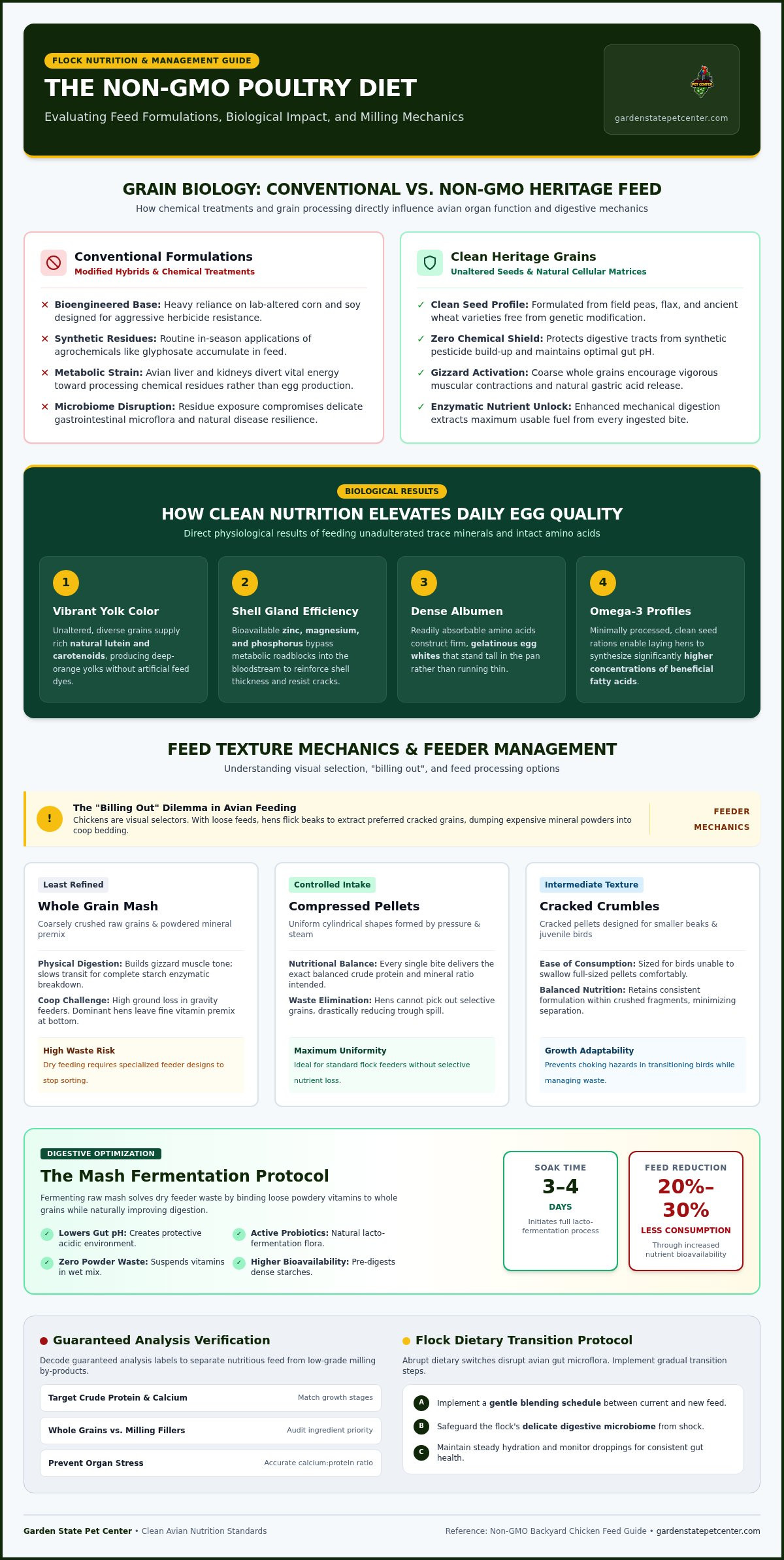
Choosing quality non gmo backyard chicken feed means providing rations cultivated strictly from seeds that haven't been genetically altered in a laboratory. Standard commercial rations rely heavily on bioengineered corn and soy, crops that routinely receive aggressive applications of synthetic herbicides like glyphosate during the growing season. Feeding clean grains shields your birds from cumulative chemical residues, protecting their sensitive gastrointestinal tracts. When gut microflora remain balanced and undisturbed, hens absorb dietary nutrients far more efficiently, building natural vitality and resilience against environmental stress.
The Biological Difference Between Conventional and Clean Grains
Conventional poultry diets lean heavily on modified hybrid crops designed to endure systemic chemical sprays. Processing these synthetic agricultural residues places unnecessary metabolic strain on an avian liver and kidneys, diverting energy away from immune response and daily laying. Clean heritage grains, including field peas, flax, and ancient wheat varieties, preserve their natural cellular matrices. These unaltered whole grains engage a chicken's muscular gizzard as nature intended. The coarse, clean feed encourages vigorous muscular contractions and healthy gastric acid production, unlocking vital enzymes that help birds extract maximum usable fuel from every bite.
Impact on Daily Egg Quality and Nutritional Density
The daily ration in your coop directly dictates the nutritional profile of your morning breakfast. Feeding unadulterated rations ensures that bioavailable trace minerals like zinc, magnesium, and phosphorus bypass heavy metabolic roadblocks, moving straight into the bloodstream to support shell gland function. This mineral efficiency produces thick, durable eggshells that resist hairline cracks and bacterial intrusion.
- Vibrant Yolk Color: Unaltered, diverse grains deliver natural lutein and carotenoids, creating rich, deep-orange yolks without artificial coloring additives.
- Elevated Omega-3 Profiles: Hens consuming clean, minimally processed seed formulations synthesize higher concentrations of beneficial fatty acids.
- Dense Albumen Structure: Readily absorbable amino acids produce firm, gelatinous egg whites that stand tall in the skillet rather than running thin.
Investing in thoughtful avian nutrition transforms your daily gathering basket, ensuring every egg offers exceptional flavor, dense nutrition, and complete peace of mind. Explore our specialized selection of clean chicken food to support your flock with the balanced nourishment they deserve.
Comparing Feed Textures: Mash vs. Pellets vs. Crumbles
Feed milling determines far more than appearance; it dictates how your flock consumes their daily calories. Choosing the right non gmo backyard chicken feed involves matching your flock's natural foraging habits with the proper physical texture. Unprocessed mash, compressed pellets, and cracked crumbles each interact differently with avian digestion and coop feeder mechanics.
Chickens are natural visual selectors. When offered loose, multi-textured meals, hens use their beaks to flick aside less appealing components in search of favorite cracked seeds. This behavior, known as "billing out," sends substantial amounts of expensive feed straight into the bedding. Understanding the engineering behind each texture prevents frustrating coop waste and ensures your birds ingest their complete ration.
Whole Grain Mash and Fermentation Suitability
Mash consists of coarsely crushed raw seeds, grains, and finely powdered mineral premixes. It provides the least refined presentation possible, demanding rigorous mechanical effort from the gizzard to break down intact seeds. This physical workload builds gizzard muscle tone and slows digestive transit, giving enzymes plenty of time to break down starches.
Dry mash fed through standard hanging gravity feeders often leads to heavy ground loss. Dominant hens quickly scoop out visible grains, leaving behind the fine, powdery vitamin and mineral premix at the bottom of the trough. Fermenting your mash solves this issue entirely. Soaking the mix in fresh water for 3 to 4 days initiates lacto-fermentation. This process binds the loose powders to the grains, introduces beneficial probiotics, naturally lowers gut pH, and can reduce overall flock feed consumption by 20% to 30% by increasing nutrient bioavailability.
Pellets and Crumbles for Controlled Intake
Pellets compress ground grains, proteins, and minerals into uniform cylindrical shapes using mechanical pressure and steam. Every single bite delivers the exact same nutritional ratio, completely eliminating selective sorting in the feeder. Pellets flow cleanly through automatic hoppers and gravity tubes without jamming, even during humid summer mornings.
- Uniform Pellets: Ideal for mature laying hens. Pellets speed up feeding time and drastically cut coop floor waste, ensuring non-dominant hens receive full vitamin fortication.
- Crumbles: Pellets cracked into bite-sized morsels. They provide a manageable size for growing pullets, bantams, or smaller heritage breeds that struggle to swallow standard adult pellets.
Finding the ideal match between feeder style and texture keeps your coop cleaner and your feed budget efficient. If you want personalized advice on selecting the right balance for your setup, explore our specialized bird food selections to keep your birds thriving.
Life-Stage Nutrition: Choosing Starter, Grower, and Layer Rations
Precision feeding requires adjusting dietary profiles as birds mature physically. Selecting the right non gmo backyard chicken feed means matching crude protein targets and mineral ratios to distinct developmental windows. A single formula cannot safely sustain a bird from hatch through egg production; feeding adult layer rations to young pullets introduces dangerous calcium levels that trigger irreversible kidney damage and visceral gout.
Carefully review the guaranteed analysis tag on every bag you buy. You'll want to verify adequate levels of indispensable amino acids like lysine and methionine, which fuel rapid feathering, tissue repair, and ongoing reproductive stamina.
Chick Starter Rations for Healthy Early Growth
Brooding chicks require concentrated fuel during their first six weeks of life. Quality starter formulas deliver 18% to 20% crude protein to build dense muscle mass, support rapid skeletal expansion, and accelerate early feather development. Keep calcium restricted between 0.8% and 1.2% to protect immature renal tubules.
Look for clean starters fortified with natural oregano essential oils, prebiotics, and targeted yeast cultures. These botanicals gently nurture fragile chick biomes without relying on synthetic medication, establishing early immune vigor.
Grower and Developer Formulations
Between seven and eighteen weeks of age, pullets transition into a steady skeletal developmental phase. Switch your flock to a grower ration with 15% to 18% crude protein. Moderating dietary protein prevents aggressive, premature growth spurts that can stress immature joints.
- Targeted Calcium: Maintain calcium near 1.0% to keep bone growth steady without overworking the kidneys.
- Balanced Phosphorus: Ensure adequate available phosphorus to build strong, structural pelvic bones capable of sustaining future egg production.
Layer Feeds Engineered for Heavy Production
Once pullets reach eighteen weeks or present their first egg, their physiological priorities change dramatically. A single egg contains approximately 2 grams of pure elemental calcium, demanding layer rations fortified with 3.5% to 4.5% calcium alongside 16% to 18% crude protein.
Never rely solely on the calcium blended into pelleted or mash feeds. Active hens deplete bone reserves quickly during consecutive laying cycles. Always offer coarse crushed oyster shell or limestone free-choice in a separate container, allowing individual hens to self-regulate calcium intake without forcing non-laying flock members to overconsume it. If you manage mixed flocks or companion aviaries alongside your coop, explore specialized options in our bird care collection for tailored species-specific diets.
Ingredient Evaluation: Identifying Clean Grains and Problematic Fillers
A feed tag reveals everything you need to know about the integrity of your flock's diet. When reviewing the ingredient list on non gmo backyard chicken feed, look for recognizable, whole-grain sources like cracked corn, barley, wheat, and oats near the top. Ingredients appear in descending order of weight. Steer clear of vague collective terms such as "grain by-products," "roughage products," or "plant protein products." Industrial mills often use these ambiguous catch-alls to mask cheap flour-milling leftovers, peanut hulls, and low-grade chaff that dilute nutritional density.
High-end formulas also avoid synthetic chemical binders like lignin sulfonate and artificial dyes designed to mimic natural carotenoids. Quality feeds rely on nutrient-dense ingredients rather than industrial shortcuts to create cohesive, appealing rations.
Evaluating the Soy-Free vs. Soy-Inclusive Question
Soybean meal remains the most widespread protein source in poultry nutrition because it naturally supplies dense concentrations of lysine and methionine. Even so, many flock keepers actively seek soy-free alternatives due to human dietary intolerances or concerns regarding phytoestrogens and digestive sensitivities in hens. Field peas, flaxseed, and black soldier fly larvae offer exceptional, clean protein replacements. These nutrient-dense alternatives deliver balanced sulfur amino acids without depending on heavily processed legumes.
Functional Botanicals and Essential Mineral Additives
The cleanest feeds fortify whole grains with targeted botanical compounds and marine-derived nutrients that proactively protect digestive wellness.
- Oregano Essential Oil: Rich in active carvacrol and thymol, natural oregano extract provides gentle antimicrobial benefits that help suppress internal coccidial blooms.
- Oceanic Kelp Meal: Dehydrated sea kelp introduces over sixty bioavailable trace minerals, strengthening feather shaft flexibility and improving cellular resistance to heat stress.
- Direct-Fed Microbials: Multi-strain probiotics, including targeted Bacillus and Lactobacillus cultures, populate the gut to actively outcompete pathogenic bacteria.
- Essential Electrolytes: Precisely balanced sodium, potassium, and magnesium ratios maintain hydration and cellular acid-base equilibrium throughout hot afternoons.
Inspect tags closely so you can fuel your flock with absolute confidence. Explore our selection of expert-approved chicken food to secure clean, filler-free nutrition delivered directly to your door.
How to Transition Your Flock to a Premium Non-GMO Diet
Chickens thrive on consistency and show natural suspicion toward sudden changes in their feeder. Swapping feeds overnight shocks the cecal microbiome, causing acute digestive dysbiosis, watery droppings, and sudden drops in daily egg counts. Transitioning to a high-caliber non gmo backyard chicken feed requires a measured approach that allows digestive enzymes and gut flora to adapt comfortably to denser, clean-grain nutrition.
Always provide separate hoppers of insoluble granite grit throughout the shift. Gizzards rely on sharp granite particles to grind coarser whole grains mechanically, ensuring seamless digestion and nutrient absorption.
The Step-by-Step 14-Day Transition Schedule
Patience protects flock performance. Follow this two-week schedule to keep digestion stable and preserve steady egg production:
- Days 1 to 4: Blend 25% new non-GMO ration with 75% familiar feed. Observe feeding behavior to confirm birds aren't avoiding the new texture.
- Days 5 to 8: Mix an even 50/50 split. Check roost droppings every morning; they should remain firm with well-defined white urate caps.
- Days 9 to 13: Increase to 75% new feed and 25% previous feed. Verify that combs remain bright red and fully hydrated.
- Day 14 Onward: Fill feeders with 100% clean non-GMO ration.
If you notice loose stool or erratic laying during any step, hold at that ratio for three additional days before moving forward.
Sourcing Clean Nutrition and Avian Wellness Supplies
Sourcing dependable, fresh-milled non gmo backyard chicken feed shouldn't mean gambling on sporadic stock at local farm stores. Freshness matters, as fragile fatty acids and natural fat-soluble vitamins degrade when bags sit in humid warehouses for months. Partnering with dedicated animal nutrition specialists guarantees your flock receives carefully curated rations free from synthetic by-products.
Convenient nationwide shipping ensures your coop never faces sudden supply disruptions that force unwanted diet changes. Our team has supported specialized avian welfare and holistic diets since 1990, helping flock raisers establish dependable care routines. Discover holistic wellness supplies across our full premium pet food collection to provide your birds with the comprehensive, clean nutrition they deserve.
Elevate Your Flock's Daily Nutrition
Building a vibrant, resilient flock starts right at the feed trough. Providing clean non gmo backyard chicken feed ensures your birds absorb bioavailable amino acids and essential trace minerals without the cumulative burden of synthetic herbicide residues. Whether you choose gut-supporting whole-grain mash for home fermentation or uniform pellets to eliminate feeder waste, matching wholesome formulas to your flock's exact life stage safeguards skeletal bone reserves and fills your kitchen with nutrient-dense eggs.
Caring for your birds should always feel rewarding, straightforward, and dependable. Since 1990, Garden State Pet Center has supported avian enthusiasts and flock owners nationwide with expert-curated holistic diets guided by specialized nutritional standards. Skip the uncertainty of mysterious grain by-products and treat your birds to clean, transparent ingredients. Explore premium avian and poultry nutrition with nationwide shipping to keep your coop active, healthy, and thriving through every laying season.
Frequently Asked Questions
What is the main difference between non-GMO and organic chicken feed?
Organic feed is always non-GMO, but non-GMO feed isn't automatically certified organic. Non-GMO formulas ensure crops grow from non-genetically modified seeds, tested to remain below strict contamination thresholds. Certified organic feeds go a step further by prohibiting synthetic chemical pesticides, chemical fertilizers, and synthetic fungicides during cultivation. While non-GMO poultry rations eliminate lab-altered DNA, only organic certifications strictly regulate the synthetic agricultural sprays used throughout the farming cycle.
Can I feed non-GMO layer feed to my baby chicks or pullets?
No, you should never offer layer rations to young chicks or developing pullets. Layer feeds contain 3.5% to 4.5% calcium to form daily eggshells, whereas growing birds require roughly 1% calcium. Immature avian kidneys cannot filter high calcium concentrations. Excess mineral intake causes irreversible renal damage, hypercalcemia, and fatal visceral gout. Always keep young birds on designated starter or grower formulations until they lay their first egg.
Why do some poultry keepers prefer soy-free non-GMO chicken feed?
Many keepers choose soy-free rations to accommodate human dietary intolerances or bypass concerns about phytoestrogens transferring into table eggs. While soybeans deliver dense natural proteins, unfermented soy contains trypsin inhibitors that can challenge sensitive digestive systems. Choosing soy-free non gmo backyard chicken feed replaces soy meal with wholesome alternatives like field peas, flaxseed, and insect meal, providing balanced sulfur amino acids without potential digestive irritation.
Do chickens need insoluble granite grit when eating non-GMO whole grain feed?
Yes, chickens strictly require insoluble granite grit when consuming whole or cracked grains. Chickens lack teeth to crush food before swallowing. Instead, whole seeds travel to the muscular gizzard, where ingested granite stones grind the kernels into a digestible paste. Without free-choice granite grit, birds eating unprocessed rations risk painful crop impactions, severe nutritional deficits, and chronic digestive blockage because their gizzards cannot break down whole seed hulls.
Will switching my flock to non-GMO feed increase egg production?
Switching to non-GMO feed generally maintains rather than artificially boosts laying frequency, but it significantly elevates internal egg quality. Daily egg counts depend largely on breed genetics and daylight hours. However, clean-label non gmo backyard chicken feed provides bioavailable trace minerals and unprocessed amino acids that strengthen shell durability, thicken albumen, and produce richer yolks. Birds on clean nutrition also exhibit superior immune resilience, resulting in consistent lay cycles.
How should I properly store non-GMO chicken feed to prevent mold and pests?
Store your poultry feed inside airtight, pest-proof metal or heavy-duty food-grade plastic containers kept in a cool, dry area. Clean whole-grain feeds lack synthetic chemical preservatives, making them naturally susceptible to humidity, mycotoxin mold, and grain weevils. Keep containers elevated off damp concrete floors and away from direct sunlight. Buy quantities your flock will consume within four to six weeks so vitamins and fats remain fresh. If you are setting up storage or property infrastructure for your birds, check out Gidge Rural for dependable rural and farm supplies.
Can non-GMO chicken feed be fermented, and what are the benefits?
Yes, whole-grain and mash feeds are ideal candidates for lacto-fermentation. Soaking whole mash in clean water for three to four days encourages beneficial lactic acid bacteria to thrive while lowering the feed's pH. Fermenting unlocks complex starches, synthesizes B-vitamins, and neutralizes phytic acid for superior gut absorption. The resulting wet mash binds powdery mineral fines, eliminating selective sorting and reducing overall flock feed waste by up to 30%.

Article by
Victor Santucci
Victor Santucci is the owner of Garden State Pet Center in Audubon, NJ, where he specializes in premium pet nutrition, exotic animals, and expert-level care. With years of hands-on experience and a passion for helping pets thrive, Victor is dedicated to educating pet owners on proper nutrition, enrichment, and species-specific care. His mission is simple: provide every pet with the highest quality products and every customer with honest, knowledgeable guidance.
Share this post
- 0 comment
- Tags: backyard chickens, chicken feed, egg production, flock nutrition, layer feed, non gmo backyard chicken feed, non-GMO feed, organic feed, poultry health