

Best Bird Calcium Supplements for Egg Laying: 2026 Guide


Hanging a simple cuttlebone in your bird's enclosure might feel like responsible care, but calcium supplementation without metabolic cofactors like vitamin D3 fails laying birds when they need it most. Finding the most effective bird calcium supplements for egg laying requires looking past basic mineral blocks. Because a single eggshell requires roughly two grams of calcium, an unprepared hen quickly depletes her skeletal stores, putting her life at immediate risk.
You already know the dread that accompanies breeding season. The constant worry over fatal egg binding, fragile shells, and exhausting physical depletion keeps every conscientious bird parent on high alert. You shouldn't have to second-guess whether your bird's diet is strong enough to support her reproductive cycle. In this guide, you'll learn how to choose the right bird calcium supplement to protect your laying bird from egg binding and nutritional depletion, clarifying the divide between emergency liquids and daily maintenance powders. We explore the essential roles of vitamin D3 and magnesium alongside precise species routines, giving you complete confidence in your flock's health.
Key Takeaways
- Understand how vital cofactors like vitamin D3 and magnesium allow your hen to mobilize minerals efficiently and protect her delicate skeletal reserves.
- Compare water-soluble powders, blocks, and fast-acting liquids to choose the most bioavailable bird calcium supplements for egg laying for either routine wellness or urgent care.
- Evaluate baseline nutrition from pellets and fresh foods to tailor supplementation precisely to your bird's species profile and reproductive schedule.
- Implement balanced dosing schedules to prevent chronic over-supplementation risks such as hypercalcemia, kidney distress, and visceral gout.
Why Egg-Laying Birds Require Specialized Calcium Support
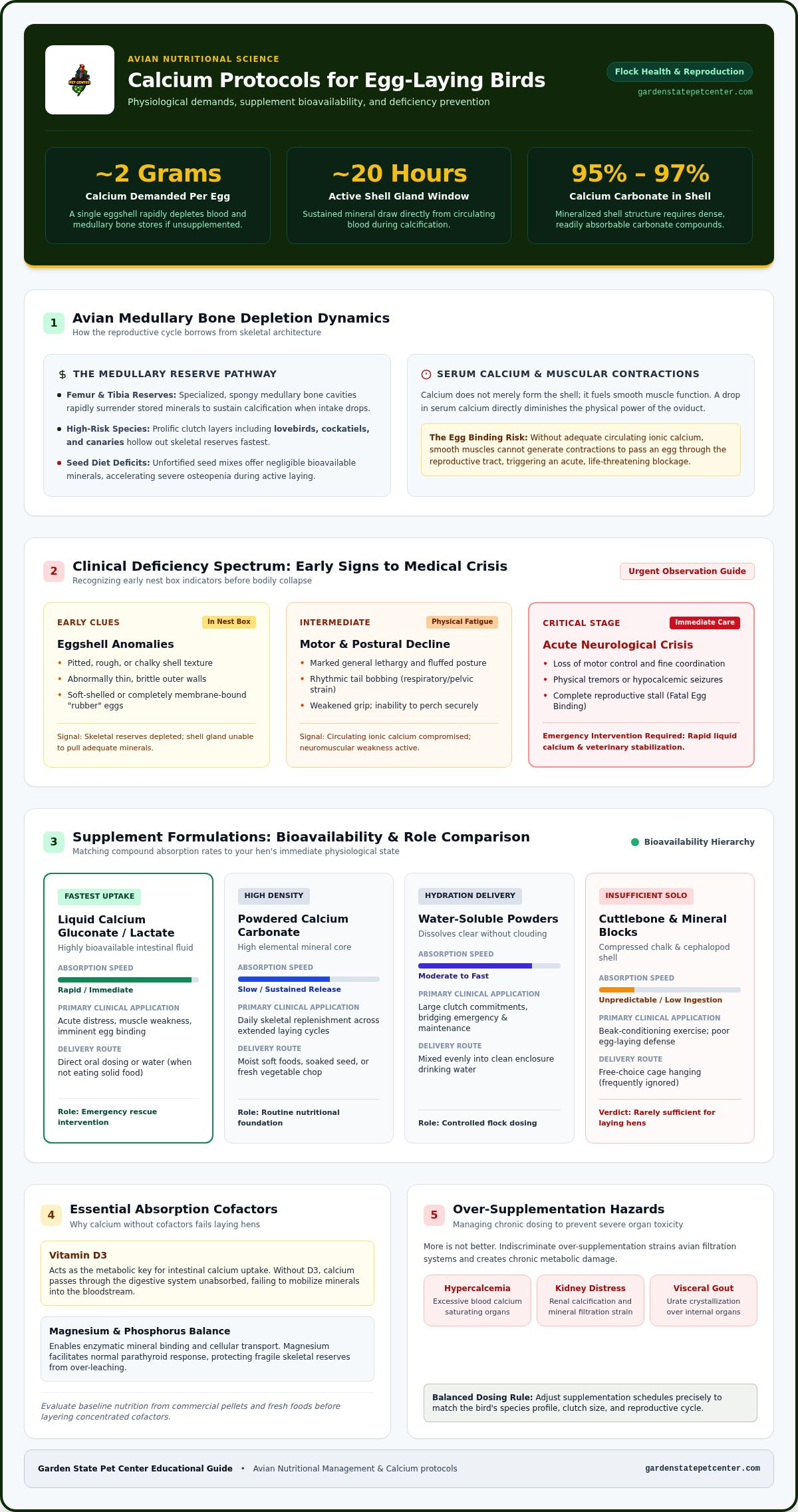
Producing a single egg places an extreme physiological strain on a hen's body. During active shelling, which lasts roughly twenty hours, the shell gland draws vast quantities of calcium directly from circulating blood. Understanding typical eggshell composition highlights why this process is so demanding, as mineralized shells consist of roughly 95 to 97 percent calcium carbonate. Relying solely on basic seed mixes leaves birds critically depleted because seeds offer negligible bioavailable minerals.
To witness how dietary strategies support avian physiology during demanding cycles, watch this informative breakdown:
The Biology of Avian Shell Gland Calcium Depletion
When dietary intake falls short, the hen's body leaches essential minerals from her medullary bone reserves. These specialized, spongy bone cavities inside the femur and tibia rapidly surrender minerals to sustain shell calcification. In prolific layers like lovebirds, cockatiels, and canaries, chronic depletion hollows out these reserves completely. Utilizing reliable bird calcium supplements for egg laying helps maintain high circulating blood calcium, protecting these vital skeletal structures from irreversible osteopenia.
Recognizing Early Deficiencies: From Soft Shells to Egg Binding
Clinical signs of deficiency often appear first in the nesting box before progressing to bodily collapse. Watch for clear developmental anomalies, including:
- Pitted, rough, or abnormally chalky outer shells
- Soft-shelled or completely membrane-bound "rubber" eggs
- Lethargy, tail bobbing, and an inability to perch securely
- Loss of motor control, tremors, or severe hypocalcemic seizures
Low serum calcium impairs the smooth muscle contractions needed to push an egg through the oviduct. Without sufficient muscular tone, eggs stall in the reproductive canal, causing acute, life-threatening egg binding. Providing targeted bird calcium supplements for egg laying ensures dependable oviduct function, preventing reproductive exhaustion before critical medical emergencies take hold.
Evaluating Supplement Types: Powders, Liquids, and Mineral Blocks
Selecting the right formulation depends heavily on your hen's current reproductive status and immediate physiological demands. Bioavailability dictates how quickly calcium enters the bloodstream, making the choice between liquid suspensions, dissolvable powders, and solid blocks a critical health decision rather than a simple preference. Understanding the biological uptake of each compound helps avoid the clinical dangers of improper calcium supplementation, ensuring your bird receives therapeutic support without metabolic strain.
Liquid Calcium Gluconate vs. Powdered Carbonate Formulations
Formulations vary significantly in their absorption pathways and practical applications:
- Liquid Calcium Gluconate and Lactate: Highly bioavailable and rapidly absorbed through the intestinal tract. These liquids serve as urgent interventions during acute reproductive distress, such as imminent egg binding or noticeable muscle weakness. They integrate easily into drinking water or direct oral dosing when a hen stops eating solid food.
- Powdered Calcium Carbonate: Delivers high elemental mineral density with a slower, sustained release. Carbonate powders provide an economical foundation for daily maintenance, blending seamlessly into moist soft foods, soaked seed, or fresh chop mixes for steady skeletal replenishment across extended laying cycles.
- Water-Soluble Powders: Dissolve entirely without clouding, allowing controlled hydration delivery. They bridge the gap between emergency fluids and daily feed additives for birds with large clutch commitments.
Cuttlebone and Mineral Blocks: Why They Are Rarely Enough
Many caregivers assume a cage cuttlebone offers adequate protection. While these compressed chalk items and marine cephalopod remnants provide excellent beak-conditioning exercise, they function poorly as primary egg-laying defense. Birds rarely consume cuttlebone in measured, predictable amounts; they often chew them into dust that falls straight through cage grates. If an active layer ignores the block entirely, her skeletal reserves deplete without warning.
Relying on passive nibbling leaves reproductive hens vulnerable. Prolific layers, such as cockatiels producing clutches of four to six eggs, require exact intake that passive items cannot ensure. To secure precise daily dosing, explore specialized bird calcium supplements for egg laying that mix directly into daily rations. Transitioning from unstructured chewing blocks to measured dietary bird calcium supplements for egg laying provides dependable nutritional defense throughout your hen's entire breeding season.
Essential Absorption Factors: Vitamin D3, Magnesium, and Phosphorus
Pouring calcium into your hen's feed bowl doesn't guarantee her body can use it. Avian mineral absorption relies on an interdependent biochemical triad: vitamin D3, phosphorus, and magnesium. Without these cofactors acting together, ingested minerals pass right through the digestive tract unabsorbed, leaving medullary bone reserves vulnerable. As detailed in the Merck Veterinary Manual on nutritional disorders, unbalanced dietary minerals trigger nutritional secondary hyperparathyroidism, compromising both skeletal density and reproductive vitality.
The Interdependent Role of Cholecalciferol (Vitamin D3)
Vitamin D3 functions as the master hormonal key that unlocks intestinal calcium absorption. Wild birds synthesize cholecalciferol naturally when ultraviolet-B (UVB) rays strike exposed skin and preen gland oils. Standard window glass filters out nearly all natural UVB light, leaving indoor companion birds chronically deficient without dietary intervention. Formulated bird calcium supplements for egg laying include calibrated levels of synthetic vitamin D3 to ensure smooth transport across the gut wall. Keep dosage levels controlled, as excessive vitamin D3 causes metastatic soft-tissue calcification, permanently damaging delicate avian kidneys.
Balancing the Critical Calcium-to-Phosphorus Ratio
Dietary balance requires maintaining a strict calcium-to-phosphorus ratio between 1.5:1 and 2:1. Traditional seed mixes create dangerous metabolic traps because seeds contain excessive phosphorus and negligible calcium. High circulating phosphorus binds available calcium at intestinal receptor sites, effectively blocking absorption.
Protect your laying hen with a balanced feeding protocol:
- Low-Phosphorus Fresh Foods: Pair supplements with dark leafy greens like collards, turnip greens, and dandelion rather than phosphorus-heavy grains.
- Enzymatic Magnesium Support: Ensure your supplement supplies trace magnesium, which acts as the metabolic spark plug for parathyroid regulation.
- Stabilized Mineral Deposition: Proper magnesium levels direct absorbed minerals straight into medullary bone rather than soft tissues.
Selecting balanced bird calcium supplements for egg laying that incorporate magnesium and vitamin D3 guarantees complete metabolic protection for your breeding flock.
Step-by-Step Selection Guide: Matching Supplements to Your Bird
Matching the ideal formulation to your flock requires evaluating their diet, species tendencies, and housing setup. Follow this systematic five-step evaluation framework:
- Evaluate Species Profile and Body Weight: Chronic small layers face drastically different depletion rates than larger, single-clutch psittacines.
- Audit the Existing Diet: Pelleted formulations already supply basic minerals, whereas seed-based diets demand strict, proactive intervention.
- Select the Administration Vehicle: Pick a method your bird reliably accepts every day without causing unnecessary handling stress.
- Confirm Critical Cofactors: Verify guaranteed inclusion rates of synthetic cholecalciferol and magnesium on the label.
- Establish a Pre-Breeding Health Baseline: Consult an avian veterinarian or diagnostic specialist before pairing birds for reproduction.
Species-Specific Considerations: Small Parakeets to Large Parrots
Small prolific layers like budgies, cockatiels, and lovebirds burn through mineral reserves rapidly due to large clutch sizes. These species need consistent, bioavailable bird calcium supplements for egg laying starting weeks before the first egg forms. Conversely, African greys show an extraordinary genetic vulnerability to hypocalcemic tetany even outside the breeding season, requiring elevated dietary monitoring. Before establishing breeding pairings, confirm your bird's sex and health markers with specialized avian DNA sexing to prevent unexpected solitary laying cycles.
Administration Protocols: Water Soluble vs. Food Incorporation
Dissolving powdered minerals into open drinking water seems convenient, but it carries real hygiene risks. Warm drinking water combined with organic supplement residues fuels rapid bacterial blooms, forcing caregivers to scrub and replace water dishes multiple times daily. Birds may also dislike the altered mineral taste and avoid drinking entirely, risking rapid dehydration.
Direct food application provides a cleaner, more reliable dosage delivery:
- Dust powdered minerals lightly over warm, steamed sweet potato or squash mashes.
- Stir liquid formulations into finely chopped broccoli, kale, or soaked sprouts so the liquid clings to the food.
- Mist daily pellets with pure water or organic red palm oil before tossing them with powder for seamless adhesion.
During active laying, provide daily therapeutic supplementation until the clutch finishes. Scale back to once or twice weekly maintenance during non-reproductive rest periods. To build a complete nutritional plan for your flock, browse our curated collection of bird calcium supplements for egg laying to protect your hen throughout her reproductive cycle.
Safe Usage Rules and Avoiding the Dangers of Over-Supplementation
More calcium is not always better. While preventing hypocalcemia remains a top priority during active egg laying, excessive mineral intake carries severe, irreversible risks. The avian body eliminates unneeded nutrients through delicate renal filtration systems. Flooding a hen with unmeasured compounds strains these pathways, leading directly to toxic hypercalcemia. Responsible aviculture requires knowing when to taper off high-potency additives just as much as knowing when to start them.
Recognizing Hypercalcemia and Renal Stress
Excessive blood calcium forces minerals to crystallize directly inside renal tubules. Over time, these mineral deposits cause visceral gout, where insoluble uric acid crystals coat internal organs like the heart, liver, and air sacs. This painful condition offers poor clinical prognosis and limits long-term vitality. Monitor your flock closely for classic physical indicators of calcium overload:
- Extreme Thirst (Polydipsia): The hen drinks excessively to flush congested kidneys.
- Watery Droppings (Polyuria): A sudden surge of clear liquid surrounding the stool in cage trays.
- Chalky Urates: Urates transition from normal cream-white paste into gritty, chalk-like deposits.
- Articular Swelling: Stiff, painful toe joints caused by secondary uric acid precipitation.
If you suspect an accidental overdose, remove all high-calcium supplements immediately. Offer pure, unsupplemented water and contact your avian veterinarian to evaluate kidney function.
Post-Clutch Recovery and Long-Term Dietary Management
Once your hen completes her clutch, her intense physiological demand ends abruptly. Continuing full-strength breeding supplementation forces her kidneys to process massive mineral loads without an active reproductive outlet. Gradually reduce therapeutic dosages over three to five days as brooding begins, tapering down to a light maintenance routine of once or twice per week.
Curbing future reproductive cycles requires proactive environmental management alongside dietary adjustments:
- Shorten daylight exposure to 10 or 12 hours to mimic non-breeding seasons.
- Remove perceived nesting sites, including cardboard boxes, dark corners, and sleeping huts.
- Rearrange cage perches and toys periodically to discourage territorial nesting behaviors.
- Feed a balanced baseline of premium pellets, fresh vegetables, and holistic seed mixes.
Maintaining long-term wellness means balancing active reproductive support with appropriate recovery care. To support your hen across every season, browse our curated collection of bird supplies and nutrition to find premium options. Explore dedicated bird vitamins and supplements and premium diets that deliver balanced nutrition tailored to your flock's unique needs.
Safeguard Your Hen's Reproductive Vitality
Protecting your laying bird requires more than hanging an ordinary cuttlebone and hoping for the best. Healthy egg production demands bioavailable compounds supported by activated vitamin D3 and magnesium to keep serum calcium high and medullary bones intact. By matching therapeutic liquids to acute emergencies and stable powders to daily soft foods, you eliminate the threat of egg binding and avoid the severe renal risks of over-supplementation.
You don't have to navigate avian nutrition alone. Backed by decades of specialized avian nutrition and care experience, our team curates professional-grade formulas designed to sustain delicate reproductive health. Explore Premium Bird Calcium Supplements and Nutrition with nationwide shipping available directly to your door. Invest in verified bird calcium supplements for egg laying today, and give your hen the dependable metabolic foundation she deserves throughout every clutch.
Frequently Asked Questions
Can I give my egg-laying bird regular human calcium tablets?
No, you shouldn't give human calcium tablets to birds. Human tablets contain dosage concentrations designed for humans weighing dozens of kilograms, risking immediate, fatal toxicity in small birds. They often include added binders, artificial sweeteners like xylitol, or flavorings that are poisonous to avian digestive systems. Always use specifically formulated bird calcium supplements for egg laying that provide accurate species milligram dosing alongside safe, balanced levels of cholecalciferol.
How quickly does a bird calcium supplement work for soft-shell eggs?
Highly bioavailable liquid calcium gluconate enters the bloodstream within twenty to forty minutes, providing rapid metabolic support. However, hardening a developing eggshell requires sustained levels across the entire shelling cycle. If your hen has already laid a soft-shelled egg, administering supplements right away ensures that subsequent eggs in the clutch form properly. Daily supplementation should continue until she finishes laying her entire clutch.
Is cuttlebone enough calcium for a cockatiel laying eggs?
Cuttlebone is rarely sufficient for an actively laying cockatiel. While it offers useful beak exercise, birds mostly scrape and waste the soft material rather than ingesting measured amounts. Cockatiels typically lay four to six eggs per clutch, demanding far more bioavailable calcium than passive nibbling can provide. Relying solely on cuttlebone leaves active hens vulnerable to skeletal depletion, soft-shelled eggs, and life-threatening oviduct contractions.
What happens if an egg-laying bird gets too much calcium?
Excess calcium triggers hypercalcemia, placing intense strain on the avian renal system. When blood mineral concentrations remain elevated, excess calcium forms crystalline deposits in delicate kidney tubules. This leads to visceral gout, where insoluble uric acid crystals accumulate on internal organs. Warning signs include extreme thirst, unusually watery droppings, and lethargy. Once renal calcification occurs, the damage to your bird's kidneys is permanent.
How do I know if my bird is egg-bound due to low calcium?
An egg-bound hen typically sits fluffed at the cage bottom, displays persistent straining, and exhibits heavy tail bobbing with each breath. Low blood calcium deprives oviduct muscles of the strength needed to expel the egg. You might also notice swollen abdominal areas, trembling wings, or partial leg paralysis caused by the stalled egg compressing pelvic nerves. This is an urgent medical emergency requiring immediate avian veterinary care.
Should I put liquid calcium in my bird’s drinking water or food?
Mixing liquid supplements directly into fresh, moist food is generally safer and far more reliable than adding it to water. Water-borne calcium additives alter the water's taste, causing stubborn birds to drink less and risk dehydration. Stagnant enriched water also promotes rapid bacterial growth in open cups. Coating steamed vegetables, soft mash, or soaked sprouts ensures your hen consumes her complete, measured dose cleanly.
Do female birds need calcium supplements if they do not have a mate?
Yes, solo female birds still require supplemental calcium if they begin producing clutches. Hens lay infertile eggs regardless of whether a male is present, and forming those shells drains medullary bone reserves just as quickly. Providing targeted bird calcium supplements for egg laying prevents severe hypocalcemia in chronic single layers like cockatiels and lovebirds, protecting them from physical exhaustion while you work to manage their hormonal triggers.

Article by
Victor Santucci
Victor Santucci is the owner of Garden State Pet Center in Audubon, NJ, where he specializes in premium pet nutrition, exotic animals, and expert-level care. With years of hands-on experience and a passion for helping pets thrive, Victor is dedicated to educating pet owners on proper nutrition, enrichment, and species-specific care. His mission is simple: provide every pet with the highest quality products and every customer with honest, knowledgeable guidance.
Share this post
- 0 comment
- Tags: avian health, bird breeding, bird calcium supplements for egg laying, bird care, calcium supplements, egg binding, egg laying, parrot nutrition, pet birds