

Natural Feather Plucking Remedies for Parrots: Care Guide


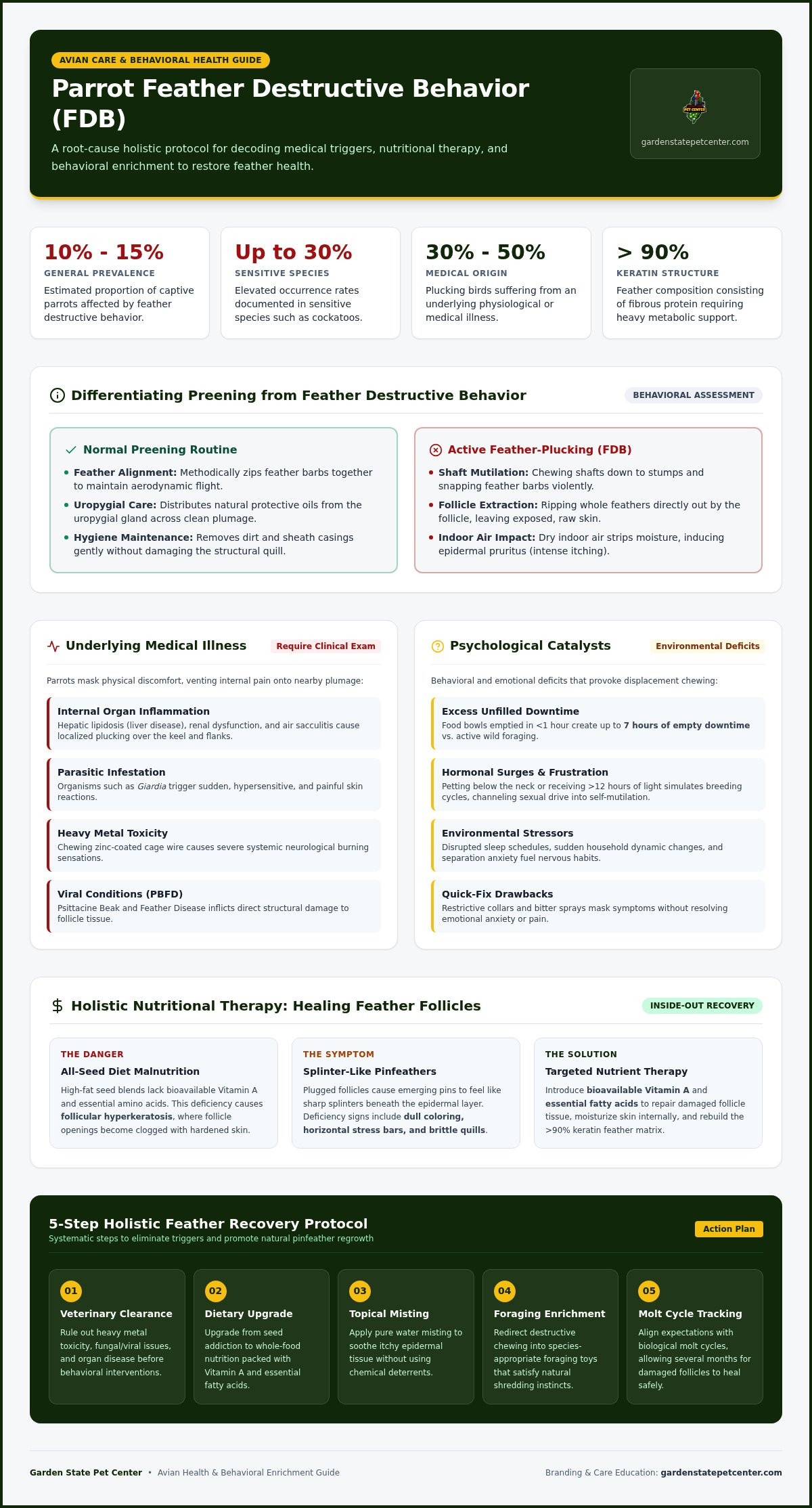
Feather destructive behavior affects an estimated 10% to 15% of captive parrots, climbing as high as 30% in sensitive species like cockatoos. Few experiences are more heartbreaking than watching your companion strip away their plumage, leaving behind irritated, bare skin. If you feel overwhelmed trying to decipher whether the chewing stems from boredom, stress, or nutritional gaps, you aren't alone. Frustration runs deep when generic advice fails, which is why exploring targeted natural feather plucking remedies for parrots requires a thoughtful, root-cause approach.
Sustainable recovery demands healing sensitive skin from within while actively redirecting instinctive foraging energy. In this care guide, you'll discover proven, holistic steps to pinpoint your bird's exact plucking triggers and restore their feather health naturally. We walk you through a clear protocol to distinguish medical issues from behavioral habits, alongside species-appropriate diet interventions and environmental enrichment that soothe irritated skin and encourage healthy pinfeather regrowth.
Key Takeaways
- Rule out underlying medical issues like fungal infections or heavy metal toxicity with an avian veterinarian before treating the habit as purely psychological.
- Upgrade your companion's diet with bioavailable vitamin A and essential fatty acids to repair damaged follicles and soothe dry skin from within.
- Implement safe natural feather plucking remedies for parrots, such as pure water misting, to provide topical relief without relying on harsh chemical deterrents.
- Redirect destructive chewing behaviors into healthy activity by introducing species-appropriate foraging toys that fulfill innate shredding instincts.
- Track daily environmental triggers and align your expectations with biological molt cycles, giving new pinfeathers several months to regrow safely.
Understanding Parrot Feather Destructive Behavior: Root Causes and Medical Clearance
Healthy preening maintains aerodynamic flight feathers and cleans away dirt, but feather destructive behavior (FDB) is entirely different. During normal grooming, a bird methodically zips feather barbs together using oil from their uropygial gland. In contrast, active feather-plucking involves chewing shafts down to stumps, snapping barbs, or violently ripping feathers out by the follicle. Dry indoor air exacerbates this issue by stripping natural moisture from exposed tissue, producing intense epidermal pruritus that compels birds to scratch and tear at their skin.
Many retailers promote quick-fix bitter sprays or restrictive collars, but masking the habit solves nothing. An estimated 30% to 50% of plucking birds suffer from an underlying physiological illness. Before testing natural feather plucking remedies for parrots, you must confirm your bird isn't reacting to physical pain or infection.
To better understand the differences between normal preening and self-mutilation, watch this helpful overview:
Medical Triggers: When Plucking Signals Underlying Illness
Parrots instinctively mask physical distress, often venting internal discomfort onto the nearest patch of feathers. Internal organ inflammation, including hepatic lipidosis (liver disease), renal dysfunction, and air sacculitis, frequently manifests as localized plucking over the flanks or keel. Parasites such as Giardia trigger sudden, painful skin hypersensitivity, while heavy metal toxicity from chewing zinc-coated cage wire causes systemic neurological burning. Viral conditions like Psittacine Beak and Feather Disease (PBFD) directly damage follicle tissue. Establishing a reliable baseline through professional avian health and disease testing ensures you treat the true clinical source rather than chasing surface symptoms.
Behavioral and Psychological Catalysts in Parrots
Once your veterinarian rules out disease, turn your attention to psychological triggers. In the wild, parrots spend hours foraging, social calling, and navigating complex flocks. In captivity, a bird can empty a food bowl in under an hour. This leaves up to seven hours of unfilled downtime, breeding severe chronic boredom inside barren enclosures. Separation anxiety, disrupted sleep schedules, and sudden changes in household dynamics can provoke nervous mutilation. Hormonal surges also play a major role. Petting a parrot anywhere below the neck or providing more than 12 hours of artificial light simulates breeding conditions. When those drives go unmet, sexual frustration quickly turns inward. Addressing these environmental deficits alongside holistic husbandry forms the backbone of effective natural feather plucking remedies for parrots, creating lasting relief supported by proper bird care practices.
Holistic Nutritional Therapy: Healing Feather Follicles from the Inside Out
Feathers consist of over 90% keratin, a fibrous protein requiring immense metabolic investment to produce. When a parrot subsists primarily on an all-seed diet, systemic malnutrition follows rapidly. High-fat seed blends lack bioavailable vitamin A and essential amino acids, directly triggering follicular hyperkeratosis. In this painful state, follicle openings plug with dry, hardened skin, making emerging pins feel like sharp splinters under the epidermal layer. Implementing natural feather plucking remedies for parrots begins by healing this cellular damage from within through anti-inflammatory nutrition.
Transitioning from Seed Addiction to Whole-Food Nutrition
Nutritional deficiencies manifest as dull coloring, horizontal stress bars across feathers, and brittle quills that fracture during routine preening. Shifting an addicted bird to an optimal diet requires patience and steady persistence. Mix cold-pressed organic pellets with their current seed blend over three to four weeks, gradually adjusting proportions until pellets make up 60% to 70% of their daily intake. Explore our curated specialized bird food and diet essentials to establish an unadulterated baseline free of artificial colorings and refined sugars.
Anti-Inflammatory Superfoods and Healthy Fatty Acids
Follicular inflammation fuels severe itching that birds simply cannot ignore. Introducing moderate amounts of unrefined red palm oil or hulled hemp seeds supplies balanced omega-3 and omega-6 fatty acids that lubricate skin tissues. Complement these fats with foods dense in beta-carotene, such as steamed sweet potatoes, fresh squash, and chopped dandelion greens. While dietary overhaul soothes internal distress, research on providing enrichment for a pet bird shows that introducing foods inside novel foraging textures also eases the mental anxiety tied to feeding changes.
Targeted Avian Supplements for Molting and Skin Repair
When molting begins, new pinfeathers place elevated biochemical demands on your parrot's body. Targeted, holistic supplementation provides necessary relief:
- Organic Milk Thistle: Supports hepatic detoxification, which is critical for birds recovering from years of seed-induced fatty liver disease.
- Methionine and Trace Minerals: Supplies essential sulfur-bearing amino acids and bioavailable calcium required to build strong, flexible feather shafts.
- Whole-Food Carotenoid Purees: Delivers gentle mucosal support without the toxicity risks associated with synthetic water-soluble drops.
Avoid dosing high-potency synthetic multivitamins into community water dishes without professional guidance, as fat-soluble compounds accumulate quickly in avian organs. If you need assistance selecting safe formulas, review the options available at Garden State Pet Center to give your companion gentle, effective nutritional support.
Natural Topical and Environmental Remedies for Itchy, Irritated Skin
Commercial anti-plucking sprays rely on bitter compounds to deter chewing, but these chemical deterrents rarely work. Parrots often find the taste repulsive enough to trigger frantic over-preening, irritating raw follicles further. Rather than punishing your bird for reacting to physical discomfort, effective natural feather plucking remedies for parrots focus on soothing parched epidermal tissue and balancing their living space.
Every recovery strategy requires choosing the right intervention for your bird's specific situation:
- Topical Hydration: Pure distilled water or diluted aloe misting removes trapped dander, softens emerging pinfeather sheaths, and triggers instinctive grooming mechanics without residue.
- Environmental Adjustments: Calibrated humidity and full-spectrum UV light address ambient dryness and hormonal triggers at the source.
- Mechanical Barriers: Fabric collars or vests prevent severe tissue mutilation during acute crises, but they act as temporary shields rather than long-term cures.
Pure Aloe Vera Mists and Bathing Routines
Clean, warm water remains the gold standard for daily avian skin therapy. For birds with visibly flushed or flaky skin, mix pure, food-grade aloe vera juice with warm distilled water in a three-to-one ratio using a clean spray bottle. Never apply essential oils, heavy salves, or mammalian skin balms. Parrots lack sweat glands, and oil-based substances mat their down feathers, ruining their natural thermoregulation and creating panic that worsens plucking.
Establish a morning misting routine so your companion dries completely before evening. Generous bathing cleanses accumulated dander, flushes away microscopic environmental irritants, and encourages healthy preening rather than self-destructive chewing.
Optimizing Cage Climate: Humidity and Full-Spectrum UV Light
Most psittacine species evolved in humid tropical canopies, yet domestic heating and air conditioning frequently drop indoor humidity below 30%. Running an ultrasonic cool-mist humidifier near your bird's enclosure maintains relative humidity between 50% and 60%, immediately easing epidermal tightness. Ensure you clean the water reservoir daily to prevent airborne mold spore buildup.
Photoperiod management and light quality matter just as much. Standard glass windows block beneficial ultraviolet wavelengths. Installing an avian-specific full-spectrum light overhead allows your bird to synthesize vitamin D3 naturally, which regulates calcium absorption and skin repair. Pair this lighting with a strict 10-to-12-hour period of complete, covered darkness every night to stabilize circulating reproductive hormones.
Pairing these environmental upgrades with species-appropriate housing from our complete bird catalog provides a stable, calming space where irritated skin can finally recover.
Environmental Enrichment and Foraging Therapy: How to Redirect Destructive Energy
Wild psittacines dedicate nearly half their waking hours to seeking food, navigating canopies, and dismantling hard nuts. When captive birds receive open bowls filled with ready-to-eat rations, that hardwired searching drive stalls. Left without an outlet for their high intelligence, birds redirect that oral fixation back onto their own bodies. Foraging is not an optional hobby; it functions as an essential behavioral outlet. Harnessing this survival instinct remains one of the most reliable natural feather plucking remedies for parrots facing chronic psychological stress.
Texture Matching: Selecting Natural Shredding Materials
You cannot simply hang a hard wooden block in a cage and expect an anxious bird to engage. Successful diversion hinges on texture matching, offering safe physical substitutes that mimic the resistance of feathers. Birds that strip soft contour feathers respond best to fibrous textures like woven palm braids, seagrass mats, and thin sola wood. Chewing through these yielding fibers delivers the same tactile feedback as preening barbs, saving their real plumage from mutilation.
Birds that fracture thick primary wing shafts need sturdier items. Offer them yucca slices, mahogany pods, and soft natural pinecones to satisfy their intense beak pressure. Explore our full collection of safe destructible bird toys and foraging accessories to keep busy beaks engaged with species-appropriate chewing options.
Designing a Daily Foraging Hierarchy
Birds raised solely on open food bowls often fear novel objects. You must teach your bird to forage gradually so they don't give up out of frustration:
- Phase 1 (Visual Transparency): Wrap favorite nuts loosely in clean, unbleached coffee filters, leaving edible corners visible. Place these parcels directly inside their primary dish.
- Phase 2 (Semi-Concealed Work): Hide organic pellets within folded brown paper cups or shallow hanging woven baskets, requiring them to actively tear material to reach meals.
- Phase 3 (Complex Problem Solving): Distribute daily dry rations across puzzle feeders, requiring your parrot to slide levers or spin wheels to retrieve food throughout the day.
Routine Stabilization and Social Interaction
Sensory enrichment must work in tandem with predictable social habits. Provide at least two to three hours of structured flock interaction daily. Ensure every household member pets your parrot exclusively on the head and neck. Stroking a bird down their back, under wings, or around their tail triggers reproductive frustration that fuels chronic plucking cycles.
Parrots thrive on predictable routines. If you must travel, plan ahead with our experienced team at Garden State Pet Center to provide dependable care and keep behavioral disruptions to a minimum.
Building a Long-Term Feather Recovery Plan for Your Parrot
Feather regrowth doesn't happen overnight. While behavioral tweaks can redirect destructive chewing within days, damaged follicles must progress through a full biological molt cycle before fresh plumage emerges. Depending on species and health, a complete molt can take anywhere from six to twelve months. Quick fixes and miracle drops don't exist. Committing to natural feather plucking remedies for parrots means embracing a slow, patient recovery process anchored in consistent daily observation.
Tracking Triggers and Managing Biological Molt Cycles
Documenting subtle patterns helps you pinpoint exact triggers before another flare-up begins. Keep a detailed daily wellness journal to track trends across four core variables:
- Dietary Intake: Note exact ratios of fresh chop, organic pellets, and healthy fats consumed each day.
- Sleep Duration: Log whether your bird received 10 to 12 hours of total, undisturbed darkness.
- Household Stressors: Record environmental shifts like unfamiliar visitors, noisy home renovations, or schedule disruptions.
- Feather Evidence: Check cage debris to distinguish between clean molts, which feature smooth white quills, versus chewed shafts showing jagged margins or blood tips.
When new blood feathers finally erupt, the tight keratin sheaths cause intense itching. Increase warm misting sessions to soften these outer casings. Offering extra sprouted seeds or high-protein legumes during this phase supplies the amino acids necessary to build sturdy, resilient shafts.
Partnering with Avian Nutrition and Care Specialists
Overcoming chronic self-plucking requires an evolving protocol. What soothes a bird in autumn might fall short during dry winter heating cycles or hormonal spring surges. Schedule routine nutritional consultations with avian professionals to reassess diet ratios, calibrate raw fat percentages, and address micronutrient absorption as your companion heals.
Resist the urge to rely on fabric collars or restrictive cones unless your parrot causes active skin lacerations. Collars only restrict motor movement without resolving internal itchiness or anxiety; removing them often leads to rapid, aggressive plucking. True relief comes from systematically removing environmental irritants, nurturing internal organ health, and supplying stimulating foraging challenges. Explore our full national catalog of companion bird supplies to equip your bird with premium nutrition and enriching accessories designed for long-term health and vibrant plumage.
Take Proactive Steps Toward Your Parrot's Feather Recovery
Healing chronic feather destructive behavior requires patience, clinical diagnostics, and a dedicated daily routine. When you swap nutrient-depleted seed diets for cold-pressed pellets, soothe irritated follicles with gentle pure water mists, and channel pent-up drive into destructible shredding materials, you address root discomfort. Committing to thoughtful natural feather plucking remedies for parrots transforms an agonizing cycle of self-mutilation into an opportunity for restorative, lifelong wellness.
You don't have to tackle this journey alone. We offer certified pet nutritionist guidance to help you fine-tune balanced avian meals, backed by an extensive inventory of natural foraging toys and cold-pressed feeds. With reliable nationwide shipping on all holistic wellness essentials, supporting your companion's healing is simple and direct. Explore holistic diets and natural foraging toys at Garden State Pet Center to give your bird the daily comfort they deserve and watch those healthy pinfeathers return with confidence.
Frequently Asked Questions
Can a parrot completely recover from chronic feather plucking using natural remedies?
Yes, many birds achieve full plumage recovery if feather follicles haven't sustained permanent scarring from repeated tissue damage. Success depends on identifying the root cause early and sticking to a consistent routine. By combining balanced nutrition, daily environmental enrichment, and safe natural feather plucking remedies for parrots, you give dormant follicles the biological support they need to produce healthy, vibrant feathers again.
How do I know if my parrot is plucking from dry skin or an emotional behavioral problem?
Examine where and how the damage occurs to distinguish between physical itchiness and psychological distress. Birds with dry skin frequently rub their heads against perches, produce excessive white dander, and pull feathers uniformly across their flanks. Behavioral plucking often starts abruptly following household changes, focusing intensely on accessible chest patches while leaving the head completely untouched.
Is pure aloe vera spray safe to spray directly onto my parrot’s feathers?
Yes, pure aloe vera is safe when properly diluted with warm distilled water. Always use 100% pure, organic food-grade liquid that contains no synthetic preservatives, fragrances, or alcohol. Mix one part aloe with three parts warm water in a clean mister. This gentle solution hydrates taut epidermal tissue and softens hard feather sheaths without leaving oily residues behind.
What dietary deficiencies most commonly lead to feather chewing and plucking?
Severe deficiencies in vitamin A, sulfur-containing amino acids like methionine, and essential fatty acids are the most frequent dietary culprits. All-seed diets lack these vital micronutrients, causing the delicate lining of feather follicles to dry out and hyperkeratinize. Transitioning your bird to cold-pressed organic pellets alongside fresh orange and leafy green vegetables repairs these metabolic deficits from within.
Why do companion parrots start plucking their feathers during springtime?
Lengthening daylight hours and warmer temperatures naturally trigger psittacine reproductive cycles, leading to acute sexual frustration in captive birds. Without a mate or nesting site, circulating reproductive hormones elevate stress, compelling birds to strip their chest and leg plumage. You can minimize this seasonal trigger by enforcing 12 hours of total darkness each night and eliminating warm, carbohydrate-heavy mash foods.
Can full-spectrum lighting help stop my bird from pulling out its chest feathers?
Yes, installing an avian-specific full-spectrum light bulb overhead directly benefits skin health and emotional regulation. Glass windows block the ultraviolet rays birds require to synthesize active vitamin D3 naturally. Proper UVB exposure enables healthy calcium absorption, strengthens emerging pinfeathers, and stabilizes brain neurotransmitters, making it one of the most effective non-invasive natural feather plucking remedies for parrots kept indoors.
What are the best natural materials to replace the sensation of feather chewing?
Soft, fibrous plant materials like woven palm leaves, natural sola wood, and seagrass mats offer the ideal tactile substitute for preening. These textures yield under beak pressure in the same way real barbs do. For larger birds targeting thick wing quills, offer natural mahogany pods, soft balsa blocks, and untreated pinecones to safely satisfy their shredding drive.

Article by
Victor Santucci
Victor Santucci is the owner of Garden State Pet Center in Audubon, NJ, where he specializes in premium pet nutrition, exotic animals, and expert-level care. With years of hands-on experience and a passion for helping pets thrive, Victor is dedicated to educating pet owners on proper nutrition, enrichment, and species-specific care. His mission is simple: provide every pet with the highest quality products and every customer with honest, knowledgeable guidance.
Share this post
- 0 comment
- Tags: avian wellness, bird health, bird molting, feather plucking, foraging toys, holistic bird remedies, natural feather plucking remedies for parrots, parrot behavior, parrot care