

Best Pet Lizards for Beginners: 2026 Reptile Guide


The easiest lizard to care for may not be the best lizard for you. Choosing among pet lizards for beginners depends on how much handling you want, the habitat you can maintain, and the daily care that fits your routine. A species that suits one new keeper may feel like the wrong match for another.
If you’ve found conflicting advice about heat and UVB lighting, or worry that one setup mistake could put your pet at risk, you’re not alone. The lizard’s purchase price is only part of the commitment. Its enclosure, heating, lighting, food, and ongoing care all matter. With clear, species-specific guidance, you can make those decisions with confidence.
This guide compares beginner-friendly lizards by temperament, care needs, and interaction level, then explains what to prepare before bringing one home. You’ll learn how habitat requirements differ, which setup essentials to plan for, and how to build a healthy, attractive environment without overlooking the details that support a long-lived pet.
Key Takeaways
- Compare pet lizards for beginners by temperament, activity patterns, adult size, and feeding needs to find a species that fits your routine.
- Look beyond the animal’s price. Plan for an appropriately sized enclosure, dependable heating and lighting, and ongoing food and care.
- Match the habitat’s heat, light, and humidity to the species, and confirm your setup is working before bringing your lizard home.
- Build a species-specific feeding routine, including properly gut-loaded feeder insects where they’re part of the diet.
- Choose a reptile-focused source, ask about the animal’s health history, and identify an exotic-pet veterinarian before you need one.
Choosing Your First Reptile: Why Intent Matters
The best pet lizards for beginners aren’t simply the smallest or most commonly recommended. Look for a species whose care needs you can meet consistently: a manageable adult size, a suitable diet, and husbandry that fits your experience. “Hardy” means an animal may be more forgiving of minor variation, not that it can thrive without precise care. Heat, lighting, humidity, and a secure enclosure still need to match the species.
Plan for the less glamorous realities, too. Insect-eating and omnivorous lizards may require live feeder insects, which can be a deal-breaker for some households. Heating and lighting equipment also use electricity, and some bulbs need periodic replacement. Common pet lizards can live 10 to 20 years, so choose with the long-term commitment in mind, not just the appeal of bringing home a new animal.
For an educational overview of beginner-friendly reptiles, watch this video from Clint’s Reptiles:
Interaction vs. Observation: What Do You Want?
Bearded dragons are often selected by keepers who want a lizard that can become comfortable with gentle handling. Still, every animal has its own temperament, and handling should be calm, brief, and guided by the lizard’s behavior. Other species are better appreciated as display animals, where observing their natural activity is the main pleasure. For example, leopard geckos are generally most active at night. The Leopard Gecko overview describes this popular pet species and its biology.
Don’t expect a lizard to bond like a dog or cat. Trust grows through predictable, low-stress care, and some individuals will prefer being left alone. Choose for the kind of interaction the animal is comfortable with, not the relationship you hope to impose.
The Beginner Lizard Checklist
- Space: Check the adult enclosure footprint first, then confirm you have room for the habitat, equipment, and safe access for cleaning.
- Diet: Identify whether the species is herbivorous, insectivorous, or omnivorous. Consider whether you’re comfortable storing and offering feeder insects.
- Budget: Separate initial setup needs from recurring costs such as food, supplements, electricity, and replacement lighting. Don’t rely on a small starter enclosure if the animal will outgrow it.
- Source: Ask a reptile-focused pet specialist about the animal’s feeding history, health screening, and habitat requirements. Explore the available reptiles and reptile supplies, and confirm species availability before making plans.
Write down your answers before choosing a species. A thoughtful match makes daily care more manageable and gives your new lizard a stronger start.
Top 3 Pet Lizards for Beginners in 2026
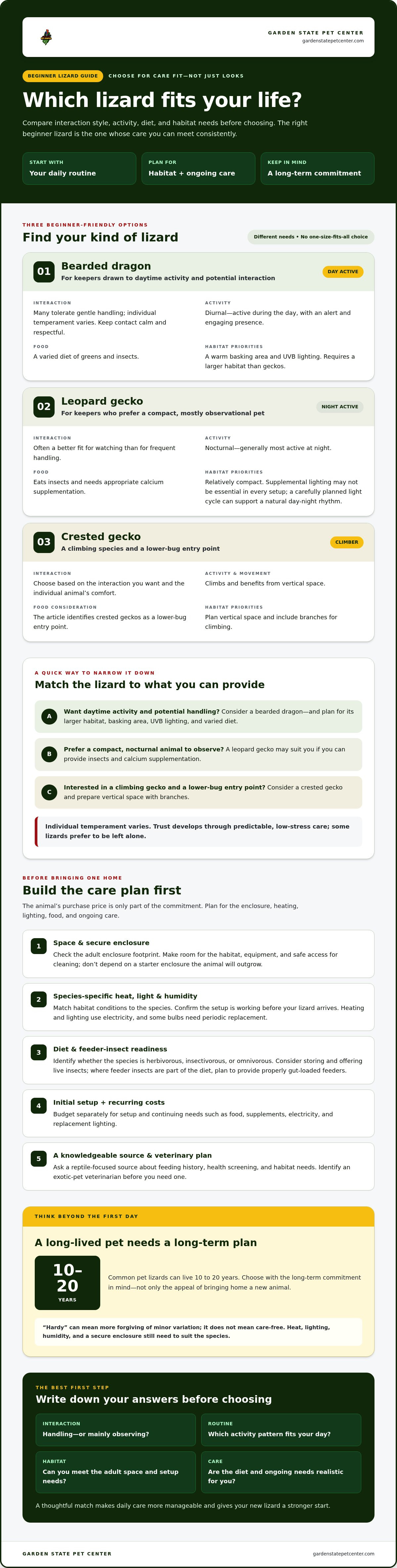
These three species appeal to new keepers for different reasons: bearded dragons suit people who want daytime activity and potential interaction, leopard geckos offer a smaller nocturnal companion, and crested geckos can reduce reliance on live insects. None is care-free. Their different diets, enclosure needs, and activity patterns make it easier to choose a realistic match rather than an advanced species that looks appealing but outpaces your experience.
Bearded Dragons: Personality and Handling
Often called the “Golden Retriever” of the reptile world, the bearded dragon is diurnal and known for its alert, engaging presence. Many tolerate gentle handling, but individuals vary, and calm, respectful contact matters. Be prepared to provide a warm basking area, UVB lighting, and a varied diet of greens and insects. They need a larger habitat than geckos, so plan for adult size before bringing one home.
Leopard Geckos: Ease of Care and Hardiness
Leopard geckos are nocturnal, relatively compact, and often a good fit for keepers who prefer watching rather than frequent handling. They eat insects and need appropriate calcium supplementation. Supplemental lighting may not be essential in every setup, but a carefully planned light cycle can still support a natural day-night rhythm. Read the Merck Veterinary Manual guide to selecting a reptile for advice on choosing a healthy animal. For enclosure supplies, explore reptile habitat essentials.
Crested Geckos: A Lower-Bug Entry Point
Crested geckos climb, so they benefit from vertical space, branches, and secure elevated hiding spots. Many can eat a nutritionally complete powdered diet mixed with water, which can be appealing if you’re squeamish about handling insects. Check the diet’s directions and ask a knowledgeable reptile-care professional whether supplementation or occasional insects are appropriate for your individual gecko. Bioactive setups, with live plants and cleanup organisms, can create a naturalistic display, but they still need careful monitoring and maintenance.
Before choosing, decide whether you want a lizard that’s active by day, one you’ll mostly observe at night, or a climber that explores a planted habitat. That preference often matters more than a “beginner” label. Garden State Pet Center offers reptiles and amphibians, reptile terrariums, and pet nutritional consultations to help you plan supplies and nutrition. Confirm current species availability and ask about the animal’s health history before purchasing.
Essential Habitat Setup: Beyond the Glass Box
A thriving terrarium is a carefully controlled habitat, not just a container with decorations. Before choosing between glass and PVC, consider the species’ adult size, ventilation needs, and humidity range. Glass offers clear viewing and is widely used; PVC is lighter and can help retain heat and moisture. Neither material is automatically best for every lizard. Match the enclosure to the animal, then test its conditions before bringing your pet home.
Think of habitat care as three connected pillars: heat, light, and humidity. Each species has its own requirements, so use a reliable, species-specific care guide rather than one temperature or lighting recipe for all pet lizards for beginners.
Heating and Lighting Fundamentals
Provide a thermal gradient, with a warm basking area at one end and a cooler retreat at the other. This lets the lizard move between temperatures to regulate its body. Use a thermostat with heat-producing equipment and check temperatures at both ends with suitable measuring tools. A heat rock can develop dangerously hot surfaces and burn a lizard; use a thermostatically controlled overhead heat source instead.
Separate basking temperature from overall air temperature. UVB lighting is also species-specific: it supports vitamin D production and calcium use, while inadequate UVB can contribute to metabolic bone disease (MBD). Choose a suitable UVB lamp and distance for the species and enclosure, follow manufacturer replacement guidance, and don’t assume visible light means the UVB output is still effective. Track humidity with a hygrometer and adjust ventilation or moisture practices to the animal’s needs.
Substrate and Enrichment
Choose substrate based on the lizard’s age, health, and natural habitat. Loose particles can be swallowed during feeding and may contribute to impaction, especially if husbandry is poor. For a new keeper, a simple, easy-to-clean surface can make waste monitoring more straightforward. Confirm the safest choice for the species with an experienced reptile-care professional.
Build in more than open floor space. Provide secure hides on both the warm and cool sides so the lizard can shelter without losing access to its preferred temperatures. Add stable branches, ledges, or other climbing structures for species that use vertical space. Check that decorations can’t tip or trap the animal, and keep access to water and cleaning areas clear.
- Before setup: Confirm enclosure dimensions and species-specific heat, UVB, and humidity targets.
- Before arrival: Run the equipment, measure conditions in multiple areas, and correct problems first.
A bioactive habitat with live plants and cleanup organisms can offer a naturalistic display, but it still requires monitoring and maintenance. For habitat ideas and equipment, browse the online collection of pet supplies.
Nutrition and Long-Term Health Care
A sound feeding routine depends on species, age, body condition, and activity. Young, growing lizards may need a different schedule from adults, so avoid blanket advice such as feeding every lizard once a week. Follow a species-specific care plan, offer suitable portions, and keep notes on appetite and weight. For bearded dragons, review this bearded dragon food guide as you plan a balanced menu.
Premium Feeding Strategies
For insect-eating lizards, feeder variety matters. Dubia roaches and mealworms differ in size, movement, and nutritional profile, so choose prey appropriate to your lizard and rotate options where its care plan allows. Gut-loading means feeding nutritious food to feeder insects before offering them to your reptile. It helps make the insects more nourishing, but it doesn’t replace the lizard’s own balanced diet or appropriate supplements.
Calcium and vitamin D3 are important, but the right supplement routine depends on species, diet, and UVB exposure. Too little or too much can cause problems. Use a reptile-specific plan from a qualified exotic veterinarian or experienced reptile-care professional rather than guessing at a dusting schedule. Some crested geckos can eat a complete prepared powdered diet; follow its directions and confirm whether insects or supplements are also appropriate.
Preventative Wellness
Hydration needs vary. Keep clean water available in a bowl when suitable for the species, and use misting or soaking only when its care requirements call for them. Don’t assume every lizard needs the same routine. Weigh your pet regularly with a consistent method and note changes. During shedding, check that skin comes away fully, especially around toes and the tail tip, without pulling stuck shed yourself.
A healthy lizard is typically alert during its normal active period, has clear eyes, a stable body condition, and a regular appetite and stool pattern. Take persistent appetite loss, unusual lethargy, labored breathing, swelling, sores, rapid weight change, or retained shed seriously. These signs warrant prompt advice from an exotic-animal veterinarian. Establish a relationship with one before a problem arises.
- Track: Record feeding, weight, shedding, and notable behavior changes.
- Check: Arrange routine wellness care and ask about appropriate screening for your species.
- Plan: Before a trip, confirm that any pet boarding provider can follow your lizard’s exact care instructions, including temperature, lighting, hydration, and feeding.
For nutrition questions, Garden State Pet Center offers pet nutritional consultations and carries pet supplies. Browse the online collection as you continue planning your pet’s care.
Where to Buy Your First Lizard and Supplies
Choosing where to buy matters because a healthy start depends on more than selecting a species. A specialized exotic pet center can help you ask focused questions about the lizard’s feeding history, current condition, and habitat needs. That guidance is especially useful when care advice online conflicts. Wherever you buy, look for a clear explanation of the animal’s diet and husbandry, ask what health screening has been completed, and make sure you can provide the right enclosure before bringing it home.
Big-box retailers may offer convenience, but the level of species-specific guidance can vary. Don’t assume any lizard is a suitable beginner pet simply because it’s for sale. Ask how the animal is eating, what conditions it has been kept in, and what care routine it’s used to. A reputable seller should welcome reasonable questions and help you understand the commitment.
The Garden State Pet Center Advantage
Garden State Pet Center is a specialized exotic pet resource offering reptiles and amphibians, reptile terrariums, and premium pet nutrition. Its on-site certified pet nutritionist can support nutrition conversations. For species-specific reptile advice, ask what guidance is available for your lizard. The store also offers disease screening, but confirm which screening applies to the animal you’re considering. Check current species availability directly rather than assuming a particular lizard is in stock.
For a multi-pet household, explore the small animal collections alongside your reptile planning. Garden State Pet Center also offers pet boarding and maintenance services. Before relying on boarding for a lizard, confirm that the provider can meet that species’ precise temperature, lighting, humidity, and feeding needs. Specialized care should be a practical fit for your pet, not just a reassuring label.
Start Your Journey Today
Take the time to prepare. Choose a species that suits your interest and routine, set up and test its habitat, and identify an exotic-animal veterinarian before you need one. These steps make the first days less stressful and help you build confidence as a keeper. Supplies can be shipped nationwide. Check product details and shipping arrangements before ordering, especially for equipment needed to establish the habitat.
Ready to plan your setup? Explore our pet collections.
Build a Confident Start for Your New Lizard
The right choice among pet lizards for beginners starts with an honest look at your lifestyle, space, and comfort with feeding. Bearded dragons, leopard geckos, and crested geckos each bring different activity patterns and care needs, so choose the one you can support for the long term.
A thriving habitat depends on species-specific heat, lighting, and humidity, while steady feeding routines and regular health checks help you spot changes early. Prepare the enclosure before your lizard arrives, and consult an exotic-pet veterinarian for health concerns.
Garden State Pet Center offers a specialized exotic pet department, an on-site certified pet nutritionist, reptile terrariums, and nationwide shipping for supplies. Its team can help you explore habitat and nutrition options as you plan your setup.
With thoughtful preparation and reliable support, you can give your new companion a healthy, comfortable home. Explore Garden State Pet Center’s pet collections to plan your setup.
Frequently Asked Questions
Which lizard is the absolute easiest for a beginner?
There isn’t one easiest lizard for every beginner; the best match depends on the care you’re ready to provide. Leopard geckos are a popular choice for keepers seeking a smaller, mostly nocturnal pet, while crested geckos may suit people who prefer feeding a prepared diet. Bearded dragons are more interactive for some owners, but need a larger habitat and careful heat and UVB management. Compare daily routines before choosing.
Do beginner lizards need live bugs to survive?
Some do, but it depends on the species. Leopard geckos eat insects, and bearded dragons need insects as part of a varied diet, alongside appropriate greens. Many crested geckos can eat a complete powdered diet mixed with water, though their specific care plan may include insects or supplements. If you’re uncomfortable keeping feeder insects, choose a species and feeding routine that genuinely fit your household, and confirm dietary details with a reptile-care professional.
How much does a full lizard setup cost for a beginner?
A complete setup can vary substantially based on species, enclosure size, heating and lighting equipment, and furnishings. Before choosing a lizard, list the required terrarium, heat source, thermostat, UVB lighting where appropriate, temperature and humidity gauges, hides, substrate, and décor. Price the full habitat rather than just the animal, and leave room in your budget for recurring food, supplements, replacement bulbs, and veterinary care. Have the enclosure ready before bringing your lizard home.
Can I keep two lizards together in the same tank?
For beginners, plan on one lizard per enclosure unless a qualified reptile professional confirms a species-specific arrangement is appropriate. Cohabiting can lead to competition for food, basking areas, or hiding places, and conflict may cause stress or injury even when it isn’t obvious at first. A larger tank doesn’t eliminate those risks. Separate habitats also make it easier to track each animal’s eating, weight, and health.
How long do pet lizards usually live?
Many common pet lizards can live 10 to 20 years, depending on species, individual health, and quality of care. That makes choosing a lizard a long-term commitment, not a short-term project. Before adopting, consider whether you can maintain its habitat, feeding routine, and veterinary care through changes in housing or schedule. Research the expected lifespan of the exact species you’re considering, since needs and longevity differ.
Is it expensive to run the heat and lights for a lizard?
Operating costs depend on the equipment’s wattage, how long it runs, your electricity rate, and the room’s temperature. Check the wattage on each heat source and lamp, then use your utility’s rate to estimate energy use. Remember that UVB bulbs may need replacement according to their manufacturer’s guidance. Choose safe, species-appropriate equipment and use a thermostat for controlled heating rather than cutting essential habitat needs to lower energy use.
What is the best lizard for a child?
A bearded dragon may suit a family seeking a lizard that can become comfortable with gentle handling, but no species is a hands-off child’s pet. An adult must take responsibility for habitat conditions, feeding, hygiene, and veterinary care, with children handling the animal calmly and under supervision. A leopard gecko or crested gecko may be better for a household that prefers observing rather than frequent handling. Match the choice to the family’s routine.
Do pet lizards carry diseases like Salmonella?
Yes, reptiles can carry Salmonella even when they appear healthy, so handle every lizard and its habitat with good hygiene. Wash hands with soap and water after touching the animal, its food, or enclosure items, and keep habitat-cleaning tools away from food-preparation areas. Don’t kiss a lizard or let it roam where food is prepared. Ask a healthcare professional about precautions if someone in your household has elevated health risks.

Article by
Victor Santucci
Victor Santucci is the owner of Garden State Pet Center in Audubon, NJ, where he specializes in premium pet nutrition, exotic animals, and expert-level care. With years of hands-on experience and a passion for helping pets thrive, Victor is dedicated to educating pet owners on proper nutrition, enrichment, and species-specific care. His mission is simple: provide every pet with the highest quality products and every customer with honest, knowledgeable guidance.
Share this post
- 0 comment
- Tags: beginner reptiles, exotic pets, lizard care, pet lizard guide, pet lizards for beginners, reptile care tips, reptile habitat