

How often to groom a poodle: Everything You Need to Know


A rigid six-week salon schedule won't protect your poodle from painful mats. Many pet parents quickly discover that understanding how often to groom a poodle isn't about circling a static date on the calendar; it depends entirely on your dog's clip style, size, and daily brushing habits at home.
If you're struggling with dense tangles developing close to the skin, or feel confused about proper bathing frequency, ear care, and nail trims, you aren't alone. That iconic, low-shedding coat continuously traps loose hair, meaning small friction spots can turn into tight, uncomfortable knots before you even spot them.
You'll discover the exact grooming intervals your poodle needs across every coat style, size, and life stage. We'll walk you through a practical weekly and monthly care schedule, giving you the clear steps needed to prevent matting and support healthy skin from the inside out.
Key Takeaways
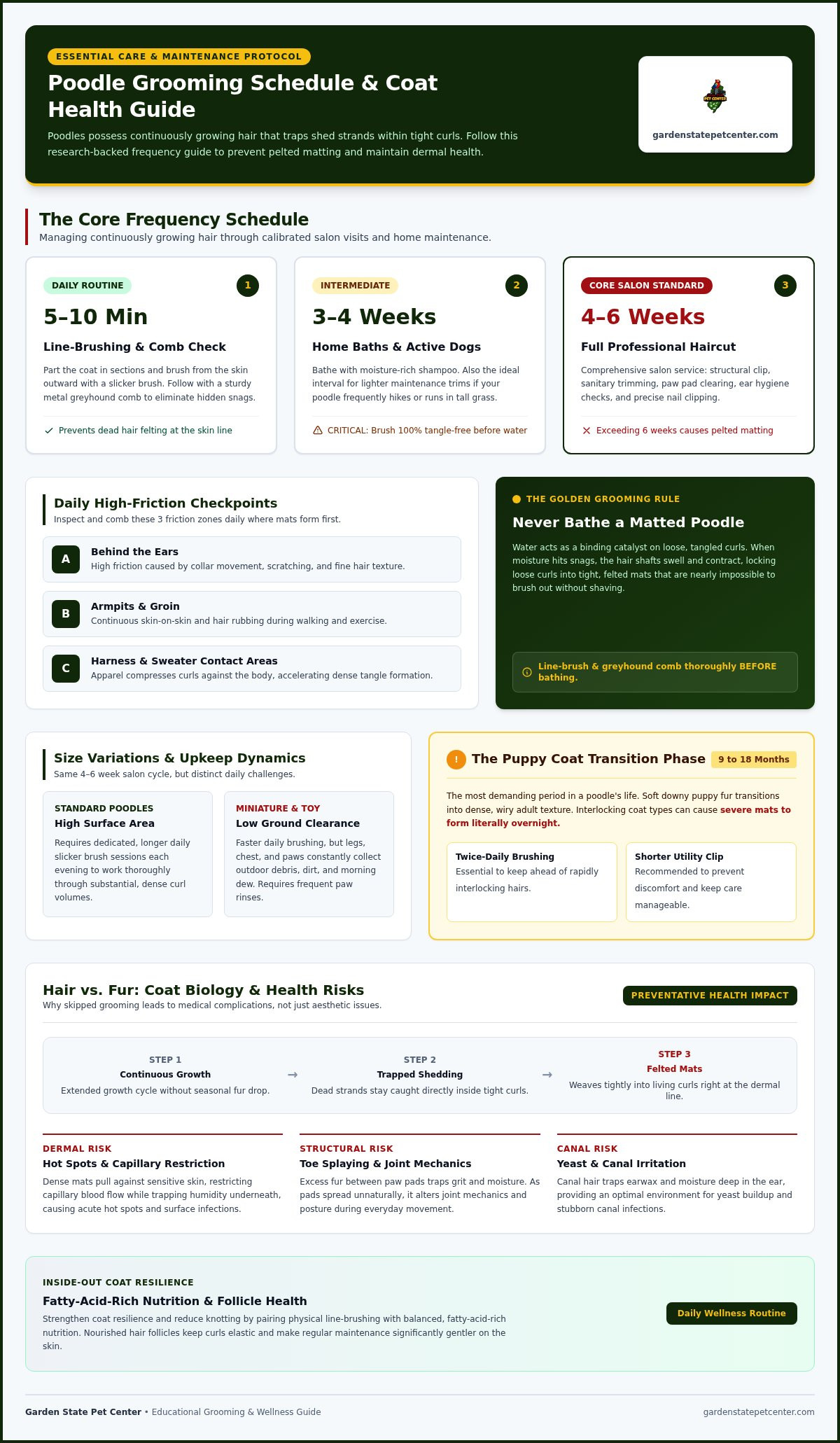
- Plan for professional haircut appointments every four to six weeks, paired with daily line-brushing to prevent continuously growing hair from tangling.
- Discover why how often to groom a poodle depends heavily on your chosen clip, since shorter utility trims demand far less daily maintenance than fuller styling.
- Always brush and comb your dog's coat thoroughly before introducing water, preventing loose curls from locking into tight mats during a bath.
- Establish a steady three- to four-week hygiene routine for ear cleaning, paw pad maintenance, and nail trims to keep sensitive areas healthy and comfortable.
- Strengthen coat resilience and reduce knotting from the inside out by pairing your physical routine with balanced, fatty-acid-rich nutrition.
The Core Poodle Grooming Schedule: How Often Is Necessary?
Determining how often to groom a poodle comes down to managing hair that never stops growing. Because this breed doesn't shed loose fur outward like double-coated dogs, dead strands catch inside surrounding curls. A dependable grooming calendar balances professional salon appointments with consistent home care to keep the coat healthy and pain-free.
Professional Grooming Frequency: The 4 to 6 Week Standard
Schedule a professional haircut every four to six weeks. A full salon visit addresses structural needs that home brushwork cannot handle alone, including sanitary trims, paw pad clearing, ear checks, and nail clipping. Waiting beyond six weeks drastically increases the chance of pelted matting near the skin. If your companion spends lots of time hiking or running through tall grass, a lighter maintenance groom every three to four weeks keeps debris under control.
Daily and Weekly Home Care Frequencies
Salon visits only succeed when paired with daily home upkeep. Dedicate five to ten minutes every day to gentle line-brushing, parting the coat in sections so you work directly from the base of the skin outward. After brushing, run a sturdy metal greyhound comb through each section to catch hidden snags before they tighten. Check high-friction zones daily:
- Friction spots behind the ears where collars and scratching create tangles
- Armpits and groin areas that rub together during daily walks
- Underneath harnesses or sweaters that compress the curls
Bathe your dog at home every three to four weeks between appointments using a moisture-rich shampoo, making sure you work out all tangles before water hits the coat.
Size Variations: Standard, Miniature, and Toy Poodles
Core Poodle coat characteristics remain virtually identical across all sizes, but your maintenance time varies significantly. Standard poodles present a substantial surface area, requiring more time with the slicker brush each evening to work through their dense curls.
Toy and Miniature poodles need clipping on the exact same four-to-six-week cycle. However, their lower ground clearance exposes their legs, chest, and paws to dirt, morning dew, and outdoor debris much faster. Plan on frequent paw rinses and quick spot-checks for smaller dogs after outdoor play, even if their total daily brushing session takes only a few minutes.
Understanding the Poodle Coat: Why Regular Grooming Is Vital
Grasping the biology of canine hair explains why learning how often to groom a poodle is a health matter rather than pure vanity. Unlike double-coated breeds that shed fur onto your floors seasonally, poodles grow continuous hair with an extended growth cycle. When individual strands finish their cycle, the tight curl pattern prevents them from falling away naturally.
Hair vs. Fur: The Anatomy of Trapped Shedding
Loose hairs remain trapped directly inside the surrounding coat. Without diligent manual removal, these shed strands weave tightly into living curls, creating felted clumps right at the dermal line. Adhering to an AKC-recommended professional grooming schedule ensures these dense tangles get addressed before they turn into solid sheets of matted hair that pull against sensitive skin.
The Crucial Puppy Coat Change Phase
The most demanding period in a poodle's life occurs between nine and eighteen months of age. During this transitional phase, the soft, downy puppy coat gives way to a dense, wiry adult texture. As both coat types interlock, severe matting can develop literally overnight.
Owners often need to brush twice daily during this shift to keep ahead of clumping curls. Choosing a shorter utility clip during these months saves your young dog from unnecessary discomfort and keeps maintenance manageable.
Health Risks of Delayed or Neglected Grooming
Skipping routine maintenance carries immediate medical consequences that extend far beyond cosmetic appearance:
- Severe mats restrict capillary blood flow and trap humidity, triggering painful hot spots and surface infections.
- Excessive fur growing between paw pads collects grit and moisture, causing toe pads to splay and altering joint mechanics.
- Canal hair traps earwax and moisture, fostering yeast buildup and stubborn canal irritations.
Staying ahead of these concerns preserves everyday comfort and keeps curls elastic. Pairing your physical brushing routine with targeted coat-support supplements from our curated dog supplies collection helps nourish hair follicles from within, making regular maintenance easier on your dog's skin.
Routine Grooming Between Salon Visits: Bathing, Ears, and Paws
Managing how often to groom a poodle at home comes down to establishing a steady three- to four-week hygiene routine. Before turning on the tap, remember the golden rule of poodle maintenance: always brush and comb the coat down to the skin before introducing water. Wetting a tangled coat causes loose hairs to tighten instantly like wet wool, shrinking manageable snags into impenetrable felted knots that often require shaving.
Bathing and Thorough Drying Intervals
Give your poodle a bath every two to four weeks depending on their outdoor activity level. Use a gentle, dog-specific shampoo designed to protect their delicate lipid barrier. While daily wellness links closely to diet and coat health, topical hydration is just as vital. After washing, use a high-velocity canine dryer to blow moisture out from the root level. Air-drying causes the hair to crimp and shrink tightly against the skin, making subsequent combing much harder.
Ear Canal Care and Cleaning Frequency
Inspect your dog's ear canals weekly for excess moisture, dark wax, or yeasty odors. Clean the outer folds every two weeks using a veterinarian-approved cleansing flush and soft cotton rounds. Never insert cotton swabs deep into the canal. Poodles naturally grow hair inside their ear canals; check with your veterinarian to determine whether your dog benefits from gentle routine plucking or if plucking creates unnecessary canal inflammation for their specific ears.
Nail Trimming and Paw Pad Shaving Schedules
Keep nails trimmed or ground smooth every two to three weeks. Long nails alter paw posture, shifting skeletal alignment up through the ankles and hips. Clear the hair between the paw pads every four weeks using small, quiet clippers. Trimming this hair flush prevents painful slipping on indoor floors and lets you spot outdoor debris before it embeds:
- Grass awns and burrs caught between the webbing
- Hardened mud balls clinging to pad crevices
- Minor abrasions hidden beneath overgrown curls
Matching Grooming Frequency to Your Poodle's Haircut Style
Every haircut profile dictates a completely different maintenance timeline. When deciding how often to groom a poodle, coat length is the single biggest factor governing your weekly chore list. Choosing an elaborate scissored silhouette without time for daily upkeep leads straight to severe skin friction, whereas shorter trims give active households far more breathing room.
Low-Maintenance Styles: The Kennel and Utility Clip
A kennel or utility cut keeps the coat clipped short to one-half inch or less across the entire torso and legs. Because the hair remains close to the skin, loose strands cannot easily wrap around each other to form knots. You only need to run a comb through the coat twice a week to maintain texture. Professional clipping appointments occur every six to eight weeks, making this an ideal choice for dogs that love hiking trails or swimming.
Medium-Maintenance Styles: The Puppy and Teddy Bear Cut
The Teddy Bear clip and classic puppy cut leave between one and two inches of plush length across the body, paired with hand-scissored, rounded beveling around the muzzle and feet. This aesthetic requires salon shaping and sanitary clearing every four to six weeks. At home, commit to line-brushing three to four times per week. Skipping even a few days allows friction under collars and harnesses to create dense knots that ruin the plush finish.
High-Maintenance Styles: Lamb, Modern, and Historic Show Clips
Elaborate profiles like the Lamb trim, Modern clip, and AKC Continental style feature dense sculpted jackets, distinct leg pompons, and voluminous topknots. These intricate silhouettes demand professional touch-ups every three to four weeks to preserve clean lines and prevent heavy matting. At home, plan on non-negotiable daily comb-outs down to the dermal layer, often paired with specialized banding to keep topknots secure and clean during meals.
Be honest about your weekly schedule before picking a clip. Selecting a trim that matches your lifestyle keeps grooming stress-free for both you and your pet. To support soft, resilient curls that resist tangling across any coat style, explore our canine wellness supplies for daily nutritional solutions that nourish the hair shaft from the inside out.
Optimizing Skin and Coat Health Through Daily Wellness
External hair condition is a direct mirror of internal cellular health. When evaluating how often to groom a poodle, remember that coat elasticity dictates how easily tangles form. A brittle, parched coat generates static and snaps under light friction, forming persistent mats that complicate your grooming schedule. Daily maintenance becomes far simpler when internal hydration and proper tools support the curl structure.
Nutrition and Essential Fatty Acids for Coat Resilience
Healthy curls begin at the dermal layer. Diets packed with balanced Omega-3 and Omega-6 fatty acids strengthen follicle walls and coat each hair strand in protective natural oils. Hydrated hair bends rather than snags, minimizing felted clumps in high-friction zones. Upgrading to a premium dog dry food featuring clean animal proteins and healthy fats provides vital building blocks for dense curl growth. Supplementing kibble with species-appropriate raw food or gently cooked meals introduces bioavailable nutrients that enhance shine and hair flexibility. Discover balanced diets and coat-support supplements at Garden State Pet Center to build coat health from the inside out.
Essential At-Home Tool Selection
Using the right tools prevents skin irritation and cuts your home combing time in half. Build a dependable grooming kit with three essential items:
- Long-pinned slicker brush: Reaches deep through dense curls down to the skin without scratching sensitive tissue.
- Stainless steel greyhound comb: Catches microscopic snags that slicker pins glide over, alerting you to tangles before they felt.
- Hydrating leave-in spray: Coats hair fibers with light moisture, cutting friction during daily comb-outs. Never brush dry poodle hair.
Establishing a Stress-Free Daily Routine
Mastering how often to groom a poodle also involves turning maintenance into a calm bonding ritual. Keep daily line-brushing sessions brief and rewarding. Five minutes of patient work paired with high-value healthy treats builds positive associations with your grooming table or mat. Desensitize your dog early by gently handling their paw pads, opening ear flaps, and touching around their muzzle during quiet moments on the couch. This regular, gentle contact eliminates table anxiety and creates a willing, cooperative partner for your professional appointments.
Build a Confident Routine for Lifelong Coat Health
Mastering how often to groom a poodle comes down to proactive care rather than emergency fixes. Pairing a dependable four- to six-week salon schedule with brief daily line-brushing sessions keeps painful matting away from sensitive skin. Matching your clip choice to your everyday schedule ensures grooming remains an enjoyable routine instead of an overwhelming chore.
True dermal wellness extends beyond slicker brushes and combs. When you fortify your companion's diet with species-appropriate proteins and moisture-dense fatty acids, their hair shafts gain natural resilience against daily friction knots. Serving pet parents nationwide with curated holistic diets since 1990, we focus on canine nutrition, raw feeding, and targeted supplements to protect health from within.
Explore premium nutrition and wellness options at Garden State Pet Center to nourish your dog's skin from the inside out. With the right tools on hand and quality nutrition in their bowl, you'll help your poodle stay radiant, active, and comfortable through every season.
Frequently Asked Questions
Can you go 8 weeks between professional poodle grooming appointments?
Yes, but only if your poodle wears an extremely short utility cut and you maintain consistent brushing at home. For coats longer than half an inch, waiting eight weeks almost always leads to dense pelting at the skin line. Most pet trims require professional shaping every four to six weeks. If you stretch appointments, commit to diligent weekly line-combing to catch hidden snags before they require shaving.
How often should you brush a poodle at home to prevent matting?
Brush your poodle daily or at least three to four times each week depending on coat length. Fuller curls, teddy bear cuts, and show trims demand daily line-brushing down to the skin to remove trapped shed hairs before they tighten. Shorter utility cuts need thorough combing twice weekly. Consistent home brushing stimulates natural dermal oils, ensuring your routine for how often to groom a poodle remains stress-free and manageable.
What happens if you bathe a matted poodle before brushing it out?
Bathing a matted poodle causes existing tangles to shrink and tighten dramatically as the hair dries. Water acts like a felting agent on dense curls, locking loose strands into hard clumps directly against the dermal layer. These tightened mats restrict airflow, pinch delicate skin, and frequently lead to bacterial hot spots. Always detangle completely with a slicker brush and greyhound comb before letting water touch the coat.
Do toy poodles need to be groomed as often as standard poodles?
Yes, toy poodles require the exact same haircut frequency as standard poodles. Hair growth rate and curl structure do not change with physical size, meaning all varieties need professional trims every four to six weeks. While a toy poodle takes far less time to comb out each evening, their low clearance means their chest and legs collect outdoor debris much faster, requiring frequent paw rinsing between visits.
How often do you need to clean and pluck poodle ears?
Clean your poodle's ears every two weeks and inspect them weekly for redness, heat, or dark discharge. Ear plucking depends on individual ear anatomy. While groomers historically plucked all inner ear hair, current veterinary advice suggests leaving healthy ear hair intact unless it blocks airflow or traps heavy debris. Consult your veterinarian regarding your dog's canals, and clean folds using a gentle, veterinarian-approved ear flush.
At what age should a poodle puppy get their first professional groom?
Introduce your poodle puppy to professional grooming around 12 to 16 weeks of age, right after completing their core vaccination series. This first visit shouldn't be a full haircut. Instead, it should serve as a positive introduction featuring a gentle bath, low-speed drying, nail trim, and minor sanitary tidy. Starting early builds table confidence before their demanding adult coat change begins around nine months of age.
Why is my poodle getting matted so quickly between grooming visits?
Rapid matting usually stems from brushing only the surface coat, entering the adolescent coat change, or nutritional dryness. Brushing over the top leaves dense knots untouched at the skin level. If your dog is between nine and eighteen months old, adult hair is tangling with shedding puppy coat. Evaluating how often to groom a poodle must also account for diet, as coats low in essential fatty acids become brittle and knot easily.

Article by
Victor Santucci
Victor Santucci is the owner of Garden State Pet Center in Audubon, NJ, where he specializes in premium pet nutrition, exotic animals, and expert-level care. With years of hands-on experience and a passion for helping pets thrive, Victor is dedicated to educating pet owners on proper nutrition, enrichment, and species-specific care. His mission is simple: provide every pet with the highest quality products and every customer with honest, knowledgeable guidance.
Share this post
- 0 comment
- Tags: dog coat care, dog grooming tips, how often to groom a poodle, line brushing, mat prevention, pet hygiene, poodle care, poodle grooming, poodle haircut