

Bird Safe Cage Cleaner Spray: How to Choose and Use It Safely


What if the words “bird-safe” on a bottle don’t tell you enough? The term isn’t an official safety standard, so choosing a bird safe cage cleaner spray means reading beyond the front label. It’s understandable to want a quick, effective clean while worrying about airborne mist, fumes, or residue around your bird.
Birds can be sensitive to airborne products, and a cleaner’s suitability depends on its directions and how you use it. A spray isn’t automatically the best choice for every cage or cleaning task. A damp cloth may suit a small area, while a different approach may be needed for a stubborn mess.
This guide explains how to check labels, compare cleaning methods, and prepare a separate cleaning area. You’ll also learn what to confirm before your bird returns to the cage and when to ask an avian veterinarian for guidance. Garden State Pet Center offers bird supplies and bird grooming, and you can ask the team about current product availability.
Key Takeaways
- Assess a bird safe cage cleaner spray by its intended use, cage-material compatibility, warnings, ventilation directions, and rinsing requirements, not just its front-label claims.
- Match the cleaning method to the mess and your cage setup. A spray isn’t automatically the right choice for every task.
- Prepare a separate cleaning area, follow the product label, and keep your bird away until the cage is ready for their return.
- Use a checklist to compare products and build a routine you can follow consistently.
- Ask an avian veterinarian about product suitability or your bird’s response. Garden State Pet Center offers bird supplies, but check with the team about current availability of any particular cleaner.
Bird safe cage cleaner spray: what “bird-safe” should mean
It makes sense to pause before spraying anything near a bird. Airborne products may be a concern, and cleaner left on perches, bars, or trays can create a separate contact concern. Choosing a bird safe cage cleaner spray means checking the full directions and planning how you’ll clean, not relying on a reassuring phrase on the bottle.
“Bird-safe” isn’t an official standard for general cleaners, so treat it as a claim to investigate, not a guarantee. The practice of keeping and breeding birds includes maintaining their living environment, but the right cleaning approach depends on the bird, product, cage material, and required cleanup. Garden State Pet Center offers a bird supplies collection. Check with the team about whether a particular cage-cleaner spray is available.
For a visual example of a cage-cleaner product, see the video below. Its appearance or claims aren’t a substitute for checking the label and considering whether the product suits your bird and cage.
Does “bird-safe” on a label guarantee safe use?
No label phrase replaces the complete instructions. Check the intended-use statement, warnings, restrictions, application directions, and any instructions about ventilation, rinsing, or drying. Confirm that the label specifically includes bird cages and the materials you plan to clean. A product may be intended for one surface or task, not every part of an enclosure.
Don’t assume a familiar or “natural” ingredient is automatically suitable, and don’t judge a product by one ingredient without considering its concentration and directions. If your bird has a health concern, or you’re unsure whether a product is suitable for their situation, ask an avian veterinarian.
Why spray use deserves extra attention around birds
Spraying can create airborne mist, and some products may also release fumes. Wet surfaces can expose a bird through contact, while residue may remain after visible moisture is gone. These are different routes to consider. The concern depends on the product, how it’s applied, the room, the cage material, and whether the bird can reach the area.
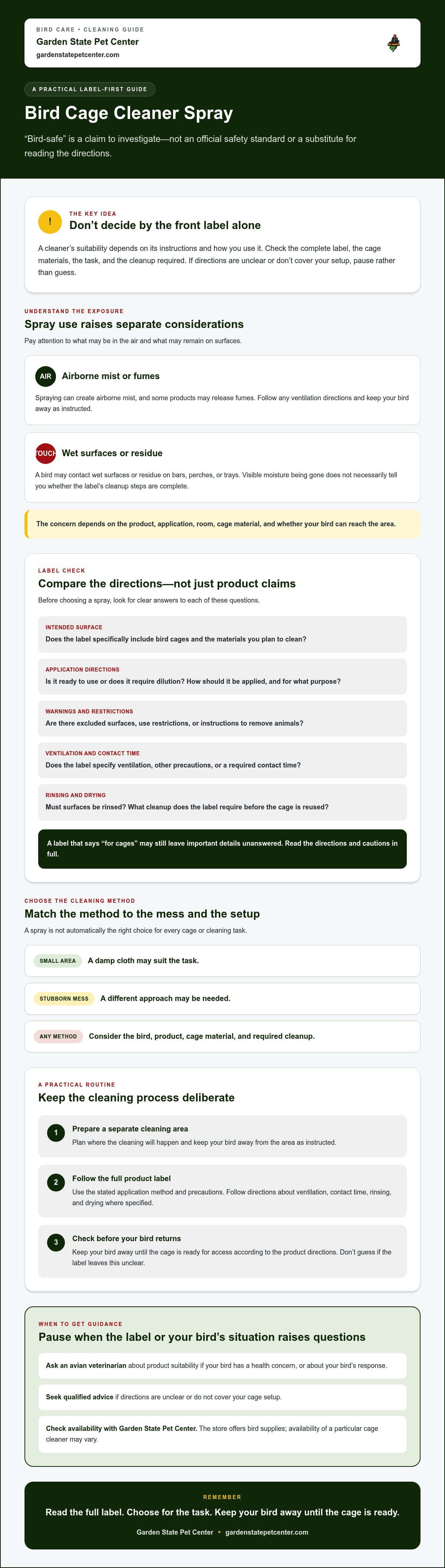
“Bird-safe” is a claim to investigate; the label’s specific directions explain how the product is meant to be used. Follow those directions, keep the bird away as instructed, and don’t return them until the cage is ready for access. If the directions are unclear or don’t cover your setup, pause and seek qualified advice rather than guessing.
How to compare bird cage cleaner sprays by label and use directions
Compare the directions, not just the product names or front-label claims. A useful label should tell you which surfaces the cleaner is intended for, how to apply it, and what must happen before your bird can return. If any of those details are missing or unclear, don’t fill in the gaps by guessing.
| What to check | Questions to ask |
|---|---|
| Intended surface | Does the label specifically include bird cages and the materials you’ll clean? |
| Directions | Is it ready to use, or does it require dilution? How should it be applied, and for what purpose? |
| Warnings | Are there use restrictions, excluded surfaces, or instructions to remove animals? |
| Ventilation | Does the label specify ventilation or other precautions during application? |
| Rinsing and drying | Must surfaces be rinsed? What does the label say about cleanup before reuse? |
Which label details should bird owners check first?
Read the complete label, including directions and cautions. Check intended use, any dilution steps, application method, and surfaces the product says not to treat. Look for instructions about removing animals, ventilating the area, required contact time, and rinsing. A phrase such as “for cages” may not clarify whether the product is meant for your bird’s enclosure or how to use it there.
Verify claims about efficacy, ingredients, and safety certifications before repeating them as facts. A missing warning isn’t evidence of bird-specific safety, and front-panel wording can’t replace detailed use instructions.
Do cage materials change which spray is suitable?
Identify the materials you’ll clean, such as stainless steel, coated metal, or plastic. Directions may limit use to certain surfaces, and a cleaner could affect a finish. Check compatibility for each material rather than assuming one product suits the entire enclosure. Follow any test instructions on the label, and keep your bird away from treated areas as directed.
For broader cage-hygiene guidance, consult VCA Animal Hospitals’ advice on cleaning and rinsing, including its discussion of non-toxic disinfectant soap. Use the product’s own label for its specific application and cleanup directions. If those directions don’t address your cage material or setup, ask an avian veterinarian before proceeding.
Use these checks to assess a bird safe cage cleaner spray instead of treating a safety phrase as a shortcut. If you’re browsing bird-care supplies, Garden State Pet Center’s bird supplies are a place to start. Check current availability and product directions before choosing a cleaner.
Spray cleaner or another method: choose for the mess and cage
A spray can feel convenient, but it isn’t automatically the best fit for every cage or cleanup. Choose a method based on what needs removing, the cage material, the product’s directions, and whether you can complete the required cleanup before your bird returns. Convenience should not outrank clear instructions and a routine you can follow.
When might a spray be convenient, and what are the trade-offs?
Ready-to-use sprays avoid measuring or mixing, while concentrates may require dilution exactly as directed. Both involve more steps than wiping with a damp cloth, and a spray’s mist can travel beyond the surface you mean to clean. Check the label for where and how to apply the product, ventilation, required contact time, rinsing, drying, and storage instructions. Don’t assume a spray cleans or disinfects better. That depends on the product’s directions and evidence.
Consider the area as well as the task. A spray may suit a surface the label explicitly includes, but it can be harder to control around nearby items or in a tight space. A damp cloth may allow more targeted application for a small area, provided that approach is compatible with the cage material and appropriate for the mess. Either way, keep your bird away as directed and complete all stated cleanup steps.
When should owners consider a non-spray cleaning method?
For routine marks or loose debris, a damp-cloth approach may be worth considering if it fits the surface and cleaning guidance. This isn’t a universal recommendation: persistent deposits, hard-to-clean areas, or suspected contamination may call for a different approach. Don’t mix cleaning products or rely on an unverified home recipe. If you’re unsure what the mess may be or how to address it safely, ask an avian veterinarian.
Household alternatives also need bird-aware handling. “Natural” or familiar doesn’t automatically mean suitable for your bird, cage finish, or cleaning task. Check material compatibility, keep the bird away during cleaning, and follow reliable guidance for use and rinsing. VCA Animal Hospitals provides information on safe cage cleaning practices, including the importance of thorough rinsing.
Before choosing a bird safe cage cleaner spray, compare its directions with the task and the steps you can reliably complete. If you’re exploring bird-care supplies, browse bird supplies, then check current availability and product instructions before making a selection.
How to clean a bird cage with a spray while limiting exposure
A careful routine starts before you pick up the bottle. Read the full label, then set up a separate cleaning area where your bird can’t reach the cage or treated surfaces. Follow the product’s directions throughout. Don’t add extra spray, change dilution instructions, or assume the same routine applies to a different cleaner.
What steps should you follow before and during cleaning?
- Read and prepare. Check the label for the intended surface, application method, ventilation, contact time, rinsing, and drying directions. Gather the supplies you’ll need so you won’t have to leave treated surfaces unattended.
- Move your bird and belongings. Take your bird to a separate area as directed. Remove food, water, and toys from the cage or cleaning area if the label calls for it, and keep them away from treated surfaces.
- Apply only as directed. Use the product on the stated surface and for its intended purpose. Avoid unnecessary misting or spraying beyond the target area. Don’t mix cleaners or improvise a stronger application.
- Complete the label’s cleanup steps. Observe any stated contact time. Rinse and ventilate as directed, then allow surfaces to dry as specified. Keep your bird away while the cage is being cleaned and prepared.
Organizing the process this way helps limit avoidable contact with mist, wet surfaces, and cleaning residue. The right method still depends on the specific product and cage, so don’t substitute a general routine for label instructions.
When can the bird return to the cleaned cage?
Use the label’s stated re-entry, rinsing, and drying directions. Don’t invent a waiting period or treat “dry to the touch” as enough if the product requires rinsing or gives another condition. Where rinsing is directed, complete it and check for remaining moisture or visible residue before restoring access. Return food, water, and toys only when appropriate under the label’s instructions.
Follow the label, and restore access only when its conditions are met. If the directions don’t explain when your bird can return, pause and ask an avian veterinarian rather than estimating. If your bird may have been exposed to cleaner or shows concerning symptoms, contact an avian veterinarian promptly and have the product label available to share.
Build a routine you can carry out carefully each time. To explore bird-care supplies, browse bird supplies, and check current product availability and any cleaner’s directions before use.
Choose a bird cage cleaner spray with confidence, and know when to ask for help
A suitable choice is one you can use exactly as directed on the surfaces you need to clean, with a clear plan for keeping your bird away until the cage is ready. Before buying a bird safe cage cleaner spray, use this checklist to compare the label with your bird’s needs and your cleaning setup.
Use this checklist before buying a cage-cleaning spray
- Intended use: Does the label specifically include bird cages and the surfaces you plan to clean?
- Directions: Are application and any dilution instructions clear? Does the label specify removal of animals, ventilation, contact time, rinsing, or drying?
- Material compatibility: Does it address the cage materials, such as coated metal or plastic, without leaving you to guess?
- Exposure controls: Can you keep your bird, food, water, and toys away as the directions require?
- Cleanup: Can you complete all required rinsing and drying steps before allowing your bird access?
Compare sprays with damp-cloth or other appropriate methods for the mess and cage. Don’t assume a “natural” description means a product is suitable for birds, and don’t mix cleaners or improvise a recipe. If a label is unclear, pause and ask an avian veterinarian for species-specific guidance, especially if your bird has known health sensitivities.
When should you ask an avian veterinarian?
Seek veterinary advice if you can’t determine whether a product or its directions fit your bird’s situation. If you suspect your bird has been exposed, or notice unusual behavior afterward, contact an avian veterinarian promptly. Share the product label and describe what happened. Don’t try to diagnose the cause yourself.
Garden State Pet Center specializes in exotic birds and offers bird supplies and bird grooming. Ask the team about current availability of a particular cage-cleaner spray. Bird grooming is a separate care service from cleaning a cage, and it doesn’t replace checking a cleaner’s directions or getting veterinary advice about product safety.
Before choosing a product, check its availability and read the full label. For questions about your bird’s health or a cleaner’s suitability, consult an avian veterinarian. Careful label checks and a routine you can follow help make cage cleaning practical and bird-aware.
Choose a careful cage-cleaning routine with confidence
A “bird-safe” claim is only a starting point. Check the full label for intended surfaces, application instructions, exposure precautions, and cleanup requirements, then choose a method that fits the mess and your cage. Keep your bird away during cleaning and restore access only when the product’s directions say the cage is ready.
If the label leaves you unsure, or your bird has health sensitivities, ask an avian veterinarian for species-specific guidance. Contact one promptly if you suspect exposure or notice unusual behavior. A retailer can help you check product availability, but veterinary professionals are the right resource for health and safety concerns.
Garden State Pet Center specializes in exotic birds and offers bird supplies and bird grooming. Ask the team about current availability of a particular cage-cleaner spray before making a plan. Explore bird supplies and ask our team about current availability. With careful label checks and a routine suited to your setup, you can keep cage care practical and bird-aware.
Frequently Asked Questions
Is a bird-safe cage cleaner spray safe to use while my bird is in the room?
Don’t assume it’s safe to spray while your bird is in the room, even if the label says “bird-safe.” The phrase isn’t an official standard, and airborne mist or fumes may reach your bird beyond the surface you’re cleaning. Follow the full label, including instructions about removing animals and ventilation. If directions don’t clearly address your setup, move your bird to a separate area and ask an avian veterinarian for advice.
Can I use a household cleaner to clean my bird’s cage?
Only use a household cleaner if its directions and reliable avian-care guidance support that use. A familiar or “natural” cleaner isn’t automatically suitable for birds, and surfaces may need specific rinsing before the bird returns. Avoid mixing products or using unverified home recipes. For routine cleaning, simpler methods may be appropriate, but consider the cage material and task, and consult an avian veterinarian if you’re uncertain about a cleaner.
How do I know if a cage-cleaning spray is safe for parrots?
Check whether the label specifically includes bird cages and the materials you plan to clean, then read all application instructions, warnings, ventilation directions, and rinsing or drying requirements. “Bird-safe” alone doesn’t establish that a product suits every species or situation. Use a bird safe cage cleaner spray only as directed, and keep your parrot away as instructed. Ask an avian veterinarian about species-specific concerns or health sensitivities.
What should I do if my bird breathes in cleaner spray?
Move your bird away from the cleaning area to fresh air, if you can do so safely, and contact an avian veterinarian promptly for guidance. Don’t wait for symptoms or try to diagnose the effect yourself. Keep the product container or label available so you can share its name, ingredients, and directions with the veterinarian. If you notice unusual behavior after possible exposure, describe that clearly when you call.
Do I need to rinse a bird cage after using a cleaner spray?
Follow the specific product label. Some cleaners may require rinsing, while others may give different cleanup instructions. Don’t assume either way based on the words “bird-safe.” If rinsing is directed, rinse the treated surfaces thoroughly and let them dry as instructed before allowing your bird access. If the label doesn’t explain cleanup or when the cage can be used again, contact the manufacturer or ask an avian veterinarian.
Can cage cleaner spray damage stainless-steel or plastic cage parts?
It can’t be ruled out without checking the cleaner’s directions and the cage manufacturer’s care guidance. Products may be intended for particular surfaces, and coated metal or plastic parts may have different compatibility needs from stainless steel. Confirm that the label includes the material you’ll treat, and follow any test instructions. Keep your bird away during cleaning, and don’t use the product on surfaces the label excludes.
How often should I clean my bird’s cage?
Set a routine based on how quickly food, droppings, and debris accumulate, along with your bird’s setup and any veterinary advice. Remove soiled material regularly, and clean surfaces as needed using a method appropriate for the cage. Daily cleaning can often be done with soap and water or a vinegar solution, but confirm the approach is suitable for your bird and follow guidance on rinsing and drying.

Article by
Victor Santucci
Victor Santucci is the owner of Garden State Pet Center in Audubon, NJ, where he specializes in premium pet nutrition, exotic animals, and expert-level care. With years of hands-on experience and a passion for helping pets thrive, Victor is dedicated to educating pet owners on proper nutrition, enrichment, and species-specific care. His mission is simple: provide every pet with the highest quality products and every customer with honest, knowledgeable guidance.
Share this post
- 0 comment
- Tags: avian care, bird care, bird health, bird safe cage cleaner spray, cage cleaning, cage maintenance, pet bird supplies