

Pet allergy testing cost Best Practices and Expert Advice


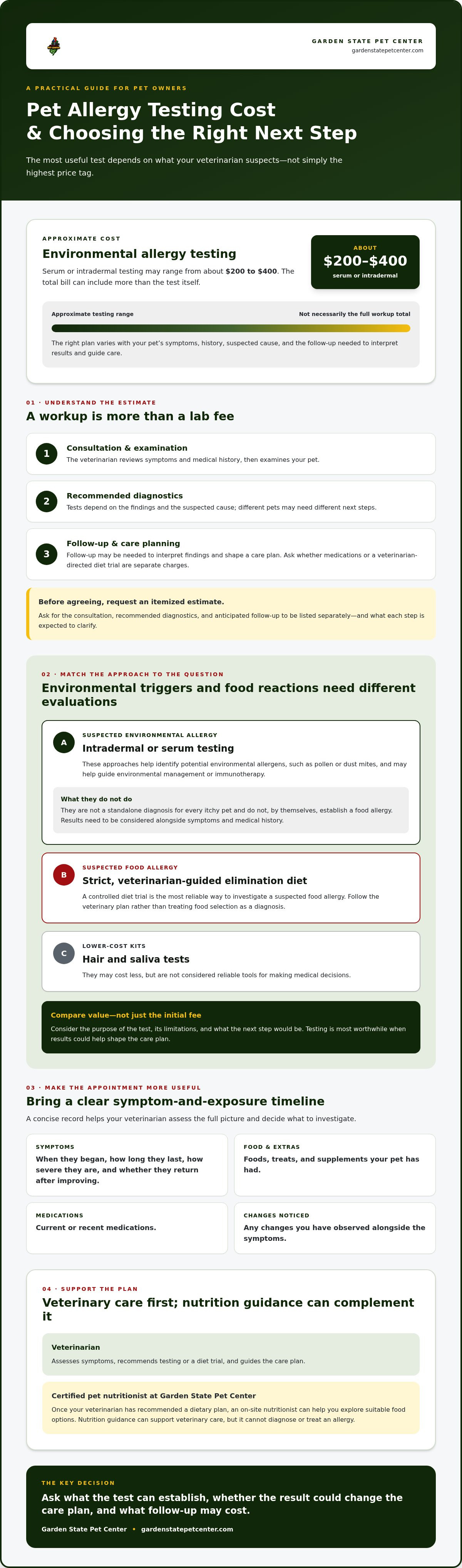
What if the right allergy test isn’t the one with the highest price tag? Pet allergy testing cost can range from about $200 to $400 for serum or intradermal testing, though the useful choice depends on what your veterinarian suspects. It’s understandable to want a clearer picture of the cost before paying for tests, especially when food reactions and environmental allergies can look similar.
Start by separating the questions each approach can help answer. Intradermal and serum tests help identify environmental allergens, while a strict, veterinarian-guided elimination diet is the most reliable way to investigate a suspected food allergy. Hair and saliva kits may cost less, but they aren’t considered reliable tools for making medical decisions. Testing is most worthwhile when results could help shape the care plan.
This guide explains what can affect the total bill, which tests may suit different concerns, and what to ask before agreeing to testing. You’ll also learn how to discuss follow-up costs and prepare useful notes about your pet’s symptoms. Once your veterinarian has recommended a dietary plan, an on-site certified pet nutritionist at Garden State Pet Center can help you explore suitable food options. Nutrition guidance can support veterinary care, but it can’t diagnose or treat an allergy.
Key Takeaways
- Ask for an itemized estimate of the pet allergy testing cost, including the exam, recommended diagnostics, and expected follow-up.
- Before agreeing to a test, ask what its results can establish and whether they could change your pet’s care plan.
- Compare testing options by purpose, limitations, and next steps, not just by the initial fee.
- Bring a timeline of symptoms, foods, treats, supplements, medications, and any changes you’ve noticed to help your veterinarian assess the full picture.
- Follow veterinary guidance for any diet trial, then seek nutrition advice to help choose suitable foods without treating food selection as a diagnosis.
Pet Allergy Testing Cost: What Determines the Total?
Think of pet allergy testing cost as the cost of a veterinary workup, not simply a lab fee. The total may include the consultation, examination, recommended diagnostics, and follow-up. Providers offering complete care, such as Peakhurst Veterinary Clinic and Small Animal Hospital, tailor each evaluation to the individual patient, recognizing that two pets with similar itching may require very different next steps.
Your veterinarian may first look for other explanations for itching or skin changes before recommending allergy testing. Allergies can involve different symptoms and triggers. The general overview Allergies in dogs describes common signs and the use of serum or skin tests to identify specific allergens. To hear a first-hand account of one pet owner’s testing experience, watch this video:
What can be included in an allergy workup?
A workup typically starts with a conversation about symptoms and medical history, followed by a physical examination. Depending on the findings, the veterinarian may recommend tests to investigate other causes of skin problems or allergy testing to help guide care. The MSD Veterinary Manual’s overview of atopic dermatitis in animals explains that environmental allergy testing helps identify allergens, rather than serving as a standalone diagnosis. The specific workup varies with the pet’s signs and history.
Why do testing needs differ between pets?
Note how long symptoms have lasted, how severe they are, and whether they return after improving. Those details can help your veterinarian decide what to investigate and whether follow-up is needed. A suspected environmental allergy and a suspected food reaction call for different approaches. Testing for environmental allergens doesn’t by itself establish a food allergy. For that question, a veterinarian may recommend a structured dietary evaluation.
In brief: The total reflects the exam, tests selected for the suspected cause, and follow-up needed to interpret findings and guide care.
Before approving a plan, ask for an itemized estimate that separates the consultation, recommended diagnostics, and anticipated follow-up. Check whether medications or a veterinarian-directed diet trial are separate charges, and ask what each proposed step is expected to clarify. This helps you understand the plan without assuming every pet needs the same tests or sequence of care.
Which Pet Allergy Tests May Be Recommended, and What Do They Show?
Different suspected allergies call for different kinds of evaluation. Environmental allergy tests look for sensitivity to potential triggers such as pollen or dust mites, while suspected food allergies are assessed through a controlled diet trial. Don’t choose from a test menu alone. Your veterinarian considers your pet’s history, examination, and clinical signs to decide what could clarify the diagnosis or guide care.
Intradermal and blood tests for environmental allergies
Intradermal testing involves introducing small amounts of environmental allergens into the skin and assessing the skin’s response. Serum allergen-specific IgE testing uses a blood sample to look for antibodies associated with selected environmental allergens. Veterinary dermatologists commonly use these tests to help identify relevant triggers and guide environmental management or immunotherapy—to learn more about how specialized veterinary dermatology practices evaluate complex skin issues, click here. Intradermal testing is often described as the gold standard for identifying environmental allergens, but results still need to be interpreted alongside symptoms and medical history.
As Animal Dermatology Group explains, allergy testing helps inform treatment planning, including allergen-specific immunotherapy. It isn’t a standalone explanation for every itchy pet. Your veterinarian can advise which method is suitable and whether any preparation is needed. Ask what each proposed test is expected to show and how the results could affect the care plan.
Why suspected food allergies are evaluated differently
Blood, saliva, and hair tests aren’t considered reliable ways to diagnose food allergies. Instead, the most reliable approach is a veterinarian-directed elimination diet followed by a controlled reintroduction of foods to see whether signs return. The trial commonly runs for 8-12 weeks, but your veterinarian should set the duration and select a diet for your pet’s needs.
Consistency matters. Extra treats, flavored medications, supplements, or unapproved foods may interfere with a structured trial, so ask your veterinarian what your pet can have throughout the process. Don’t change the diet or reintroduce ingredients without guidance. The outcome depends on observing your pet’s response under controlled conditions, not on a laboratory result alone.
In short: Environmental allergen tests can help identify triggers for veterinary management, while suspected food allergies are evaluated with a carefully followed elimination diet and reintroduction. In both cases, test results are clues for your veterinarian to interpret, not automatic diagnoses. If your veterinarian recommends a diet trial, a pet nutrition consultation can help you discuss suitable food options within that veterinary-directed plan.
Are Cheaper Pet Allergy Tests Worth It? Compare Value, Limits, and Follow-Up
A lower upfront fee can still leave the main clinical question unanswered. Compare options by what they’re designed to assess, how results may guide decisions, and what follow-up they involve. Before agreeing to a test, ask your veterinarian: What decision will this help us make?
| Approach | Purpose and what results can inform | Likely follow-up and limitations |
|---|---|---|
| Veterinary workup | Review symptoms and medical history, examine your pet, and decide what causes to investigate. | May lead to additional diagnostics or reassessment. It’s an evaluation, not one definitive allergy test. |
| Environmental allergy testing | Intradermal or serum testing can help identify environmental allergens relevant to veterinary management. | Results need interpretation alongside clinical signs. They may inform allergen-specific treatment planning, but don’t diagnose every cause of itching. |
| Food elimination trial | A controlled diet trial, followed by veterinarian-guided reintroduction, can help assess a suspected food reaction. | Requires careful adherence and observation over the prescribed period. It isn’t a quick laboratory result, and unapproved foods can undermine the trial. |
What should you compare before approving a test?
Ask what the quoted amount includes: consultation, sample collection, laboratory processing, and result review. Check whether follow-up visits, additional tests, or treatment planning are billed separately. Request an itemized estimate, then ask which items are recommended now, which are optional, and what each step is expected to clarify. This lets you assess the full plan instead of judging pet allergy testing cost by one line on an estimate.
How should owners think about online allergy tests?
Convenient sampling and broad claims don’t replace a veterinary assessment. Hair and saliva tests marketed for food or environmental sensitivities aren’t considered reliable tools for making medical decisions. If you’re considering an online test, show your veterinarian how it works and ask what evidence supports its use, what its results can establish, and whether the findings would change the care plan. Avoid starting a diet change or treatment based only on an at-home result.
Value means relevance. A test is more useful when it addresses a specific clinical question and its result can guide a next step. If that connection isn’t clear, ask your veterinarian to explain the purpose and limitations before you decide.
How to Prepare for a Pet Allergy Testing Appointment
A little preparation can help your veterinarian spot patterns and make the appointment more productive. Record your pet’s symptoms and gather relevant medical and diet history. Ask what testing is being considered and why. Before approving a plan, review an itemized estimate so you understand what’s included and what may come next.
What history helps a veterinarian investigate itching?
Write down when the symptoms began, where they appear, and whether they improve, worsen, or return. Note changes in scratching, licking, skin appearance, or other signs. Bring photos if flare-ups are easier to see at home than during the visit.
Make a concise record of current and previous foods, treats, supplements, medications, and parasite prevention. Include approximate start and stop dates where you can. These details may help the veterinarian assess possible patterns and decide what to investigate. Bring a symptom timeline, photos, and a complete list of your pet’s foods, treats, supplements, medications, and parasite prevention.
Questions to ask before agreeing to testing
Use the appointment to clarify the purpose of each proposed step. Ask:
- What condition or suspected allergy can this test assess, and what can’t it establish?
- How will the result be interpreted alongside my pet’s symptoms and history?
- Does my pet need any preparation, and when should I expect results?
- Are result review, follow-up visits, or additional diagnostics included in the estimate?
- How could this result change the care plan?
Request an itemized estimate and ask which recommendations are clinically advised now. Understanding the role of each step can help you evaluate pet allergy testing cost without choosing a test based on price alone.
Don’t stop medication or change your pet’s food before the appointment unless your veterinarian directs you to. Changes could affect your pet’s comfort or make it harder to interpret what’s happening. If a diet trial is being considered, ask for clear instructions about food, treats, supplements, and flavored medications before starting.
After your veterinarian recommends a dietary plan, Garden State Pet Center’s pet nutritional consultations can help you discuss suitable food options. This guidance supports the veterinary plan; it doesn’t diagnose or treat allergies.
After Testing: Support Your Pet’s Plan With Veterinary and Nutrition Guidance
Allergy test results are one part of the picture. Your veterinarian should interpret them alongside your pet’s symptoms, examination findings, and medical history, then explain how they affect the care plan. A result may help guide next steps, but it doesn’t automatically identify every cause of discomfort or mean your pet needs a particular food.
Follow veterinary advice before changing your pet’s diet, especially during a structured elimination trial. Switching foods, adding treats, or offering supplements outside the plan may make it harder to assess your pet’s response. Ask your veterinarian which ingredients and food formats are appropriate, what your pet can have during the trial, and how to handle a transition if one is recommended.
When can food guidance help after a veterinary assessment?
Once your veterinarian has outlined the dietary approach, nutrition guidance can help you compare suitable food formats and review ingredient information against the plan. Garden State Pet Center’s on-site certified pet nutritionist can discuss food-selection questions through a pet nutritional consultation. This is supportive guidance, not allergy testing, diagnosis, or treatment. For general background on choosing a food, explore a premium pet food guide and bring questions about specific ingredients back to your veterinarian.
Consistency is especially important during an elimination diet. Use only the food and extras approved by your veterinarian, and check before making substitutions. Even a well-intentioned change can interfere with the trial and make the results harder to interpret.
How to choose food without disrupting a diagnostic plan
Before selecting a new option, ask your veterinarian which ingredients matter for your pet, whether a particular format is suitable, and how any transition should be handled. Keep the recommendations handy while comparing choices. If a food doesn’t fit the trial or care plan, don’t substitute it without checking first.
After you have veterinary guidance, you can browse dog food options for a dog or review suitable choices for a cat with the nutrition team. Food selection can support a veterinarian-directed plan, but it can’t confirm an allergy. Keeping that distinction clear helps ensure the effort and pet allergy testing cost contribute to informed care, not guesswork.
Make Your Pet’s Next Care Step a Clear One
The best next step starts with a veterinarian’s assessment, not a test chosen by price alone. Ask what each recommended test can clarify, what it can’t establish, and whether its results may change the care plan. Understanding what shapes the pet allergy testing cost also means looking beyond the test itself to consultations and follow-up.
Keep food decisions connected to veterinary guidance. Environmental allergy testing and food evaluations serve different purposes, and a structured diet trial depends on consistency. Don’t change foods or add extras during a trial unless your veterinarian approves them.
Once you have a veterinary-directed plan, an on-site certified pet nutritionist can help with food-selection questions. Garden State Pet Center carries premium dog and cat food options, including raw, gently cooked, freeze-dried, and holistic diets. This nutrition guidance can support your pet’s plan, but it doesn’t diagnose or treat allergies.
Explore premium dog and cat food options and take your veterinarian’s recommendations with you as you compare choices. With a clear plan and reliable guidance, you can move forward with greater confidence in the care you provide.
Frequently Asked Questions
How much does pet allergy testing cost?
There’s no single universal pet allergy testing cost. The estimate can include more than a laboratory fee: your veterinarian’s examination, the suspected allergy, the selected testing method, sample processing, and follow-up may all affect the total. Ask the veterinary practice for an itemized estimate before approving the plan. Confirm whether it includes sample collection and result review, and whether additional tests, appointments, or treatment planning are billed separately.
Is pet allergy testing worth the cost?
Testing may be worthwhile if its results can inform your veterinarian’s next decision. It should follow a clinical assessment, since a test result needs to be considered alongside your pet’s symptoms and history. Before agreeing, ask what specific question the test is intended to answer, what its limitations are, and whether result interpretation or follow-up is included. No test can guarantee a diagnosis or a particular treatment outcome.
Can a blood test confirm a food allergy in dogs or cats?
A blood test used in some environmental allergy evaluations doesn’t confirm a food allergy. For a suspected food reaction, a veterinarian may recommend a controlled elimination diet followed by a planned reintroduction to assess whether signs return. Follow the veterinarian’s instructions about the selected food, trial duration, and permitted treats or supplements. Ask your clinician to explain the current diagnostic approach for your pet before changing the diet.
What is the difference between intradermal and blood allergy testing for pets?
Intradermal testing involves placing small amounts of environmental allergens in the skin and observing the response. Blood testing measures allergen-specific antibodies in a sample. Veterinarians may use either method to investigate environmental allergies in appropriate cases, but neither is a universal fit. Suitability depends on your pet’s history and clinical assessment. Ask how the veterinarian will interpret the findings and how they could guide the care plan.
How long does pet allergy testing take?
The appointment, laboratory turnaround, and overall diagnostic process have different timelines. An appointment may cover examination and sample collection, while result timing depends on the test and provider. A food elimination trial takes sustained consistency and may run for 8-12 weeks under veterinary direction. Ask the practice about preparation, expected result timing, and follow-up plans. Avoid relying on a fixed schedule that may not apply to your pet’s workup.
Can I change my pet’s food before allergy testing?
Don’t change your pet’s food or stop medication before testing unless your veterinarian directs you to. A change may affect the evaluation or disrupt a planned diet trial. Bring a complete history of foods, treats, supplements, and medications to the appointment so the veterinarian can review it. After the veterinarian sets the dietary requirements, a nutrition professional can help you discuss suitable food options without replacing veterinary guidance.
Are at-home pet allergy tests reliable?
Reliability depends on what a test measures and whether its method is supported for the suspected allergy. Results shouldn’t replace a veterinary examination or clinical interpretation. Ask the provider and your veterinarian what the test assesses, whether the method has been validated for that purpose, and how a result could change care. Be cautious about treating broad sensitivity claims as a diagnosis, especially before starting a diet change or treatment.

Article by
Victor Santucci
Victor Santucci is the owner of Garden State Pet Center in Audubon, NJ, where he specializes in premium pet nutrition, exotic animals, and expert-level care. With years of hands-on experience and a passion for helping pets thrive, Victor is dedicated to educating pet owners on proper nutrition, enrichment, and species-specific care. His mission is simple: provide every pet with the highest quality products and every customer with honest, knowledgeable guidance.
Share this post
- 0 comment
- Tags: allergy test cost, cat allergies, dog allergies, pet allergy testing, pet allergy testing cost, pet healthcare, pet wellness, veterinary care