


How to Build a Bioactive Terrarium for Dart Frogs: A Step-by-Step Guide


A healthy bioactive terrarium for dart frogs starts with a suitable enclosure, a drainage layer beneath the substrate, and plants and leaf litter that support a cleanup crew. A front-opening enclosure measuring 24 x 18 x 18 inches should not be treated as an ideal minimum for most dart frog species. The right size depends on the frogs you choose and the habitat they need.
It’s understandable to want a lush, natural-looking bioactive terrarium for dart frogs without creating a damp, unstable environment. Careful planning helps each layer work together, from drainage and substrate to plant growth and the small organisms that break down waste.
This step-by-step guide explains how to choose compatible dart frogs, prepare the enclosure, build the drainage and substrate layers, and introduce plants, leaf litter, and a cleanup crew. You’ll also learn what to consider before adding frogs, so the habitat has time to establish and you can monitor its conditions with confidence.
Key Takeaways
- Choose dart frogs with compatible care needs, and plan the enclosure around the species before bringing frogs home.
- Build a drainage layer beneath the substrate so excess water can collect below the plant roots.
- Set up a suitable cleanup crew and give it leaf litter and habitat conditions that support its role.
- Match plant choices and lighting to the enclosure, then arrange foliage and decor to create useful cover.
- Establish and monitor the habitat before adding frogs, adjusting moisture and other conditions as the plants take hold.
Bioactive cleanup crew
A cleanup crew helps process small amounts of organic waste inside a planted terrarium. Springtails consume microscopic fungi and decaying material, while suitable tropical isopods break down leaf litter. These organisms support the enclosure’s natural decomposition cycle, but they don’t replace regular frog care or spot cleaning. For a bioactive habitat, introduce the crew after preparing the substrate and adding leaf litter, then allow it to establish before adding frogs.
Choose small, non-aggressive cleanup organisms suited to warm, humid conditions. Springtails can live in damp substrate and crevices, while isopods need leaf litter and sheltered hiding places. Add them near the substrate surface and beneath leaves, where food and moisture are available. A small starter culture can reproduce when conditions are suitable, but a visible population doesn’t guarantee that every waste source will be managed.
- Keep food available: Leaf litter provides a continuing food source for isopods and cover for the crew.
- Maintain damp refuges: Moist pockets support small invertebrates, while the enclosure still needs airflow.
- Remove excess waste: Take out uneaten frog food and large debris rather than expecting the crew to consume everything.
How much does a bioactive dart frog terrarium setup cost? The total depends on enclosure size, drainage materials, substrate, plants, lighting, and the frogs’ food and cleanup cultures. List each component separately, and account for equipment you already own when planning your setup.
What size terrarium do dart frogs need? A front-opening enclosure measuring 24 x 18 x 18 inches is described as an ideal minimum for most dart frog species. Species, group composition, and usable floor and climbing space also affect the enclosure plan.
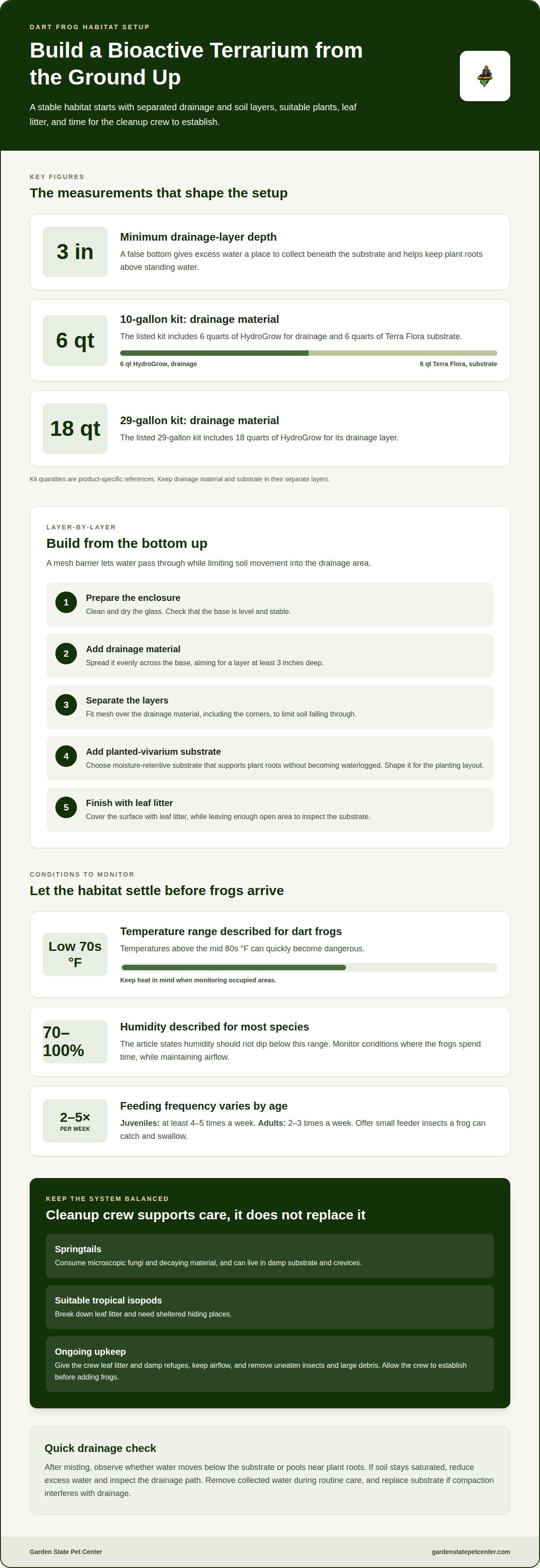
What temperature and humidity should a dart frog terrarium maintain? Dart frogs do best in the low 70s °F, and temperatures above the mid 80s °F can quickly become dangerous. Most species require humidity of 70-100% that never dips below that range, so monitor conditions in the frogs’ occupied areas.
What do dart frogs eat, and how often should they be fed? They eat small feeder insects, and feeding frequency varies with age: juveniles need food at least 4-5 times a week, while adults need food 2-3 times a week. Offer appropriately sized insects, since a frog must be able to catch and swallow its prey.
Common problems include excess dampness, poor airflow, decaying waste, and a cleanup crew that cannot keep pace with available food. Remove uneaten insects and watch for changes in frog activity or appetite. Heat above the mid 80s °F is a serious risk; signs of illness call for prompt evaluation by a veterinarian experienced with amphibians.
Drainage layer and substrate
Use a false bottom to separate standing water from planted soil. It elevates the substrate and gives excess misting water a place to collect, helping keep plant roots out of saturated conditions. A drainage layer at least 3 inches deep is recommended for a dart frog enclosure. The depth creates a collection area beneath the soil while keeping the planting surface above accumulated water.
Choose moisture-retentive substrate made for planted tropical enclosures. It should hold moisture for plant roots without becoming waterlogged. Place it above the drainage material, with leaf litter across the surface. Keep the layers distinct: loose soil that falls into the drainage area can reduce collection space and make water harder to monitor.
Build from the bottom up. A mesh barrier over the drainage layer helps keep substrate from falling through while allowing water to pass. Fit it across the full base, including the corners, before adding soil. Shape the substrate around your planting plan, and leave enough access to inspect the lower drainage area during routine care.
- Prepare the enclosure. Clean and dry the glass, then make sure the base sits level and stable.
- Add drainage material. Spread it evenly, aiming for a layer at least 3 inches deep.
- Separate the layers. Cover the drainage material with mesh to limit soil movement.
- Add substrate. Create a consistent planting layer, shaping slopes or raised areas to suit the layout.
- Finish the surface. Add leaf litter, keeping enough open area to inspect the substrate.
What substrate, drainage layer, and cleanup crew work best for dart frogs? Use moisture-retentive planted-vivarium substrate above a false bottom, with mesh separating the layers and a drainage layer at least 3 inches deep. Springtails and suitable tropical isopods are common cleanup crew choices.
How do you set up a bioactive terrarium for dart frogs step by step? Prepare the enclosure, add drainage material, cover it with mesh, then add substrate, plants, and leaf litter. Before introducing frogs, check that the layers are secure and water can pass through them.
After misting, observe whether water moves below the substrate or pools near plant roots. If the soil stays saturated, reduce excess water and inspect the drainage path. The false bottom works only when water can pass through the substrate and mesh. Remove collected water during routine enclosure care, and replace substrate if compaction interferes with drainage.
The listed kit quantities provide a product-specific reference when planning material amounts. The 10-gallon kit includes 6 quarts of HydroGrow for its drainage layer. It also includes 6 quarts of Terra Flora substrate. The 29-gallon kit includes 18 quarts of HydroGrow for its drainage layer. Keep the materials assigned to their respective layers: HydroGrow is specified for drainage, while Terra Flora is specified as substrate in the 10-gallon kit. These quantities describe what each kit includes and can guide a comparison with the enclosure’s planned setup. After adding the materials, keep the layers distinct and leave the lower drainage area accessible for inspection.
Plant lighting and supplementation
Plant lighting should support foliage without adding unnecessary heat to the frog enclosure. A 10-gallon vivarium kit is described as including a 12-inch Solar Grow LED with internal mounting hardware. Choose lighting suited to the plants and enclosure, and place it so leaves receive even coverage rather than a bright hotspot.
What lighting and misting systems do dart frogs need? Use lighting suited to the plants, such as an LED designed for vivarium plants, and a misting method that keeps foliage and substrate appropriately moist. Check the enclosure’s temperature and humidity after changing either system, since lighting and misting can affect habitat conditions.
Set up the light after arranging the plants, then observe how the foliage responds. Plants stretching toward one side may be receiving uneven light. Leaves that fade, scorch, or fail to grow can indicate a mismatch in light, moisture, or plant placement. Adjust one factor at a time, such as moving the fixture or repositioning a plant, so you can see which change helps.
- Secure the fixture: Use appropriate mounting hardware and keep cords outside areas where water collects.
- Check coverage: Look across the enclosure for shaded plants and intense spots directly beneath the light.
- Observe the habitat: Note changes in leaf condition and enclosure readings after adjusting lighting or misting.
A misting system can distribute water across foliage and substrate, while manual misting gives you direct control over where it lands. Either approach requires observation. Check that leaves receive moisture and that water doesn’t continually pool in one spot. Drainage beneath the substrate provides a place for excess misting water to collect, but it doesn’t remove the need to monitor watering.
Keep electrical equipment away from splashes and standing water. Route cords so they don’t rest against wet surfaces, and follow the fixture’s installation instructions. If you use an automated mister, test its spray direction before frogs enter the enclosure. Aim nozzles at plants or enclosure surfaces, not at one exposed area that stays soaked.
Use supplements carefully and in measured amounts. The guidance in the research recommends using a Vitamin A supplement no more than once weekly for dart frogs. Follow the product directions, and don’t increase supplementation simply because plants or insects appear less active. Dart frog nutrition is species-specific, so base supplement decisions on the animal’s feeding plan rather than treating supplements as a substitute for suitable feeder insects.
Opened supplements are recommended for replacement after 6 months to maintain potency. Mark the opening date on the container, store it as directed, and discard it at that point. Keep lighting, misting, and supplementation as separate care decisions: plants need suitable light and moisture, while frogs need a feeding plan appropriate to their species and life stage.
Plants, leaf litter, and enclosure decor
Choose tropical plants that suit the enclosure’s humidity and available light. A 10-gallon vivarium kit is described as including two tropical plants sized 3-4 inches, but the specific plants are not identified. A larger planting plan can combine tropical plants, a vining plant, a fern, moss or Selaginella, and bromeliads. This mix offers different leaf shapes and growth habits, while giving frogs varied routes and places to shelter.
Plan the layout before planting. Place taller plants toward the back and leave clear sightlines through the front glass. Set a bromeliad or sturdy fern where decor won’t crush its leaves. A vining plant can soften a background or climb a secured surface. Keep plant crowns above the substrate, and avoid burying stems where moisture can collect around them.
Leaf litter does more than finish the enclosure floor. It provides cover for dart frogs and a foraging surface for springtails and isopods. Spread leaves across the substrate, overlapping some edges to create sheltered spaces. Replace leaves as they break down, while keeping enough intact litter to preserve cover. Remove leaves with persistent decay or those that obscure your view of the enclosure floor.
Choose clean, untreated decor, such as cork bark or smooth stones suited to the enclosure. Secure each piece before adding frogs. Check that it can’t shift, trap an animal, or block access to the substrate. A low branch or cork panel can add climbing routes, while open floor space makes feeding and routine observation easier.
Use leaves from a safe, untreated source, and inspect them for visible pests or debris before adding them. Avoid collecting leaves where chemical exposure is possible.
- Group plants by growth habit: Combine a fern, bromeliad, moss or Selaginella, and a vining plant where each has room to grow.
- Protect the floor: Keep leaf litter accessible, but leave clear areas for feeding and observation.
- Secure hardscape: Test cork bark and stones for movement before frogs enter.
After planting, observe new growth and leaf condition as the enclosure settles. Remove damaged foliage, trim vines that cover the front, and reposition plants that shade smaller neighbors. Layered tropical plants, leaf litter, and stable decor give frogs cover without making routine care difficult.
Species selection and compatibility
Choose the dart frog species before deciding which animals will share an enclosure. Species can differ in adult size, activity, and habitat needs, so a group suitable for one species may not suit another. Research the exact species, including its mature size and care requirements, then make sure the enclosure plan meets those needs. Don’t rely on a frog’s appearance or small size when planning a long-term group.
A single-species group is a straightforward way to keep care needs consistent. Don’t mix species based only on similar size or appearance. For a mixed group, compatibility depends on habitat requirements, adult size, behavior, and access to food and shelter. If you don’t understand these factors, choose one species rather than treating the enclosure as a community habitat.
Are dart frogs legal to keep in the United States, and what permits are required? Permit rules can depend on the frog and where you live. Identify the exact species and check the applicable requirements before acquiring it.
Before selecting a group, consider how each frog’s needs will shape daily care:
- Adult size: Plan around mature animals, not just the size of juveniles.
- Group arrangement: Decide whether your plan is for one frog or a compatible group of the same species.
- Individual access: Make sure each frog can reach suitable shelter and food without relying on one crowded area.
- Observation: Consider whether plants and decor will allow you to see each animal during routine checks.
- Long-term care: Choose a group you can monitor and care for consistently as the frogs mature.
Plan for individual differences, even among frogs of the same species. One may be more visible, while another spends more time under cover. Note each frog’s normal activity and appearance so you can recognize meaningful changes. If you can’t reliably distinguish individuals, use their usual locations or markings to keep observations organized.
Compatibility means more than avoiding obvious conflict. Watch whether each frog can use the enclosure without being repeatedly displaced from shelter or food. Persistent exclusion or a change in an animal’s usual behavior needs attention. Have a clear plan for separating frogs if their interactions become concerning, and seek guidance from an amphibian-experienced veterinarian if health or injury is involved.
Feeding plans also belong in the compatibility decision, because a group must be manageable at mealtimes as well as in its use of shelter. Adult dart frogs need feeding amounts suited to their species and individual needs. Treat that as a starting point, not a universal fixed portion: the appropriate amount depends on the size of the species being kept. When planning a group, consider whether you can provide and monitor the feeding needed for its adults, while checking that individuals are not being shut out of food.
Observe routine feeding to assess whether each frog is reaching the food. A shared feeding area doesn’t prove that every animal has access. If access is uncertain, revisit the group and enclosure plan rather than assuming similarly sized frogs will eat equally.
Garden State Pet Center: Reptile Terrariums
When planning a planted dart frog habitat, choosing an enclosure is an early step. Its dimensions, access, and layout affect how you arrange substrate, plants, and decor. Consider the selected species and the space its habitat needs before settling on a setup.
Think about how you’ll access the enclosure and arrange the habitat as you compare terrarium options. The right setup depends on the species and the space available for its habitat.
Contact Garden State Pet Center with questions about planning your dart frog habitat.
Keep Learning as the Habitat Grows
As you refine a bioactive terrarium for dart frogs, treat the habitat as a living system that changes over time. New growth can shift shade and airflow, while roots and leaf litter reshape the enclosure floor. A simple care log can help you connect gradual changes with the adjustments you make.
Record where plants thrive, which areas stay damp, and how frogs use different parts of the enclosure. These notes can guide measured changes instead of frequent rearranging. Keep the selected species and each frog’s individual behavior at the center of your decisions.
Give the habitat time to develop, and make adjustments with a clear purpose. Consistent observation helps you recognize what’s working and respond thoughtfully as plants and frogs settle into their environment.
Frequently Asked Questions
Which dart frog species are suitable for bioactive terrariums?
Species are suitable when their care needs match the enclosure and you can maintain the necessary conditions consistently. Choose the exact species before selecting frogs, then plan the habitat, feeding access, and group arrangement around it. For example, don’t assume two dart frog species can share a planted enclosure because they’re similar in size. Keep a species-specific care record, including feeding observations and behavioral changes.
Which plants are safe and suitable for dart frog terrariums?
Ferns, bromeliads, mosses, and Selaginella are examples used in tropical vivariums, but suitability depends on the particular plant and how it was grown. Identify each plant before placing it near frogs, and avoid plants with unknown treatments or residues. Rinse roots and leaves, remove nursery soil, and inspect for pests. Arrange plants so frogs have clear routes between resting, hiding, and feeding areas.
How much does a bioactive dart frog terrarium setup cost?
The cost depends on enclosure size, drainage materials, substrate, plants, lighting, and the frogs’ food and cleanup cultures. List each component separately and account for equipment you already own.

Article by
Victor Santucci
Victor Santucci Jr. is the owner of Garden State Pet Center and a Certified Clinical Pet Nutritionist specializing in premium pet nutrition, raw and fresh feeding, holistic pet wellness, birds and exotic animals. Through years of hands-on retail and animal-care experience, Victor helps pet parents make informed decisions about nutrition, enrichment and species-appropriate care.
Share this post
- 0 comment
- Tags: bioactive terrarium for dart frogs, bioactive terrariums, cleanup crew, dart frogs, drainage layer, leaf litter, terrarium plants, terrarium setup, terrarium substrate