

Holistic Dog Food Benefits: What the Research and Labels Really Tell You


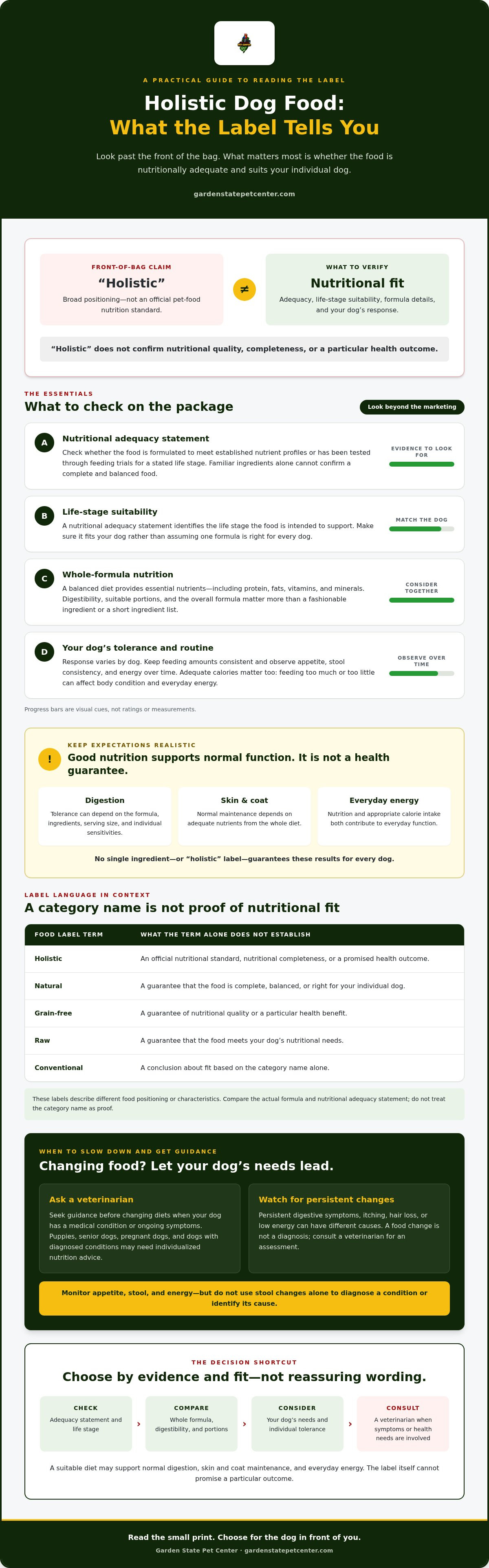
What if the words “holistic dog food” tell you less about your dog’s nutrition than the small print on the back of the bag? It’s understandable to look for food that supports your dog’s overall well-being, but holistic dog food benefits aren’t guaranteed by the label. The term has no official definition for pet food, so it doesn’t confirm nutritional quality, completeness, or a particular health outcome.
To choose with confidence, check what the food provides and whether it fits your dog. This guide explains how to assess the nutritional adequacy statement, ingredient list, life-stage suitability, and feeding format, and when to consult a veterinarian before changing diets. Use a practical checklist rather than relying on reassuring front-of-package language to find an option that meets your dog’s needs.
Key Takeaways
- Learn why “holistic” is a broad label, not a standardized guarantee of nutritional quality or health results.
- Understand why digestibility and a balanced nutrient profile matter more than fashionable ingredient claims when considering holistic dog food benefits.
- Compare holistic, natural, grain-free, raw, and conventional foods by what each label describes and what it doesn’t prove.
- Use a practical label checklist to assess life-stage suitability, nutritional adequacy, formula details, and fit for your dog.
- Find out when to transition carefully and seek veterinary guidance before changing your dog’s diet.
What Does Holistic Dog Food Mean, and Which Benefits Are Realistic?
“Holistic” may sound like a clear promise, but it doesn’t tell you whether a dog food is nutritionally complete or right for your dog. The term can describe a broad marketing or dietary approach to overall well-being, rather than a consistent nutritional standard. Look beyond the front of the package to find information you can use to compare foods.
Realistic holistic dog food benefits depend on a food’s nutritional adequacy and how well it suits the individual dog. No food category guarantees better health for every dog. A thoughtfully formulated diet may support normal body functions, but a label can’t promise a particular outcome.
This video shares one brand’s perspective on what “holistic” means:
Is holistic dog food a regulated nutritional category?
No. “Holistic” doesn’t have an official regulatory definition for pet food under AAFCO or FDA guidance. It differs from a nutritional adequacy statement, which indicates whether a food is formulated to meet established nutrient profiles or has been tested through feeding trials for a stated life stage. Check current AAFCO label guidance to understand what a specific statement means. Familiar or appealing ingredients alone can’t confirm that a food is complete and balanced. For general background on dog-food composition and nutrition, see this overview of dog food.
What benefits might a suitable holistic diet support?
A diet with appropriate nutrients, fed in suitable amounts, can support normal digestion, skin and coat maintenance, and everyday energy. These are possible outcomes of adequate nutrition, not automatic effects of a “holistic” claim. A dog’s response also depends on the formula, feeding routine, health, and individual tolerance. If your dog has ongoing symptoms or a medical condition, ask a veterinarian before relying on a food change to address the concern.
A label can describe a food’s positioning; nutritional adequacy evidence tells you whether it’s designed to meet your dog’s needs. Keep that distinction in mind when comparing options. To explore different dog-food choices, review the dog food selection, then assess each formula for your dog’s life stage and needs.
How Holistic Dog Food May Support Digestion, Skin, and Everyday Well-Being
Potential holistic dog food benefits come from what a formula provides and how an individual dog responds, not from the word on the package. Digestibility, a balanced nutrient profile, appropriate portions, and your dog’s particular needs all matter. A fashionable ingredient or a short ingredient list can’t establish, on its own, how well a food will suit your dog.
Can holistic dog food improve digestion?
Digestive tolerance varies. A dog may respond differently to a formula based on its ingredients, digestibility, serving size, and the dog’s own sensitivities. You can monitor appetite and stool consistency as you assess a food, but stool changes alone don’t diagnose a condition or reveal its cause. Don’t assume probiotics, grains, or any other single ingredient will help every dog.
For a clearer picture, keep feeding amounts consistent and note changes over time, including appetite, stool, and energy. Sudden or persistent digestive symptoms warrant veterinary attention rather than a guess based on a food label. The FDA’s pet food guidance explains labeling considerations, including expectations that claims be truthfully labeled; marketing language still isn’t a diagnosis.
Can food affect skin, coat, and energy?
A complete diet supplies essential nutrients, including protein, fats, vitamins, and minerals, that contribute to normal skin and coat maintenance and support everyday body functions. Adequate calories matter too: feeding too much or too little can affect body condition and day-to-day energy. These outcomes reflect the whole diet and feeding routine, not one highlighted ingredient.
Good nutrition supports normal function, but no food label can guarantee a particular health outcome. Itching, hair loss, low energy, or other persistent changes can have different causes. Don’t assume a food change will resolve them; consult a veterinarian for an assessment.
Which dogs may need individualized nutrition advice?
Puppies, senior dogs, pregnant dogs, and dogs with diagnosed conditions may have needs that call for tailored guidance. Ask a veterinarian before changing a therapeutic or medically prescribed diet. General nutrition information can help you compare options, but it can’t replace diagnosis or treatment.
For nonmedical food questions, a pet nutritional consultation can provide supportive guidance on comparing formats and matching a diet to your dog and routine. You can also explore the dog food selection as you consider options. Check with your veterinary team when health concerns are involved.
Holistic vs. Natural, Grain-Free, and Conventional Dog Food: What Matters?
These label terms describe different things, not a single scale from “basic” to “best.” Holistic dog food benefits can’t be judged by category name alone. Compare what a label tells you with what it leaves unanswered, then check the food’s nutritional adequacy and fit for your dog.
| Label term | What it describes | What it doesn’t prove; what to verify |
|---|---|---|
| Holistic | A broad marketing or dietary approach to overall well-being. | It doesn’t prove completeness, balance, quality, or a health benefit. Check the adequacy statement and formula details. |
| Natural | A defined label term with specific criteria. | It doesn’t automatically mean nutritionally complete or better suited to your dog. Review the adequacy statement and life-stage fit. |
| Grain-free | A formula made without grains. | It doesn’t prove a health advantage or that the food is appropriate for every dog. Check the full formula and ask your veterinarian if considering it for a health concern. |
| Raw | A food’s preparation or processing format. | It doesn’t establish nutritional adequacy or individual suitability. Verify the intended life stage and feeding guidance. |
| Conventional or premium | Broad market descriptions; “premium” often signals positioning, not a specific nutrient standard. | Neither term ranks nutritional quality on its own. Compare adequacy, life-stage fit, formulation, and manufacturer quality-control information. |
Does holistic mean better than conventional dog food?
No. The label alone can’t rank one food above another. Tufts University’s veterinary nutrition experts describe “holistic” as simply a marketing term, not evidence that a product is complete, balanced, or medically appropriate. A conventional food may be suitable if its nutritional profile fits the dog; a holistic-labeled food needs the same careful review. Compare the nutritional adequacy statement, intended life stage, formula, and available information about how the manufacturer maintains quality.
Is grain-free food part of a holistic diet?
No. “Grain-free” describes the absence of grains; “holistic” is a separate, broad label. Grains aren’t automatically harmful to dogs, and removing them doesn’t make a food inherently healthier. Grain-free formulas may use other carbohydrate sources, so assess the whole ingredient and nutrient profile rather than treating the claim as a benefit. If you’re considering a restrictive diet because of symptoms or a suspected health issue, discuss the choice with your veterinarian first.
Treat label terms as prompts for questions, not answers. The most useful comparison is whether a formula is nutritionally adequate for your dog’s life stage, appropriate for their needs, and supported by clear feeding and manufacturer information.
How to Evaluate Holistic Dog Food Labels and Transition Safely
Review labels in a consistent order. Don’t let “holistic” or a prominent ingredient claim distract you from details that show whether a food is designed for your dog and how it should be fed. Label guidance can change, so check current information from AAFCO and the FDA if a term or statement is unclear.
What should you check on a dog-food label?
- Life stage: Confirm that the food is intended for your dog’s stage of life, such as growth or maintenance.
- Nutritional adequacy: Find the adequacy statement and check whether it says the food is complete and balanced for the relevant life stage. Ingredient descriptions alone can’t establish this.
- Formula and feeding details: Review feeding directions, calorie information, and the full ingredient list. Use the feeding guide as a starting point, then consider your dog’s body condition and routine.
- Manufacturer information: Look for contact details. Ask how the company formulates its food, what testing it conducts, and how it manages quality control.
- Your dog’s fit: Consider preferences, tolerance, health history, and any veterinary recommendations. A food that looks appealing on paper still needs to work for the individual dog.
Use this checklist to compare the dog food collection and, if you’re considering that format, the dry dog food selection. Potential holistic dog food benefits matter less than whether the specific formula is nutritionally appropriate and suits your dog.
How should you switch to a new dog food?
Unless your veterinarian advises a different plan, introduce a new food gradually over several days, adjusting the pace to your dog’s tolerance. Follow the package’s feeding directions and avoid changing several parts of the diet at once. That makes it easier to notice how your dog responds.
During the transition, monitor appetite, stool, and other observable changes. If concerning symptoms appear or changes persist, pause the switch and contact your veterinarian for guidance. Follow veterinary instructions if they differ from general transition advice.
When should you consult a veterinarian first?
Check with your veterinarian before changing food if your dog has a diagnosed condition, persistent symptoms, or a therapeutic diet in their care plan. Ask whether that diet should continue and whether a transition is appropriate. Supplements or restrictive diets aren’t substitutes for professional advice, and a food label can’t diagnose the cause of a health concern.
Choosing a Holistic Dog Food That Fits Your Dog and Your Routine
The right choice isn’t determined by “holistic” on the package. Look for a food that’s complete and balanced for your dog’s life stage, appropriate for their individual needs, tolerated well, and manageable for your household. A raw, gently cooked, air-dried, freeze-dried, or dry format may suit different preferences and routines, but format and ingredient preferences don’t replace nutritional adequacy.
A quick checklist for comparing holistic dog foods
Ask the same questions about each option so you can compare formulas fairly:
- Is the food intended for your dog’s life stage, and does its nutritional adequacy statement match?
- What do the feeding directions and calorie information suggest about daily portions?
- Does the ingredient panel align with your preferences without distracting from nutritional needs?
- Does your dog accept and tolerate the food, and does it fit your feeding routine?
- Has your veterinarian recommended specific dietary considerations?
No single formula is best for every dog. If your dog has a health concern or a prescribed diet, make veterinary guidance part of the decision rather than relying on label claims.
How can a nutrition consultation help?
A pet nutritional consultation can help you discuss food formats, compare label details, and clarify questions to bring to your veterinarian. It offers supportive food guidance, not veterinary diagnosis or treatment. Use the factors discussed here alongside your dog’s needs, preferences, and feeding routine.
Explore dog-food options with informed guidance
Once you’ve identified your dog’s needs and preferences, browse options with those criteria in mind. Garden State Pet Center carries a premium dog-food selection that includes holistic and other diet formats, and offers nutritional consultations with an on-site pet nutritionist. Potential holistic dog food benefits depend on the specific food and the dog, not the label alone.
Explore dog food options and use the checklist to compare them thoughtfully.
Choose Your Dog’s Food With Confidence
The key takeaway is simple: “holistic” alone can’t tell you whether a food is complete, balanced, or right for your dog. Look beyond the label to the nutritional adequacy statement, life-stage fit, feeding guidance, and your dog’s individual response. Potential holistic dog food benefits depend on the formula and the dog, not a promise printed on the package.
Take your time comparing options, and involve your veterinarian before changing a prescribed diet or addressing persistent symptoms. For additional support, Garden State Pet Center offers a premium dog-food selection that includes holistic and other diet formats, along with nutritional consultations with an on-site certified pet nutritionist. These consultations can help with food questions, but they don’t replace veterinary care.
Explore dog food and get helpful nutrition guidance. Use a clear checklist and the right professional input to choose a practical option for your dog and your routine.
Frequently Asked Questions
What are the benefits of holistic dog food?
A suitable, nutritionally complete food can support normal digestion, skin and coat maintenance, and everyday energy, but those effects aren’t guaranteed by the word “holistic.” Potential holistic dog food benefits depend on the formula, feeding amount, and your dog’s individual needs and tolerance. Check the food’s nutritional adequacy statement and life-stage fit. If your dog has ongoing symptoms, ask a veterinarian rather than relying on a label to identify or resolve the cause.
Is holistic dog food better for dogs?
Not automatically. “Holistic” is a broad label, not a reliable ranking of nutritional quality, and conventional foods can also be formulated to meet dogs’ nutritional needs. Compare the adequacy statement, intended life stage, feeding directions, and available manufacturer information instead of choosing by category name. The best fit is a complete and balanced food appropriate for your dog that they tolerate and that works for your household’s feeding routine.
Is holistic dog food regulated by the FDA or AAFCO?
“Holistic” has no official, consistent nutritional definition under FDA or AAFCO pet-food guidance. AAFCO provides nutrient profiles and model labeling guidance, while the FDA oversees aspects of animal-food safety and labeling. Neither makes the word “holistic” proof that a food is complete, balanced, or beneficial for a particular dog. Look for the nutritional adequacy statement, and check current FDA and AAFCO guidance if a label term or claim is unclear.
Can holistic dog food help with allergies or itchy skin?
A complete diet supplies nutrients that support normal skin and coat function, but a holistic label doesn’t mean a food will relieve allergies or itching. Skin symptoms can have different causes, and changing foods without identifying the cause may not help. If itching persists, worsens, or comes with other concerning signs, consult a veterinarian. Ask before trying an elimination or restrictive diet, especially if your dog has a diagnosed condition or follows a prescribed food plan.
How do I switch my dog to holistic dog food?
For a routine diet change, introduce the new food gradually over several days, adjusting the pace to your dog’s tolerance and following any veterinary instructions. Keep portions consistent with the feeding directions, and monitor appetite, stool, and other observable changes. If concerning symptoms develop or persist, pause the transition and contact your veterinarian. Don’t switch a dog from a therapeutic or medically prescribed diet without first checking with the veterinarian who recommended it.
What should I look for in holistic dog food?
Start with the nutritional adequacy statement and confirm that the food is intended for your dog’s life stage. Then review feeding directions, calorie information, and the ingredient list, and look for manufacturer contact details. If information isn’t clear, ask how the company formulates the food and manages testing and quality control. Consider your dog’s preferences, tolerance, health history, and veterinary recommendations. Ingredient names or a “holistic” claim alone can’t establish nutritional completeness.
Does holistic dog food need to be grain-free?
No. “Holistic” and “grain-free” describe different attributes, and a holistic-labeled food doesn’t need to exclude grains. Grains aren’t automatically harmful to dogs, and grain-free doesn’t automatically mean healthier or more complete. Assess the whole formula and its adequacy statement rather than treating grain-free as a benefit by itself. If you’re considering a restrictive diet to address a health concern, discuss the choice with your veterinarian before making a change.

Article by
Victor Santucci
Victor Santucci is the owner of Garden State Pet Center in Audubon, NJ, where he specializes in premium pet nutrition, exotic animals, and expert-level care. With years of hands-on experience and a passion for helping pets thrive, Victor is dedicated to educating pet owners on proper nutrition, enrichment, and species-specific care. His mission is simple: provide every pet with the highest quality products and every customer with honest, knowledgeable guidance.
Share this post
- 0 comment
- Tags: canine nutrition, dog food, dog food labels, healthy dogs, holistic dog food, holistic dog food benefits, pet diet tips, pet health