

Exotic Birds for Sale Near Me: A 2026 Buyer’s Guide


The closest listing isn’t always the right bird for your home. Searching “exotic birds for sale near me” is a sensible first step, but a bird’s temperament, daily care needs, and the support available after you bring it home matter just as much as distance.
When listings vary in detail, it can be hard to compare a bird’s background, health information, and care requirements. This guide will help you assess your options, match a bird’s needs to your household and experience, and prepare for its habitat, diet, routine, and ongoing care. You’ll also find practical questions to consider before deciding. From choosing suitable bird supplies to understanding grooming, boarding, avian DNA sexing, and disease screening, these steps help you plan beyond the purchase.
Key Takeaways
- Use “exotic birds for sale near me” as a starting point, then compare the information and care support behind each listing.
- Match a bird’s social needs, noise, space, and daily routine to your household and experience level.
- Review available health and background details carefully; appearance and behavior alone can’t confirm a bird’s overall health.
- Prepare the enclosure, diet, enrichment, cleaning plan, and household routines before your bird arrives.
- Plan for ongoing care, including bird supplies and services such as grooming, boarding, avian DNA sexing, and disease screening.
Exotic Birds for Sale Near Me: How to Compare Your Options
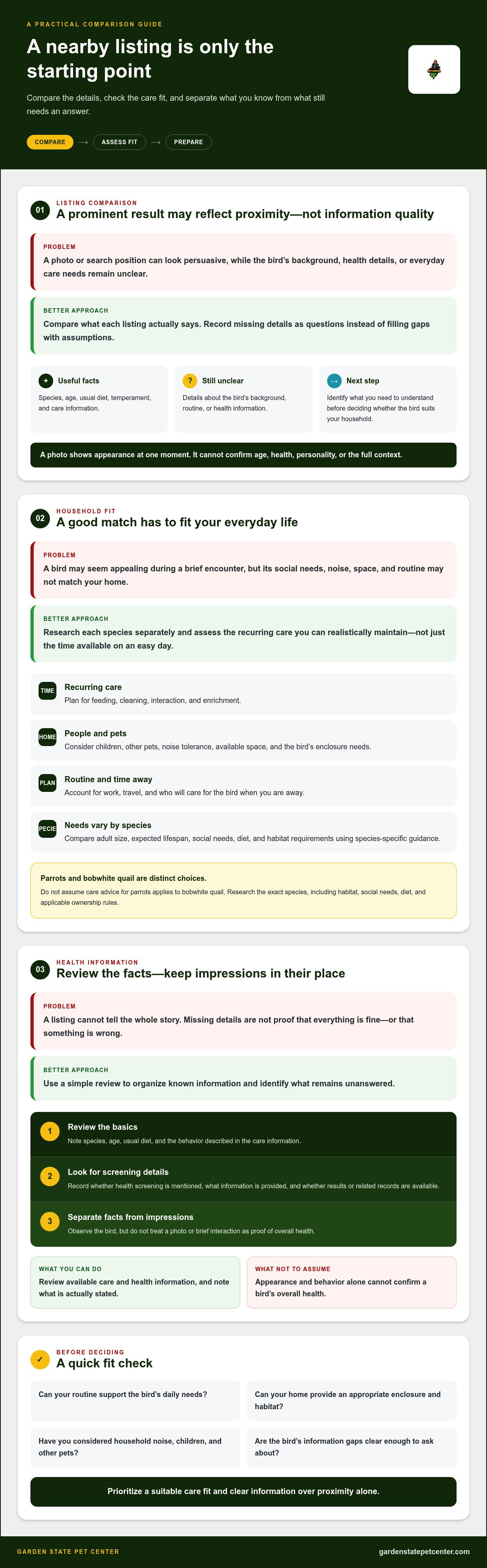
Searching for exotic birds for sale near me is about more than finding the closest listing. You’re looking for a bird whose needs suit your home, plus clear information and practical care resources. Search engines use signals such as your device’s location settings and search preferences to shape “near me” results. A prominent listing may reflect proximity rather than the quality of the information it provides.
Start by comparing what each listing actually says. “Exotic bird” covers a range of birds kept as pets; this overview of what is an exotic bird offers useful context. Then assess each bird on its own details instead of letting a photo or search position decide for you.
Which listing details help you compare birds?
Look for clear species identification, age information, and a description of the bird’s usual diet. A helpful listing also describes temperament and everyday care needs, such as interaction and enrichment. These details help you decide which birds to research further, but they can’t replace species-specific guidance or information about the individual bird.
Use a short comparison checklist. Record what each listing says and note missing details as questions, rather than making assumptions:
- Useful facts: species, age, usual diet, temperament, and care information.
- Still unclear: missing details about the bird’s background, routine, or health information.
- Next step: identify what you need to understand before deciding whether the bird fits your household.
Don’t infer age, health, or personality from a photo. It shows appearance at one moment, not the full context you need to make an informed comparison.
What does a specialist bird store add to the search?
A bird-focused store makes it easier to consider bird options alongside the supplies and care services that support ownership. Garden State Pet Center offers exotic birds, bird food, cages, toys, and accessories, along with bird grooming, boarding, avian DNA sexing, and disease screening. Browse bird supplies and bird categories as you research what a bird will need. Prioritize clear information and a suitable care fit over proximity alone.
Match an Exotic Bird to Your Experience, Routine, and Home
A bird that looks appealing in a listing may not suit your everyday life. Before narrowing down exotic birds for sale near me, consider how much time you can consistently give to feeding, interaction, cleaning, and enrichment. Include the whole household in your decision: noise tolerance, children, other pets, available space, and travel routines can all affect whether a bird’s needs fit.
Research each species separately. Compare adult size, expected lifespan, social needs, diet, and habitat requirements. General bird-care advice can be a starting point, but it can’t replace species-specific information. A young bird isn’t automatically easier to care for, and a pleasant temperament during a brief encounter doesn’t guarantee a good long-term match.
How should first-time owners assess care commitment?
Be realistic about your regular schedule, not just the time you expect to have on an easy day. Write down the tasks you can maintain, including feeding, cleaning, interaction, and enrichment. Consider who will care for the bird when you’re away. If your household is busy or noise-sensitive, make those factors part of your research rather than assuming you’ll adapt after the bird arrives.
- Time: Plan for feeding, cleaning, interaction, and enrichment as recurring responsibilities.
- Household: Consider how children and other pets may affect the bird’s space and routine.
- Home: Assess whether you can provide an appropriate enclosure and room for the bird’s needs.
- Schedule: Account for work, travel, and consistent care when you’re away.
How do parrots and bobwhite quail differ as ownership considerations?
Parrots and bobwhite quail are distinct bird types, not interchangeable choices. A search for “bobwhite quail for sale” should lead to species-specific research, not an assumption that care advice for parrots applies. Before considering either, look up authoritative guidance on habitat, social needs, diet, and applicable ownership rules. Broad bird-care tips can’t answer questions that depend on the exact species.
Use the same questions to compare each potential match: Can your routine support its needs? Can your home accommodate its adult size and suitable habitat? Are you prepared for the commitment over time? Answering these questions before choosing can help you focus on fit, not appearance alone. As you plan the setup, browse bird supplies and accessories alongside your care research.
How to Assess Bird Health and Purchase Information
Health details help you make a more informed decision, but no listing can tell the whole story. As you compare exotic birds for sale near me, look for clear information about the bird’s usual diet, behavior, background, and any health screening. Treat gaps as questions to resolve, not as proof that everything is fine or that something is wrong.
What health information should a buyer understand?
Use this step-by-step review to organize what you know and what remains unclear:
- Review the basics. Note the bird’s species, age, usual diet, and the behavior described in its care information.
- Look for screening details. Record whether health screening is mentioned, what information is provided, and whether results or related records are available.
- Separate facts from impressions. Observe the bird, but don’t treat a photo or brief interaction as proof of overall health. Appearance and behavior alone aren’t a veterinary diagnosis.
- Write down unanswered questions. List missing details about diet, history, behavior, or screening instead of guessing from limited information.
- Plan for veterinary guidance. Use records and screening information as context, not as a replacement for care from an avian veterinarian.
Clear information supports a careful decision, but it doesn’t remove the limits of what has been assessed.
When can avian DNA sexing and disease screening help?
These services answer different questions. Avian DNA sexing identifies a bird’s sex through testing, with the method and interpretation depending on the laboratory process. Disease screening looks for specific health concerns according to the screening performed. Garden State Pet Center offers both avian DNA sexing and disease screening.
DNA sexing identifies sex; disease screening checks for specified health concerns, and neither by itself guarantees a bird’s overall health. Keep that distinction in mind as you review records. Screening results relate to the tests performed, while a veterinary assessment considers the bird’s health more broadly. Understand what information is documented, keep relevant records, and discuss health questions with an avian veterinarian.
Prepare Your Home Before Bringing an Exotic Bird Home
Set up your home before bringing a bird into it. A ready enclosure, suitable food, and predictable household routines give you a practical starting point for meeting the bird’s needs from day one. As you consider exotic birds for sale near me, research habitat requirements for the exact species. Enclosure dimensions, bar spacing, placement, and other setup details vary, so don’t guess or apply general advice to every bird.
What should an exotic-bird setup include?
Use this before-arrival checklist to organize your preparations. Confirm technical habitat details with authoritative avian-care references for the species, and seek qualified guidance when a requirement is unclear.
- Enclosure: Choose a suitably sized cage or enclosure, with secure placement and a setup based on the bird’s species-specific needs.
- Perches and enrichment: Prepare appropriate perches, toys, and activities. Select enrichment with the bird’s size and needs in mind.
- Food and water: Have suitable food ready based on species-specific dietary guidance, and plan for consistent access to clean water.
- Cleaning routine: Decide how you’ll keep the enclosure and feeding areas clean as part of regular care.
- Household routine: Choose a calm, secure location and agree on consistent expectations for daily interaction and care among household members.
Choose food and enrichment for the bird you’re preparing for, rather than buying based on a broad “bird” label alone. Explore bird food, cages, and enrichment supplies as you put your checklist into action.
How can owners plan for support beyond the purchase?
Think ahead about care needs that may arise over time. Garden State Pet Center offers bird grooming and pet boarding, which can support grooming needs and care arrangements when you travel. These services address different needs, and a bird’s individual care requirements should guide your plans. Learn more about professional bird grooming services as part of planning for ongoing care.
Pair reliable supplies with a care routine that fits your bird, then explore bird-care supplies to complete your home setup.
Choose Ongoing Bird-Care Support Alongside Your Purchase
Choosing a bird is only one part of responsible ownership. Before deciding, bring together four things: a species that fits your experience and routine, reliable information about the individual bird, a clear understanding of available health information, and a home prepared for its needs. Planning for continuing care at the same time can help you make a thoughtful choice rather than treating the purchase as a one-time decision.
Which ongoing services can support bird ownership?
Bird care needs can change over time, so understand what support is available and what each service is intended to address. Garden State Pet Center offers bird grooming and pet boarding, as well as avian DNA sexing and disease screening. These are separate services, each with a different purpose.
- Bird grooming: A dedicated option for relevant grooming needs. Learn more about professional bird grooming services as you plan for ongoing care.
- Pet boarding: Temporary care to consider when travel or other plans mean you can’t provide your bird’s usual care yourself.
- Avian DNA sexing: Testing that identifies a bird’s sex.
- Disease screening: A distinct health-related service. It isn’t the same as DNA sexing or a substitute for veterinary care.
Understanding these differences helps you plan appropriately. Testing and screening provide specific information, while grooming and boarding address different practical care situations.
What is the next step after choosing a bird?
Before visiting, explore the bird category and prepare questions based on the species and the information you’ve gathered. Consider how you’ll provide suitable food, a properly researched enclosure, enrichment, and consistent daily care. Also think ahead about grooming needs and how you’ll arrange care when you’re away.
Garden State Pet Center offers bird supplies and relevant care services. Bring your species-specific questions and use the details you’ve researched to guide your plans. A careful approach connects the bird you choose with the environment and continuing support it needs.
Explore bird options and care essentials
Choose With Care and Plan for the Years Ahead
Finding exotic birds for sale near me is only the first step. Choose based on a bird’s care needs and your household routine, review available health information without relying on appearance alone, and prepare the right enclosure, food, and enrichment before bringing a bird home. Responsible ownership also means thinking ahead about ongoing care and support.
Garden State Pet Center offers bird food, cages, toys, and accessories, plus bird grooming, boarding, avian DNA sexing, and disease screening. These resources support different parts of bird care and help you plan beyond the initial decision.
Explore the bird options and care essentials, and bring your species-specific questions as you plan your next steps. Explore bird options and care essentials. Thoughtful preparation and reliable support can help you build a caring start for your new companion.
Frequently Asked Questions
How do I find exotic birds for sale near me?
Search for nearby bird listings, then compare the care information and support behind each option, not just its distance from you. Search results can be influenced by your device’s location settings and preferences, so the closest result may not offer the clearest bird details. Look for species identification, age, diet, temperament, and health information. Garden State Pet Center offers exotic birds and bird-care resources, including food, cages, toys, grooming, boarding, avian DNA sexing, and disease screening.
What should I look for when buying an exotic bird?
Look for clear information about the bird’s species, age, usual diet, temperament, background, and any health screening. Compare these details with reliable, species-specific care guidance and consider whether the bird’s needs fit your experience, home, and daily routine. Note unanswered questions rather than filling gaps with assumptions. A bird’s appearance or behavior during a brief interaction can offer observations, but neither establishes its overall health or replaces veterinary assessment.
How much time does an exotic bird need each day?
The time required depends on the bird and its species-specific social, feeding, cleaning, and enrichment needs, so there isn’t one daily schedule that fits every bird. Before choosing, map out when you can provide food and water, interaction, enclosure care, and appropriate activities. Consider whether your household can keep that routine consistent on workdays, weekends, and during travel. Research the exact species rather than relying on general advice about birds.
Can a beginner buy an exotic bird?
A beginner can consider bird ownership, but the right choice depends on preparation and the bird’s individual needs, not simply its age or appeal. Start by researching the exact species’ adult size, lifespan, diet, social needs, and habitat requirements. Be realistic about noise, available space, daily care, and your experience. If important needs seem difficult to meet, take more time to learn before making a commitment.
Is bobwhite quail a suitable first exotic bird?
Bobwhite quail shouldn’t be assumed to suit a first-time bird owner simply because they’re being considered as a pet. Quail and parrots are distinct bird types, and their care needs shouldn’t be treated as interchangeable. Before deciding, research authoritative, species-specific guidance on habitat, social needs, diet, and applicable ownership rules. Compare those requirements with your home and experience, and seek knowledgeable guidance if you’re unsure whether you can meet them.
Does avian DNA sexing tell me whether a bird is healthy?
No. Avian DNA sexing identifies a bird’s sex; it doesn’t establish overall health. Disease screening is a separate service that concerns the specific health tests performed, and its results shouldn’t be treated as a guarantee that a bird is free of every condition. Garden State Pet Center offers both avian DNA sexing and disease screening. For a broader assessment of a bird’s health, consult an avian veterinarian.
What supplies should I prepare before bringing a bird home?
Prepare an appropriately sized enclosure, secure placement, suitable perches, species-appropriate enrichment, the right food, and clean water. Plan a regular cleaning routine and decide how household members will handle daily care. Research enclosure dimensions and setup for the exact species rather than choosing by a general bird label. Garden State Pet Center offers bird cages and enclosures, bird food, toys, treats, and accessories to help you plan a suitable setup.

Article by
Victor Santucci
Victor Santucci is the owner of Garden State Pet Center in Audubon, NJ, where he specializes in premium pet nutrition, exotic animals, and expert-level care. With years of hands-on experience and a passion for helping pets thrive, Victor is dedicated to educating pet owners on proper nutrition, enrichment, and species-specific care. His mission is simple: provide every pet with the highest quality products and every customer with honest, knowledgeable guidance.
Share this post
- 0 comment
- Tags: avian care, bird buying guide, bird supplies, exotic birds, exotic birds for sale near me, exotic pet ownership, pet bird health, pet birds