

Reptile Calcium with Vitamin D3: How to Choose Safely


More vitamin D3 isn’t automatically better for your reptile. Choosing reptile calcium with vitamin d3 based on the label alone can overlook the factors that matter most: your animal’s species, diet, and exposure to effective UVB lighting. Reptiles can produce D3 with UVB exposure, while D3 from an oral supplement follows a different route and can be overdone.
It’s understandable to feel unsure when supplement labels look similar and both too little and too much may put your reptile’s health at risk. The right choice depends on the whole care picture, not a one-size-fits-all rule. This guide explains how calcium and D3 work together, compares D3-containing calcium with other supplement options, and shows what to check before choosing. You’ll also learn why insect-based and whole-prey diets can call for different approaches, and how UVB and heat fit into the decision. Use these points to identify a cautious next step, and consult a reptile veterinarian for species-specific guidance.
Key Takeaways
- Choose reptile calcium with vitamin d3 based on your reptile’s species, diet, and UVB exposure, not the supplement label alone.
- Calcium and vitamin D3 have different roles, so understand what each contributes before comparing supplement types.
- UVB lighting and heat support different parts of reptile care. One isn’t a substitute for the other.
- Compare calcium with D3, calcium without D3, and multivitamin blends by checking their listed nutrients and label clarity.
- Use species-specific veterinary guidance to shape your supplementation plan, then browse reptile supplies with your care needs in mind.
What Does Reptile Calcium with Vitamin D3 Do?
Calcium is a mineral, while vitamin D3 helps a reptile absorb and use calcium. Calcium supports skeletal health and everyday body functions, including muscle movement and nerve signaling. A supplement provides nutrients. It isn’t a cure for illness or a substitute for a suitable diet and habitat.
Reptile calcium with vitamin D3 combines calcium with a vitamin that contributes to calcium absorption, but whether that combination fits depends on the individual reptile’s species, diet, and care conditions. A product label describes its contents, not whether every animal needs those nutrients in that form.
How do calcium and D3 work together?
Calcium supplies a mineral the body uses to maintain bones and carry out normal functions. Vitamin D3 helps the body take up and use calcium from food. D3 may also be listed as cholecalciferol. For a general overview of this vitamin and its role in calcium metabolism, see Cholecalciferol (Vitamin D3).
These nutrients work together, but adding more isn’t automatically beneficial. Reptiles can produce D3 when exposed to UVB, while dietary D3 comes through food or supplements. How those sources fit together depends on the animal and its husbandry. A reptile veterinarian can help assess species-specific needs, especially if you’re unsure whether the diet and lighting provide an appropriate balance.
Why does a reptile’s species matter?
Reptiles don’t share one standard menu. Herbivorous species eat plant-based diets; omnivorous species may eat both plant and animal foods; insect-eating species rely on prey items. Those diets have different nutrient profiles, so don’t assume the same calcium supplement plan suits all three groups. Species-specific care guidance puts diet and supplementation in context.
For example, a bearded dragon’s diet changes with age and includes a mix of food types, so its nutritional needs can’t be inferred from the word “lizard” alone. Explore the reptile supplies available for building a suitable habitat and care setup, and use a dedicated bearded dragon food guide for broader diet context. This example isn’t a supplement prescription. Confirm an individual animal’s plan with a reptile veterinarian.
Start with the species, then consider its usual diet and care environment before choosing a supplement. That pause helps keep a product label from standing in for a complete care plan.
How UVB Lighting and Diet Affect Calcium with D3 Choices
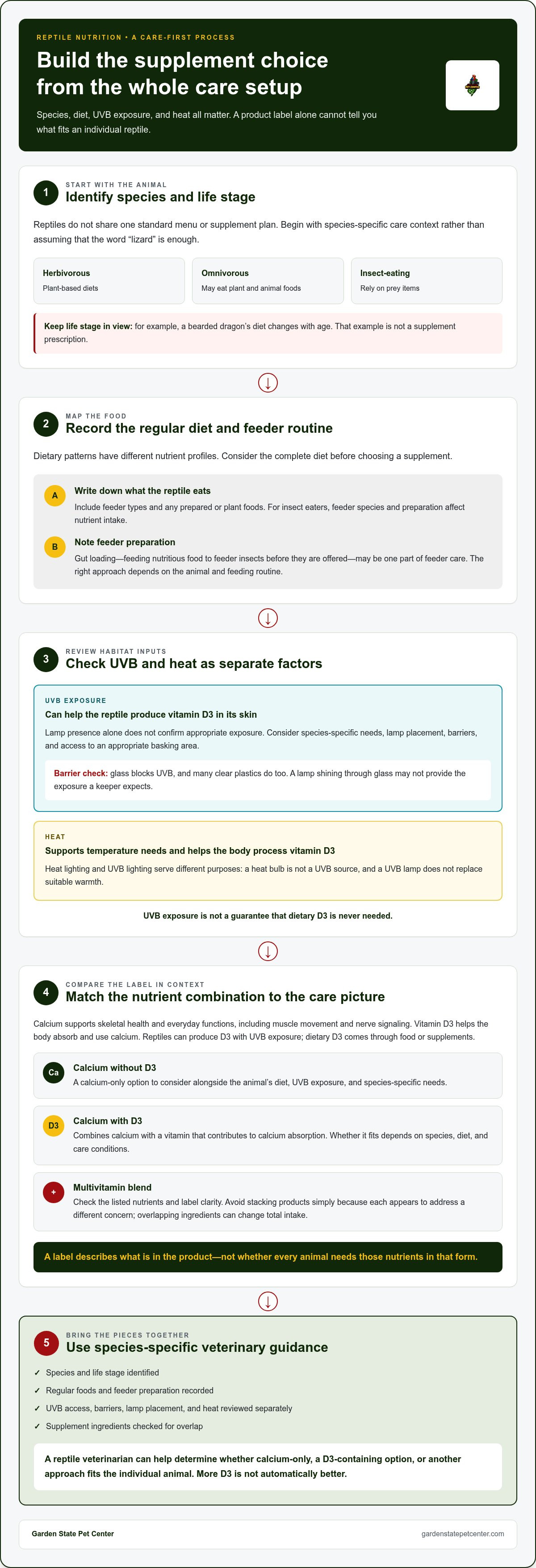
A supplement decision makes more sense when you look beyond the tub. Species, food, UVB access, and the rest of the habitat all shape how a reptile receives and uses nutrients. A lamp or supplement label can offer useful information, but neither proves that the whole setup is appropriate for a particular animal.
Supplement choices should reflect the complete care setup, including species, diet, UVB exposure, and heat. That’s why choosing reptile calcium with vitamin d3 isn’t as simple as adding the same powder to every reptile’s food.
What role does UVB play in D3 decisions?
UVB exposure can help a reptile produce vitamin D3 in its skin, which supports the body’s use of calcium. The result depends on more than whether a UVB lamp is present. Species-specific needs, the lamp’s placement, barriers between the lamp and animal, and access to an appropriate basking area all matter. Glass blocks UVB, and many clear plastics do too, so a lamp shining through a glass enclosure may not provide the exposure a keeper expects.
UVB and heat lighting serve different purposes. UVB contributes to D3 production; heat supports the animal’s temperature needs and helps the body process that vitamin. A heat bulb isn’t a UVB source, and a UVB lamp doesn’t replace suitable warmth. Ask a reptile veterinarian for guidance tailored to your species and setup. UVB exposure also shouldn’t be treated as a guarantee that dietary D3 is never needed.
How can diet change the supplementation picture?
Consider the complete diet before choosing a supplement. An insect-eating reptile’s nutrient intake is influenced by feeder species and how those feeders are prepared. Herbivorous and omnivorous reptiles have different dietary patterns, so their needs can’t be inferred from a plan designed for insect eaters. Gut loading, or feeding nutritious food to feeder insects before they’re offered, may be one part of feeder care. The right approach depends on the animal and feeding routine.
Keep the diet review separate from the product comparison. First, record what the reptile eats, including feeder types and any prepared or plant foods. Then review UVB and heat conditions. With that context, a veterinarian can help determine whether a calcium-only supplement, a D3-containing option, or another approach better fits the animal. Avoid stacking products simply because each appears to address a different nutritional concern. Overlapping ingredients can change the total intake.
- Identify the reptile’s species and life stage.
- List its regular foods and feeder preparation practices.
- Review UVB access, barriers, lamp placement, and heat separately.
- Use species-specific guidance before changing supplements.
Use the same care-first approach while reviewing reptile supplies: match enclosure equipment and nutrition choices to the animal’s needs rather than relying on a single product claim.
Calcium with D3 vs. Other Reptile Calcium Options
Supplement labels can look similar while describing different nutrient combinations. Compare what each product is intended to provide, then consider it alongside your reptile’s species, diet, and UVB setup. A category name is a useful starting point, not proof that a supplement suits an individual animal.
This overview highlights common differences. Ingredients and directions vary by product, so read the full label rather than relying on the front-panel name.
| Supplement type | Intended nutrient contents | What to check |
|---|---|---|
| Calcium with D3 | Calcium plus vitamin D3 | Confirm D3 is listed in the ingredients and review the directions for the intended animal and use. |
| Calcium without D3 | Calcium, with no D3 listed as an added ingredient | Read the ingredient list to distinguish a calcium-only product from a blend. |
| Multivitamin blend | Multiple vitamins and possibly minerals; contents differ by product | Check which nutrients are included, including whether calcium or D3 is present. |
When might keepers compare D3 and non-D3 calcium?
Compare the options as part of a care-plan decision, not as a contest to find one universally “best” powder. A keeper reviewing an animal’s diet and UVB access may need to know whether a product includes D3 or supplies calcium without it. Those details help frame the decision, but they don’t determine the answer on their own.
Species, feeding pattern, and husbandry all influence what may fit. If you’re uncertain about your reptile’s needs or whether its lighting setup is appropriate, seek species-specific guidance from a reptile veterinarian before changing supplements. Don’t choose by habit or copy another keeper’s routine; different animals can have different care requirements.
What should you check on a supplement label?
Read the back or side panel as carefully as the product name. Look for the listed ingredients, whether D3 is included, the intended use, and the manufacturer’s directions. Then distinguish a calcium-focused product from a multivitamin blend, which may supply additional nutrients. Don’t assume two products with similar names have identical formulations.
- Ingredients: Identify the nutrients the product actually contains.
- D3 status: Check whether vitamin D3 is included instead of guessing from the word “calcium.”
- Directions: Follow the product label, but remember that general manufacturer directions don’t replace species-specific veterinary advice.
Keep the label available when discussing your care plan with a reptile veterinarian. That makes it easier to compare the product’s contents with the animal’s diet and lighting. A clear label supports an informed choice; it doesn’t establish that reptile calcium with vitamin d3 is right for every reptile.
How to Choose and Use Reptile Calcium with D3 Carefully
Make this a care-plan decision, not a guess based on a familiar product name. Before choosing reptile calcium with vitamin d3, gather a clear picture of the animal and its routine. Then compare labels and use species-specific guidance to decide whether a D3-containing supplement fits. Manufacturer directions explain how a product is intended to be used, but they can’t account for every reptile’s individual needs.
What information should you gather before choosing?
Write down the details that shape your reptile’s nutrition and environment. A short record helps you explain the situation clearly when seeking tailored advice and reduces the chance of overlooking an existing source of nutrients.
- Species and life stage: Note the exact species and age or life stage, since care needs can differ.
- Diet: List regular foods and feeder types, including how feeder insects are prepared.
- Lighting and heat: Describe the UVB setup and heat sources separately, including where the animal can access them.
- Current supplements: Record product names, listed ingredients, and how each is currently used.
With this information, compare the product’s ingredient list and directions with the animal’s care plan. Don’t infer a dose from another reptile’s routine or increase the amount because the label seems cautious. A reptile veterinarian can help interpret the details for your individual animal.
When should a reptile veterinarian guide the decision?
Seek veterinary guidance if your reptile shows concerning symptoms, you suspect a deficiency, or you’re uncertain whether its diet and habitat are appropriate. Supplements can’t diagnose or treat metabolic bone disease (MBD), and trying different products isn’t a substitute for an assessment. Don’t delay veterinary care while adjusting supplements in hopes of resolving a possible health problem.
Take the product label and your care notes to the discussion. This gives the veterinarian useful context for considering the animal’s nutrition and husbandry together. If a change is recommended, follow the guidance specific to your reptile rather than adding products or altering use on your own. More supplementation isn’t a safe way to compensate for a lighting, diet, or other husbandry problem that hasn’t been assessed.
Once your care plan points to a product category, browse reptile supplies with that need in mind. Compare the label and intended use with the guidance you’ve received, and choose equipment and supplies that support the complete setup.
Find Reptile Calcium with D3 That Fits Your Care Plan
The safest choice isn’t automatically the supplement with the most ingredients or the one another keeper uses. Match the product category to your reptile’s species, diet, and UVB context, then consider the full care setup before making a change. A label can tell you what’s in a product, but it can’t determine what an individual animal needs.
A quick checklist before you compare products
Gather the details that make a comparison useful. This keeps product selection connected to your animal’s care instead of a guess based on packaging.
- Confirm the species and life stage. Record the animal’s species and age or life stage for more relevant guidance.
- Review the diet. Note the foods and feeder types your reptile receives, along with any feeder preparation practices.
- Describe the lighting. Record the UVB arrangement and heat sources separately, including how the animal accesses them.
- Check the label. Compare listed ingredients, whether D3 is included, the intended use, and the manufacturer’s directions.
- Note current supplements. Include what you use and how you use it so a professional can consider the full picture.
Follow the product’s directions, but don’t treat them as a substitute for species-specific veterinary advice. If your reptile has health concerns, pause product comparisons and seek veterinary guidance rather than trying a different supplement or increasing supplementation on your own.
Make the next step informed and practical
Garden State Pet Center specializes in reptiles and amphibians, and its reptile supplies can support the habitat and care setup you’re planning. The retailer is a resource for supplies, not a replacement for veterinary assessment or individualized health advice. Keep your care-plan criteria beside you as you browse, and compare product information with the guidance you’ve received.
Choose reptile calcium with vitamin d3 only when it fits the animal’s assessed needs, not simply because D3 appears to be an added benefit. Apply the same care when considering other categories: check the intended use and ingredients, and don’t assume a product suitable for one species or setup will suit another.
Explore the reptile supplies collection for care and habitat categories, then use your established requirements to guide product comparisons. Browse reptile supplies at Garden State Pet Center with your reptile’s needs at the center.
Make Your Next Care Choice with Confidence
Let your reptile’s care plan guide your next step. Before selecting reptile calcium with vitamin d3, keep species-specific veterinary advice at the center of the decision, especially if your animal has health concerns or its needs are uncertain. Use that guidance to compare relevant supplies without treating a supplement as a shortcut for resolving a husbandry issue.
Garden State Pet Center specializes in reptiles, amphibians, exotic birds, and small animals. Its pet supplies and accessories ship nationwide, making it easy to explore options while keeping your animal’s individual requirements in view.
When you’re ready to browse, take your care-plan criteria with you and compare categories thoughtfully. Browse reptile supplies and choose your next step with care. A clear plan makes informed decisions easier, and your reptile’s well-being remains the guide.
Frequently Asked Questions
Is calcium with vitamin D3 safe for every reptile?
No. A D3-containing calcium supplement isn’t automatically suitable for every reptile or care setup. An animal’s diet, species-specific UVB requirements, and other sources of D3 all affect the decision. Don’t use another keeper’s routine as a prescription for your pet. If you’re unsure whether a supplement fits, discuss the animal’s full diet and habitat with a reptile veterinarian before adding it.
Can reptiles get vitamin D3 from UVB lighting?
Yes, UVB exposure can enable reptiles to produce vitamin D3 in their skin, but the result depends on the species and lighting setup. A lamp shining through glass won’t provide effective UVB exposure because glass blocks UVB. Placement, barriers, and the reptile’s access to the lit area matter, so evaluate the arrangement for the species rather than assuming any UVB bulb is sufficient.
How much calcium with D3 should I give my reptile?
There isn’t one safe amount that applies to all reptiles. The appropriate plan depends on the animal’s species, life stage, diet, and UVB conditions, as well as the product’s formulation. Follow the label’s directions, but don’t use them as a substitute for individualized veterinary advice. If you’re uncertain, bring the supplement label and details about the reptile’s routine to a reptile veterinarian before changing how you use it.
What happens if a reptile gets too much vitamin D3?
Excessive dietary D3 can be harmful. It may contribute to abnormal calcium deposits in soft tissues and organs, so adding more supplement isn’t a safe response to a suspected nutrition problem. If you think your reptile has received too much, or you notice a change in its health, contact a reptile veterinarian promptly. Share the product label and how it was used, and don’t wait to try another supplement first.
What is the difference between calcium with D3 and calcium without D3?
Calcium with D3 supplies calcium along with vitamin D3; a calcium product without D3 is intended to provide calcium without added D3. Read the ingredient panel to verify what a specific product contains, since names and formulations can vary. Neither type is universally preferable. Even with a carefully managed UVB setup, the choice depends on the reptile’s species, diet, and guidance for its individual care.
Can I use reptile calcium with D3 for feeder insects?
Some keepers dust feeder insects with calcium supplements, but whether to use a D3-containing powder depends on the reptile’s overall feeding and lighting plan. Dusting adds nutrients to the prey, so consider it alongside any other supplements rather than treating it as an isolated step. Follow the product directions and seek species-specific veterinary guidance if you’re unsure whether D3 belongs in your feeder routine.
Does calcium with D3 treat metabolic bone disease?
No. Calcium with D3 isn’t a diagnosis or a stand-alone treatment for metabolic bone disease (MBD). A reptile with suspected MBD needs veterinary assessment to determine its condition and appropriate care; changing supplements on your own could delay that assessment. If you notice signs that concern you, arrange veterinary guidance rather than trying different calcium products. Bring details about the animal’s diet, lighting, and supplement use to help inform the discussion.

Article by
Victor Santucci
Victor Santucci Jr. is the owner of Garden State Pet Center and a Certified Clinical Pet Nutritionist specializing in premium pet nutrition, raw and fresh feeding, holistic pet wellness, birds and exotic animals. Through years of hands-on retail and animal-care experience, Victor helps pet parents make informed decisions about nutrition, enrichment and species-appropriate care.
Share this post
- 0 comment
- Tags: reptile calcium with vitamin d3, reptile care, reptile health, reptile nutrition, reptile supplements, UVB lighting, vitamin D3 for reptiles