

Puppy feeding schedule chart Best Practices and Expert Advice


Your puppy's bowl is more than just a container for food; it's a biological roadmap that dictates their development and long-term health. We know that staring at a bag of kibble or a container of raw food often brings a wave of anxiety about overfeeding or underfeeding your new family member. Finding a reliable puppy feeding schedule chart is the essential first step toward replacing that confusion with a consistent, healthy routine that supports their unique needs.
Master your puppy’s mealtime with our expert-approved feeding chart and nutritional guide for 2026. You'll gain the confidence to select high-quality ingredients, whether you prefer the convenience of premium brands like Fromm or the specialized benefits of raw diets from SmallBatch. We'll walk you through the latest AAFCO labeling updates and explain how to prioritize gut health during these critical early months. This guide provides the clarity you need to ensure your puppy achieves steady growth and vibrant energy every single day.
Key Takeaways
- Discover why puppies require twice the energy of adult dogs and how to navigate the transition from mother's milk to solid food with confidence.
- Establish a reliable daily routine using our expert-approved puppy feeding schedule chart to maintain digestive consistency and healthy growth.
- Master the Body Condition Score (BCS) technique to visually assess your puppy’s weight and adjust portions more accurately than generic charts allow.
- Compare the nutritional advantages of specialized raw, holistic, and premium pet food options to provide the highest standard of care for your growing pet.
- Monitor vital indicators of health, such as stool quality and coat condition, to confirm your nutritional choices are delivering optimal results.
Table of Contents
Understanding Puppy Nutritional Milestones (0-12 Months)
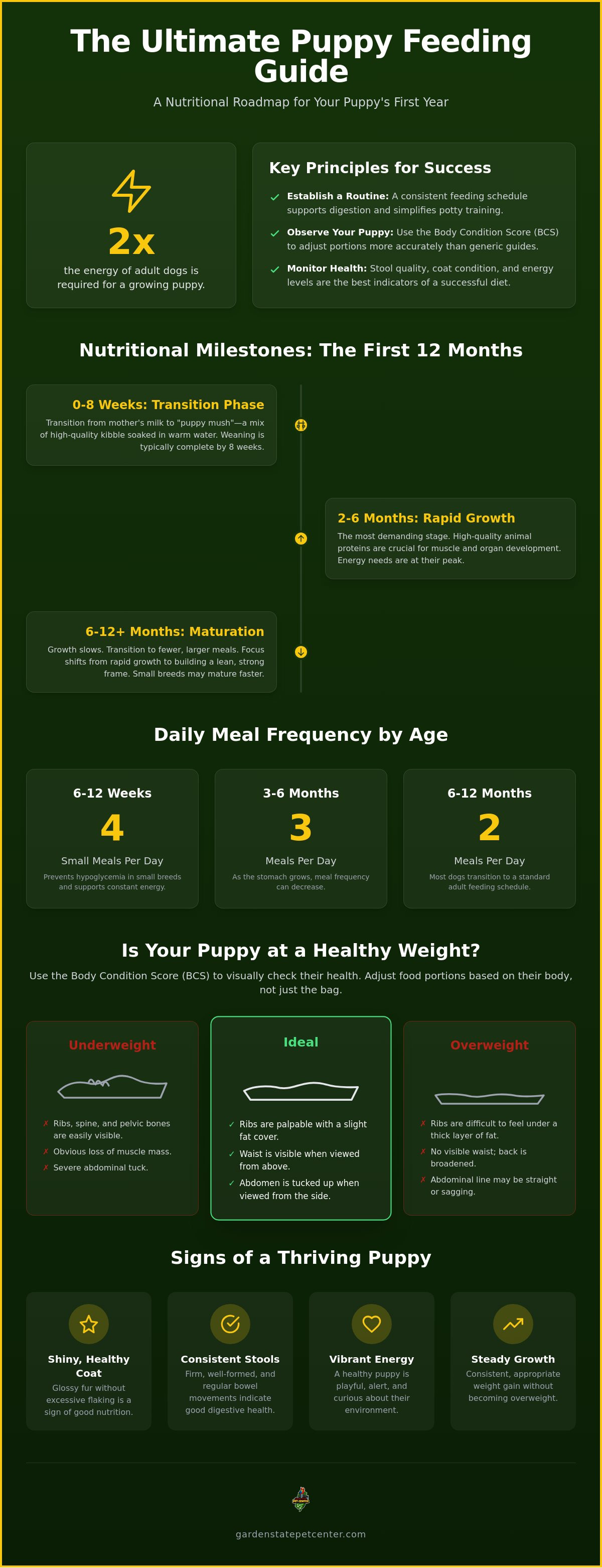
Watching a puppy grow is like witnessing a small miracle in fast-forward. During these first twelve months, your new companion isn't just getting bigger; they're undergoing complex physiological changes that require precision fueling. Most new owners are surprised to learn that puppies often require twice the energy of an adult dog of the same weight. This isn't just about calories; it's about the specific Puppy nutritional requirements that support brain development, immune function, and structural integrity. Using a well-structured puppy feeding schedule chart helps you manage these shifting needs without overwhelming their developing digestive systems.
For large and giant breeds, this growth period is even more sensitive. There is a critical window for bone and joint development where over-nutrition can be just as harmful as a deficiency. If a large breed puppy grows too quickly, their skeletal structure may not be able to support their weight, leading to long-term health issues. We prioritize bioavailability in the diets we recommend, ensuring that the nutrients in premium brands like Fromm Family or Farmina are easily absorbed and utilized by your puppy's body rather than simply passing through as waste.
To visualize how these portions look in real life, watch this helpful veterinary guide:
The First 8 Weeks: From Nursing to Solids
Transitioning from nursing to solid food is a delicate process that typically begins around three to four weeks of age. You can start by introducing a "puppy mush" created by soaking high-quality dry puppy food in warm water or a canine milk replacer. This bridge period is vital because it supplements the maternal antibodies the puppy received from colostrum. You'll know they're ready for a fully solid diet when they show a keen interest in their mother's bowl and their first sharp teeth begin to emerge. By eight weeks, most puppies should be fully weaned and following a consistent puppy feeding schedule chart.
The Rapid Growth Phase: 2 to 6 Months
The period between two and six months is arguably the most demanding stage of a dog's life. This is the peak of the rapid growth phase where caloric intake must be carefully monitored to support intense development. High-quality animal proteins are the essential building blocks here, providing the amino acids necessary for healthy muscle development. Because their stomachs are still small but their energy demands are massive, you'll typically feed three to four small meals a day to prevent energy crashes and maintain steady, healthy growth throughout the day.
The Ultimate Puppy Feeding Schedule Chart by Age
Establishing a reliable puppy feeding schedule chart is the cornerstone of successful pet ownership. It isn't just about what you put in the bowl; it's about creating a timing sequence that supports their metabolic rhythm. We advocate for the "Consistency Rule" because puppies thrive on predictability. Their sensitive gastrointestinal tracts respond best when meals occur at the same time every day. This routine doesn't just aid digestion; it's your most powerful tool for successful potty training. A predictable intake lead to a predictable output.
Following established Puppy Feeding Fundamentals ensures your pet receives adequate nutrition during their most vulnerable growth stages. While general guidelines exist, you must adjust for your puppy's specific breed size. Small breeds often require more frequent, smaller meals to prevent hypoglycemia, or low blood sugar. Large breeds need a carefully managed schedule to ensure they don't grow too quickly, which can put undue stress on their developing joints. If you're looking for the right tools to start this journey, browse our selection of premium dog supplies to find high-quality options tailored for every breed size.
Daily Meal Frequency Guide
As your puppy matures, their stomach capacity increases and their metabolic needs shift. Use this frequency breakdown to guide your routine:
-
6 to 12 weeks: 4 meals per day. This frequency maintains steady blood sugar levels during a period of intense brain and body development.
-
3 to 6 months: 3 meals per day. Most puppies are ready to drop the mid-morning or mid-afternoon meal during this stage.
-
6 to 12 months: 2 meals per day. By this point, most dogs can transition to a standard adult schedule of morning and evening feedings.
Sample Daily Routine for a 4-Month-Old Puppy
At four months, your puppy is likely in the "three meals a day" phase. Aligning these meals with your own schedule makes the routine easier to maintain. Consistency is the goal here.
-
7:00 AM (Morning): Serve the first meal. Follow this with an immediate outdoor break. Puppies typically need to eliminate within 15 to 30 minutes of eating.
-
12:00 PM (Mid-day): Provide the second meal. Use the post-meal energy for a short socialization or training session. This keeps their mind engaged and helps burn off "zoomies."
-
5:00 PM (Evening): Offer the final meal of the day. Ensure this happens at least three hours before bedtime to allow for full digestion and a final potty break before sleep.
Don't forget to incorporate hydration breaks throughout the day. While you should pick up the water bowl about two hours before bed to help with overnight crating, puppies need constant access to fresh water during their active hours. This prevents dehydration and supports the high moisture requirements of a growing body, especially if they're eating a dry kibble diet.
How Much to Feed: Calculating Portions for Healthy Growth
Many owners look at the back of a food bag and assume the printed numbers are absolute law. In reality, those suggestions are broad averages. Your puppy's metabolism, breed, and daily activity level mean their requirements are unique. While your puppy feeding schedule chart establishes the rhythm of the day, the actual volume of food requires regular adjustment based on physical feedback. Relying solely on bag instructions often leads to overfeeding, as manufacturers frequently calculate for the highest possible energy needs.
Adhering to FDA pet food regulations ensures that the calorie counts and nutritional facts on your puppy's food are accurate, but it's up to you to apply that data to your specific dog. We strongly advise against "free-feeding," where a bowl is left out all day. This habit makes it nearly impossible to monitor appetite changes, which are often the first sign of health issues. Instead, use scheduled portions to maintain a healthy weight and build a strong bond through routine.
The Hands-On Rib Test
The Body Condition Score (BCS) is a practical tool you can use at home to determine if your puppy is at an ideal weight. Start with the rib test. Place your hands on either side of your puppy's chest. You should be able to feel their ribs under a thin layer of fat, similar to how the bones on the back of your hand feel. If you have to press hard to find them, your puppy might be carrying extra weight. This hands-on approach is much more reliable than weight alone during rapid growth phases.
Next, look at your puppy from a bird's eye view. You should see a clear "waist tuck" behind the ribs before the hips begin. From the side, the abdomen should slope upward from the chest to the hind legs. If your puppy looks like a solid cylinder or lacks that tuck, reduce their daily intake by 10% for two weeks and re-evaluate. Conversely, if the ribs are highly visible without touching them, increase the portion slightly to support their energy demands.
Accounting for Treats and Training
Training is a vital part of your puppy’s first year, but those extra rewards add up quickly. Follow the 10% rule: treats should never make up more than 10% of your puppy’s total daily caloric intake. If you're doing a heavy training session, subtract that amount of food from their next scheduled meal to keep the balance. This prevents the "hidden calories" that often lead to early-onset joint stress in larger breeds.
Using a portion of their regular kibble for basic repetitions is a great way to manage weight. For more challenging environments, choose low-calorie, high-value Dog Treats that provide intense motivation without excessive fillers. Look for single-ingredient or freeze-dried options, like those from SmallBatch or Vital Essentials, which offer pure nutrition in small, manageable bites. These high-quality rewards ensure you're reinforcing good behavior without compromising the nutritional integrity of their primary diet.
Choosing the Right Diet: Raw, Holistic, and Premium Options
While your puppy feeding schedule chart provides the timing, the specific fuel you choose determines the quantity and quality of growth. Many mass-market grocery brands rely on fillers that require larger portions to meet basic needs. In contrast, investing in Premium Pet Food offers higher nutrient density, meaning your puppy absorbs more and produces less waste. By 2026 standards, look for the "Pet Nutrition Facts" box on labels to verify that the diet meets the AAFCO minimum of 22.5% crude protein required for growth. Higher protein levels from animal sources support the skeletal and muscular integrity your puppy needs to thrive.
Holistic diets go beyond basic survival by incorporating functional ingredients like probiotics and omega fatty acids. Recent research highlights how critical the first few months are for establishing a healthy gut microbiome. Choosing brands like Green Juju or Nature's Logic helps support this internal ecosystem, providing a foundation for long-term immune health. Don't be swayed by myths regarding grain-free diets; the key is ensuring the recipe is "complete and balanced" according to AAFCO standards, regardless of the specific carbohydrate source used.
The Benefits of Raw and Gently Cooked Foods
Raw diets from brands like SmallBatch or OC Raw provide high bioavailability and natural enzyme content that processed kibble sometimes lacks. These diets mirror a canine's ancestral eating habits and often result in smaller, firmer stools. For owners who want the benefits of fresh food with the safety of a light heat process, gently cooked options like those from California Dog Kitchen or Raised Right provide an excellent middle ground. These are particularly helpful for puppies with sensitive stomachs. When switching diet types, always use a gradual 7 to 10 day transition to prevent digestive upset.
Identifying High-Quality Ingredients
Read your labels with clinical precision. The first five ingredients matter most because they comprise the bulk of the recipe. We prioritize formulations where named animal proteins, like "deboned chicken" or "lamb meal," are at the top of the list. Avoid vague terms like "meat by-products" or artificial preservatives like BHA and BHT. While fresh food is excellent, high-quality Dry Food from brands like Fromm Family or Carna4 remains a reliable, nutrient-dense option when it includes whole-food inclusions rather than synthetic sprays. These formulas provide the crunch necessary for dental health while maintaining professional nutritional standards.
If you feel overwhelmed by the variety of choices, schedule a Pet Nutritional Consultation with our team to find the perfect fit for your puppy's unique needs.
Monitoring Success: Signs Your Puppy’s Diet is Working
Monitoring your puppy’s progress is the final piece of the nutritional puzzle. You’ve established a routine, selected high-quality ingredients, and calculated portions with care. Now, you must observe how their body responds to the fuel you provide. By consistently referencing your puppy feeding schedule chart, you create a baseline of normal behavior that makes it easier to spot subtle changes in health. A thriving puppy shows vitality in every movement, and their physical appearance should reflect the professional care you're providing.
Stool quality is one of the most reliable indicators of digestive success. A puppy on a well-balanced, high-quality diet should produce firm, dark, and consistent waste that is easy to pick up. If you notice persistent loose stools or excessive flatulence, it often indicates that the current food is too rich, or the portions are slightly too large for their digestive capacity. A consistent puppy feeding schedule chart allows you to track these patterns with precision, helping you distinguish between a one-time upset and a dietary mismatch.
The "Thrive" Checklist
-
Energy Levels: Your puppy should be playful and alert during their active windows. While puppies sleep a lot, their awake time should be characterized by steady energy rather than frantic hyperactivity or unusual lethargy.
-
Coat and Skin: Their fur should feel lustrous and smooth, lacking the dandruff or persistent itching that often signals a sensitivity to specific fillers. Clear, bright eyes and clean ears are also markers of internal health.
-
Growth: Weight gain should follow a steady upward curve. Sudden spikes in weight can stress developing joints, while a plateau might suggest they need a slight increase in caloric density as they hit a growth spurt.
When to Adjust the Schedule or Diet
Expect to make adjustments as your puppy matures. Picky eating can sometimes be a sign that your puppy is ready to drop a meal, moving from four feedings down to three. However, a genuine loss of appetite, where they refuse even high-value rewards, is a red flag that requires immediate attention. During intense growth spurts, you might notice your puppy acting "hangry" or searching for food between scheduled times. In these moments, trust the Body Condition Score we discussed earlier rather than just the clock. If they are leaning out too much, it's time for a portion increase.
Every puppy is an individual with specific metabolic needs that can change month to month. If you're unsure about their progress or want to optimize their performance, consult with our on-site experts for a personalized Dog nutrition plan. We can help you fine-tune their diet to ensure they reach their full potential with confidence and health.
Empower Your Puppy's Growth Journey
Building a solid nutritional foundation is the greatest gift you can give your new companion. By understanding specific growth milestones and sticking to a consistent puppy feeding schedule chart, you're setting the stage for a lifetime of health and vitality. Remember that portions are dynamic. Use the hands-on rib test regularly to adjust for activity levels and growth spurts. Whether you choose the raw power of SmallBatch or the holistic balance of Fromm Family, your commitment to high-quality ingredients will show in your puppy's lustrous coat and steady energy every day.
Navigating these choices is much easier with a knowledgeable partner by your side. Our on-site certified pet nutritionist specializes in raw, freeze-dried, and holistic diets to help you craft a personalized plan for your pet. We also offer nationwide shipping to bring professional-grade nutrition right to your doorstep. Shop our curated selection of Premium Dog Food and Supplies to find exactly what your growing puppy needs. You're doing an excellent job, and we're excited to help you watch your puppy thrive with confidence.
Frequently Asked Questions
Is it okay to leave food out for my puppy all day?
No, free-feeding is generally discouraged for puppies because it makes monitoring appetite changes difficult and can lead to overeating. Scheduled meals help regulate digestion and simplify house training by creating a predictable routine. Following a structured puppy feeding schedule chart ensures you know exactly how much they consume and when they will likely need a potty break, which builds confidence for both you and your pet.
What should I do if my puppy misses a meal?
Simply wait until the next scheduled feeding time and offer the normal portion without doubling up. Doubling a meal to compensate for a missed one can cause significant stomach upset or even dangerous bloat in certain breeds. If your puppy misses more than two consecutive meals or shows signs of lethargy, it's time to consult your veterinarian to rule out any underlying health issues or sensitivities.
How do I know if I am feeding my puppy too much?
Use the rib test and visual checks daily to monitor their body condition as they grow. You should feel the ribs easily under a thin layer of fat, but they shouldn't protrude or be visible from a distance. If the waist tuck disappears and your puppy begins to look round from above, reduce their portions by about 10 percent. Steady, lean growth is much safer than rapid weight gain.
Can I switch my puppy from kibble to a raw diet immediately?
It is best to perform a gradual transition over seven to ten days to avoid sudden digestive distress or diarrhea. Start by mixing a small amount of the new raw food with their current kibble during their regular mealtime. Slowly increase the raw portion while decreasing the kibble over the week. This allows the enzymes in their gut to adapt to the new, bioavailable nutrient profile safely and comfortably.
Does my puppy need vitamins or supplements if I feed premium food?
Most high-quality, complete, and balanced puppy foods already contain the necessary vitamins and minerals for healthy development. Adding extra calcium, for example, can actually cause permanent skeletal damage in large breeds. However, some puppies benefit from specific additions like fish oil for skin health or probiotics for digestion. If you are looking for a science-backed option to support your pet's microbiome, click here to learn more about the yeast relief powder from Paws & Whiskers. Always consult a pet nutritionist before adding supplements to a premium diet to ensure you aren't creating a nutritional imbalance.
How much water should a puppy drink during the day?
Puppies generally need about one ounce of water per pound of body weight each day to stay healthy. Very active puppies or those eating dry kibble diets may require more to maintain proper hydration and support organ function. Provide fresh, clean water throughout the day, but you can pick up the bowl two hours before bedtime to help with overnight crate training and prevent accidents during the night.
What happens if I feed adult dog food to a puppy?
Adult dog food lacks the high levels of protein, fat, and minerals like phosphorus required for rapid canine growth. Feeding adult food too early can lead to developmental delays or serious nutritional deficiencies in your growing pet. Puppies need the specialized nutrient profile designed for growth to support their high energy demands and skeletal integrity until they reach physical maturity, which varies by breed size.
Why is my puppy always acting hungry even after eating?
Puppies have high metabolic rates and small stomachs, which often leads to scavenging behavior even when they are properly nourished. If their body condition score is ideal and they have plenty of energy, they likely don't need more food. However, if they are consistently lean, check your puppy feeding schedule chart to ensure the portions have kept pace with their recent growth and activity levels.

Article by
Victor Santucci
Victor Santucci is the owner of Garden State Pet Center in Audubon, NJ, where he specializes in premium pet nutrition, exotic animals, and expert-level care. With years of hands-on experience and a passion for helping pets thrive, Victor is dedicated to educating pet owners on proper nutrition, enrichment, and species-specific care. His mission is simple: provide every pet with the highest quality products and every customer with honest, knowledgeable guidance.
Share this post
- 0 comment
- Tags: dog food, dog nutrition, feeding schedule, new puppy, puppy care, puppy feeding, puppy feeding schedule chart, puppy health, raw feeding