

Best Raw Food for Puppies: A 2026 Guide to Premium Holistic Nutrition


What if the most scientifically advanced fuel for your growing dog isn't found in a bag of processed kibble, but in the vibrant, bioavailable ingredients nature intended? Choosing the best raw food for puppies is one of the most vital decisions you'll make as a pet parent, yet it's often clouded by conflicting online advice and valid fears about nutritional gaps. You want to see your puppy thrive, but recent 2026 recalls and FDA directives on pathogens like H5N1 make it difficult to know which brands to trust. We understand that you're looking for more than just a meal; you're looking for a professional partner in your puppy's long-term wellness.
It's natural to feel overwhelmed by the responsibility of feeding a developing animal during these critical growth stages. We agree that the stakes are high, especially when you're balancing caloric needs that are up to twice that of an adult dog. This guide will help you cut through the noise and select a biologically appropriate raw diet that builds a foundation for lifelong health. We'll explore the latest 2026 standards for complete and balanced nutrition, helping you select human-grade options that meet AAFCO requirements while maintaining the strict safety protocols your family deserves.
Key Takeaways
- Understand how a biologically appropriate diet supports rapid tissue development and provides essential DHA for your puppy's brain and eye health.
- Master the "First Five" rule to identify high-quality animal proteins and avoid common industry tactics like ingredient splitting.
- Compare frozen and freeze-dried formats to determine the best raw food for puppies based on your lifestyle and your dog's specific nutritional needs.
- Learn the step-by-step process for a safe, gradual transition that minimizes digestive upset and ensures optimal stool quality.
- Discover why consulting with a pet nutritionist and selecting specialized holistic brands can provide a customized growth plan for your puppy's unique breed.
The Biological Blueprint: Why Puppies Thrive on Raw Nutrition
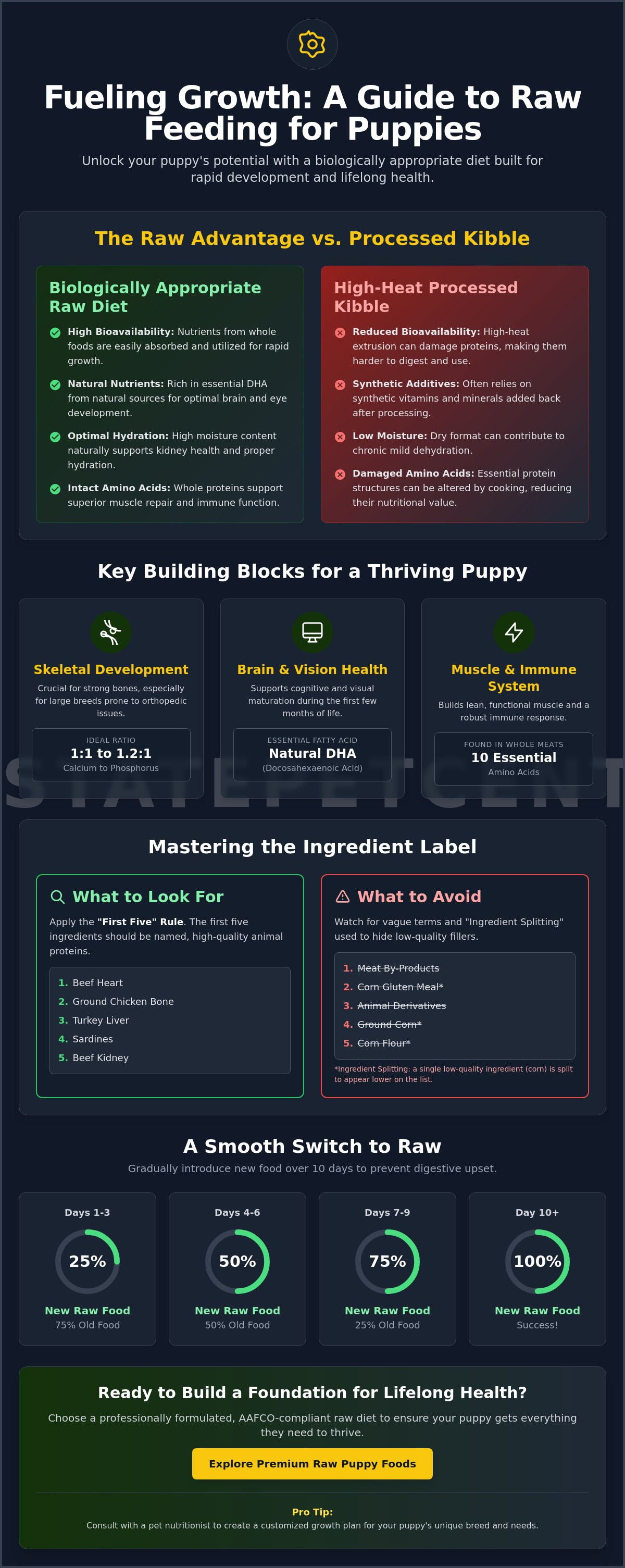
Puppies aren't just small dogs; they're biological powerhouses in a state of constant construction. Their bodies require specific, high-quality building blocks to develop everything from sturdy bones to a sharp mind. Raw feeding aligns with this natural design by providing animal-based proteins that their digestive systems are evolutionarily optimized to process. During these first few months, cognitive and visual maturation depends heavily on Docosahexaenoic acid (DHA). While some processed foods add synthetic versions, the best raw food for puppies often contains natural sources that are more easily absorbed. Additionally, a high-moisture diet supports kidney health from day one, ensuring your puppy stays hydrated without relying solely on the water bowl.
To better understand this concept, watch this helpful video:
Consider the "25% protein" claim often seen on traditional labels. There's a massive difference between 25% protein from fresh, raw beef and 25% protein derived from rendered, high-heat processed kibble. Raw proteins retain their natural structure and live enzymes, making them far more bioavailable for rapid tissue development. This means the puppy's body can actually use more of what it consumes, leading to less waste and more energy for growth. Choosing the best raw food for puppies ensures that every calorie serves a functional purpose in their development.
Skeletal Growth and the Calcium-Phosphorus Balance
Precise mineral intake is non-negotiable for growing dogs, especially large breeds prone to developmental orthopedic diseases. Raw bone matter provides a natural source of calcium and phosphorus that the body recognizes and utilizes efficiently. Synthetic additives often struggle to replicate this synergy. The ideal calcium-to-phosphorus ratio for puppies should fall between 1:1 and 1.2:1. Explore our premium dog food options to find pre-balanced formulas that take the guesswork out of this delicate ratio.
Amino Acids and Muscle Repair
Puppies must obtain 10 essential amino acids from their diet because their bodies cannot produce them. High-heat extrusion processes used in standard kibble often damage these delicate proteins, reducing their nutritional value. Whole muscle meat found in raw diets provides these acids in their most potent form. Unlike "meat meals," which are rendered leftovers, whole raw proteins support superior muscle repair and immune function during the most demanding growth phases of your puppy's life. This ensures they build lean, functional muscle rather than just gaining weight.
Decoding the Label: Identifying Premium Raw Ingredients
Understanding what goes into your pet's bowl starts with mastering the "First Five" rule. When you search for the best raw food for puppies, the first five ingredients listed must be specific animal proteins, such as beef heart, turkey liver, or ground chicken bone. If you see vague terms like "meat by-products" or "animal derivatives," it's a sign to keep looking. These terms often mask lower-quality ingredients that lack the amino acid profile necessary for your puppy's rapid tissue development. High-quality brands treat transparency as a standard, not an option.
Watch out for a common industry tactic called "ingredient splitting." Manufacturers often break down a single carbohydrate source, like corn, into multiple entries such as "corn gluten meal," "ground corn," and "corn flour." By splitting them up, each individual grain component weighs less than the primary meat source, allowing meat to stay at the top of the label even if the food is actually carbohydrate-heavy. True holistic raw diets avoid this trickery, prioritizing meat density over cheap fillers. This level of detail is a hallmark of safety and quality, especially when considering the FDA guidance on raw pet food regarding pathogen control and sourcing standards. We always recommend choosing brands that explicitly name their farm sources and avoid chemical preservatives like BHA, BHT, and Ethoxyquin.
Red Flag Ingredients to Avoid
Corn, wheat, and soy are unnecessary fillers for a growing carnivore. They provide empty calories and can often trigger early food sensitivities. Vague descriptors like "poultry meal" or "animal fat" are also major red flags. Since the source animal isn't identified, you can't be certain of the nutritional consistency or potential allergens. Finally, reject any formulations containing artificial flavors or high sodium levels, as these can be incredibly taxing on a puppy's developing kidneys and liver.
The Role of Superfoods and Whole-Food Supplements
The best raw food for puppies often incorporates whole-food supplements to provide a natural boost to the immune system. We look for ingredients like organic kelp for thyroid support, green-lipped mussels for joint health, and pumpkin for digestive stability. We also prefer formulas that use chelated minerals. These minerals are bound to organic molecules, making them much easier for a puppy's sensitive digestive tract to absorb. Natural antioxidants from whole fruits like blueberries or cranberries offer essential protection against oxidative stress during intense growth periods.
If you're ready to provide your new companion with a superior nutritional start, explore our carefully vetted selection of premium dog food to find the perfect fit for your puppy's needs.
Format Comparison: Raw, Freeze-Dried, and Gently Cooked Diets
Choose your puppy's diet format based on your lifestyle and their specific health needs. Frozen raw remains the gold standard for preserving live enzymes and maximum nutrient density. Brands like OC Raw and SmallBatch provide biologically appropriate meals that mimic a puppy's ancestral diet. These frozen options offer the highest level of enzymatic activity, which is essential for a developing gut. If you need the convenience of kibble without sacrificing quality, freeze-dried raw is an excellent alternative. Brands like Vital Essentials offer shelf-stable options that retain nearly all the nutritional integrity of fresh meat. For puppies with sensitive stomachs or picky palates, gently cooked meals provide a safe middle ground. This format offers whole-food nutrition while being easier to digest for certain young dogs.
Investing in Premium Pet Food often results in lower long-term veterinary expenses. By providing the best raw food for puppies early on, you're preventing common issues like obesity, dental disease, and poor coat quality. While the initial cost may be higher than commercial kibble, the value of a thriving, healthy dog is immeasurable. High-quality nutrition acts as a proactive health plan, building a resilient immune system from the very first bowl. Selecting the best raw food for puppies means prioritizing long-term vitality over short-term convenience.
Safety Protocols in Premium Raw Brands
Modern safety protocols have transformed the industry. Many premium brands now utilize High-Pressure Processing (HPP) to neutralize pathogens like Salmonella or Listeria without using heat that destroys vital nutrients. While the AVMA policy on raw diets highlights potential risks, choosing brands that perform rigorous batch testing and provide transparency reports significantly mitigates these concerns. Always wash your hands and sanitize surfaces after handling raw meals. Safe storage is just as vital; keep frozen food in a dedicated container to prevent cross-contamination in your freezer.
Convenience Factors for Busy Owners
Frozen patties require overnight thawing, which takes some planning and freezer space. In contrast, freeze-dried "nibblets" are pantry-stable and ready to serve instantly, making them perfect for travel or busy mornings. If you aren't ready to commit to a 100% raw diet, using raw toppers is a great way to introduce high-quality proteins to your puppy's current bowl. This "hybrid" approach still offers significant benefits. Whether you choose the deep nutrition of frozen or the ease of freeze-dried, there's a raw format that fits your daily routine.
The Safe Transition: Step-by-Step Implementation for Young Dogs
Success starts with a slow pace. While you might be eager to see the benefits of the best raw food for puppies, a "cold turkey" switch often leads to digestive upset. A puppy's gut microbiome is still developing. This makes it highly sensitive to sudden changes in pH and enzyme requirements. Plan for a gradual transition to allow their system to adapt to processing raw, moisture-rich proteins instead of dry, starchy kibble. During the first 14 days, incorporating high-quality probiotics and digestive enzymes is essential. These supplements help manage the shift in gut flora. They ensure your puppy absorbs every ounce of nutrition during this critical window.
Monitor your puppy's stool quality daily. On a raw diet, "good" puppy poop is typically smaller, firmer, and darker than kibble-fed waste. It also has significantly less odor because the body is absorbing more nutrients and producing less waste. If you notice persistent diarrhea or extreme lethargy, slow down the transition. Adjust portions as your puppy hits growth spurts; their caloric needs can change almost weekly. Stay proactive by feeling their ribs regularly. You should be able to feel them easily without seeing them protruding.
The 10-Day Transition Schedule
- Days 1-3: Introduce 25% raw food mixed with 75% of their previous diet. Observe closely for signs of gas, bloating, or unusual lethargy.
- Days 4-7: Move to a 50/50 split. This is the perfect time to incorporate digestive aids like raw goat milk to provide natural probiotics.
- Final Phase: Reach 100% raw by day 10. Once you've stabilized the feeding routine, you'll likely notice a shinier coat and more consistent energy levels.
Healthy Treats and Training Rewards
Don't let rewards derail your progress. Select single-ingredient dog treats to avoid over-complicating the transition with hidden fillers or artificial additives. Freeze-dried liver or heart pieces make excellent high-value, nutrient-dense training rewards that complement the best raw food for puppies. Always manage the "caloric budget" by ensuring that treats don't exceed 10% of their daily intake. This keeps the primary diet balanced and prevents unwanted weight gain during these formative months.
Ready to start your puppy on the path to lifelong health? Browse our curated selection of holistic puppy nutrition and find the perfect transition starter today.
Expert Consultation: Tailoring Nutrition to Your Puppy’s Unique Needs
Choosing the right nutrition shouldn't be a solo journey. While general veterinary advice often points toward standard AAFCO-compliant kibble, consulting a certified pet nutritionist offers a deeper level of clinical precision. These experts understand that the best raw food for puppies isn't a static product but a dynamic plan tailored to your dog's specific breed, activity level, and metabolic rate. Specialized brands like Solutions Pet Food and Tucker's Raw are frequently recommended by experts because they prioritize whole-prey ratios and ethical sourcing. These brands go beyond basic survival requirements, focusing on the high-end nutritional standards that foster long-term vitality.
Breed-specific growth is where professional guidance becomes invaluable. A Great Dane puppy requires a different caloric and mineral density than a Pomeranian. Large breeds need a carefully controlled growth rate to prevent skeletal stress, while toy breeds often require more frequent, energy-dense meals to avoid hypoglycemia. We provide expert guidance and specialized resources to ensure you can access these diets regardless of your location. Selecting the best raw food for puppies means recognizing these nuances before they manifest as health challenges. This specialized care ensures that your puppy's skeletal and muscular systems develop in perfect harmony.
The Proactive vs. Reactive Health Model
Starting your puppy on a premium raw diet is a proactive investment in their future. Many adult issues like chronic skin allergies and obesity are often reactive responses to years of high-carbohydrate, processed feeding. By choosing biologically appropriate holistic diets, you're building a resilient immune system from the start. We encourage owners to maintain variety in their puppy's bowl. Exploring high-quality dry food alternatives for balanced rotations can provide different protein profiles and textures, keeping your puppy engaged and nutritionally well-rounded while maintaining a sophisticated health plan.
Building a Lifelong Wellness Partnership
We believe that ingredient transparency and ethical sourcing are the cornerstones of a healthy life. As your puppy grows, staying engaged with the latest research in raw pet nutrition will help you adjust their diet through every life stage. Think of us as your knowledgeable neighbor and professional partner in this journey. We're here to provide the specialized care and high-quality resources your pet deserves, ensuring they thrive for years to come. Explore our curated selection of premium puppy food today and take the first step toward a lifetime of wellness.
Build a Foundation for Lifelong Puppy Health
Investing in your puppy's nutrition today sets the stage for a vibrant, energetic future. You've learned how biologically appropriate proteins support rapid growth and why navigating label transparency is the first step in avoiding hidden fillers. Whether you choose the enzymatic power of frozen raw or the convenience of freeze-dried formats, prioritizing bioavailable nutrients ensures your puppy's skeletal and cognitive development stays on track.
Finding the best raw food for puppies doesn't have to be a solo effort. We specialize in raw, freeze-dried, and holistic puppy diets, backed by the expertise of our on-site certified pet nutritionist. We're here to help you tailor a growth plan that matches your dog's unique breed requirements. You can also rely on our nationwide shipping for all premium pet supplies, ensuring your puppy never misses a meal. Shop our expert-approved raw puppy food collections and give your companion the premium start they deserve. We're excited to partner with you in your puppy's wellness journey.
Frequently Asked Questions
Is raw food safe for a puppy’s developing immune system?
Raw food is safe for puppies when you choose premium brands that utilize High-Pressure Processing (HPP) or strict batch testing. These safety measures neutralize harmful bacteria while keeping the beneficial live enzymes intact. These enzymes actually help build a resilient immune system. Always follow proper hygiene by cleaning bowls and surfaces after every meal to maintain a safe environment for your household.
How much raw food should I feed my puppy based on their weight?
Puppies generally require 1.6 to 2 times the number of calories that an adult dog of the same breed needs. Because their growth is rapid, you should monitor their body condition weekly. Adjust the portion sizes if you can no longer feel their ribs or if they appear too lean. Consulting a pet nutritionist can help you determine the exact caloric intake required for your puppy's specific breed.
Can I mix raw food with kibble during the puppy stage?
You can mix raw and kibble, but it is often better to feed them as separate meals. Raw food and dry kibble digest at different rates, which can sometimes cause minor digestive upset in sensitive puppies. If you use raw as a topper, ensure the overall diet remains balanced. This approach is a great way to introduce high-quality proteins without a full commitment to raw feeding.
Do I need to add extra calcium to a raw puppy diet?
Do not add extra calcium to a commercial raw diet that is already labeled as complete and balanced. Excess calcium can cause serious developmental orthopedic diseases, particularly in large breed puppies. Premium raw foods are formulated to meet the ideal calcium-to-phosphorus ratio of 1:1 to 1.2:1. Stick to these pre-balanced recipes to ensure your puppy's bones develop at a healthy, steady rate.
What is the difference between grain-free and raw puppy food?
The main difference lies in the ingredients used to replace grains and the level of processing. Grain-free kibble typically uses high-starch fillers like peas, lentils, or potatoes to hold the nuggets together. Raw food is naturally grain-free and relies on animal-based fats and proteins for energy. This makes raw diets much more bioavailable, as puppies are evolutionarily designed to thrive on animal tissue rather than complex carbohydrates.
How do I know if my puppy is getting enough nutrients from raw food?
A shiny coat, bright eyes, and steady energy levels are the best indicators that your puppy is receiving proper nutrition. The best raw food for puppies will also result in smaller, firmer stools, which shows that their body is efficiently absorbing the ingredients. If your puppy is growing at a consistent rate and remains lean but muscular, their current nutritional plan is likely hitting all the right marks.
When should I switch my puppy from 'puppy' raw to 'adult' raw food?
Make the switch once your puppy reaches about 80% to 90% of their expected adult weight. This timeline varies significantly by breed. Small dogs might reach this milestone at 10 months, while giant breeds may need growth-specific nutrition for up to 24 months. Transitioning too early can deprive a large breed of the specific mineral balances they need for their final stage of skeletal development.
Are there specific raw proteins better for puppies with sensitive stomachs?
Novel proteins like rabbit, duck, or whitefish are excellent choices for puppies with sensitive digestive systems. These proteins are less likely to trigger the food sensitivities often associated with common beef or chicken. Starting with a single-source protein helps you isolate any potential issues. This strategy allows you to provide the best raw food for puppies while keeping their gut health stable and their digestion comfortable.

Article by
Victor Santucci
Victor Santucci is the owner of Garden State Pet Center in Audubon, NJ, where he specializes in premium pet nutrition, exotic animals, and expert-level care. With years of hands-on experience and a passion for helping pets thrive, Victor is dedicated to educating pet owners on proper nutrition, enrichment, and species-specific care. His mission is simple: provide every pet with the highest quality products and every customer with honest, knowledgeable guidance.
Share this post
- 0 comment
- Tags: AAFCO, best raw food for puppies, biologically appropriate raw food, freeze-dried dog food, puppy diet, puppy health, puppy nutrition, raw dog food, raw feeding